0

The Shortest Song in the World

ND

As a kid I loved playing Mum and Dad’s records on the stereogram. There was always a little zap of frisson as I dropped the needle onto the vinyl, spinning at 33 1/3 RPM, and the speakers would spit and sizzle, and provided the stylus didn’t bounce off, we’d soon hear some music. Not the cold digital tunes of today with their obedient binary code, but some warm, enveloping sounds.

A favourite record was Creedence Gold.  Its track listing is-

Side 1

1.”Proud Mary” – 3:07

2.”Down on the Corner” – 2:43

3.”Bad Moon Rising” – 2:19

4.”I Heard it Through the Grapevine” (Norman Whitfield, Barrett Strong) – 11:03

Side 2

1.”The Midnight Special” (Traditional) – 4:11

2.”Have You Ever Seen the Rain?” – 2:39

3.”Born on the Bayou” – 5:14

4.”Susie Q” (Dale Hawkins, Stan Lewis, Eleanor Broadwater) – 8:34

The last track on Side 1, “I Heard it Through the Grapevine” mesmerised me. It featured not one but two great guitar solos. The second of these stretched on forever and to my eight year old self was impossibly cool. It was always disappointing when the song faded out.

There was so much happening within it, it was a snaking southern boogie like the Mississippi itself, and I wondered how this huge instrumental break enlarged upon the lyrics, how it connected to the story, and of course, it didn’t. It had no textual meaning.

It just was.

It was beyond narrative, but nonetheless epic. It told me that there was much in the world about which to get excited. There was possibility and opportunities for wild, unhinged self-indulgence. And Creedence Clearwater Revival was from San Francisco, a city that fascinated me.

Long, meandering songs such as this open themselves up to connotation and interpretation; like a novel or a film, and many argue that these marathon songs often possess a cinematic quality.

But how do we locate meaning in the world’s shortest song?

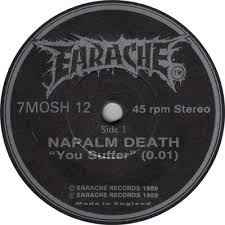
“You Suffer” is a track by the British grindcore band Napalm Death, from their debut album, Scum.  It’s precisely 1.316 seconds long. It’s now over thirty years old. Its lyrics are officially listed as-

You suffer

But why?

However, I must confess, I was unable to detect these unaided. I only heard the lyrics “Raaaah.” I had to find them on the web, probably because rightly or wrongly, my ears have enjoyed limited grindcore listening experience. Like arc welding, I think lyric decipherment, when it comes to micro grindcore, is actually quite a specialised skill. There’s possibly a TAFE, or adult education course in it.

I first came across the song when teaching in Singapore (don’t tell the authorities- they might come after me) when babysitting covering a Maths class one humid, bothersome afternoon. I played the song on my MacBook at random points during the lesson when the pupils- all compliant and sweet, were silently immersed in matters algebraic and entirely unsuspecting. I made a few of them jump. It was the most fun I’ve ever had in Maths. It was decidedly un-Singaporean.

Among other places it’s located on an album called Earache: The World’s Shortest Album which has thirteen songs and clocks in at a total of ninety-two seconds. You can listen to the entire album when watching the evening news, in the advertisement break between, say, the sport and the weather. For our British friends iTunes lists the album for sale at 29 pence. There’s a walk-the-dog and put-out-the-bins pocket money incentive for the kiddies of Birmingham.

So, micro grindcore fans, it’s nice to have visited your world, but I don’t think I’ll stay long, despite it being the funniest song about human suffering I’ve ever heard.

Give it a listen or two. 1.316 seconds isn’t much out of your day.

4

MONA moments

ferry

I’ve been accused, obviously in the past, by both strangers and friends, of ridiculous and unknowable underdressing.

It’s dark as a pint of stout and only just past five bells here in Hobart. As luck would have it, I’ve located a stool in the front bar of The Telegraph, and let me assure you, I’m suitably clad for the climate.

It’s July, but the side door is wedged open, tempting a decidedly crisp draught to gush into the pub, and phantom about us, like an anonymous, yet Arctic ghoul from the Harry Potter series.

Ordering a Cascade Pale Ale and a pizza, I note that Old Mate behind the bar is wearing shorts and a t-shirt. A quick scan of the dark, convict interior tells me that he’s not the only one. If my Mum were here, she may well now be in an involuntary foetal position, wailing for a Bundy and a blanket.

Scrutiny of the pub’s décor also tells me that stripping away the uptartedness, this is an old world, maritime boozer. I can almost hear The Pogues, playing Rum Sodomy & the Lash.

Already, I’m happy in Hobart.

*

With the MONA ROMA ferry hurtling up the Derwent there was music thumping across the deck. I was instantly smitten hearing Joe Tex and his 1977 classic “Ain’t Gonna Bump No More (With No Big Fat Woman).” I mean, who wouldn’t be?

Australia is wobbling on the edge of drought and, even here in Tasmania, the hills are brown and thirsty. It’s a massive harbour, and is more Port Lincoln than Sydney with its expansive stretches and rustic, inviting appearance.

*

How tremendous to invest an afternoon in this most modern and confronting of museums?

The architecture is instructive for we are sent, mole-like, to the depths, and in exploring the exhibits, are to ascend, towards the light. This establishes a central theme of the vast collection, for it is about decay and marginalisation. MONA is more Nick Cave than One Direction. I’m eager.

It’s also surely a first-world indulgence that we have the luxury of introspection and probing questioning. Each room has a theme and the first two I visit are declared as opposites: faith and satire. I take an inner breath. Here’s two ideas I hold important. Are these so incompatible? Do I have to surrender one? I fear satire may be just in the lead.

I pause at an ancient TV which is looping endlessly through the clip of a band unsuccessfully trying to master the Sex Pistols’ “God Save The Queen.” The singer holds a sheet of lyrics in front of her agonised face, while the drummer and guitarist are bravely attempting the same song, but in violently clashing tempos.

Each musician is an octogenarian.

It’s funny and probably cruel and I wonder what I’m supposed to think.

*

There’s a large cement cavern, vaguely reminiscent of London’s Tate Modern and its turbine hall, with its evocations of empire and space and dark. Along its length is Sidney Nolan’s installation, “Snake” comprising over 1,600 individual paintings across 46 winding metres. When it was conceived and assembled Nolan was already elderly, and I gasp at the colossal nature of his singular, ambitious vision.

A major departure, as near as my innocent eye can tell, from European galleries, is how this collection celebrates unheralded, everyday artists. Many of the works are Art Brut and Outsider Art, often by commoners and folks suffering mental illness, especially in the London-based Museum of Everything. There’s an insolent rejection of high culture, and a preference given to solitude, and the voices of the disturbed.

My audio companion instructs me in the work of a Prussian butcher who was fascinated by the cosmos and space travel, and created accordingly. Until recently he received no acknowledgement. How great, how vast, how rich is this planet?

I like that, at least in these very minor ways, there’s an arc towards democratisation.

I swing back through the galleries, past the dinosaurs assembled from found objects such as cable ties and one, a large asaurus of some note, built from both blank and pre-recorded cassette tapes, including incurably hideous disco tapes, but none by Joe Tex. By hang tight folks, if vinyl can make a comeback so can dinosaurs and tapes, like Ripper ’77.

I also take in a smiling hermaphrodite illumination and other happy collisions of ideas and amateur execution, including an entire darkened wall of vaginal casts, and its accompanying eight-minute audio commentary. I wonder if it has been commissioned by my favourite conceptual artist, Maude, of The Big Lebowski. I hope so.

Suddenly, the bright, southern day is rushing to the east. I’m back on the ferry and the Tasmanian velvet is pushing in, all over Salamanca Place.

maude

0

Port Adelaide v Collingwood: a Messerschmitt up your arse or free bird seed

free bird seed
During the second quarter, on the fifty-metre arc, at the Punt Road end was, to paraphrase Hunter S Thompson, when the stories and the beer began to take hold.

Six of us are in Row S, connected by the time we spent together at Kapunda High School, and variously on the Barossa’s cricket and footy ovals.

Much of our conversation is our old cars and coaches and mates and publicans and parents and maverick teachers who shaped us.

It’d been a ripping trip so far: early flights, the North Fitzroy Arms for the Footy Almanac lunch which concluded with the final siren at the SCG, the obligatory Young and Jackson nightcaps, and a Saturday laneway breakfast.

With the Uber app showing cars descending like black Pacmen three of us ride in a Caprice, and I’m reminded of the great Dave Graney and his song “Feelin’ Kinda Sporty” which opens with the magnificent

A black Statesman “73

Caprice.

Leaded.

At high noon, and accompanied with ample yarns, we entered the All Nations Hotel to confer with the ghost of Bill Hunter, and then white pub-vanned to the MCG as the match commenced. Each of us is merrily apathetic about the result.

I love footy, but occasionally its lone function is to provide a panoramic context across which we can splash our stories. Rocket would love to be watching his beloved Sturt while Nick, the Hayward boys (not Kapunda’s Gatlin boys) and Lukey are Norwood men, but as neither is scheduled at the MCG today we get along to Collingwood and Port.

With the match chugging along Nick and I discuss contemporary AFL footballers and old players from home, in particular one Mail Medallist and local publican who loved scrapping at the bottom of a pack, like a nuggetty 1970’s Selwood.

“You know what he used to do in the sheds before a game?”
“No. Tell me.”
“He’d smear heaps of Vaseline on his eyebrows so the elbows would slide off.”
I giggle.

Needing to refresh their refreshments the Haywards return with their shouts: Bundy for them, and mid-strength beers for us. For a moment, I fear we’ll need petroleum jelly too, but happily there’s no fight in the forward pocket.

We move onto that most vital of topics: Which Test Cricketer would you most like to have a beer with? (until very recently in pre-production at Network Ten)

“Warney?”
“There’s nothing to discover. Nothing.”
“Yeah, and I can’t have a beer with someone who calls their book, ‘My Autobiography.’”
“That’d have been a funny meeting at the publishers.”
I take a difficult sip of my mid-strength. “Waugh twins?”
“No. Steve’d bore you to death.”
“The worst kind of mental disintegration.”

Ultimately our choice is clear. One of the most stylish middle-order bats we’ve seen, and still a bloke about whom little is really known. An anti-Warney. The one who quit the night of the famous 2006 Ashes victory in Adelaide. Damien Martyn.

On the ground, Port is doing well with Robbie Gray slotting a few while Unley Jets alumnus Brodie Grundy is holding his own for the Magpies.

We wonder if the Chappell brothers still own the Leg Trap Hotel, and if David Warner is less likeable than a curved television and if it’s possible to make Boonie more Australian. It isn’t.

This brings us to the best quotation ever, the one which places sport and our little, self-tortured world into perfect context. Nick remembers his Dad giving him Australian allrounder and WWII pilot Keith Miller’s book. “Pressure,” Keith said. “I’ll tell you what pressure is. Pressure is a Messerschmitt up your arse. Playing cricket is not.”

Still laughing at the magnificence of this, Rocket heads off to a cavern and emerges with some appropriate beers. Normal transmission is resumed. Pendlebury is smooth and constructive, as usual. We note that Ollie Wines has thighs like Californian redwood.

The conversation then tends, as it must, towards other nostalgia and juvenalia. We’re now at Stalag 13. The verdant field of the MCG recedes and we’re all in front of a black and white TV, sliding our paws into packets of Lolly Gobble Bliss Bombs.

“Burkhalter and Hochstetter.”
Much giggling, given to misty eyes.
“Captain Hoganhoffer?”
“No prisoner has ever escaped from Stalag 13.”
More giggling.

“I’d like to hear this on the BBC World Service: Munich Messerschmitts 2, Stalag 13, 3.”
Someone slides next to me with a pie. A message comes through that another Kapunda High contemporary is on the second deck behind the Port cheer squad. We wave at Maria, who waves towards our bay.

Looking back now it makes sense, and indeed there’s a happy inevitability in the childhood image that would become our weekend’s talisman. The footy is now on mute as we moved towards the creature that Mark Twain described as “a long, slim, sick and sorry-looking skeleton.” The coyote, but of course for us, Wily E Coyote.

I don’t know how we came to this, and I don’t want to know, but as the shadows lengthened across Melbourne, Lukey, with his talent for the comic and the absurd mentioned it and we were off.

“Easily the greatest cartoons ever.”
The coyote hanging in mid-air until he realizes that he is about to plummet into a chasm!”
“Yeah, and he’d hold up a sign like ‘Goodbye cruel world.’”
“Or ‘Help me.’”
“‘Mother.’”

By now the laughter and the memories and the beer and our good fortune at being in this fun space meant, for some of us, there were tears of childish abandonment.
“What of the Giant Kite Kit?”
“The roller skates and the fan blowing the coyote along?”
“From the Acme company.”
Bombs, detonators, nitroglycerin. Not so funny in 2017, but when you’re seventeen and watching Looney Tunes…

We talk of the Road Runner’s ability to enter the painted image of a cave, while the coyote cannot, which showed us that the existentialists are correct: it is an unknowable and absurd universe. Cartoons teach us this.

And then as the Paah (sic) delivered their knockout blow to Collingwood, Lukey delivered his knockout blow to us. A childhood picture that captures the fun, the innocence of the endless battle between the Roadrunner and the Coyote.

“Free bird seed.”

And there it was. Only three words. But a beautiful mantra of the past, a pulsing refrain, and the best televisual picture of a little bird nibbling at food in the desert, likely just outside Albuquerque.

coyote

0

Finally, a beer review


sparko

Good art is evocative. It jumps on the individual and transports them elsewhere. Gee, even bad art can have you skipping across the planet.

Can beer be art too? Of course. It functions like a frothy time machine. Or something like this.

One afternoon I went on a little holiday, while sitting on our modest patio. Here’s my travel diary courtesy of the following fun refreshments.

Chang

On Boxing Day 2005 we arrived in Bangkok from London. Having survived part or whole of three shadowy English winters meant the Thai heat was monstrous. Like the black monolith in Kubrick’s 2001, it governs the landscape (and the moonscape).

Late morning, we took a boat along the Chao Phraya river, pausing at various Buddhist sites, and marvelling at the coconuts, bobbling in the brown water. When thirst conquered tourism we moored at a floating restaurant for a drink, and such was the hotness and absurd humidity that we demolished a squadron of large Chang bottles.

It’s a pale lager with a straw hue, and while it’s not bursting with personality and stories, it’s crisp and refreshing in a functional way, like an old Casio calculator. It’ll never MC your best mate’s wedding.

Our session was brisk and energetic, and soon there was a phalanx of green bottles on the table, in silent evidence of our stern tropical application. De-camping to Singapore a few years later I learnt that a handful of tinkling ice cubes in a frosty beer glass is no gastronomic crime, in fact it’s medically necessary.

With the sun slipping into the Andaman Sea and your green chicken curry steaming on the Ko Lanta table, a Chang is gorgeously contextualised. Don’t forget. Chang means elephant.

Tsingtao Beer

Gee, we’re all now situated within an Asian century and like Roy and HG, I find it tremendously exciting. This pilsner was originally brewed under the mythical German Purity Laws in a joint Chinese/ Bavarian operation. These enigmatic ideals are now abandoned and rice is an ingredient, but it works in a happy, meaningless pre-season fixture fashion.

Like an episode of Have You Been Paying Attention? it’s fun and compelling at the time, but in the morning, you’ll recollect little of it. However, this is fine. Live a little and ignore the cultural import.

Tsingtao attends to its easy drinking brief with a casual nod to the grandstand as the chestnut conveyance strides past the post in an early spring Group 3 race over, say, 1600 metres. It’s pale, golden in the glass and unlikely to inspire a revolution, cultural or military. While I enjoyed it, at no stage did I hear Communism barking in my ear as I supped. I should’ve listened to Little Feat’s “A Apolitical Blues” to allow beer and art to mingle in that deathless, exotic exchange-

Well my telephone was ringing

And they told me it was chairman Mao


Well my telephone was ringing

And they told me it was chairman Mao

Coopers Sparkling Ale

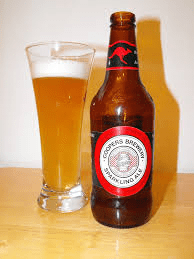
At the end of a holiday, even a lager-themed trip, it’s good to come home. And so, we look at the mighty CSA, as I’m confident it’s not known in the trade. In my coterie, it’s a Sparko although this familiar, friendly nomenclature disguises a dark truth.

Kids: this is not a session beer. The graveyard is clunking with the skeletons of those who fought it, and lost.

Sparkling ale speaks with preternatural eloquence. I tell you, every bottle bursts with Jack Nicholson, the Velvet Underground and ultimately, Hemingway from his tiny Spanish bar. As an aspirational product, it’s looking down fondly upon us all from its Nepalese retreat.

It presents with citrus, cereal, ferment, danger, sex, death. It can be eaten with a fork. Avoid it at breakfast, especially if you’ve booked a duel with a mortal enemy. But taken moderately, in the late autumnal sun, it’s invigorating and celebratory.

After three circumspect sips, you’ll possess the wit of former Australian PM, Paul Keating who once described the performance of a parliamentary foe as “like being flogged with a warm lettuce.”

Coopers Sparkling Ale is huge like Merv Hughes in his twilight, but under the hum and roar of a party, it leans in and whispers conspiratorially, “Can you believe our good fortune to live where we do?”

And you smile in that reflective way while sort of staring into the middle distance and think yep, that’s fecking true.

bangkok


0

Iconic Instants in Rock Music


guitar

No, not Elvis gets his guitar, or Mick and Keef meet at the Dartford train station, but snippets of sound from within songs, that punters sometimes scramble to identify at quiz nights.

A Hard Day’s Night- the Mighty Opening Chord

Revealing a curious etymology, there was both a film and an album ready to go, but the Fab Four were told that it’d be incongruous for there to not also be a song.

With the title originating in a Ringo malapropism, Lennon composed the track in an evening, and the following day, refined the lyrics with help in a taxi on the way to the studio. The song was recorded in three hours. It starts with untouchable majesty.

George Harrison’s Rickenbacker generates most of the moment, but each Beatle contributes to its revered musicology. As with much art there’s a secretive, unknowable complexity behind it. Instantaneously recognisable, but also mysterious in its alchemy, one academic, Dominic Pedler, dedicates a sizable chunk of his 800-page volume, The Song Writing Secrets of The Beatles, to the chord, and lists twenty-one compositional possibilities.

In one theory Pedler deploys a process called a Fourier transformation: the decomposition of a sound wave into its constitute pure tones- as modelled by sine and cosine curves- to come up with a scientific solution.

But, for me, the tale of this thrilling chord is its cultural potent. It’s both a daring announcement and a promise. Innocent and eager, it exemplifies the Beatles’ giddily evolving confidence in both their music and social power.

That the guitars are slightly out of tune only magnifies the charisma, and suggests a bouncing mid-summer walk along London’s Oxford Street, in the bright, blossoming city.

It’s an aural intoxicant.

Paradise City- Whistle Blower

When Elvis first gyrated his hips on TV, I’m sure that in countless homes the first rock obsessions were also born. A few decades later, in the unspeakable 1980’s, a particular Guns ‘N’ Roses fan from Lafayette, Indiana- Axl Rose’s home, too- began investing time and not inconsiderable money touring the world to claim an elusive plastic whistle.

Of course, he’s seeking a concert souvenir: the whistle blown and nightly thrown into the crowd at the 1:21 mark of “Paradise City” from Appetite for Destruction, the album so beloved by aging leather jackets and Triple M music directors. So far, our trophy-hunter’s been unsuccessful. His cabinet remains bare.

In this moment, there’s juxtaposition at work as the song transitions from its opening section and momentum builds. The anthemic tropes are present, but exhilaratingly assembled: pounding drums, driving guitars, and wailing vocals married to shameless subtexts.

Suddenly climbing above this grind and growl is the simplest addition: a lone whistle blast that invests the song with a military discipline, demanding both band and listener focus and follow. It also evokes the urgent start to a football match when the warm-up is done, and we’re in the huddle together, and it’s just us and them.

It’s a riotous call to arms.

The Tourist- The Mourning Bell

Radiohead’s OK Computer is an album of luxurious, sparkling gloom, best listened to through headphones at midnight. Its themes of nagging horror and emptiness are expressed with pristine melodies that seem to bend out through a Kubrick-like universe.

Once described as possessing “… soaring, operatic choruses, and a towering bridge,” the record is closed by “The Tourist.” Its dramatic context is a pending car crash, and over Jonny Greenwood’s guitar Thom York pleads for the driver, possibly himself, to “slow down” and as we wince against the grim inevitability, the roaring doom, instead we hear a tiny bell. What happened? Was there even an accident? And, if yes, of what ultimate consequence?

Again, TS Eliot is right.

What does this bell denote? Some suggest it’s the ding of a microwave, that millennial symbol of mundane gnawing consumerism; for others, it conjures an ancient typewriter in a nameless attic, signalling how this musical story, and our fragile human story is indeed, finished.

Irrespective, it’s a sonic conclusion of poignancy and uncommon beauty, befitting the preceding 53 minutes of searing maelstrom.

It’s a punctuation mark, but also a prayer.

axl.png

4

I Believe in Milk Cows: You Sexy Thing

cow

I negotiated the semi-circle of Adelaide’s most notorious roundabout by the Britannia Hotel, before slipping onto tree-lined and genteel Kensington Road. It was just after eight in the morning when the opening chords rushed into my tiny car.

It was a revelation, and happy reminder of the excellence that had come before. Yet again, Triple J would provide instruction, although on this occasion it was Mikey, the Sandman and guest presenter Rosie Beaton’s weekly segment during which a much-loved song was played.

I believe in miracles

Where you from?

You sexy thing

London funk and soul outfit Hot Chocolate’s greatest song is firmly anchored in 1975, but also transcends this frightfully disco epoch, and to my ears is still as irresistible now as it was when it was cruelly denied rising to the top of the charts by Queen and their “Bohemian Rhapsody” juggernaut. Testament to the affection for “You Sexy Thing” is its rare achievement of charting in the 1970’s, 80’s and 90’s. Spare him his life from this monstrosity, indeed.

There’s orgasmic violins- listen carefully, and tell me this is not the case- which soar across the arc of the melody, absurdly catchy vibrato guitars and (late) lead singer Errol Brown, whose voice is perfect, with a soulful performance that is almost a gleeful shout, especially in this unexpected, but joyous couplet-

Yesterday I was one of the lonely people

Now you’re lying close to me, making love to me

However, the opening lyrics continue to confuse listeners, with the following declared among the catalogue of the misheard

      Are you bleeding mental

Where’s your car, you sexy thing?

And then this, a pre-Trump assertion

I believe I’m American!

Not ignoring the geek-driven, Family Matters option

I believe in Urkel

The esoteric-

      I believe in Malcolm

Wear your bra

You sexy thing

A piscatorial tribute-

        I believe in mackerels

And finally, attributed to a German gent, allegedly hard of hearing-

              I believe in milk cows.

*

“You Sexy Thing” is ageless, disco genius; a song that elevates mood, and our capacity for joy, instantly.

Go on, stick it on! Now.

1

Adelaide’s Widest Variety of Pink

J and D

Autumn in Adelaide. It’s magnificent, and probably better than Baghdad in summer or Vladivostok in winter. The days are warm and still and the evenings are great for all manner of alfresco activity such as the Fringe Festival, centred upon the Garden of Unearthly Delights.

I was there with two dear old friends, Poof[1] and Trish[2] and we took in Judith Lucy and Denise Scott and their show Disappointments. In the football match of our lives it’s after half time and we’re, hopefully, into the Premiership Quarter[3] so the themes of dealing with aging,  bodily degeneration and the like are targeted at our demographic. It was fun, well as much fun as this comedy of cruelty could be.

Our after-show conversation was especially provoked by a rapid-fire monologue in which Judith catalogued how unspeakably awful pop music of the 1980’s is. Poof[4] and Trish[5] disagreed, coming to an enthusiastic, but ultimately incorrect defence of this cursed decade! Our friendship enjoys robust debate. The centre point of Judith’s argument was Rick Springfield’s “Jessie’s Girl” whose only redeeming quality is surely the correct use of the possessive apostrophe within its title.[6]

You know I feel so dirty when they start talking cute

I wanna tell her that I love her but the point is probably moot

See? ‘Tis a nonsense. Imagine a radio station dedicated to this swill? If you’d really like to wallow in colossal disappointment and have every joyful atom sucked from your being, I recommend listening to Mix 102.3, lurking poisonously on the FM band and doubtless streaming right now across an undeserving galaxy. Love the more putrid songs of the 1980’s? Here’s five in a row! Love those crappy INXS ballads that should never have been on their otherwise great albums[7]? We’ll play one an hour. Up for those rubbish Bowie tunes, from the time when he’d truly lost his way and we thought he’d never return? I’ve got one right after the news! It’ll make you tense, if not physically and spiritually sick.

When Mix 102.3 is not undertaking 1980’s aural terrorism[8] it’s playing Pink. Astonishingly, it’s slogan is “Adelaide’s Widest Variety of Music” but if there’s any truth in radio sloganeering, it should be “Adelaide’s Widest Variety of Pink.” Delusion dictates that it must play Pink multiple times within each freaking hour of their godless day. Listen for any length and you will certainly wish you were trapped in a CIA black site, and about to be folded into a dark cupboard for a fortnight. If you were bound by rope to a chair, listening through bleeding ears, and somehow decided to drink a shot of Bundy[9] every time you heard her banshee gibberish shrieking from the radio speakers, you’d turn into Sir Les Paterson[10] or Elizabeth Taylor[11] within about fifteen minutes.

I love the 1990’s. In among the grunge of Nirvana and Pearl Jam, who I also like, there were lots of sunny songs with great melodies and fetching harmonies. The Sundays and Weezer spring to mind. Then there’s Teenage Fanclub and their signature tune, “Sparky’s Dream.”[12]

It opens with gangly guitars and this great lyric

If she lived in space, man

I’d build a plane

Aside from the aeronautical impossibility it’s a song of optimism and joy.

I reckon Judith Lucy would like it. You’ll never hear it on Mix 102.3.


[1] Not her given name, but certainly her real name

[2] Not Patsy, under any circumstances

[3] Australian Rules football metaphor indicating the most crucial section of a grand final

[4] Not her given name, but certainly her real name

[5] Not Patsy, under any circumstances

[6] See previous two blog entries for more on this

[7] Shabooh Shoobah from 1982 being one

[8] As developed by the CIA, ASIO and Stock, Aitken and Waterman

[9] Dark rum from Queensland, another act of war

[10] Hideous but hugely funny cultural icon

[11] Apparently enjoyed an aperitif

[12] Note correct use of possessive apostrophe here too. See, it’s not so hard, people


0

Fun and Feasting at the Beggars Banquet

devil

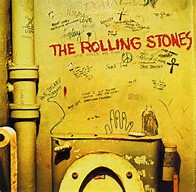
Who forgot the apostrophe? Mick or Keith? Should it be Beggar’s Banquet or Beggars’ Banquet? I prefer the later, imagining a mythical party hosted by the Rolling Stones somewhere like, say, Tangier in Morocco.

Punctuation marks denoting possession aside, this 1968 release is the most fun of their career with sitars, LA’s Watts Street Gospel Choir and a polite devil all prominent. Forgetting the psychedelic swill of Their Satanic Majesties Request, this album’s ambitious but also homage to their American influences.

The music of Satan is not, as many might attest, heavy metal or any of its more ridiculously camp variants. His accompaniment, of course, is something much more seductive. Opening Beggars Banquet is “Sympathy for the Devil” which is narrated by Lucifer himself.

Underpinned by congas the music is a samba: hypnotic, sexual, inescapably charismatic. And there’s the Devil, resplendent in a sharp suit, drawing you in over a cocktail with his allure, but also his invisible menace. Indeed, the opening to this dramatic monologue is a deferential “Please allow me to introduce myself…”

In the days after its release, I imagine God-fearing folk from places like Lynchburg, Virginia quivering at Mick’s vocals, but I reckon it’s now fanciful fun, fetching theatre.

*

In Keith Richards’ autobiography Life my favourite vignette centres upon the young author and his grandfather in Soho, during the austere 1950’s. Upon seeing a poor urchin, the elder asks, “Keith, have you got a shilling?”

“Yes.”

“Good. Now go and give it to that boy. He needs it more than you.” Keith does.

“Well done,” praised granddad, “That’s very kind.” He pressed his fist into Keith’s paw.

Keith opened his hand. In it were two shillings.

*

“Dear Doctor” is the third track and takes us musically and narratively to the American south with the mawkish tale of a doomed boy, trapped to his betrothed.

The melodramatic context is clunky, but it’s one of the record’s fine acoustic songs that could be dismissed as irreverent; making fun of the genre. However, this would misjudge the band’s deep admiration for this music, as they deliver us to their beloved blues and country destinations. Worship, and not cheap parody is driving the pick-up. Such is the authenticity of Mick’s vocal characterisation that the finale is a relief for us all

It read, “Darlin’, I’m sorry to hurt you.

But I have no courage to speak to your face.

But I’m down in Virginia with your cousin Lou

There be no wedding today.

*

In February 1965, my Mum and Dad saw the Rolling Stones at Centennial Hall. It was part of the Showgrounds, but the building is now demolished. A short Par 4 from where I work, and commuting past, I envisage flickering black and white footage and screaming. Shrill, teenaged, screaming.

Roy Orbison took the stage beforehand and with his voice like “the cry of an angel falling backward through an open window” the crowd adored him. But then, Mum and Dad both remember the Stones being booed and jeered. What? They played eight songs with competent energy, but it was too late. Adelaide loved the Big O, and gave the boys from Dartford the Big A.

*

The Rolling Stones are now popularly connected to the electric guitar, but on Beggars Banquet the acoustic songs generate much of the fun. “Prodigal Son” is a country blues, Bible-infused number that on the record’s early pressings was wrongly attributed to Jagger and Richards. It was by the Rev. Robert Wilkins, a Memphis gospel singer and herb medicine specialist whose first recording was “Rolling Stone Blues, Parts I & II.” It dates from 1928.

It’s a reminder that they still loved the blues and regarded themselves as belonging to Memphis as much as London. “Prodigal Son” is a terrific driving song, and the Mississippi swims into widescreen view as Mick’s harmonica eddies and swirls across the speakers.

*

The album is colonized by rich characters and the richest here is the “Factory Girl.” It’s a curious amalgam with violins, South Asian congas or tablas giving it a Hindustani feel and Mick’s mid-Western vowels providing a pilgrimage too. The girl is irrepressible: catching buses, sporting “curlers in her hair” and loving a weekend fight. Even with the “stains all down her dress” she’s attractive. It’s my pet track.

Opening the batting for the band’s astonishing run of form which witnessed consecutive centuries through Beggars Banquet, Let It Bleed, Sticky Fingers and Exile on Main St, it’s a whirling, boisterous set. While it doesn’t gather the acclaim of its successors, it’s their most fun record.

*

And I’m not sure that the title’s absent apostrophe is rock’s greatest grammatical crime. This surely belongs to Paul McCartney’s “Live and Let Die” for its maddeningly redundant preposition, which if you’re not vigilant, sticks in your head like a rusty nail

But if this ever changin’ world

In which we live in.

Ladies and gentlemen, Beggars Banquet!

stones

2

Jeans On- Not on Triple J’s Hottest 100 but Massively Cool

dd

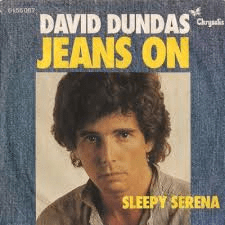
Born in Oxford to the 3rd Marquess of Zetland and his wife Penelope Pike, and schooled at Harrow. Not what you’d necessarily expect of the man singing the world’s catchiest tune. Ladies and gentlemen, Lord David Dundas!

At least it was in 1977 when I first heard it on Countdown on a Sunday night. I recall my cousin Boogly was a fan of the song too. We first heard it one wintry evening after a Kapunda Footy Club function (piss up) when we repaired to his house. No doubt having toasted ham and cheese sandwiches. We ate these often. His mum, my Aunty Claire, makes a wicked toasted sandwich.

ts

If the song sounds like a jingle that’s because it originally was, having come to life to promote Brutus jeans, a company started by two London brothers in their teens. The jeans were popular among mods, sharpies and scooter boys.

With a laid-back melody underpinned by a memorable keyboard the lyrics commence

When I wake up in the morning light
I pull on my jeans and I feel all right
I pull my blue jeans on, I pull my old blue jeans on (ch-ch)

Back about a year we entertained friends from Kimba and Kentucky- as you do; these should be twinned communities- and this song came up. With sufficient sparkling beverages onboard (Ale and Shiraz) we located the song on YouTube and played it on repeat, sitting on our patio as we (Bazz and I) yodelled out into the undeserving night sky with the “ch-ch” bits being an aural highlight. Neighbourhood dogs still growl when I pass.

sa

Happily, the song is now also on Spotify with nearly three-hundred thousand plays while other songs by David Dundas have only attracted meagre listens making him, I think, a one-hit wonder. But, Fatboy Slim liked it so much he sampled it on his song “Sho Nuff.”

It will be another vital plank in the musical education of Alex and Max and I’ll play it for (at) them when an opportunity arises (imprisoned in my car). You should listen to it too.

On Australia Day, what could be more appropriate?


0

The Dude and Dinosaur Jr.


been

In my pocket my phone buzzed. A message. Trev.

I’m up front watching J. Mascis…His left hand up the neck of his telecaster is like a bionic crab!

On a stormy Thursday evening the weather is Singaporean heavy and portentous. Trev, Matty and I are at The Gov, Adelaide’s best live music pub. American indie band Dinosaur Jr. is playing. We’re at the back of the room and we’re feeling the fuzzy guitar.

Like a 1990’s disaster film- doubtless featuring a frowning Tommy Lee Jones- we’re pummelled by cataclysmic forces. However, it’s not an indiscriminate assassin, it’s a benevolent god: a ’63 Fender Jazzmaster. It’s the star of the show.

Later, I squeeze my way up the front too. I’m only a few feet from the stage. With his long hair- Trev calls him the “Grey Ghost”- eyes closed and expressionless dial, he reminds me of the Dude from The Big Lebowski.

dude

And here’s a key. He appears utterly uninterested; he’s not even in the room with us. He’s home in Massachusetts thinking of making a cuppa tea, yet he’s generating that unique sound- soaring yet distorted, joyfully immaculate and also hovering just above swirling noise. It’s a magic carpet. It’s why we’re here.

A highlight is “Start Choppin’” from their breakthrough set Where You Been. It remains among my favourite album art. I didn’t know the band when in 1993 I first saw the CD in Big Star Records on Rundle Street, but it spoke of a weird world: all misshapen darkness and bizarre humour. It looked fun.

And here’s another key to their appeal. Mascis sings with a whining, drawling, nasal voice. A bit Neil Young, but without any commitment. He’s telling you a story, but doesn’t think you can be bothered to listen. He expects you to walk off as he’s mid-story. Maybe to make a cuppa tea. Again he reminds me of The Dude.

The Dude: Mr. Treehorn treats objects like women, man.

Malibu Police Chief: Mr. Treehorn draws a lot of water in this town. You don’t draw shit, Lebowski. Now we got a nice, quiet little beach community here, and I aim to keep it nice and quiet. So let me make something plain. I don’t like you sucking around, bothering our citizens, Lebowski. I don’t like your jerk-off name. I don’t like your jerk-off face. I don’t like your jerk-off behaviour, and I don’t like you, jerk-off. Do I make myself clear?

The Dude: [after a pause] I’m sorry, I wasn’t listening.

Dinosaur Jr. perform melodic, simple songs that pioneered the loud/quiet dynamic that’d become the sonic signature of grunge. “Feel The Pain” and “Out There” elevate the crowd too, and the last song of the encore “Gargoyle” closes with a meandering, enthralling guitar solo that’s at once cosmic, searing and euphoric.

And there’s J. Mascis, barely aware of his battered axe, more relaxed than the Dude. He saunters off-stage. He’s mumbled about five words all night.

Walking to my car a fellow Dinosaur Jr. fan passes me. He’s in the middle of the road. He’s riding a Malvern Star bike. It’s a tick after midnight. No helmet, no lights, no hands.

Superb.

j


0

Austria and the Rhine- seven very scared croutons

soup

Tuesday June 12- Pork Day (Michael)

Early start. Lunch at Trier which has the oldest Roman gate in the world. Lots of wurst stands, and we bought some nice strawberries. Saw a few good dogs.

The local cathedral is huge, beautiful and sombre. Ate a couple pork rolls for lunch and were reminded of this frequently during the afternoon.

Made our pay toilet debut. Travelled through Luxemburg- a generous community with zero net migrant intake every year.

Sleepy afternoon on the coach then a Rhine river cruise which was fun. This large boat had an open back deck with striking views of the narrow valley, castle and vineyards. Had a Riesling and a dark beer in a large vase-like glass. Saw the much-feared Lorelei Rock.

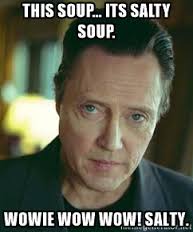
Bussed past Frankfurt and had dinner at the motel. Most of the despised food groups were lurking together- peas, pork and capsicum. Starters was a curious local fare we called Salt Soup which is made of ten tablespoons of salt, half a litre of water and seven very scared croutons.

Met and chatted with a Melbourne couple – Clive and Connie who are also teachers. Walked around the block and retired.

Wednesday 13/6- Kerry

Up at 6.30 again- this is definitely not a holiday, it’s a tour. This is the saying anyway and I agree.

Napped our way through the countryside to Nuremburg for lunch. A very interesting city- we visited the old part; some of which was bombed during the war.

Saw a beautiful fountain in the square and made a special wish with the gold ring- for a Hungarian visa! The story of the visa- or lack of: our travel agent did not inform us despite asking numerous times if we needed one. We’re pretty angry, but we’ll worry about it when we get back. Our challenge will be to get one when we arrive in Vienna where it will cost about 500 shillings each.

Back to Nuremburg. We walked up the hill to the old palace and there were good views over the city. Back in the square we bought some lovely dip and bread and artichokes (choke is the word- Editor) from a Turkish stall and walked down to a park on the river to eat it. Cool!

Back on the bus- another nap- we headed towards Munich, but didn’t pass through it. On the way, we saw a lovely big lake (Khem-see) with islands and all in it. All of this at the base of the German Alps.

Soon we’re over the border into Austria where our overnight stop was just outside Salzburg. The pension was lovely- small, family-owned with spacious rooms and a real double bed, finally! Our meal was good and we walked down the road afterwards which was very nice, except for the big, black slugs. Wrote a few postcards (google ‘em kids- Editor) before bed.

Thursday June 14- Michael

Typically early start. Into Salzburg for city tour. Was quite rainy. Our guide looked like Cosmo Kramer, and behaved like him too. And Kerry’s grandpop, Griffy Grace.

Saw lots of Sound of Music sites and places relevant to Mozart. Cobblestoned squares, monastery, nunnery, castle and funicular. The monks’ cemetery was impressive. Ate a couple pretzels. Got passport photos taken for $40! And then the camera broke. Went to internet café, spent a fortune, lost half an hour of trip text. Whilst the city was beautiful, we weren’t displeased about getting the fuck out of there.

Both napped on the bus to Vienna. Arrived at 6pm to discover that the pocket knife was missing (fuck-up number 76). All our clothes and belongings thrown about the large room, we headed off for an Austrian feast and entertainment.

Sat with Morrie and Glenda and Italian/Americans from Virginia (US state, not market garden town north of Adelaide- Editor). Big wooden tables and stools, piano accordion music and generous glasses of wine contributed to the bonhomie. Salads, chicken, sausage, sauerkraut and stinking pork to eat.

Our rotund musician played traditional tunes and Also Waltzing Matilda and Tie Me Kangaroo Down (Sadly, no Shaddup Your Face-Editor).  Quiet trip back to the motel to the strains of Dean Martin.

Our day finished happily.

toilet


0

NYE in Adelaide Oval’s Bay 134

zooper.png

Is there anything more disappointing than a soggy pie?

No, there’s not. The expectation of firm pastry and the meaty joy within was instantly ruined. No sooner in his seat and having slid his pie from its bag, it collapsed in our eldest’s lap like a Home and Away extra during a Summer Bay disaster.

Our members’ tickets are in Bay 134, at the bottom of the Fos Williams Stand, and about six rows from the fence. At about backward point it’s a top spot.

With noise and music and fireworks and the ceaselessly moronic countdown our innings begins courtesy of the hoopla-free off-spin of Johan Botha. He played for the Strikers and the Redbacks but is now with the Sixers. Every confected cricket event needs a villain, and Botha swishes his black cape for the crowd.

The civilised world’s favourite sporting Hodge opens briskly, as does his partner Jake Weatherald. We progress at a goodly clip, and when Dunk comes in he takes seventeen from one over of former wig salesman and current outlaw-bikie impersonator, Doug Bollinger.

*

Is it possible to drown the week between Christmas and New Year’s with too much cricket, both televisual and backyard? With Alex and Max receiving a cricket set and some Zing bails, we’ve gone close.

Balls have lobbed over the northern, eastern and southern fences and into the neighbours’ like F- bombs in a Tarantino flick. Our house is on the western side of the modest backyard and balls: tennis, rubber and various assorted have cascaded down into the gutter like stones across a holiday-camp lake.

*

Brad Hodge (at 42, the competition’s second oldest Brad) holes out, and to the wicket sprints Travis Head, hero of last year’s corresponding fixture. But his lean tournament continues and he’s rapidly back in the sheds.

Looking like a participant in a slo-mo beer advertisement is Jake Lehmann and he then takes careful block and three balls later is bowled for zero. Perhaps next time they should strap a set of pads to his moustache and just send it out for a slog.

When his stumps are disturbed and the bails flash and dance, the hoardings and screens light up with animated Zooper Doopers and I’m suddenly aggrieved for the great loss of 2016. Bowie? Cohen? Prince? Bah. Hang your head for the demise of the great summery ice-treat, the Sunnyboy.

I know the between-balls musical stabs are highly orchestrated, like elevator muzak and shopping centre soundtracks, but tonight’s seems improved with Wilson Pickett’s “Land of a Thousand Dances,” and The Black Keys’ “Lonely Boy.” A highlight is “Shout” by the Isley Brothers, although for me and many of my generation the iconic version of this 1959 classic is by Otis Day and the Knights, as performed during the toga party scene in Animal House.

The sun sets beyond the Chappell Stand and the Strikers go to sleep before Pollard and Jordan rescue the situation with some controlled bludgeoning. It’s a beautiful batting deck and I reckon we’re about twenty runs short. For the Sixers Sean Abbott is impressive taking a Michelle.

*

Human creativity is eternally astonishing, and our boys find limitless ways to argue on the backyard pitch. A couple times this last week some cricket has even broken out between them. Mates who’ve brothers tell me it’s common.

Over Christmas lunch I ask Mum about my childhood cricket. “You’d come home from primary school and play every afternoon with Brett.” Brett was two years older and lived down the road. “Did we argue?” I ventured. “Like cats and dogs,” Mum replied, “You never stopped.” I was instantly reassured. I was normal.

During the break, there’s a win $500 if you take a catch competition for those caught on camera with a KFC bucket on their bonce. It’s criminally inadequate compensation. However, the security guard/ cult hero from the Strikers’ first home game joins in, and with his final attempt completes a nice overhead grab. It’s no John Dyson on the SCG fence in 1982, but still, it’s tidily done. We loves it. If KFC was available at Adelaide Oval I’d buy thirty-eight pieces, inhale them and wipe the grease through the hair of my loved ones.

*

Hughes and Roy (Surrey import, not Slaven) get the visitors away brightly, but then the wickets fall regularly. Lanky Queenslander Billy Stanlake bowls with pace and penetration taking three, including that of Brad Haddin, who in stomping on his stumps, appears to have taken his midnight cups prematurely.

Test discard Maddinson arrives and departs limply. His year concludes bleakly, but with national selection logic proving impenetrable his two from eight deliveries may be sufficient to earn him a recall or a position on Turnbull’s front bench.

With O’Connor and Laughlin operating in tandem the Strikers are attacking with Anglicized forms of Gaelic, and this is effective as they snare four collectively. “Jump Around” by House of Pain, everyone’s beloved Irish hip hop collective (if LA’s a Belfast suburb) blasts out and O’Connor takes a sharp return catch from Abbott to make it seven for not-nearly-enough.

When the wickets aren’t tumbling, the bowling is so economical there’s more dots than a Morse Code Festival (email me for details). Like octogenarian Port Power fans clapping every single fecking disposal the crowd now applauds each maiden delivery. Our boys are really excited.

Sixer Sam Billings swots a couple into the western stand named for benefactor and KFC-devotee, Sir Edwin Thomas Smith, but with his departure the required run-rate accelerates like Zimbabwean inflation and the game is over.

Doug doesn’t even get to face.

*

A few years’ ago, during the Boxing Day Test our eldest began shrieking from the lounge. “Dad. Dad! Come quick!” I burst in. What was happening? What had I missed? “What is it?” Alex looked up at me, his toddler’s eyes wide. “Dad, Peter Siddle’s about to bowl!” Ah, the enthusiasms of the child. Not many could get excited by that.

Not even Mrs. Siddle.

*

In our car, we venture home and into the new year.

*

The following is fantastic. Voiced by Richie Benaud it captures what we love about cricket and summer.


2

By George said Ringo to Paul while sitting on the John

ar

June 9- Michael

Walked to St Johns Wood and to Lords. Elderly tour guide was cheeky and cockney. Long Room, museum and media centre. The playing surface drops eight feet from off to on-side. Whilst certainly attractive is not as naturally beautiful as Adelaide. Bought Dad a souvenir- not Phil Tufnell’s autobiography- and headed across to Abbey Road.

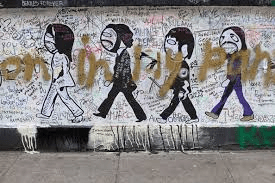
Humble white studio but the front fence is thick with graffiti. Much of it corny: “By George said Ringo to Paul while sitting on the John.” Photo taken at pedestrian crossing. Ambled along Regents Canal. Lots of canal boats which seemed to be houses.

Bought lunch at Pret a Manger- magnificent chocolate cake- and ate in Hyde Park near Marble Arch. Walked through the Park to the Serpentine and had coffee. Continued to Albert Monument and Albert Hall.

Natural History Museum for a few hours. Dinosaurs, animals, birds, great spider and web exhibit and the blue whale. Superb.

Onto Kensington Palace. Saw lots of squirrels. The first one was nearly taken by a swooping raven. The Round Pond was great and then we headed to Oxford Street and our internet café. Back to our hostel, and after a big day walking, to be about ten.

June 10- Michael

Coffee and hot chocolate in Trafalgar Square and then to Buckingham Palace. Enjoyed the changing of the guard: music, colour, ceremony. Entertained equally by French school kids.

Westminster Pier and down to St Katherine’s Wharf. Had lunch. By Christ, it was a poor chicken burger. Tower of London. Enormous crowds. Joined a guided tour with a yeoman warder who’d a superb presence, voice and humour. Learnt more about Anne Boleyn, three blind mice Henry VII and royal history.

Checked out the Crown Jewels, White Tower, wall walk, Cullinan Diamond display, Royal Chapel and The Common. Stood on the steps at Traitors Gate and marvelled at this place which has been palace, fort, prison and site of English history’s most poignant moments.

Called into a supermarket for some supplies and beer- wheat lager (shite) and Stella Artois. Caught parts of a TV show commemorating Prince William’s 18th birthday. (NB- the after-party starring Harry probably more entertaining- Editor)

June 11- Kerry

On the road again. Up early, packed and walking to a location near Euston Station at the Thistle Hotel. After a reasonable delay, it was on the bus and winding our way through London to Dover.

The countryside was lovely. Lots of beautiful scenery (Michael slept). Dover was great but things were a bit rushed as we were late. But the white cliffs were interesting and in all a quaint seaside village with a HUGE port. Our ferry, the Provence, was massive. We walked on and made our way to the deck to wave goodbye to jolly old England.

Went downstairs for an ale and a bit of a look around and before we knew it we had crossed the channel in just under two hours and were arriving at Calais. Met up with our tour manager whose name is Ute, and our driver Giro (if I was a bogan I’d suggest the roles should have been swapped- Editor).

Time was short so we were quickly on the road to our first stop- Brussels, Belgium. Ute talked to us about the tour and other general things and this helped while away a fair chunk of time- looking out the window and taking in the scenery is good- to a point. I did recall however a time travelling from the city to Gawler on the train and someone saying it was like France, and I have to agree.

Arrived at the Holiday Inn on the outskirts of towns across the road from a big stadium about 7pm after winding our clocks forward an hour. After a quick tidy up we were downstairs to get a map then on the train into the centre of town. The main square, Grand Place is cool- lots of very big, very old buildings and no cars.

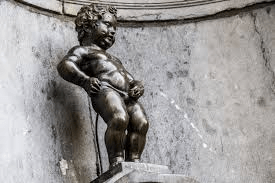
We quickly found the fountain Mannekin Pis, took some photos then looked for food. Ate at a Greek café called Plaka- the food was superb- falafels and a plate of open lamb yiros. YUM.

Had a bit more of a look around the side streets including one full of seafood restaurants before catching the underground home. TIRED!

mp

0

Radiohead and me

headphones

I was a tourist, but also trying to be a detective. We ambled over the bridge and looked down at the Thames, making its quiet way towards London. Naught. In the town centre St Nicolas’ Church surrendered no clues, and I wondered what influence the former MG car plant had with its suggestions of status and privilege.

Abingdon is six miles from Oxford, and we were there visiting friends. It’s the birthplace of Radiohead. Following the requisite pub lunch, we took a stroll. While our hosts knew nothing of the town’s famous sons I attempted some connections. Any signs in the market square that could further decode “Karma Police?” Would Abingdon Gaol’s architecture enlighten my reading of “Pyramid Song?”

Of course, my thinking assumed that art is chiefly autobiographical. We often want it to be. But, was mine a ridiculous quest? Having worked for a decade near Kensington in Adelaide’s east, I’d not gained much geographical insight into Paul Kelly’s back catalogue.

However, it was also a sensible quest, for music is more meaningful if we can somehow make its birthplace enchanted. Landscapes might matter, even for Radiohead, whose existential songs are devoid of setting.

Driving home from Oxfordshire I acknowledge that from a wholly unremarkable village, a remarkable band emerged, as we’d hope.

*

Indeed, it was commuting up Kensington Road past Norwood into Paul Kelly territory (I taught two of his nieces) when on Triple J I first heard “Paranoid Android.” After, Mikey Robbins and The Sandman linked it to Hitchhiker’s Guide to the Galaxy, which I devoured as a teenager. References to Douglas Adams’ cult novel are infused across the record.

I was spellbound, apprehended by the song’s circuitous, multi-part structure that also announced Radiohead’s dominant theme: the horrors of modern life. They continue to explore this with gallows humour and compelling soundscapes. Perfect through headphones.

That afternoon I bought OK Computer.

*

Arriving in Singapore my wife and I bought smartphones, onto which I uploaded my CDs. I then rambled about that hot, teeming islet, accompanied by some beloved collections, which both isolated me and somehow welded me to those equatorial streets. Now, back in Australia when I put on Exile on Main St, Belle and Sebastian’s Tigermilk or Vampire Weekend’s Contra I’m walking through the thick heat at Robertson Quay.

Great albums present discovery and rediscovery as every track enjoys periods of personal high rotation in which it becomes the favourite. I like these evolutions in my explorations of an artist.

A few Octobers ago, around our Phuket pool, I played OK Computer. Horizontal on my sun lounge I became enamoured with the final song. The waltz-tempo and cathartic rhythm of “The Tourist” deliver a telling full stop to this record of splendor and portent. After a ferocious guitar solo, it closes with a single note struck on a triangle. Superb.

I also recall eating pizza by that pool when a neighbouring family leapt up and scattered. An emerald snake had appeared at their feet, and startled, it slipped hastily over the pavers and climbed a palm. We peered up at it, hanging green on a frond, fifteen feet up like reptilian tinsel. Could a frightened snake populate a Radiohead song? Feature as a symbol of contemporary alienation? Don’t be silly, I thought. Have another heat, the Chang’s getting to you.

*

In a distant Port Pirie winter, we lit a backyard fire and sat about it in black coats. The grey smoke phantomed around and through us while we drank shiraz and stories and music. It’s the year PJ Harvey released Stories from the City, Stories from the Sea, but what I remember from this evening is Radiohead’s second offering, The Bends.

I remember “Fake Plastic Trees” and aside from the consciously tautological title I love the soaring atmospherics of the guitars, although now Radiohead hasn’t been a guitar band for two decades. Throughout, Thom Yorke invests his vocals with vulnerability, and this matches the dread and defiance of the lyrics.

The next afternoon I bought The Bends.

*

1993 in a forgotten pub. “So, what do you think about that British band Radiohead? You know that song, “Creep?”

I replied. “Not much. Reckon they’re a one-hit wonder.”

Oops, but who can tell? Radiohead’s debut, Pablo Honey is a turgid mess, and proposes no capacity. However, about this time a blonde leg-spinner took 1/150 in his first Test…

*

I subscribe to Spotify because I love suddenly recollecting a song, and then hearing it within seconds. As a streaming service, it’s brilliant. Nevertheless, it worries me how the artists receive miniscule royalties, such that their yearly dividend may only allow a band to huddle naked around a can of flat Fanta.

I do prefer an artefact: vinyl, CD, even a cassette, but visiting the local K-Mart with three discs by the execrable Pink isn’t worth the free parking. I remind myself to buy a turntable, and return to that dear friend, the past.

A Moon Shaped Pool is the record Radiohead promised to make all millennium. When everyone’s asleep I sometimes listen to “The Numbers” through headphones. Concerning climate change, this track exquisitely combines fragile metaphor, guitar, and tinkling piano. I love a string section, and the urgent stabs accentuate the ominous themes.

Given their form I hope Radiohead continues. The menace of neo- conservativism and dire planetary health means there’s still much for them to ponder.

hitchhiker

0

A Day on the Green: Nostalgia by the North Para


plw

T-shirt slogans can capture a moment, and a couple summers’ ago, from an English website I bought one that featured no imagery or graphics, just plain text in a small black font

c. Marsh b. Lillee

Music festivals like Saturday’s Day on the Green are the preferred habitat of the hipster t-shirt, and I saw many, but this was the standout, catching the zeitgeist in this time of disenchantment: the alarming rise of herb rage

fcuk coriander

With band members Link, Ringo, Wally and Jaws Meanie, the Meanies opened our afternoon with their energetic brand of irony-infused punk, and each song is a brisk splash of droll turbulence. Lead singer Link Meanie sports a Chopper Reid ‘tache, a diesel mechanic’s physique, and a B-grade back pocket’s self-deprecation. As Link would attest, it takes enormous dedication to look like you don’t care one dot. “10% Weird” is a great song, and it’s a cracking set. We’re off to a flier.

*

The Barossa Valley boasts Germanic villages and pastoral beauty. A most painterly aspect is Peter Lehmann’s winery on the edge of Tanunda, and it’s obligatory when we take visitors wine-tasting.

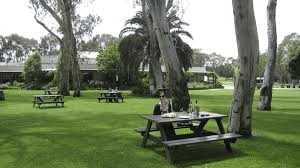
The blue-green Gatsby lawns have hosted friends’ birthdays and Mothers’ Days complete with games of cricket punctuated by adults juggling glasses of shiraz as they toss up feathery off-spinners to free-swinging kids. Today’s stage is adjacent to the North Para River while on the Nuriootpa side gum trees grasp at the azure sky. Between these are about seven thousand folks- and just a few toddlers.

*

Decades ago in Kimba my foot was broken by a behemoth opponent called Gut, and unable to play footy, I spent an enthusiastic month in the pub on the punt. The small and eclectic ensemble of TAB aficionados became my Saturday friends. Although I was the youngest by about thirty years our bond was functional, and it presented a singular entertainment. Isn’t it fantastic to enjoy the elliptical orbits of different friends? Some relationships are founded on footy or golf or wine, and with Nick and Holmesy, they’re (among other things) my music mates.

From our grassy spot, and over cans of Fat Yak we trade reviews. “The new Nick Cave album’s a bit bleak. Warren Ellis is having too much say.” And later, “The Pixies’ latest is a mixed bag. Some good moments, but a few formulaic tracks as well.” Then as Jebediah diffused their sunny pop Holmesy editorialises, “On the new Metallica the pace and fury of the guitars is like they’re channelling Lemmy.”

We’re joined by Trev. He played drums with a few bands back in the 90’s, including one who enjoyed airtime on Triple J. Another was called Imelda’s Shoes, which still amuses me. He went to every single Big Day Out. He’s still in mourning.

Late afternoon and Spiderbait is on, led by hirsute drummer Kram who is energetic like a Labrador, or Rory Sloane. He alternates vocals with bassist Janet English, a Cate Blanchett lookalike wearing oversized glasses and blonde bobbed hairdo.

The band formed twenty-five years back, but she still sings as she did back then, and I’m reminded of how enduring and immutable is the human voice. It’s remarkable. Her singing is innocent, but also as bewitching as the sirens of Greece especially on “Calypso.”

Sunshine on my window

Makes me happy

Like I should be

During one of his uproarious solos the wife says that she has a “drummer crush on Kram,” which is reasonable as, at six o’clock on this particular Saturday, we all do.

With the Barossa having been settled by persecuted Prussians Janet’s acappella introduces “99 Red Balloons,”

Hast Du etwas Zeit für mich

Dann singe ich ein Lied für Dich

and the bilingual crowd ignites. On my top 100 one-hit wonders list, it’d go top 10 for sure, right next to “Slice of Heaven” and “Harper Valley PTA.”

You Am I is a favourite, but their approach is naive, and confused in application, like the Australian middle-order. Their blue lounge suits promise much, but instead there’s self-parody and simmering agitation, both on the lawns and on the stage. Timmy could chuck a wobbly. I’m unsure if he’s helped by the bottle of wine he’s necking like a Tom Waits sailor.

Around from the prehistoric scoreboard You Am I played a blistering set before last year’s SANFL grand final. At our Day on the Green they do sizzle on “Cathy’s Clown,” but this is swamped by baffling patches of novelty including the backup singers doing, “Nutbush City Limits.”

The last act is a band I always find clinical. Something For Kate’s “Monsters” is wonderful, but like Adelaide Zoo’s two giant pandas Wang Wang and Funi, their set fails to (re)productively connect. However, they cover REM’s “The One I Love,” and it reflects the gorgeous anxiety of the original.  

Our recent festival experience was the St Jerome’s Laneway event in Singapore, and this franchise is about the future, the next wave of artists, while Day on the Green looks unashamedly to the past in targetting middle Australia’s healthy hunger for nostalgia. The line-up could have been photocopied from the 1998 Big Day Out program, but this is why we’re here, in our eager dotage.

*

With midnight ticking close we’re back at Nick’s farm in She-Oak Log. Our wives have retired, and we listen to old music and drink new wine. Outside the window his crops sway in the earthy dark, and we toast our good fortune.  


99-red-balloons