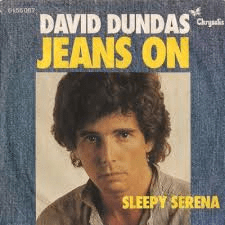
Born in Oxford to the 3rd Marquess of Zetland and his wife Penelope Pike, and schooled at Harrow. Not what you’d necessarily expect of the man singing the world’s catchiest tune. Ladies and gentlemen, Lord David Dundas!
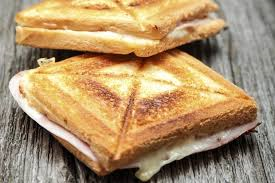
At least it was in 1977 when I first heard it on Countdown on a Sunday night. I recall my cousin Boogly was a fan of the song too. We first heard it one wintry evening after a Kapunda Footy Club function (piss up) when we repaired to his house. No doubt having toasted ham and cheese sandwiches. We ate these often. His mum, my Aunty Claire, makes a wicked toasted sandwich.
If the song sounds like a jingle that’s because it originally was, having come to life to promote Brutus jeans, a company started by two London brothers in their teens. The jeans were popular among mods, sharpies and scooter boys.
With a laid-back melody underpinned by a memorable keyboard the lyrics commence
When I wake up in the morning light
I pull on my jeans and I feel all right
I pull my blue jeans on, I pull my old blue jeans on (ch-ch)
Back about a year we entertained friends from Kimba and Kentucky- as you do; these should be twinned communities- and this song came up. With sufficient sparkling beverages onboard (Ale and Shiraz) we located the song on YouTube and played it on repeat, sitting on our patio as we (Bazz and I) yodelled out into the undeserving night sky with the “ch-ch” bits being an aural highlight. Neighbourhood dogs still growl when I pass.
Happily, the song is now also on Spotify with nearly three-hundred thousand plays while other songs by David Dundas have only attracted meagre listens making him, I think, a one-hit wonder. But, Fatboy Slim liked it so much he sampled it on his song “Sho Nuff.”
It will be another vital plank in the musical education of Alex and Max and I’ll play it for (at) them when an opportunity arises (imprisoned in my car). You should listen to it too.
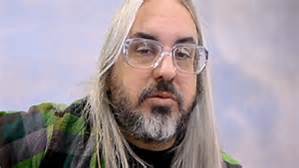
I’m up front watching J. Mascis…His left hand up the neck of his telecaster is like a bionic crab!
On a stormy Thursday evening the weather is Singaporean heavy and portentous. Trev, Matty and I are at The Gov, Adelaide’s best live music pub. American indie band Dinosaur Jr. is playing. We’re at the back of the room and we’re feeling the fuzzy guitar.
Like a 1990’s disaster film- doubtless featuring a frowning Tommy Lee Jones- we’re pummelled by cataclysmic forces. However, it’s not an indiscriminate assassin, it’s a benevolent god: a ’63 Fender Jazzmaster. It’s the star of the show.
Later, I squeeze my way up the front too. I’m only a few feet from the stage. With his long hair- Trev calls him the “Grey Ghost”- eyes closed and expressionless dial, he reminds me of the Dude from The Big Lebowski.
And here’s a key. He appears utterly uninterested; he’s not even in the room with us. He’s home in Massachusetts thinking of making a cuppa tea, yet he’s generating that unique sound- soaring yet distorted, joyfully immaculate and also hovering just above swirling noise. It’s a magic carpet. It’s why we’re here.
A highlight is “Start Choppin’” from their breakthrough set Where You Been. It remains among my favourite album art. I didn’t know the band when in 1993 I first saw the CD in Big Star Records on Rundle Street, but it spoke of a weird world: all misshapen darkness and bizarre humour. It looked fun.
And here’s another key to their appeal. Mascis sings with a whining, drawling, nasal voice. A bit Neil Young, but without any commitment. He’s telling you a story, but doesn’t think you can be bothered to listen. He expects you to walk off as he’s mid-story. Maybe to make a cuppa tea. Again he reminds me of The Dude.
The Dude: Mr. Treehorn treats objects like women, man.
Malibu Police Chief: Mr. Treehorn draws a lot of water in this town. You don’t draw shit, Lebowski. Now we got a nice, quiet little beach community here, and I aim to keep it nice and quiet. So let me make something plain. I don’t like you sucking around, bothering our citizens, Lebowski. I don’t like your jerk-off name. I don’t like your jerk-off face. I don’t like your jerk-off behaviour, and I don’t like you, jerk-off. Do I make myself clear?
The Dude: [after a pause] I’m sorry, I wasn’t listening.
Dinosaur Jr. perform melodic, simple songs that pioneered the loud/quiet dynamic that’d become the sonic signature of grunge. “Feel The Pain” and “Out There” elevate the crowd too, and the last song of the encore “Gargoyle” closes with a meandering, enthralling guitar solo that’s at once cosmic, searing and euphoric.
And there’s J. Mascis, barely aware of his battered axe, more relaxed than the Dude. He saunters off-stage. He’s mumbled about five words all night.
Walking to my car a fellow Dinosaur Jr. fan passes me. He’s in the middle of the road. He’s riding a Malvern Star bike. It’s a tick after midnight. No helmet, no lights, no hands.
Early start. Lunch at Trier which has the oldest Roman gate in the world. Lots of wurst stands, and we bought some nice strawberries. Saw a few good dogs.
The local cathedral is huge, beautiful and sombre. Ate a couple pork rolls for lunch and were reminded of this frequently during the afternoon.
Made our pay toilet debut. Travelled through Luxemburg- a generous community with zero net migrant intake every year.
Sleepy afternoon on the coach then a Rhine river cruise which was fun. This large boat had an open back deck with striking views of the narrow valley, castle and vineyards. Had a Riesling and a dark beer in a large vase-like glass. Saw the much-feared Lorelei Rock.
Bussed past Frankfurt and had dinner at the motel. Most of the despised food groups were lurking together- peas, pork and capsicum. Starters was a curious local fare we called Salt Soup which is made of ten tablespoons of salt, half a litre of water and seven very scared croutons.
Met and chatted with a Melbourne couple – Clive and Connie who are also teachers. Walked around the block and retired.
Wednesday 13/6- Kerry
Up at 6.30 again- this is definitely not a holiday, it’s a tour. This is the saying anyway and I agree.
Napped our way through the countryside to Nuremburg for lunch. A very interesting city- we visited the old part; some of which was bombed during the war.
Saw a beautiful fountain in the square and made a special wish with the gold ring- for a Hungarian visa! The story of the visa- or lack of: our travel agent did not inform us despite asking numerous times if we needed one. We’re pretty angry, but we’ll worry about it when we get back. Our challenge will be to get one when we arrive in Vienna where it will cost about 500 shillings each.
Back to Nuremburg. We walked up the hill to the old palace and there were good views over the city. Back in the square we bought some lovely dip and bread and artichokes (choke is the word- Editor) from a Turkish stall and walked down to a park on the river to eat it. Cool!
Back on the bus- another nap- we headed towards Munich, but didn’t pass through it. On the way, we saw a lovely big lake (Khem-see) with islands and all in it. All of this at the base of the German Alps.
Soon we’re over the border into Austria where our overnight stop was just outside Salzburg. The pension was lovely- small, family-owned with spacious rooms and a real double bed, finally! Our meal was good and we walked down the road afterwards which was very nice, except for the big, black slugs. Wrote a few postcards (google ‘em kids- Editor) before bed.
Thursday June 14- Michael
Typically early start. Into Salzburg for city tour. Was quite rainy. Our guide looked like Cosmo Kramer, and behaved like him too. And Kerry’s grandpop, Griffy Grace.
Saw lots of Sound of Music sites and places relevant to Mozart. Cobblestoned squares, monastery, nunnery, castle and funicular. The monks’ cemetery was impressive. Ate a couple pretzels. Got passport photos taken for $40! And then the camera broke. Went to internet café, spent a fortune, lost half an hour of trip text. Whilst the city was beautiful, we weren’t displeased about getting the fuck out of there.
Both napped on the bus to Vienna. Arrived at 6pm to discover that the pocket knife was missing (fuck-up number 76). All our clothes and belongings thrown about the large room, we headed off for an Austrian feast and entertainment.
Sat with Morrie and Glenda and Italian/Americans from Virginia (US state, not market garden town north of Adelaide- Editor). Big wooden tables and stools, piano accordion music and generous glasses of wine contributed to the bonhomie. Salads, chicken, sausage, sauerkraut and stinking pork to eat.
Our rotund musician played traditional tunes and Also Waltzing Matilda and Tie Me Kangaroo Down (Sadly, no Shaddup Your Face-Editor). Quiet trip back to the motel to the strains of Dean Martin.
Is there anything more disappointing than a soggy pie?
No, there’s not. The expectation of firm pastry and the meaty joy within was instantly ruined. No sooner in his seat and having slid his pie from its bag, it collapsed in our eldest’s lap like a Home and Away extra during a Summer Bay disaster.
Our members’ tickets are in Bay 134, at the bottom of the Fos Williams Stand, and about six rows from the fence. At about backward point it’s a top spot.
With noise and music and fireworks and the ceaselessly moronic countdown our innings begins courtesy of the hoopla-free off-spin of Johan Botha. He played for the Strikers and the Redbacks but is now with the Sixers. Every confected cricket event needs a villain, and Botha swishes his black cape for the crowd.
The civilised world’s favourite sporting Hodge opens briskly, as does his partner Jake Weatherald. We progress at a goodly clip, and when Dunk comes in he takes seventeen from one over of former wig salesman and current outlaw-bikie impersonator, Doug Bollinger.
*
Is it possible to drown the week between Christmas and New Year’s with too much cricket, both televisual and backyard? With Alex and Max receiving a cricket set and some Zing bails, we’ve gone close.
Balls have lobbed over the northern, eastern and southern fences and into the neighbours’ like F- bombs in a Tarantino flick. Our house is on the western side of the modest backyard and balls: tennis, rubber and various assorted have cascaded down into the gutter like stones across a holiday-camp lake.
*
Brad Hodge (at 42, the competition’s second oldest Brad) holes out, and to the wicket sprints Travis Head, hero of last year’s corresponding fixture. But his lean tournament continues and he’s rapidly back in the sheds.
Looking like a participant in a slo-mo beer advertisement is Jake Lehmann and he then takes careful block and three balls later is bowled for zero. Perhaps next time they should strap a set of pads to his moustache and just send it out for a slog.
When his stumps are disturbed and the bails flash and dance, the hoardings and screens light up with animated Zooper Doopers and I’m suddenly aggrieved for the great loss of 2016. Bowie? Cohen? Prince? Bah. Hang your head for the demise of the great summery ice-treat, the Sunnyboy.
I know the between-balls musical stabs are highly orchestrated, like elevator muzak and shopping centre soundtracks, but tonight’s seems improved with Wilson Pickett’s “Land of a Thousand Dances,” and The Black Keys’ “Lonely Boy.” A highlight is “Shout” by the Isley Brothers, although for me and many of my generation the iconic version of this 1959 classic is by Otis Day and the Knights, as performed during the toga party scene in Animal House.
The sun sets beyond the Chappell Stand and the Strikers go to sleep before Pollard and Jordan rescue the situation with some controlled bludgeoning. It’s a beautiful batting deck and I reckon we’re about twenty runs short. For the Sixers Sean Abbott is impressive taking a Michelle.
*
Human creativity is eternally astonishing, and our boys find limitless ways to argue on the backyard pitch. A couple times this last week some cricket has even broken out between them. Mates who’ve brothers tell me it’s common.
Over Christmas lunch I ask Mum about my childhood cricket. “You’d come home from primary school and play every afternoon with Brett.” Brett was two years older and lived down the road. “Did we argue?” I ventured. “Like cats and dogs,” Mum replied, “You never stopped.” I was instantly reassured. I was normal.
During the break, there’s a win $500 if you take a catch competition for those caught on camera with a KFC bucket on their bonce. It’s criminally inadequate compensation. However, the security guard/ cult hero from the Strikers’ first home game joins in, and with his final attempt completes a nice overhead grab. It’s no John Dyson on the SCG fence in 1982, but still, it’s tidily done. We loves it. If KFC was available at Adelaide Oval I’d buy thirty-eight pieces, inhale them and wipe the grease through the hair of my loved ones.
*
Hughes and Roy (Surrey import, not Slaven) get the visitors away brightly, but then the wickets fall regularly. Lanky Queenslander Billy Stanlake bowls with pace and penetration taking three, including that of Brad Haddin, who in stomping on his stumps, appears to have taken his midnight cups prematurely.
Test discard Maddinson arrives and departs limply. His year concludes bleakly, but with national selection logic proving impenetrable his two from eight deliveries may be sufficient to earn him a recall or a position on Turnbull’s front bench.
With O’Connor and Laughlin operating in tandem the Strikers are attacking with Anglicized forms of Gaelic, and this is effective as they snare four collectively. “Jump Around” by House of Pain, everyone’s beloved Irish hip hop collective (if LA’s a Belfast suburb) blasts out and O’Connor takes a sharp return catch from Abbott to make it seven for not-nearly-enough.
When the wickets aren’t tumbling, the bowling is so economical there’s more dots than a Morse Code Festival (email me for details). Like octogenarian Port Power fans clapping every single fecking disposal the crowd now applauds each maiden delivery. Our boys are really excited.
Sixer Sam Billings swots a couple into the western stand named for benefactor and KFC-devotee, Sir Edwin Thomas Smith, but with his departure the required run-rate accelerates like Zimbabwean inflation and the game is over.
Doug doesn’t even get to face.
*
A few years’ ago, during the Boxing Day Test our eldest began shrieking from the lounge. “Dad. Dad! Come quick!” I burst in. What was happening? What had I missed? “What is it?” Alex looked up at me, his toddler’s eyes wide. “Dad, Peter Siddle’s about to bowl!” Ah, the enthusiasms of the child. Not many could get excited by that.
Not even Mrs. Siddle.
*
In our car, we venture home and into the new year.
*
The following is fantastic. Voiced by Richie Benaud it captures what we love about cricket and summer.
Walked to St Johns Wood and to Lords. Elderly tour guide was cheeky and cockney. Long Room, museum and media centre. The playing surface drops eight feet from off to on-side. Whilst certainly attractive is not as naturally beautiful as Adelaide. Bought Dad a souvenir- not Phil Tufnell’s autobiography- and headed across to Abbey Road.
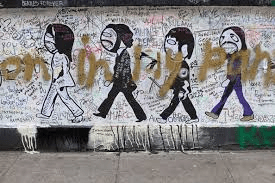
Humble white studio but the front fence is thick with graffiti. Much of it corny: “By George said Ringo to Paul while sitting on the John.” Photo taken at pedestrian crossing. Ambled along Regents Canal. Lots of canal boats which seemed to be houses.
Bought lunch at Pret a Manger- magnificent chocolate cake- and ate in Hyde Park near Marble Arch. Walked through the Park to the Serpentine and had coffee. Continued to Albert Monument and Albert Hall.
Natural History Museum for a few hours. Dinosaurs, animals, birds, great spider and web exhibit and the blue whale. Superb.
Onto Kensington Palace. Saw lots of squirrels. The first one was nearly taken by a swooping raven. The Round Pond was great and then we headed to Oxford Street and our internet café. Back to our hostel, and after a big day walking, to be about ten.
June 10- Michael
Coffee and hot chocolate in Trafalgar Square and then to Buckingham Palace. Enjoyed the changing of the guard: music, colour, ceremony. Entertained equally by French school kids.
Westminster Pier and down to St Katherine’s Wharf. Had lunch. By Christ, it was a poor chicken burger. Tower of London. Enormous crowds. Joined a guided tour with a yeoman warder who’d a superb presence, voice and humour. Learnt more about Anne Boleyn, three blind mice Henry VII and royal history.
Checked out the Crown Jewels, White Tower, wall walk, Cullinan Diamond display, Royal Chapel and The Common. Stood on the steps at Traitors Gate and marvelled at this place which has been palace, fort, prison and site of English history’s most poignant moments.
Called into a supermarket for some supplies and beer- wheat lager (shite) and Stella Artois. Caught parts of a TV show commemorating Prince William’s 18th birthday. (NB- the after-party starring Harry probably more entertaining- Editor)
June 11- Kerry
On the road again. Up early, packed and walking to a location near Euston Station at the Thistle Hotel. After a reasonable delay, it was on the bus and winding our way through London to Dover.
The countryside was lovely. Lots of beautiful scenery (Michael slept). Dover was great but things were a bit rushed as we were late. But the white cliffs were interesting and in all a quaint seaside village with a HUGE port. Our ferry, the Provence, was massive. We walked on and made our way to the deck to wave goodbye to jolly old England.
Went downstairs for an ale and a bit of a look around and before we knew it we had crossed the channel in just under two hours and were arriving at Calais. Met up with our tour manager whose name is Ute, and our driver Giro (if I was a bogan I’d suggest the roles should have been swapped- Editor).
Time was short so we were quickly on the road to our first stop- Brussels, Belgium. Ute talked to us about the tour and other general things and this helped while away a fair chunk of time- looking out the window and taking in the scenery is good- to a point. I did recall however a time travelling from the city to Gawler on the train and someone saying it was like France, and I have to agree.
Arrived at the Holiday Inn on the outskirts of towns across the road from a big stadium about 7pm after winding our clocks forward an hour. After a quick tidy up we were downstairs to get a map then on the train into the centre of town. The main square, Grand Place is cool- lots of very big, very old buildings and no cars.
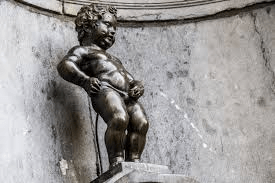
We quickly found the fountain Mannekin Pis, took some photos then looked for food. Ate at a Greek café called Plaka- the food was superb- falafels and a plate of open lamb yiros. YUM.
Had a bit more of a look around the side streets including one full of seafood restaurants before catching the underground home. TIRED!
I was a tourist, but also trying to be a detective. We ambled over the bridge and looked down at the Thames, making its quiet way towards London. Naught. In the town centre St Nicolas’ Church surrendered no clues, and I wondered what influence the former MG car plant had with its suggestions of status and privilege.
Abingdon is six miles from Oxford, and we were there visiting friends. It’s the birthplace of Radiohead. Following the requisite pub lunch, we took a stroll. While our hosts knew nothing of the town’s famous sons I attempted some connections. Any signs in the market square that could further decode “Karma Police?” Would Abingdon Gaol’s architecture enlighten my reading of “Pyramid Song?”
Of course, my thinking assumed that art is chiefly autobiographical. We often want it to be. But, was mine a ridiculous quest? Having worked for a decade near Kensington in Adelaide’s east, I’d not gained much geographical insight into Paul Kelly’s back catalogue.
However, it was also a sensible quest, for music is more meaningful if we can somehow make its birthplace enchanted. Landscapes might matter, even for Radiohead, whose existential songs are devoid of setting.
Driving home from Oxfordshire I acknowledge that from a wholly unremarkable village, a remarkable band emerged, as we’d hope.
*
Indeed, it was commuting up Kensington Road past Norwood into Paul Kelly territory (I taught two of his nieces) when on Triple J I first heard “Paranoid Android.” After, Mikey Robbins and The Sandman linked it to Hitchhiker’s Guide to the Galaxy, which I devoured as a teenager. References to Douglas Adams’ cult novel are infused across the record.
I was spellbound, apprehended by the song’s circuitous, multi-part structure that also announced Radiohead’s dominant theme: the horrors of modern life. They continue to explore this with gallows humour and compelling soundscapes. Perfect through headphones.
That afternoon I bought OK Computer.
*
Arriving in Singapore my wife and I bought smartphones, onto which I uploaded my CDs. I then rambled about that hot, teeming islet, accompanied by some beloved collections, which both isolated me and somehow welded me to those equatorial streets. Now, back in Australia when I put on Exile on Main St, Belle and Sebastian’s Tigermilk or Vampire Weekend’s Contra I’m walking through the thick heat at Robertson Quay.
Great albums present discovery and rediscovery as every track enjoys periods of personal high rotation in which it becomes the favourite. I like these evolutions in my explorations of an artist.
A few Octobers ago, around our Phuket pool, I played OK Computer. Horizontal on my sun lounge I became enamoured with the final song. The waltz-tempo and cathartic rhythm of “The Tourist” deliver a telling full stop to this record of splendor and portent. After a ferocious guitar solo, it closes with a single note struck on a triangle. Superb.
I also recall eating pizza by that pool when a neighbouring family leapt up and scattered. An emerald snake had appeared at their feet, and startled, it slipped hastily over the pavers and climbed a palm. We peered up at it, hanging green on a frond, fifteen feet up like reptilian tinsel. Could a frightened snake populate a Radiohead song? Feature as a symbol of contemporary alienation? Don’t be silly, I thought. Have another heat, the Chang’s getting to you.
*
In a distant Port Pirie winter, we lit a backyard fire and sat about it in black coats. The grey smoke phantomed around and through us while we drank shiraz and stories and music. It’s the year PJ Harvey released Stories from the City, Stories from the Sea, but what I remember from this evening is Radiohead’s second offering, The Bends.
I remember “Fake Plastic Trees” and aside from the consciously tautological title I love the soaring atmospherics of the guitars, although now Radiohead hasn’t been a guitar band for two decades. Throughout, Thom Yorke invests his vocals with vulnerability, and this matches the dread and defiance of the lyrics.
The next afternoon I bought The Bends.
*
1993 in a forgotten pub. “So, what do you think about that British band Radiohead? You know that song, “Creep?”
I replied. “Not much. Reckon they’re a one-hit wonder.”
Oops, but who can tell? Radiohead’s debut, Pablo Honey is a turgid mess, and proposes no capacity. However, about this time a blonde leg-spinner took 1/150 in his first Test…
*
I subscribe to Spotify because I love suddenly recollecting a song, and then hearing it within seconds. As a streaming service, it’s brilliant. Nevertheless, it worries me how the artists receive miniscule royalties, such that their yearly dividend may only allow a band to huddle naked around a can of flat Fanta.
I do prefer an artefact: vinyl, CD, even a cassette, but visiting the local K-Mart with three discs by the execrable Pink isn’t worth the free parking. I remind myself to buy a turntable, and return to that dear friend, the past.
A Moon Shaped Pool is the record Radiohead promised to make all millennium. When everyone’s asleep I sometimes listen to “The Numbers” through headphones. Concerning climate change, this track exquisitely combines fragile metaphor, guitar, and tinkling piano. I love a string section, and the urgent stabs accentuate the ominous themes.
Given their form I hope Radiohead continues. The menace of neo- conservativism and dire planetary health means there’s still much for them to ponder.
T-shirt slogans can capture a moment, and a couple summers’ ago, from an English website I bought one that featured no imagery or graphics, just plain text in a small black font
c. Marsh b. Lillee
Music festivals like Saturday’s Day on the Green are the preferred habitat of the hipster t-shirt, and I saw many, but this was the standout, catching the zeitgeist in this time of disenchantment: the alarming rise of herb rage
fcuk coriander
With band members Link, Ringo, Wally and Jaws Meanie, the Meanies opened our afternoon with their energetic brand of irony-infused punk, and each song is a brisk splash of droll turbulence. Lead singer Link Meanie sports a Chopper Reid ‘tache, a diesel mechanic’s physique, and a B-grade back pocket’s self-deprecation. As Link would attest, it takes enormous dedication to look like you don’t care one dot. “10% Weird” is a great song, and it’s a cracking set. We’re off to a flier.
*
The Barossa Valley boasts Germanic villages and pastoral beauty. A most painterly aspect is Peter Lehmann’s winery on the edge of Tanunda, and it’s obligatory when we take visitors wine-tasting.
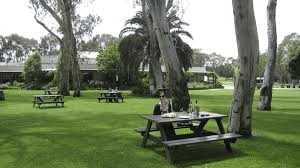
The blue-green Gatsby lawns have hosted friends’ birthdays and Mothers’ Days complete with games of cricket punctuated by adults juggling glasses of shiraz as they toss up feathery off-spinners to free-swinging kids. Today’s stage is adjacent to the North Para River while on the Nuriootpa side gum trees grasp at the azure sky. Between these are about seven thousand folks- and just a few toddlers.
*
Decades ago in Kimba my foot was broken by a behemoth opponent called Gut, and unable to play footy, I spent an enthusiastic month in the pub on the punt. The small and eclectic ensemble of TAB aficionados became my Saturday friends. Although I was the youngest by about thirty years our bond was functional, and it presented a singular entertainment. Isn’t it fantastic to enjoy the elliptical orbits of different friends? Some relationships are founded on footy or golf or wine, and with Nick and Holmesy, they’re (among other things) my music mates.
From our grassy spot, and over cans of Fat Yak we trade reviews. “The new Nick Cave album’s a bit bleak. Warren Ellis is having too much say.” And later, “The Pixies’ latest is a mixed bag. Some good moments, but a few formulaic tracks as well.” Then as Jebediah diffused their sunny pop Holmesy editorialises, “On the new Metallica the pace and fury of the guitars is like they’re channelling Lemmy.”
We’re joined by Trev. He played drums with a few bands back in the 90’s, including one who enjoyed airtime on Triple J. Another was called Imelda’s Shoes, which still amuses me. He went to every single Big Day Out. He’s still in mourning.
Late afternoon and Spiderbait is on, led by hirsute drummer Kram who is energetic like a Labrador, or Rory Sloane. He alternates vocals with bassist Janet English, a Cate Blanchett lookalike wearing oversized glasses and blonde bobbed hairdo.
The band formed twenty-five years back, but she still sings as she did back then, and I’m reminded of how enduring and immutable is the human voice. It’s remarkable. Her singing is innocent, but also as bewitching as the sirens of Greece especially on “Calypso.”
Sunshine on my window
Makes me happy
Like I should be
During one of his uproarious solos the wife says that she has a “drummer crush on Kram,” which is reasonable as, at six o’clock on this particular Saturday, we all do.
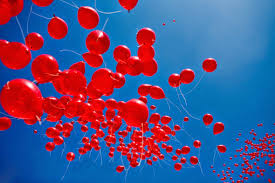
With the Barossa having been settled by persecuted Prussians Janet’s acappella introduces “99 Red Balloons,”
Hast Du etwas Zeit für mich
Dann singe ich ein Lied für Dich
and the bilingual crowd ignites. On my top 100 one-hit wonders list, it’d go top 10 for sure, right next to “Slice of Heaven” and “Harper Valley PTA.”
You Am I is a favourite, but their approach is naive, and confused in application, like the Australian middle-order. Their blue lounge suits promise much, but instead there’s self-parody and simmering agitation, both on the lawns and on the stage. Timmy could chuck a wobbly. I’m unsure if he’s helped by the bottle of wine he’s necking like a Tom Waits sailor.
Around from the prehistoric scoreboard You Am I played a blistering set before last year’s SANFL grand final. At our Day on the Green they do sizzle on “Cathy’s Clown,” but this is swamped by baffling patches of novelty including the backup singers doing, “Nutbush City Limits.”
The last act is a band I always find clinical. Something For Kate’s “Monsters” is wonderful, but like Adelaide Zoo’s two giant pandas Wang Wang and Funi, their set fails to (re)productively connect. However, they cover REM’s “The One I Love,” and it reflects the gorgeous anxiety of the original.
Our recent festival experience was the St Jerome’s Laneway event in Singapore, and this franchise is about the future, the next wave of artists, while Day on the Green looks unashamedly to the past in targetting middle Australia’s healthy hunger for nostalgia. The line-up could have been photocopied from the 1998 Big Day Out program, but this is why we’re here, in our eager dotage.
*
With midnight ticking close we’re back at Nick’s farm in She-Oak Log. Our wives have retired, and we listen to old music and drink new wine. Outside the window his crops sway in the earthy dark, and we toast our good fortune.
In my mind I’ve mapped the itinerary. Of course, a massive RV will hurl us along some of Route 66’s celebrated black ribbon. All the iconic music cities: Chicago, Memphis, Nashville, New Orleans.
On my first sojourn stateside I noticed a Hotel California in Santa Barbara. Just off the handsome esplanade of palm trees and roller-bladers, it was unexpectedly modest. Of course, I didn’t go in because, as the Eagles cautioned back in 1976, the leaving gets a bit tricky.
It may surprise that Kansas is a personal musical attraction, and more particularly its largest metropolis. Why? Jimmy Webb’s “Wichita Lineman” as performed by Glen Campbell.
Like many remarkable artworks; Mona Lisa and The Great Gatsby spring to mind, it’s smaller than anticipated, coming in at only 117 words, which, let’s understand, might only be part of a Dylan verse, as magnificent as the Noble Laureate is. Webb could’ve penned this song on a beer-coaster.
With only two verses and a fractional refrain, it’s also chorus-free. Each verse opens with a modest personal observation
I am a lineman for the county
And I drive the main road
And then in the second
I know I need a small vacation
But it don’t look like rain
Whilst the song is simple in structure, its meaning is complex, and following each verse’s introductory image we find an abstract idea
I hear you singin’ in the wire
I can hear you through the whine
There’s expert use of alliteration here with “wire” and “whine” as the lyricist announces our central character’s romantic yearning. As many could attest living and working away from loved ones is tough, although the narrative’s about being lonesome, but not lonely. It’s also solemn, but not melancholy.
Like so much in life my “Wichita Lineman” journey is circuitous. I’d always known the song as Mum and Dad had a Glen Campbell record or two, but was alerted again to its genius by REM, who’ve performed it occasionally.
My thinking was that if Michael Stipe liked it then it must be magnificent, and his plaintive singing invests it with quiet elegance. Sometimes we need to come to something through a third party, like overhearing a stranger remark how great your friend is, which makes us smile and remember why we liked them in the first place. From time to time we all need this reassurance.
Sparsely presented but broad in their evocations, the peak of Webb’s craft is
And I need you more than want you
And I want you for all time
Here, he arranges simple words into a profound sequence, and these are among my favourite lyrics. Have you heard anything more romantic?
Rightly called the “first existential country song,” the considered angsts of an electrical worker in Kansas are as instructive as any, but they’re also universal in their poignancy. There’s aching authenticity of voice too, and his earthly investment is real. Someone once said that it’s a song about nothing, but also a song about everything.
Is it country music or a pop song? Probably neither, probably both.
One muggy Singapore afternoon I was with friends in an Orchard Road bar, bursting with American sailors. Drowning their final hours of shore-leave before departing for Iraq, we talked with a few of them. Already some were homesick and missing their family, while others were eager for some desert adventure.
Above the throng a vast TV screen played continuous country music: awful, thoughtless fodder. Think, “Achy Breaky Heart” but without the subtle insights into the human condition, and majestic instrumentation.
Between Budweisers I said, “Hey Colin, have you noticed that every singer is wearing a Stetson?” Considering the televisual entertainment Colin took a swig, and replied, “Yep. Uncanny, isn’t it?” Indeed, the primary musical skill seemed to be the generally accurate and unaided wearing of a hat.
That night there was no “Wichita Linesman.” On the cusp of its fiftieth anniversary it transcends the dusty prairies, and remains suspended above time.
It’s the perfect distillation of hope. Play it to someone you love.
*
I am a lineman for the county
And I drive the main road Searchin’ in the sun for another overload
I hear you singin’ in the wire
I can hear you through the whine
And the Wichita lineman is still on the line
I know I need a small vacation
But it don’t look like rain
And if it snows that stretch down south
Won’t ever stand the strain And I need you more than want you
I’ve only just parachuted into an intriguing world: the music of Mark Kozolek. Named after a Korean light-weight, his current project is Sun Kil Moon and many of the lengthy, digressive songs reference boxing and death.
Along with Paul Kelly’s 1989 song, “Everything’s Turning to White” the film Jindabyne was inspired by the Raymond Carver short story, “So Much Water So Close to Home.” In it a matriarch laments the passing of her daughter, “When people die in the wrong order, that’s when it all turns to shit,” and Sun Kil Moon explores this, every parent’s dread, in a ten-minute epic on the recent collaboration, Jesu.
Exodus
Continuing the boxing motif this track is entitled after Mike Tyson’s late daughter, and she is but one mentioned in a catalogue of the tragically-taken, including Nick Cave’s twin boy Arthur and the son of San Franciscan author Danielle Steele, gone at nineteen to heroin. Whatever your religious position it’s hard not to nod at this
I don’t believe in God, but sometimes I hope there’s Heaven
In the middle section of this funereal hymn the singer then lists those he’s personally known who also departed early, and the effect is haunting.
We recoil: this poor man’s drowning in death.
My cousin Carissa
My friends Chris’s, Brett’s, and Dennis’s
And my ex-girlfriend Katy’s mum and dad
All became a part of the family of bereaved parents
Sprechgesang is a German operatic style characterised as a hybrid of singing and speaking, and matches perfectly Kozolek’s worldview. The mundane and the poetic sit together atop a twinkling piano as he conveys a stream-of-conscious monologue. It’s strange and compelling and in stunning effect on “Exodus.”
Fittingly, the song closes with a chorus and the lead singer harmonizing on this simple refrain
For all bereaved parents- I send you my love
Sun Kil Moon aficionados know that the opening track from the previous record, Benji, documents the sudden death of Kozolek’s second cousin, Carissa, and the intertextuality of these amplifies the impact. Their discography functions in ways reminiscent of Robert Altman’s 1993 opus, Short Cuts which weaves together nine Raymond Carver stories. These have been described as “K-Mart realism,” and the plaintive grittiness applies here too.
Among the Leaves
In contrast is the title song of his 2012 album. With its rousing strings and themes of generosity there’s melody and sunshine, and the lyrics arrive through a warm baritone as Kolozek invites a homeless girl to use his downstairs room when he’s away on tour.
I’m away for weeks, arrive at night
She hears my steps, turns off the light and runs
No mind at all, more space than I need
It’s just me among the weeds, among the ghosts, among the leaves
But with mention of ghosts we again note that death is unceasing, even in this effervescent context. There’s resignation, and no evasion from this deepening shadow. Despite this, Kolozek welcomes the light through the windows; the universe is not utterly dark, and we must keep offering, connecting; forever alert to the possibilities
When evening comes I play guitar
For the planets and the stars
I leave the porch light on
Like I do when I’m gone
Winter, spring, summer, fall
Basement’s yours, have a ball
Sun Kil Moon is a confronting aural space. There’s elegy, confessional crush, and the open pages of a diary you’d rather didn’t catch your eye on your way past.
But it’s uplifting and cathartic, and we learn how even obscure Korean boxers can instruct our tiny lives.
It was a hot day in Tanunda and lunch was done. A Sunday, there was energetic engagement with some Carlsberg lagers, and sitting in the garden, Nick and Holmesy1 agreed that these were excellent session beers.2
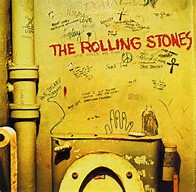
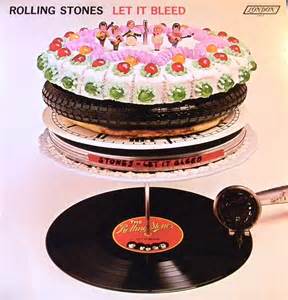
Of course, there was music. In its desolate, dirty beauty Let It Bleed burst from the outdoor speakers, and I now confess to you, dear reader, that I’d not heard it before. What had gone so wrong for me? My diet had been confined to Get Your Ya-Ya’s Out, Tattoo You 3, and various compilations.
Nick and I saw The Rolling Stones at Football Park in 1995, partly driven by fear of Keith’s mortality. Why did we worry? But I hadn’t properly investigated them as an albums band and was denying myself history’s ultimate run of releases.
Beggars Banquet. Let It Bleed. Sticky Fingers. Exile on Main St.
For me their 1969 record is their best, and while its bookends of “Gimme Shelter” and “You Can’t Always Get What You Want” are correctly celebrated, there are other songs worthy of our attention.
Let It Bleed
This song is so languid; it could be summer in Tallahassee. Each component: guitars, piano, drums and vocals is lazy and loose. The slide guitar and autoharp evoke places remote from the band’s London home while Charlie’s drumming, especially on the outro, is spectacular.
Twenty-year-old Mick Taylor debuted on the album which would be the last for Brian Jones, so incapacitated by drugs and drink that his contributions were minor, and indeed he was soon lost to music, lost to himself. Drowned.
On blossoming display is the genius of Jagger’s singing as his vocals assume an American country twang that could’ve fallen into parody, but here is homage. Over the ensuing decade he’d continue these reverent performances on tracks such as “Dead Flowers” 4 and “Sweet Virginia.”
Damningly, I’ve never heard the song on Australian radio, but its sexual decadence and portraiture would henceforth define the band.
I was dreaming of a steel guitar engagement
When you drunk my health in scented jasmine tea
But you knifed me in my dirty filthy basement
With that jaded, faded, junky nurse oh what pleasant company
You Got the Silver
For me “Jumping Jack Flash” is caricature. As hard rockers they’re competent, but this is uncomfortable territory; they’re in the wrong church. Nashville and the Mississippi Delta appeal to the band more than Chelsea.5 Blues and country rock are their spiritual habitat.
I’d never appreciated Keith as a singer. But on this song, the first on which he’d take lead vocals, he adopts a character so plausible, in such robust sympathy with his public persona, that it creates a compelling world. Its antagonism was likely inspired by Richards’ then girlfriend Anita Pallenburg, which gives it bemused venom, a telling context.
Hey babe, you got my soul,
you got the silver, you got the gold
A flash of love has made me blind,
I don’t care, no, that’s no big surprise
Both songs reveal The Rolling Stones’ song writing and performing powers, but within a genre not commonly acknowledged. These show imagination, a hunger to grow musically, and remarkable poise- especially as they were not yet thirty.
Our age of downloads and streaming services has made a curio of the album concept, but Let It Bleed is a record of a time and a place that denotes the stratospheric talents of Mick and Keith and their coterie.6
Play it this summer in its ragged, murky entirety. Over a couple Carlsbergs.
Footnotes
Their real names.
Session beers do not include either Coopers Sparkling Ale or Carlsberg’s Elephant beer. Failure to realise this can be catastrophic for all involved.
Tattoo You came out in 1981 and was played on cassette in many HQ Holdens in Kapunda, the town of my youth. “Slave” was an audio calling card for many as we could hear our mates coming around the corner before we saw them, especially for some reason, late on Sundays before we’d go to the Railway Hotel.
A wonderful version of this song by Townes Van Zandt features during the end credits of The Big Lebowski. It captures the laconic nature of the film magnificently and links thematically to The Dude, “possibly the laziest man in Los Angeles County.”
Chelsea, the west London suburb mentioned in “You Can’t Always Get What You Want” the album’s closing song about disillusionment.
Ian Stewart and Nicky Hopkins contribute brilliant piano throughout the album. Merry Clayton’s background vocals on “Gimme Shelter” are rightly recognised as iconic, and in the view of this author are the best of all time.
Gee, I love the early nineties. Indeed, my wife has often remarked that I’m still living there. She may have a point. So, I’m listening to some old songs. Here’s two that reverberate.
Girlfriend- Matthew Sweet
I remember the first time I heard Triple J. I was driving around Adelaide on a Saturday during 1990 in my VK Commodore. Roy and HG and This Sporting Life was on, and Roy was telling of the occasion he was marlin fishing off Bermuda with It’s a Knockout host Billy J. Smith, Kylie Minogue and celebrated cricketer Steve Waugh. He narrated with such earnestness that like all good satire I believed him for a few minutes.
Back then Helen and Mikey did the breakfast shift on Triple J and it remains the most exciting, deranged radio I’ve heard. They regularly played Matthew Sweet’s “Girlfriend.” It’s power pop perfection with its exhilarating, urgent guitars and ambiguous lyrics. It still transports me back to 1992 when I and Greg Anderson both sported (unironic) mullets.
A few years later Mikey was still on breakfast, but with the Sandman, and this happened.
Sandman: I’ve often wondered what it’d be like to be a woman.
Mikey: Come here.
I’m not sure if Matthew Sweet is a one-hit wonder, but “Girlfriend” endures as a glowing artefact from a fun time.
Saints- The Breeders
Emerging as a Pixies side project for Kim Deal, their signature song is “Cannonball” from their album Last Splash. I bought this when I was down from Kimba, in Adelaide to undertake my first City to Bay fun run. My aim for the gently downhill twelve kilometres was modest. I wanted to break the hour mark.
The run was Sunday morning, the day after the 1993 preliminary final between the Adelaide Crows and Essendon Bombers. I watched it in Magill with a couple mates who were enjoying some footy beers. Adelaide was up by 42 points at half time. How exciting was this? We were going to our first grand final!
As things unravelled in the second half I was tempted to apply some medicinal lagers, but resisted as I’d been training for two months. Of course we lost and a week later Essendon claimed an unlikely premiership.
I completed the run in 58 minutes.
Last Splash is an eclectic listen comprising surf music, off-kilter ballads and infectious pop. “Saints” recounts a summery day at the fairground, but through an alternative prism. There’s disconnected imagery and a driving beat with Kelley Deal on a growling guitar. Invited by her sister Kim to join the band as a guitarist presented but one problem: Kelley did not know how to strum a chord. “Saints” shows she picked it up pretty well.
The following Christmas I was in Wellington, the capital of New Zealand, on a Contiki tour. I learnt that the Breeders were playing a small venue around the corner from our digs. I didn’t go because I had to drink Steinlagers in a pub with other Australians and talk footy and cricket. As Australians do when overseas in beautiful places they might never again visit.
The opening track on Belle and Sebastian’s debut album Tigermilk is “The State I’m In” and this vignette hosts some memorable characters. I first really listened to it on Karon Beach in Thailand, and often played it walking around Singapore beneath her towering skyscape. The jangling, Byrds-like guitar adds to its sunny glow.
The initial verse contains remarkable personal and family detail, and insight into our narrator’s psychological condition. “The State I’m In” utilises language in clever and complex ways to create vivid characters. The first line’s hyperbole offers humorous, arresting insight into our narrator.
I was surprised, I was happy for a day in 1975
I was puzzled by a dream, stayed with me all day in 1995
These simple, matter-of-fact, year-specific declarations engage the audience by provoking many questions, and the revelations continue through the following verse
I got married in a rush to save a kid from being deported
Now she’s in love
With this we learn that he’s compassionate, and even self-sacrificial, but then wonder who the girl’s now in love with: is it our narrator, or another? He then recounts another relationship in which he has been vulnerable: that with the priest whom takes his admissions, breaks confidentiality and the Seal of the Confessional, and turns these into art
He took all of my sins and he wrote a pocket novel called
“The State I Am In”
By the finish of the opening stanza’s confessional intimacy we’ve learnt of the family’s dynamics, challenges and history courtesy
He stood up with a sailor friend
Made it known upon my sister’s wedding day
We then hear the final affront where his highest authority hesitates before belatedly accepting our narrator; no wonder he’s in a despondent state
So I gave myself to God
There was a pregnant pause before he said ok
His self-loathing finds pathetic and final expression in the song’s last verse
Now I’m feeling dangerous, riding on city buses for a hobby is sad
The language used in the lyrics is deceptively simplistic, but depicts vivid characters.
With this complex domestic context established our protagonist, or possibly antagonist, reveals in a striking act that shocks
I was so touched, I was moved to kick the crutches
From my crippled friend
Is this truth, or is it a comedic device; a strange metaphor? Certainly its oxymoronic nature invites deeper thought. Should we be horrified, amused, or both? Subsequently the narrator confesses this act of violence, and events take another unexpected turn with the priest acting immorally.
We find dark humour in the idea that a religious figure would steal a story and publicise it in a novel. Little wonder that our main character is disturbed! With this development the song title is invested with wicked irony that generates sympathy.
This powerful vignette catalogues key moments in the narrator’s life as he seeks purpose and meaning. The final image offers a positive picture of one, troubled as he is, wanting to do earthly good. There’s poignant use of circularity with the repetition of previous detail
Lead me to a living end
I promised that I’d entertain my crippled friend
My crippled friend
Expertly using first person perspective, the lyricist provides understated descriptions to provoke us, and our reactions encompass the witty, the sad, and the frightening. Belle and Sebastian have created some vivid characters, and this song invites deep contemplation.
I’m at the game tonight, but would’ve been happy at home as it’s the last Friday night, minor round clash to be called by Dennis Cometti. With his 1970’s AM radio drive time vocal stylings he’s become a cherished feature of our game. Combining this with precise description and fabulous wit has made him iconic.
“Gasper, the unfriendly post” is his best line in a galaxy of gems. Imagine his joy as the Sherrin was launched by the star Tiger and banged into the upright. How long must he have sat on that?
My personal metric indicating his influence is that every time I say in my head, “West Coast Eagles” I can only complete it in the voice of Dennis. And now like the famous definition of an intellectual: a man who can listen to the William Tell Overture without thinking of the Lone Ranger, I challenge you to silently repeat, “West Coast Eagles” but not in the honeyed tones of Dennis. See? Impossible.
We saw the 2006 preliminary final at Footy Park between the Crows and Eagles in which we were ahead comfortably at half-time. Probably cursing us, a friend texted- We’re going to the GF. As Ben Cousins gathered disposals at will and shrugged off desperate, lunging Crows in the second half, and the result became certain a mate grunted, “Bloody Cousins is killing us. It’s like he’s on drugs.” Mmm.
Drafted as an emergency ruckman former Kapunda boy and church minister offspring Jonathan Giles is at his fourth AFL club having been at Port, Essendon, and most productively, the Giants. He enjoyed an interregnum at Sturt where he won the 2010 best and fairest, while his SANFL life started at Central District. I’d like him to next go back to Kapunda and win a flag, then go to Glenelg and do the same before finishing his career, like many a road movie, in Fort Lauderdale. His “Places I’ve Played Footy” Facebook app is busy.
Giles is brilliant tonight, and makes the Crow ringleader appear tired. Interviewed after the match, Sam Jacobs confessed, “The only one who could ever outreach me was the son of a preacher man.”
As has been the season’s pattern the home side is sloppy early, and save for a couple clean bursts, this endures all evening. The Eagles apply good pressure across the ground and we make catastrophic quantities of errors in every facet of the game from kicking to handballing to dropping easy marks to unplumbed decision-making, most notably when Lyons snapped at the Riverside goal and missed, instead of getting it to a team-mate in the square. I’m also certain that for their post-match meal some of the Crows even went the tofu option.
It takes the Crows twenty minutes to register a major and this comes through McGovern. At the other end the Coleman Medalist is murdering us, continuing the long relationship between grassy expanses, deadly accuracy and Kennedys. He gets five in a solid outing.
Gaff, Priddis and Shuey are getting industrial volumes of ball, and we don’t seem to be doing much about this. Having reinvented himself as a half-back flanker, former Hoodoo Gurus guitarist Brad Shepperd is going well. Good times for him, indeed.
Local highlights are rare, but Tex offers some after midnight insights with his deft footwork in the centre before it lobs to Eddie who goals. The competition’s biggest scoring forward line has a Bolivian prison evening with but two majors to its members.
Our third quarter is goalless. Someone later comments that the match felt like a forfeit. Let’s hope the Adelaide Crows’ 600th game was an exorcism.
Leaving a sullen Adelaide Oval as the West Coast Eagles song plays I realise where I’ve heard it before. It was in 1985 during the final credits of a (bad) Andrew McCarthy film.
Belle and Sebastian is a Glaswegian indie band formed in 1996. Named after a French children’s television series, their nine albums have received critical acclaim, and are known for their literate and wistful lyrics. I enjoy how characters and narratives feature in their songs so decided to investigate the ways language is used.
*
“Dress Up In You” comes from their 2006 album The Life Pursuit. Characterisation is a key element in this song. Establishing who the people in the song are is our first problem as the identities of the singer (the narrator) and the person they’re singing for (the addresse) present challenges for the listener.
The song is sung in first person, with lead singer Stuart Murdoch beginning,
I’m the singer, I’m the singer in the band
You’re the loser, I won’t dismiss you out of hand
This appears straightforward and autobiographical, and an obvious interpretation is that he’s (assuming Murdoch is singing as a male character) addressing a fan or groupie. “You’re the loser” is brutal, but suddenly softened in the next line.
As quickly as Murdoch presents this relationship he changes it, with a simple couplet that is striking
Cos you’ve got a beautiful face
It will take you places
He has rapidly moved from calling the addressee a “loser” to “beautiful.” Either way the relationship seems to only exist in the present tense, and might be temporary. However, in the second verse he again surprises us by revealing more about the two characters and the progression of their relationship.
You kept running
You’ve got money, you’ve got fame
Every morning I see your picture from the train
Now you’re an actress!
Typically for Belle and Sebastian, humour and sarcasm are employed to good effect, and here these help to establish both the narrator and the model who was once a friend and then a rival. Interestingly, the last line is also a cliché which softens the impact of the observation
Now you’re an actress!
So says your resume?
You’re made of card
You couldn’t act your way out of a paper bag
The great American writer, Norman Mailer, said that writing ultimately concerns the nature of power, and this is true here for in six lines we move from the narrator calling the other a “loser” to now confessing that he/she can “see your picture from the train.” This implies that the narrator has a regular job and sees this other person, a model, on a billboard, presumably in an advertisement. With sparse lyrics Murdoch conveys vivid characters and an intriguing relationship. This continues with the accusatory
You got lucky, you ain’t talking to me now
Many listeners might’ve realistically presumed their relationship was romantic, but yet again the lyricist changes our view by gradually disseminating information: it was platonic and sisterly. Murdoch leaves the precise nature of their connection unspoken with use of what Keats called Negative Capacity
We had a deal there
We nearly signed it with our blood
Antithesis is used by the lyricist to suggest the complexity of the relationship, and show that the narrator and the model were once close, possibly when they were at school. Their relationship has changed over the years, and this drives the narrative behind the song
You give me stomach pain
I wish that you were here
This sudden and dramatic revelation keeps the listener engaged, and its twin emotions of revulsion and longing evoke a relationship dynamic with which many would associate. Belle and Sebastian is perceived as bookish, and literate, but the diction within this song is plain, and casual: suitable for a personal monologue.
As the narrator’s anger lessens, he becomes confessional, with an accolade that’s metaphorical and striking
If I could have a second skin
I’d probably dress up in you
This couplet is telling for the use of the pronoun “We” which confirms the strong connection the two characters once shared. In a surprisingly minimal number of words the lyricist has depicted a complex relationship between two contrasting people. Given the song’s initial representation of the relationship, the title is startling, as it is most complimentary metaphor
The divergent paths the lives of the two characters have taken are symbolised by the crisp imagery of
You’re a star now
I am fixing people’s nails
with the former evocative of glamour and travel, and the second connoting a mundanity and suburban imprisonment. This song uses language with deceptive simplicity in creating haunted and wistful creatures.
In the final verse, the full extent of the truth; the gritty reality is laid bare for us, and we see just how mislead we were in the song’s opening, only a few minutes previously
You’re a star now, I am fixing people’s nails
I’m knitting jumpers,
I’m working after hours
I’ve got a boyfriend, I’ve got a feeling that he’s seeing someone else
My own musical career was fleeting. When I was eight I learnt guitar until the teacher moved, and Kapunda being a country town, that was it. I remember strumming in that measured, funereal way to “Banks of the Ohio” and being uneasy at having to sing
I plunged a knife into her breast
And told her she was going to rest
She cried “Oh Willy, don’t murder me
I’m not prepared for eternity.”
*
While at university I discovered Vince Jones, jazz vocalist and trumpeter and his album For All Colours. Its sophistication reminds me of Frank Sinatra, and “Straighten Up and Fly Right” stars a rowdy Wilbur Wilde sax solo. I then knew that the saxophone could be as cool as a guitar.
The first concert I attended was Midnight Oil at Memorial Drive (Julia) and Vince Jones at Le Rox in Light Square was the second. Standing with other students in the airless dark I note that Vince wears a suit and tie, and in contrast to Peter Garrett’s frenzied jumping the jazz ensemble appears uninterested.
But, I was in. Jones himself once said, “I want to be inside every atom of every note.” Over the next decade I saw him often, usually in the Piano Bar of the Festival Theatre. And then, I don’t know why, he stopped regularly touring Adelaide.
*
One wet Saturday in England I heard a BBC Radio 4 documentary on John Coltrane’s A Love Supreme, so immediately jogged up the high street to a HMV and bought it for ten quid. And as rain and sleet lashed our windows, its saxophonic hymn brightened the crushing winter sky.
The storms of Coltrane’s personal life thundered in counterpoint to the spiritual still of A Love Supreme, and within two years of its 1965 release he would be dead.
*
One distant summer some Kapunda boys and I drove across the Hay Plains to spend a fortnight in Sydney with an air-traffic controller mate. He was among rude privilege in a Drummoyne apartment. We parked Woodsy’s Datsun 180B on the street. As we’d daily exit the Western Distributor there was a looming billboard with a huge fanged spider warning us to watch out for funnel-webs. We did. I still do.
Besides playing cricket by the Parramatta River, and body-surfing at Bondi and Curl Curl I hauled everyone to The Basement in Circular Quay. I was a fan of Live at the Basement on ABC Saturday evenings, and Galapagos Duck was the house band, and Don Burrows and James Morrison were often guests. I can’t tell you who played that sultry evening, but I liked it. The wooden tables, the ambiance, the enveloping melodies.
*
Among the more brilliant things about living in England is chucking a sickie, and knicking off at dawn on a Friday to another country. Easyjet flew us from Luton to Cologne so we could explore their Christmas markets.
The city is largely unremarkable save for its compelling cathedral; the Dom. With twin spires ascending to 515 feet, it was the world’s tallest building until the Washington Monument. Similarly astonishing is that in 1162 Emperor Barbarossa secured for the Dom the authenticated remains of the Three Magi. We drifted about its vast interior and leaving, presented some Euros to a nodding priest.
Papa Joe’s En Streckstrump is Cologne’s premier jazz venue so we find our seats early for Sun Lane Ltd, an ensemble from nearby Aachen. Slender waitresses disperse wine and beer. We can scarcely see through the stinging blue smoke. The punters surge in. Bespectacled, ample musicians squash timorously onto the picnic-rug stage. The pianist looks like a sheet has been stretched about a lumpy, wobbling refrigerator.
Standing unnaturally close, an energetic type suddenly clambers up and straddles a nearby stair- and me, as if he and I are posing for a gay fire-fighters’ calendar. I am startled. Forgetting that Europeans are often bilingual I blurt, ‘What the fuck are you doing?’
As the gentleman dismounts the step, and my groin, I mutter, “Thank you.”
“You’re welcome!” my intimate twitters.
“Say what you really want!” adds his friend. We don’t see them again.
The traditional jazz is brisk and zestful, and spilling out onto the Rhine’s bank Nina’s “99 Red Balloons” bursts from a heaving club. Lingering at the chilly Alter Markt, the wife sips a concluding gluhwein; the spiced, red wine and we confirm that Cologne jazz goes pretty well.
*
It was nearly an hour commute across Adelaide’s most miserable suburbs; Snowtown territory. After many months afternoon radio had become tiresome; especially when the old-age surrender of organising life around news bulletins, those ridiculous frissons began, so I fought this inevitability, by committing to Miles Davis. I submerged myself in Bitches Brew.
Menacing and swirling about you like a phantasm, the music is a sexual maelstrom, and its recording began within hours of Hendrix and his pyrotechnics at Woodstock. Was it jazz? Was it rock? Was it funk? I wasn’t sure, but I again knew that the trumpet could be as cool as a guitar.
Despite its ominous cadences and rhythms, I found it transportive and therapeutic as I’d make my way home to the beach. Bitches Brew is vital to jazz-fusion, and while the opening two tracks are rightly celebrated, “Miles Runs the Voodoo Down” on side four is the standout. I still love getting lost in this 94-minute ocean.
*
This story begins with Mum and Dad’s record collection. Don’t they all? In among the usual 1970’s fodder of Ripper ’76 and the Best of Abba there’s some curios, and in the not on 5AD or 5KA and certainly not on Countdown section are some jazz albums, one a Dixieland compilation. I don’t especially recall any of the tracks, but these made significant impacts upon my psychology and vocabulary.
The jazz evoked widescreen travel and the speaking of strange tongues and moving about in dazzling metropolises that one day I might be permitted to visit. It was New York and Chicago and New Orleans. It wasn’t that I was trapped in dusty little Kapunda, it was that a planet was out there, and Mum and Dad’s jazz records captured these teeming, thrilling possibilities.