2

Dutton Park at Dawn — What Had Happened Over There

Between the golf course’s pine trees, I could see the vast trotting track complex. I thought about what had happened over there. For me it was never about horses — trotting, cantering or otherwise. I continued to run along the fairway.

The trots used to happen on Tuesday nights. Officially, it was a harness racing club, although everyone called it the trots. It was a significant industry for Kapunda, and I remember going there with Dad when I was in primary school. He worked behind the bar. It was run by George Hutton, the Sir John Franklin hotel publican.

I knew the four Hutton boys and played cricket with the blonde twins. With his deceptive swing bowling, Craig took a hat trick one afternoon at Lyndoch. George’s mountainous frame and fierce face always encouraged my best manners and best attempts at invisibility.
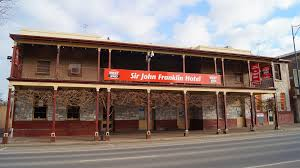
A roller-skating disco happened one Friday night on the asphalt inside the betting ring. It was the winter of 1979. Lots of kids were there. I had never put on a pair of skates — roller, ice or otherwise. Mum dropped me off in the green Ford Falcon. The DJ was moustachioed Tarlee farmer, Tony Clarke.

For me roller-skating was staggering about going clunk, clunk, clunk and lunging desperately for the safe harbour of a pole or bookie’s stall. I had no idea how to start and less idea how to stop. I was not alone. I spent most of the night instigating or receiving collisions.

There was a game of spin the bottle. I won. Arms flailing like a drowning man, I wobbled over to Tony Clarke and his turntables to collect my prize. The fifteen minutes which followed were a highlight of my brief life. I instantly found a minor celebrity — at least among Kapunda High kids.

Yes, dear reader, I had won Racey’s new single Some Girls. You know, the UK pop band. That’s right. It was their follow-up to Lay Your Love On Me. I think my fame lasted longer than Racey’s despite lyrics like these:

Some girls will
Some girls won’t
Some girls need a lot of loving
And, uh, some girls don’t.

Waiting in the carpark to be collected, the black vinyl single was handed around like a diamond. Year 9 and even Year 10 girls I would normally never dare speak to were impressed, saying things like, ‘You’re so lucky’, ‘This is really cool,’ and ‘How fantastic are you?’ Actually, I made the last one up. But I was sure this record would change my life.

Sliding into the green Ford Falcon a few minutes later, my fame dissolved into the night sky above the trotting track.

*

In the misty morning, I slip back through the golf club fence and pause by the footy clubrooms. Although I know what’s behind the windows, I gaze through them, before finding a veranda bench.

Footy clubrooms are about so much more than footy. They enter our lives through the game, but over time they become places for so much more. For many, they’ve become a kind of church. I wondered about the equivalent buildings in other countries. Village halls, school gymnasiums, even pubs.

I remembered my cousin Boogly’s 21st one July evening, and driving back from the West Coast for Paul O’Reilley’s, too. There were others.

At Boogly’s there was a table by the door groaning with cards and gifts. Lots of wine and spirits bottles. I was inspecting them when somebody pointed at a small plastic item and smirked, ‘I got him this.’ Boogly was on a government-initiated sabbatical from driving but would soon be back behind the wheel. Giggling, I replied, ‘That’s funny.’ The gift in question was a set of plastic P plates.
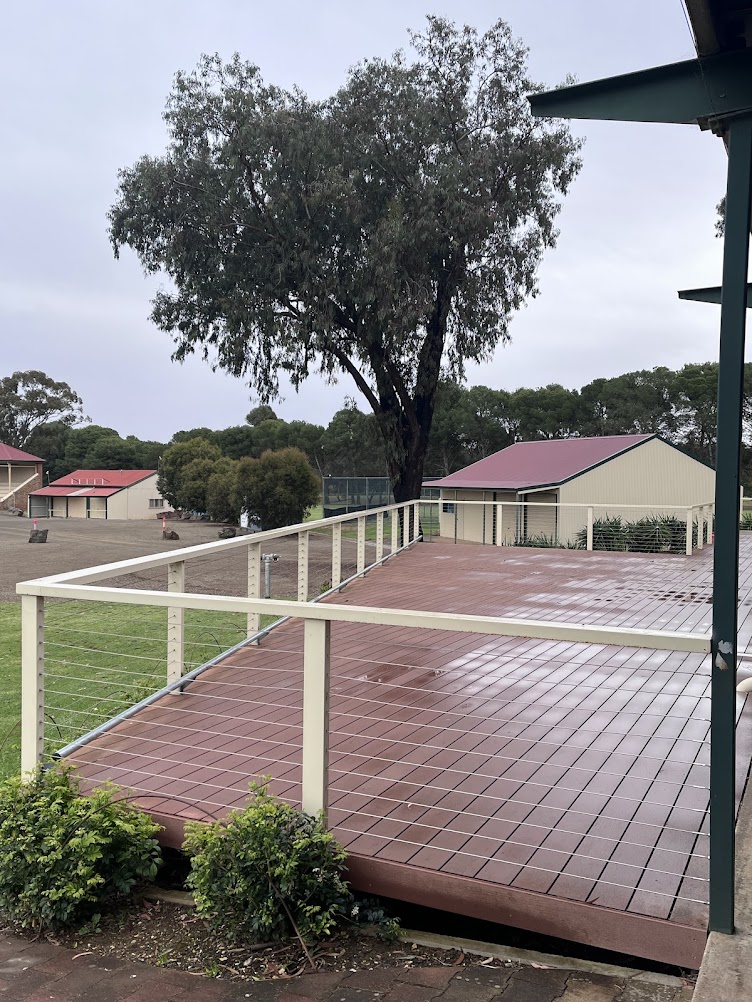
Paul and Sharee White’s wedding reception was held there in the early 1990s. Driving back to Kimba on Sunday, I remember going through Yacka and despairing that I still had over four hundred kilometres to go. Maybe that final glass of shiraz was a mistake. I nearly had a yak in Yacka.

The oval was still deserted although the rain had ceased. Looking up to the trotting track with its vast bumpy interior, a succession of jumps had been set up for the Horses in Action. This was the second day of the Kapunda Show.

In June I had gone to the footy club for the funeral of my dear Uncle Des Ryan. Trucks were a big part of his life, and they were on this day too. We all stood outside watching and listening as a prime mover slowly rumbled off for his final drive.

There were speeches and stories that made us laugh and cry. Cousins I hadn’t seen in years were there. Hands were shaken and hugs were offered. It was a funeral, of course. It was also a reunion.

*

When Claire and I planned our wedding reception the only choice was the Kapunda Football Club. We spent the Friday organising fairy lights and table decorations. As the wind picked up, we wondered how the ceremony weather might go on the Kapunda High School lawns. Saturday was blustery and there was early, slashing rain.

After the photos, Claire and I arrived at the footy club around dusk. I remember the welcoming cheer not for its volume but rather the enveloping warmth and triumph. There was music and dancing, speeches and pizza. The clubrooms were largely as I remembered them as a little kid. I was glad they hadn’t changed much.
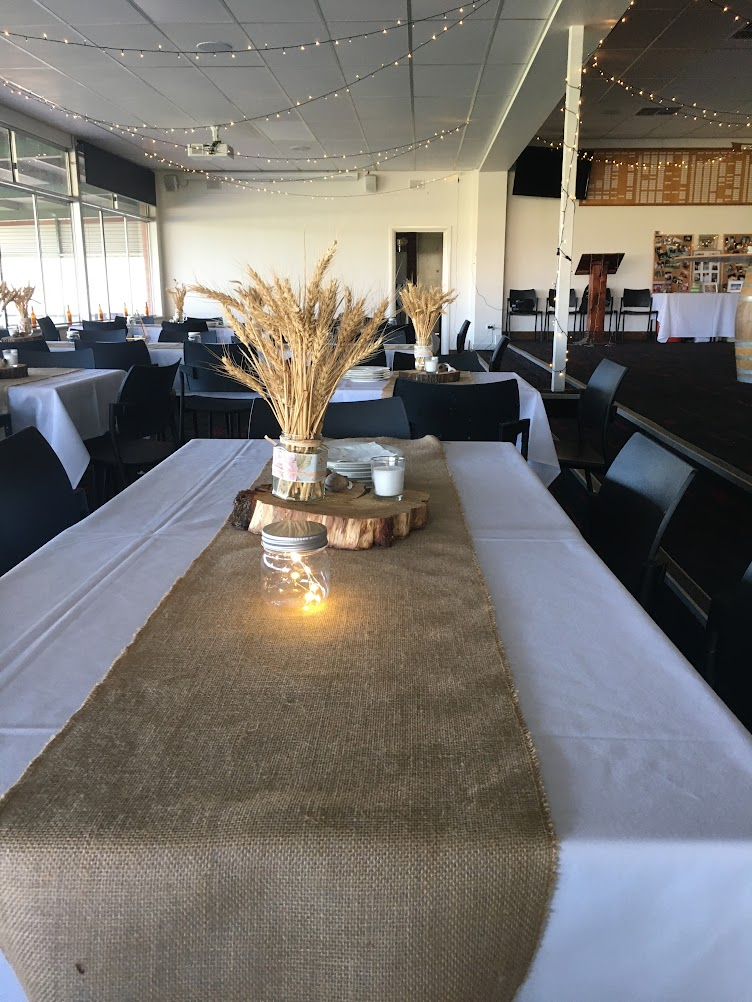
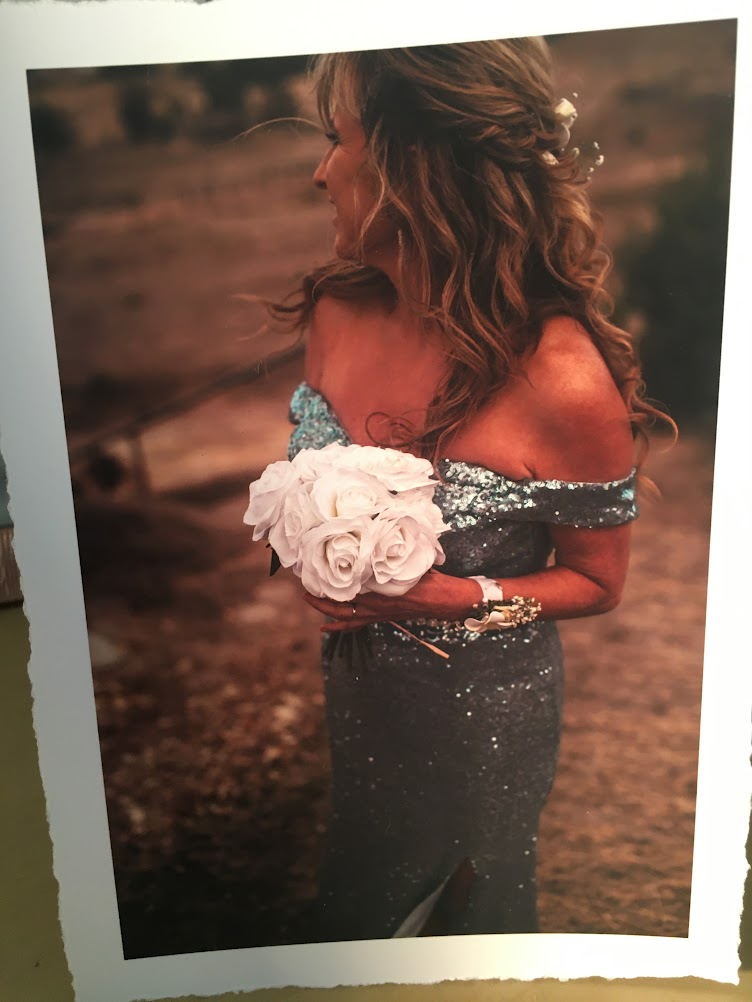
Ours was a wedding reception many decades in the making. From the moment we met at thirteen during a Kapunda Primary School fete. Claire’s speech was exquisite. It concluded:

Michael Craig Randall, whether it was as young sweethearts, or as the best of friends, I have loved you. But we just had to wait. And we waited well. With faith, love and grace in our hearts.

Dutton Park was the theatre of so much of my young life, my Kapunda life. It had borne quiet witness to our unfolding lives. In its caring, if sometimes rowdy way, the village had done its duty. I smiled at all of this. It was great to be home.

Standing up from the bench, I glanced one last time at the distant scoreboard and jogged back to our sleeping cabin.
If you missed part one, here it is! https://mickeytales.com/2026/11/08/dutton-park-at-dawn/
7

Dutton Park at Dawn

At dawn, a thunderstorm rumbled overhead. The night before at Woodsy’s party there’d been laughter and stories. Some find these occasions difficult, but I’m heartened by the continuing connections in our broad cohort. I eased open the cabin door to Sunday morning. Nobody was about.

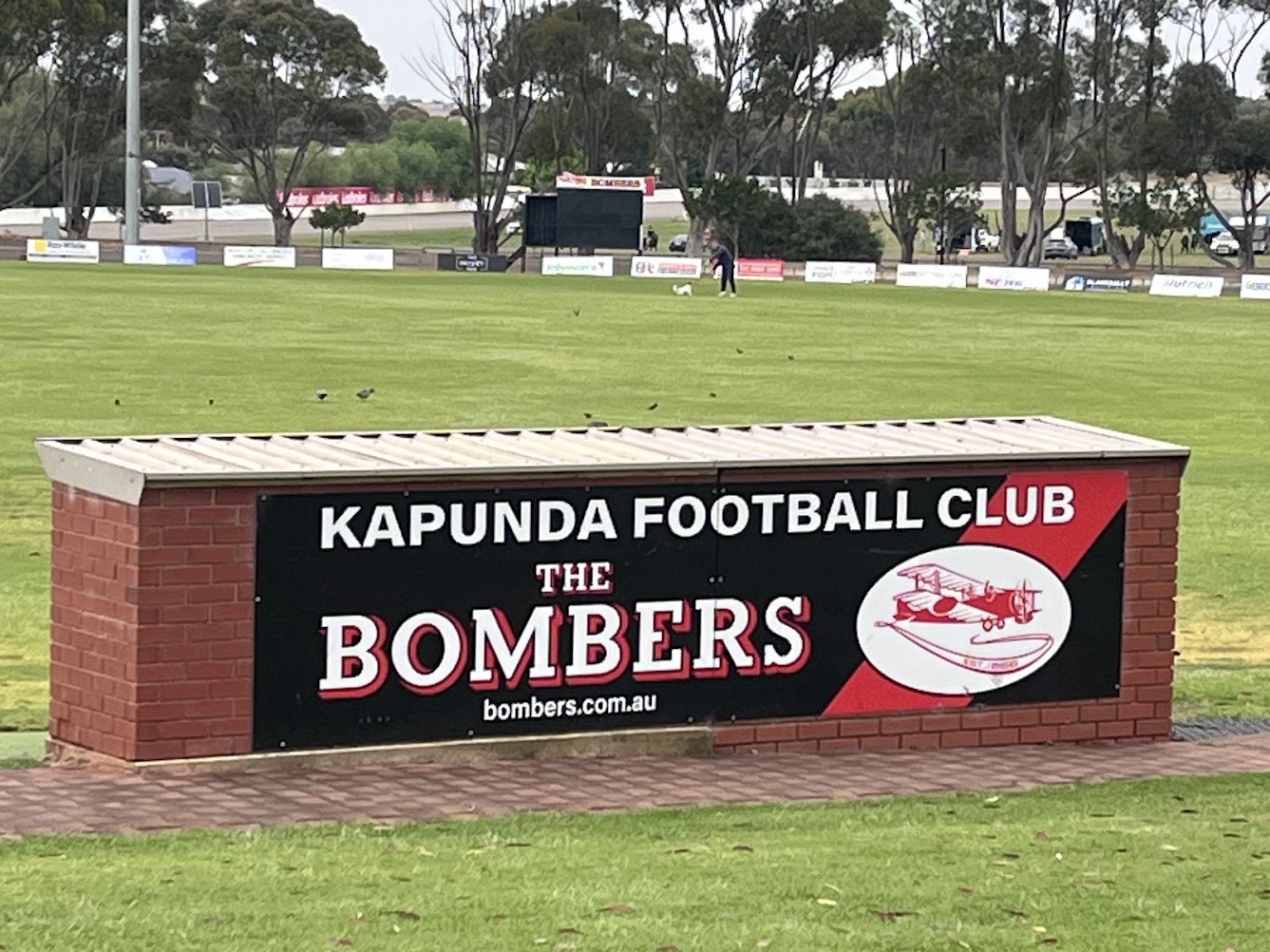
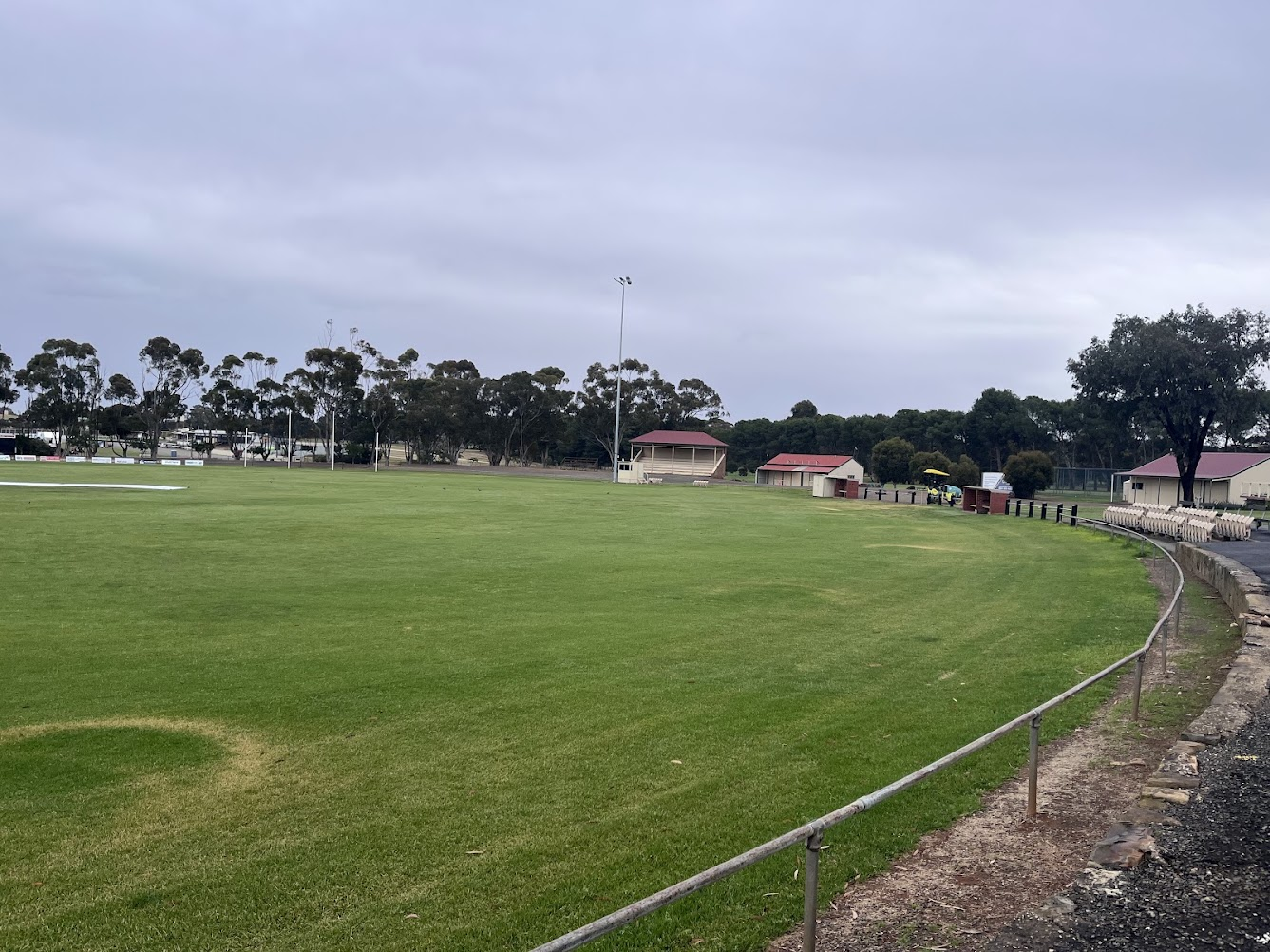
Jogging past the caravans and tents, Dutton Park’s sloping bottle green oval emerged. It was the first time I’d run in Kapunda this century. I decided to do a lap in the red and black, if only in my head. Several decades had passed since I’d last been a Bomber on this ground. Near the forward pocket, I hopped over the fence.

My last footy coach at Kapunda was Richie Mickan and while most of my school mates were busy winning the Senior Colts flag, I was roving in the B grade, and we were busy winning a wooden spoon. Despite Richie’s efforts, his speeches were no JFK, and we only won two games all season. His final three-quarter time address was, ‘Well boys, I’m buggered if I know. Let’s just run a lap or something.’

Ambling along on the wing, I remembered the menacing sight of Rod Burton, the former Port Magpie and our one-time A grade coach. He had mad eyes. Pushing off the timekeepers’ box like a western gunslinger, he launched a most monstrous screw punt, and it soared well above the southern goals. It’s the biggest kick I’ve seen.

Then I could hear Bruce Dermody, my mini-league mentor, announcing across Dutton Park that, ‘the liquor bar will open at 2.30.’ I could also recall him repeatedly saying to us ten-year-olds, ‘Hold that ball straight. Do a drop punt. Forget the screw punts.’

In the Sunday morning tranquillity I weaved around the goalposts, fetching birdsong floating down about me. With my childhood oval still to myself, an invigorating drizzle descended. Another flashback. In my last year as a Junior Colt, we’d hosted the Tanunda Boxheads in a semi-final.

It was close late in the last quarter and following a behind their full back kicked it in. He’d done a pretty good job all game but as I stood the mark, he shanked it straight onto my chest. I was as startled as he was. Sending it back over his head for a goal, I consoled him with a ‘Bad luck mate. That’s tough.’ He just kept shaking his head. Poor bugger. Shortly after, the siren sounded. A Bomber win.

*

Kapunda was a dusty place when I was a kid. It always seemed to have more in common with the arid landscapes to the north than with our lush Barossa neighbours. The land has transformed. Dutton Park is now a botanical garden, carpeted in all directions with expansive lawns. It’s deeply appealing but the small grandstand remains neglected. In these past decades has anybody actually sat on its ancient timbers and watched some footy or cricket?

Along the outer wing I ran, inspecting the advertising hoardings. Most were for familiar businesses and their longevity pleased me. Another indicator of prosperity. Beyond the pubs and Perry’s (still Rexy Draper’s to me) was a sign for Menzel’s Meats.

Boo gave me my first job there at thirteen. Scrubbing mucky tubs and hosing down the blood-wet floors, I worked every night after school and most Saturday mornings. I was paid $2 an hour.

It was my first time in unsupervised adult male company. Boo and Mick Menzel, Roger Leslie and Spick Kruschel provided much grown-up instruction, both intentional and unintentional. I probably learnt as much about life out the back of that butcher shop as I did anywhere.

I’ve still never eaten cow tongue.

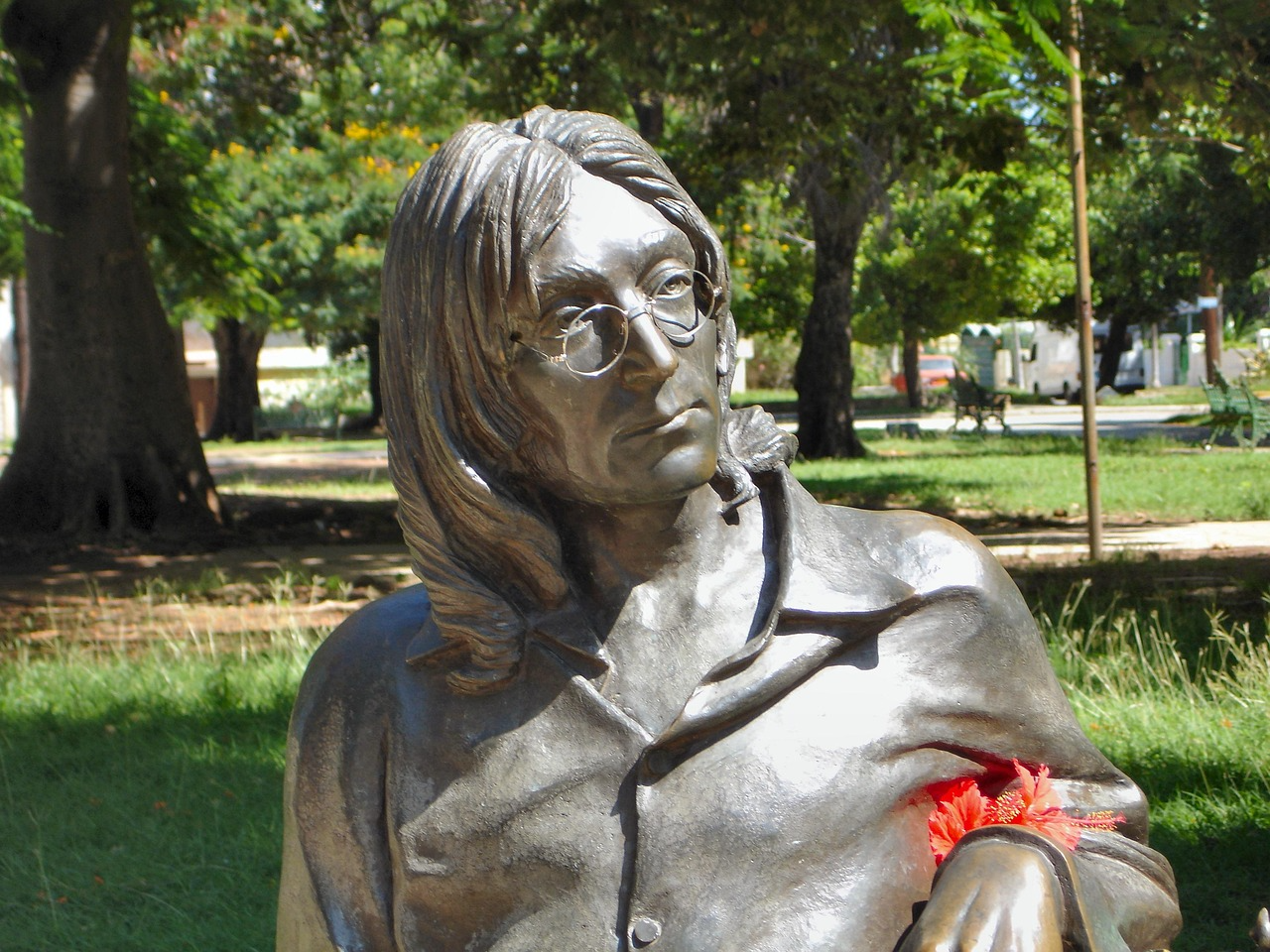
It was there that I heard on 5KA that John Lennon had been shot. Mum had just bought his record, Double Fantasy. It was a Tuesday early in December of 1980. Normally the back of the butcher shop was a chirpy, animated place. For a few minutes, it was quiet.

*

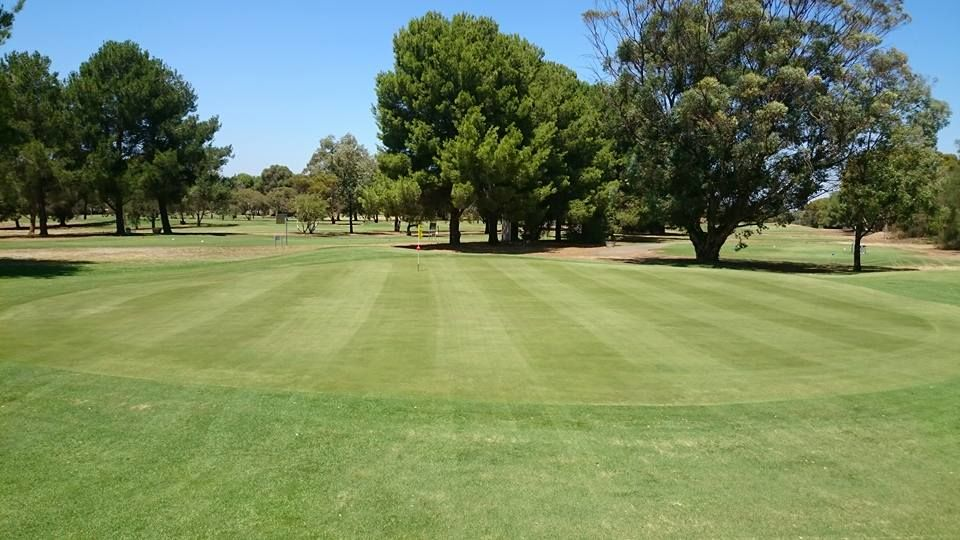
Finding a gap in the fence, I eased onto the long, hilly first hole of the Kapunda Golf Club. Playing (poorly) out there as a teenager, I recall brown and cracked fairways, tee blocks like tarmacs, and black putting scrapes.

Today, thick, spongy grass cushioned my feet. Beyond it, trees and undulating fairways combined to make a picturesque landscape. It was no longer a large paddock with nine up and back golf holes but an exquisite course.

I ran up and down about six holes. The (now) sixth hole requires you to carry the modest dam and I wondered about how many balls, to my undying disbelief, I slapped straight into it during the 1980s. Too many deceased Hot Dots.

I have a vivid memory of Dr Para making an eagle on the 18th. It was a par 5 and he hit his third shot from about 150 metres, and it bounced straight in the cup. The startled roars carried over the late afternoon fairways. After many decades why would I still have this in my head?

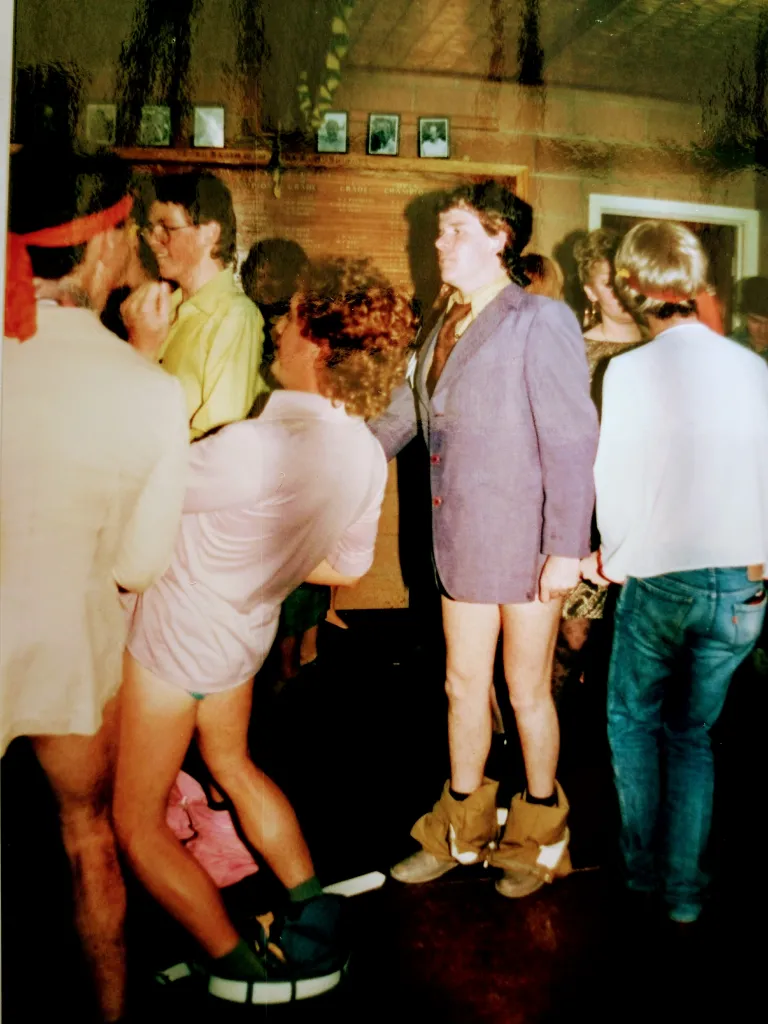
I squinted through the clubhouse windows. This was where I had my 21st birthday. It was a sixties-themed night, and I’d made four C-90 cassettes for the occasion. Of course, Eagle Rock with its trouser-dropping tradition happened too. I still have the photos. A beery circle featuring Paul Edward White, Tommy Hayward, Paul O’Reilley, Froggy Ryan, among others.

But it was also around that time I learnt to pour a beer from a keg. With considerable patience Davo and I were taught by Gus Higgins before tee-off one morning. He said, ‘Snap the tap off quickly and don’t overfill the glass. You don’t want to choke it.’ It took us a few attempts, but we got there. I could just make out the sign for ‘Gus’s Bar’ hanging in the murk.

Back outside on Sunday morning, I kept running.

Part Two coming soon!

0

Shadows and Light at Kapunda High

Kapunda High boasts some mightily impressive Moreton Bay Figs. They are central to the school’s landscape. With their wide limbs, they offer timeless beauty and reassurance.

After the ceremony and having taken a tour of the reopened building, I’m standing by the steps with Paul and Kerry McCarthy. We’re talking about the old Moreton Bay Fig which has stood by the side of Eringa for numerous decades and provides ample shade across the adjoining lawn. It’s a most magnificent specimen.

Kerry says, ‘On the night of the fire, Paul and I were worried we’d lose this tree too.’ I glance over at it again, its shadows spreading across the lush grass.

I reply, ‘Forget Adelaide Oval’s Moreton Bay Figs, this one here is my favourite tree, anywhere.’

Kerry nods and continues, ‘Yes, it’s mine too.’

If quizzed I’m sure it’d be the favourite of many who attended Kapunda High including a number who’re here this afternoon.

*

Lady Kidman’s Bedroom looks tiny. Despite being the boudoir of Isabel or Bel as she was also known, it’s about the size of similar rooms in modern homes. It’s now an office but when I was a pupil here it was a classroom and I remember History and Geography classes in it. With less than two hundred students, our classes were always small, but I still wonder how we squeezed in here. As a prefect, I slept on the floor when helping with the year 8 induction overnight stay.

There’s about six of us in there having paused our self-guided tour and it’s crowded. Why do familiar places from our youth shrink as we age? Greg Mickan and Phil Voumard share some stories from their time in this very room. I can’t repeat them here as they both might get a (significant) retrospective suspension (and caning)! Memory and its constant companion, affection, have demanded our attendance today.

*

My tour first takes me to what is now the museum. It’s downstairs and entry is gained by a long ramp. For me however, it’ll always be the Matric Centre and much of our learning, fun, and friendships happened in this subterranean space.

Descending through the doors, I immediately look right. It’s empty now but back then there was a row of carrel desks. There were only about a dozen of us in Year 12 and so we each had our own spot. In my row was Chris Rohde and Peter Davidson, and I was squeezed into the corner.

During those rare silent and secluded moments, it’s where I read and was devastated by George Orwell’s 1984 — set, as it was, just a single year in my future. On Friday afternoons we started our weekends with a study period and looking through the museum, I can hear the powerful voice of our beloved class teacher, Michael Krips. Almost every week he’d nobly remind us, ‘It’s not a half hour pack-up!’

*

Making my way to the book stand I buy a copy of From The Ruins Eringa Rises. It looks (and is) great having been written and compiled by local icons Macca, Danny Menzel, and Anne Hornsey.

Groups are mingling on the lawns in the fading light. I shake hands with many of my teachers including Geoff Schell and Robin Burgess. Robin makes his now customary remark to me that given I’ve been allowed into the event, ‘Security can’t be too flash.’ I see former colleagues too and some more Mickans. In the Moreton Bay Fig shade, Andrew Hayward and I discuss the general, buoyant state of life in Kapunda and anticipate a beer together, soon.

I take a few moments to think about the day here in 2021, when Claire and I were married on this treasured lawn.

*

Strolling back to my car, parked on West Terrace, I pause and turn around. Fittingly, the warm sun streams in across Eringa and its inviting gardens. The building is handsome and quietly proud. My head’s buzzing with stories and faces and recollections.

Squinting at the facade, it looks as it always did, like the fire never happened. Surely, this means the restoration is a dazzling success.

With this, Kapunda and its high school feel exactly as they should.

4

The Best Beer I Ever Had #7 — The Prince of Wales, Kapunda, 8.11pm

I loved living in Kimba, but after five weeks without leaving its tiny township, I was beginning to feel claustrophobic.

We’d even played every February cricket match in town. I hadn’t been home to Kapunda since Christmas; it was time.

I needed some restoring.

At lunch on Friday, I filled the petrol tank at Maurie and Clappy’s roadhouse on the outskirts of Kimba. Back at school, I parked my car facing Highway 1.

A siren finished the week’s last lesson, and I sprinted for my Nissan Exa — a most ridiculous vehicle, but fun to drive. Pushing in a Skyhooks cassette, I cranked up the volume. It was brutally hot and the paddocks were brown and barren. Decent rain was months away.

Within an hour, I was whizzing past Iron Knob. Roger Hansberry’s son Paul once bought, from its roadhouse, a tank top emblazoned with Greetings from Iron Knob. It may have been Hypercolour. He wore it when we were in Las Vegas. I think the locals were too scared to ask. Even in Vegas, some topics are taboo.

Port Augusta is on the gulf but somehow still simmering and oven-like. The ocean offers it no earthly relief. I steered over what’d eventually become the Joy Baluch Bridge. As you drove over it, I’m sure it’d often swear at you. Just like Joy.

Past Warnertown, Crystal Brook, and then Gulnare. I called into the pub there once but not tonight. There’re three utes out front. Seven o’clock already.

Clare Valley.

It’s hilly now and my journey’s more laborious. Although it’s scratchy, I can get Adelaide radio now, so I find Triple J and say farewell to 5AU and its ads for chicken shops and local retailers — Thinking of new tyres? Come say hello to Wayne and Sue…

Rhynie. Alas another country pub that’s gone and with less chance of resurrection than a Betamax VCR. Sweep around Giles Corner — easing around this bend always meant home was close.

And then through Tarlee. The searing sun is low in the sky now, but I glance over at Tarlee Oval where old Kapunda mate Davo dropped a simple catch when a bloke had just got in. By mid-afternoon he’d made 295.

Bounding past The Pines. On our year 9 camp we spent the last night there. A whole week of hiking and no showers! Many visits to this reserve since, often around a winter’s fire, a bushy. Almost home.

I’m on Clare Road. The high school’s on my left, part way up Gundry’s Hill while Dutton Park’s to the right, asleep behind the rows of trees.

Finally, Kapunda.

By the pub a dozen or so cars are lined up on Mildred Street. I’ve driven four and a half hours, evading wildlife and berserk truckies like the faceless one in Spielberg’s Duel. Friday-weary, I tumble into the Prince of Wales front bar at 8.11pm.

‘Hello West Coast smack-head,’ greets mine host. ‘Gee, you’re getting fat, Mickey.’ Puffa continues. ‘Are you still driving that dopey sports car?’

This is what I came for.

Outside, the sun now sinks below the horizon. Familiar faces surround me. A one-day cricket match is on the TV above the bar. The sound’s turned down and the Waugh brothers are batting. Fresh from the small oven near the till I smell a toasted ham and cheese sandwich. A game of spoofy is underway, clenched fists thrust into a circle. Hollering erupts from them.

Soon enough, the old stories will be told again.

With a flick of a beer tap, Puffa streams the amber into a schooner glass. I take in this snug, unremarkable country room. It understands who I am. Nothing has changed. That’s precisely why I’m here. I slide a five-dollar note onto the bar towel.

The first mouthful tastes exactly like home.

2

Uncle Des

It’s true that cousins are our first friends — especially in the country — and this was my happy experience growing up in Kapunda. I’m Michael Randall. As a kid, I was called Mick, Mickey, and sometimes Aunty Claire called me Mickle. I’m proud to say that Des was my uncle.

I recall being eight and playing at Dutton Park with my cousins — Paul, now known as Boogly — and Chris, who defied medical science by subsisting only on vegemite sandwiches. We made cubby houses, poked sticks into trapdoor spider holes, and kicked the footy, pretending to be Paul Bagshaw, Rick Davies, and Kenny Whelan.

Late on afternoons like this, the most ear-piercing and astonishing whistle would ring out. It sailed over the caravan park, through the gumtrees, and down to the oval. I’m sure it penetrated the trotting track and dusty golf course too. It was even louder and more startling than Nuri oval’s air raid siren. Funny, really — the Barossa Valley Germans setting off an air‑raid siren.

Where did this whistle originate? It was 5pm and, despite being half a mile away, we distinctly heard Uncle Des whistling us home for dinner. This was parenting. Kapunda, 1975. So, we instantly forgot the trapdoor spiders and scampered up to Clare Road for chops and three veg. On Skippy plates. Chris, the records show, opted for a vegemite sandwich.

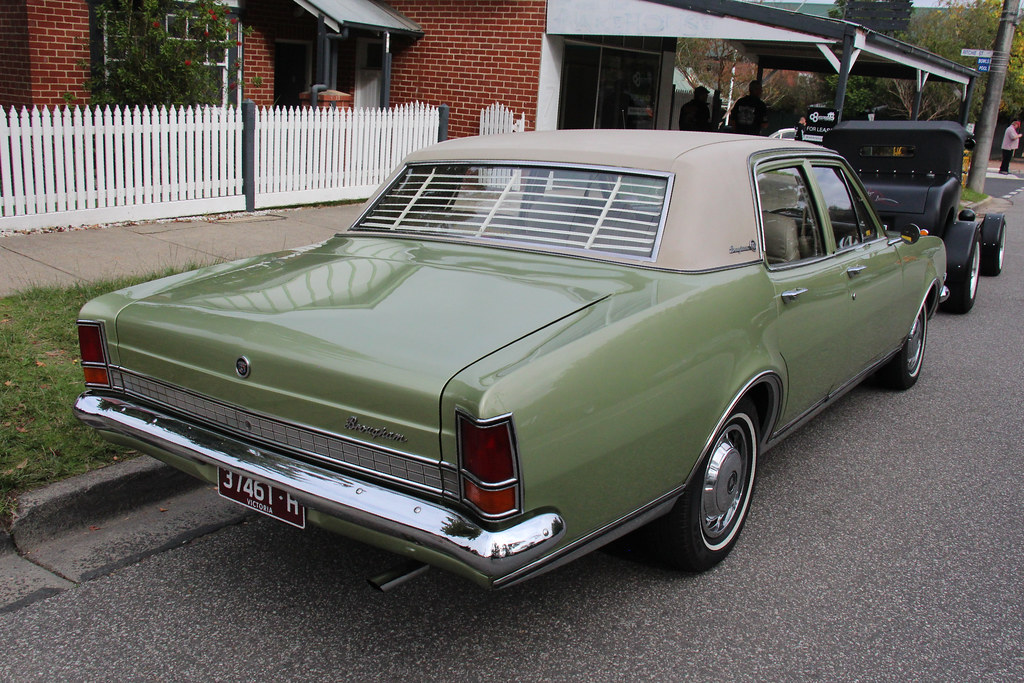
The most memorable car of my childhood was Uncle Des’s Holden Brougham. It was elegant and exotic. It was a striking sedan, and everybody loved it. It was a 1970 V8. Nobody else I knew then had one and nobody has since. Uncle Des parked it under the carport. It was his pride and joy.

One Christmas, Carolyn, Paul, and I got new bikes. Dragsters. These were magnificent. Off we went — trainer wheels on, wobbling about the back yard and dirt road.

Uncle Des said, ‘Now, be careful around the car with those bikes. I don’t want any scratches on it.’

Ouff. Watch out!

Soon after, wheeling my dragster past that Brougham I thought, ‘What if I become possessed by a demon and deliberately run my bike into a fender?’ Eight-year-old me shivered. Fifty-nine-year-old me still shivers. I could’ve spared myself much adult grief if I’d driven my actual cars with as much care as when I pushed past that Brougham on my blue Malvern Star with the sissy bar.

Across the decades, seeing Uncle Des at the footy club or in Puffa’s he’d greet me with a smile and a “How are you, pal?’ He was always interested in us. He often called me ‘pal.’ These are memories I deeply cherish.

He was a hugely positive influence, and I’m deeply grateful for that. He was funny and kind but also firm as required — especially around his car. He helped make my childhood joyful and ensured that Kapunda will always be home.

To the entire O’Keefe family, you are especially in my thoughts today. I wish you strength.

Cousins really are our first friends. And in families like ours, uncles and aunties become our second parents. Uncle Des — larger‑than‑life, charismatic, and treasured — was exactly that.

Thanks for listening and thank you for letting me share these memories.

2

Three Candles in Santorini

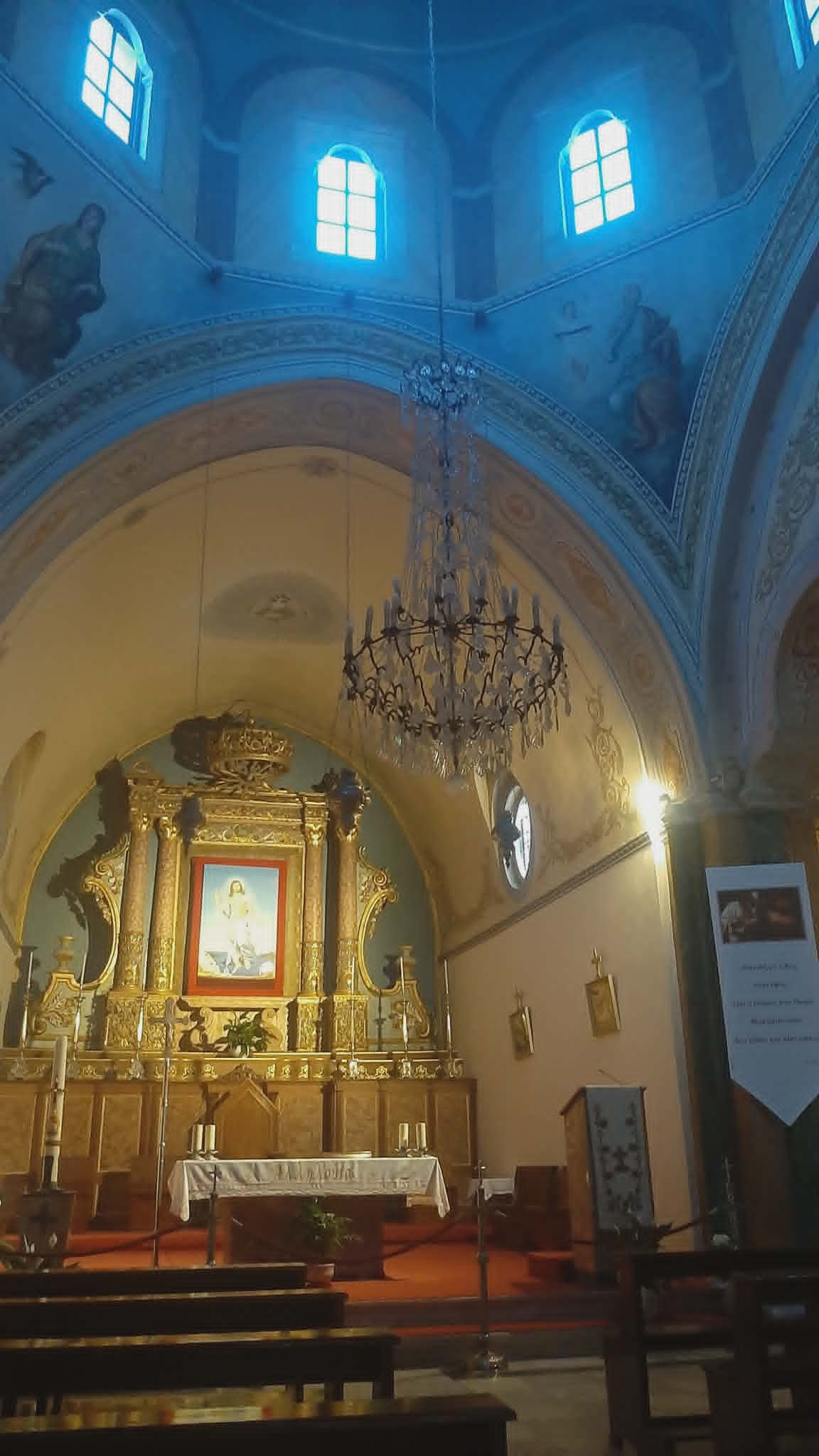
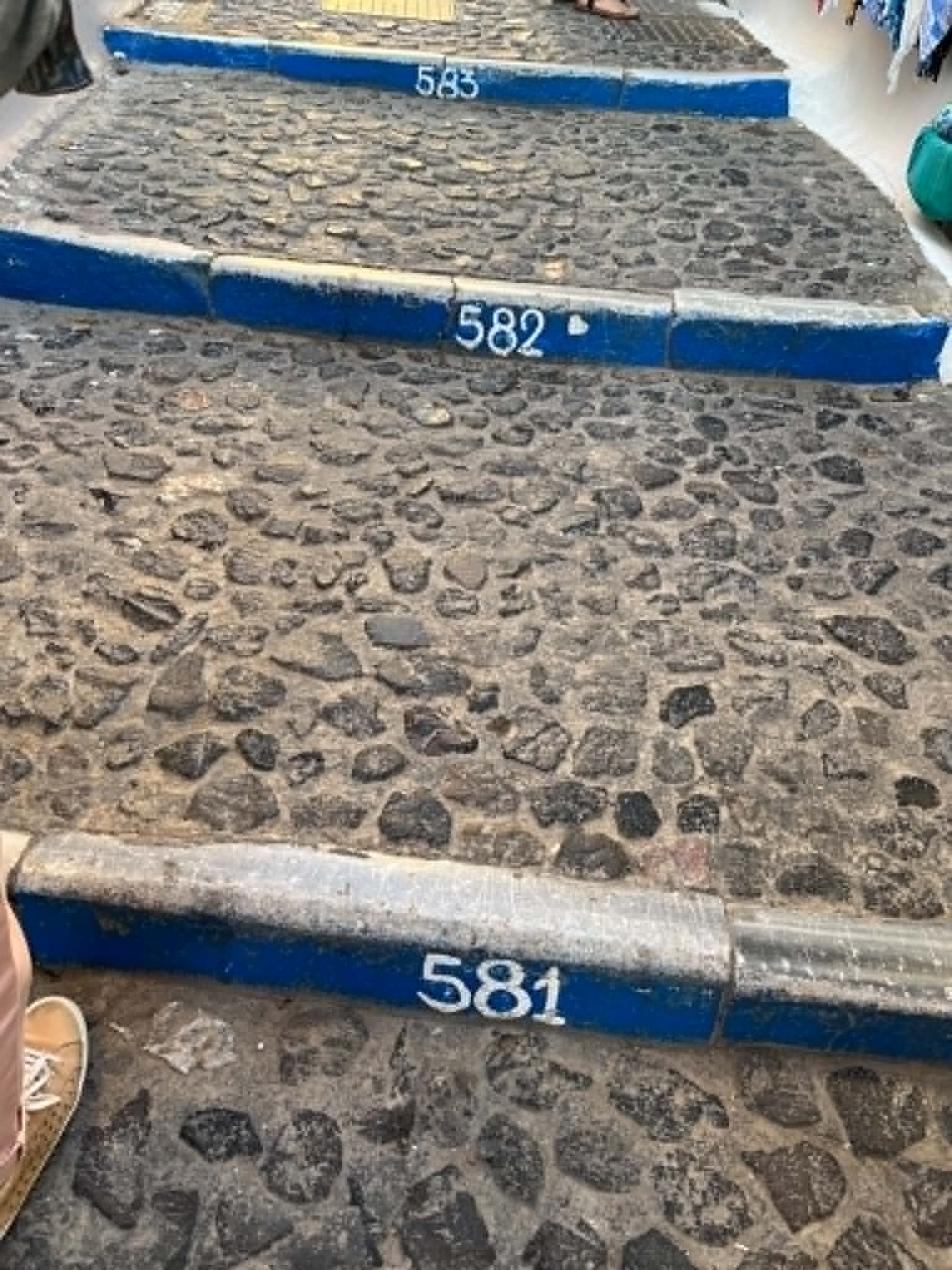
The Holy Cathedral of Saint John the Baptist is in Fira on Santorini. It’s a still, bewitching hour on a Thursday. Our final night on this striking island before we fly to Sicily. We’ve stolen up and across along the bumpy, twisting alleys from our apartment to this church. Sunset imminent.

It’s been decades since I regularly visited St Roses in Kapunda. We’re not going to mass. Claire leads me in. We’re just going to quietly sit and think.

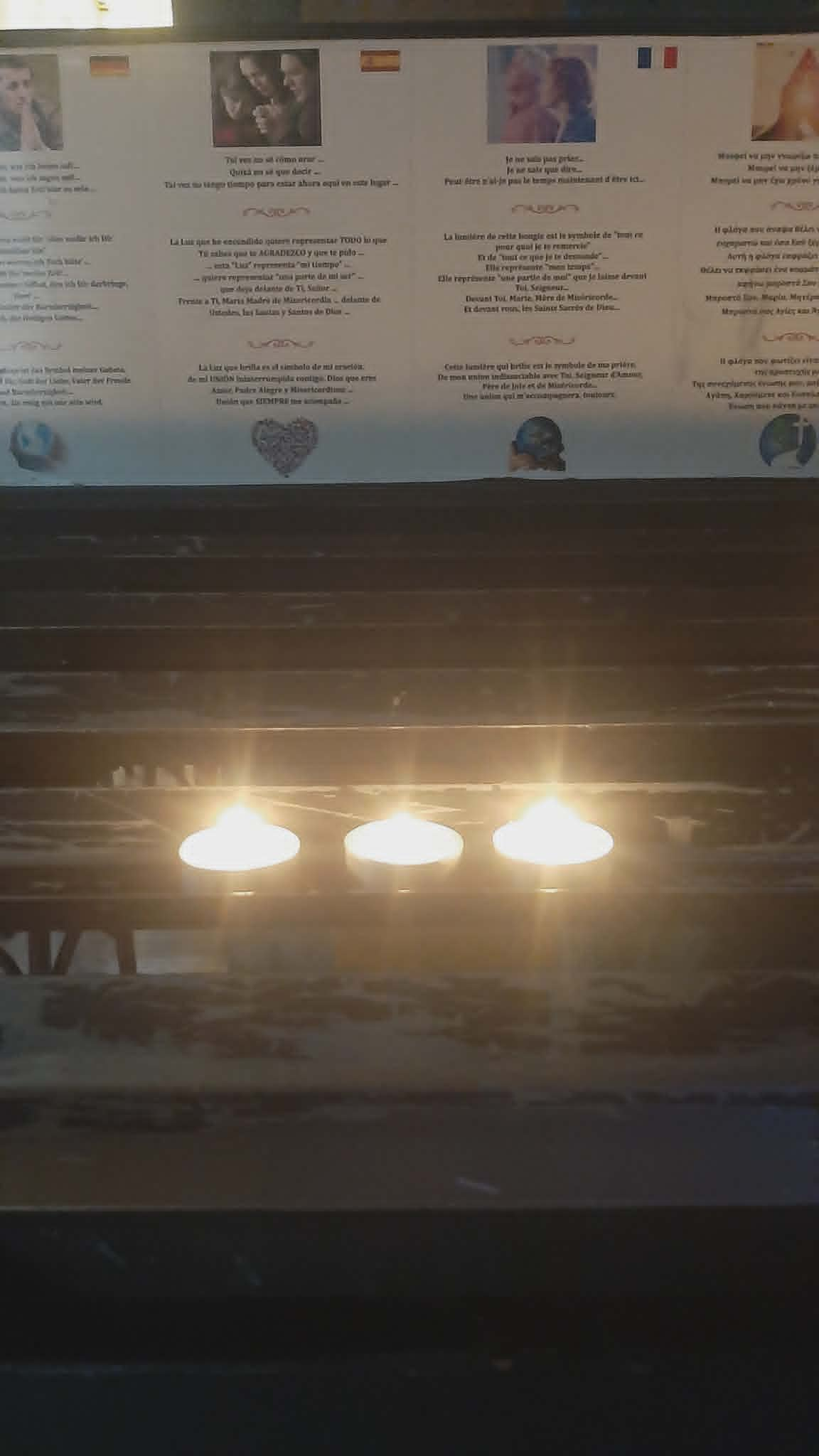
Claire gathers and lights three candles. They glow with warmth and with faith. A candle for her dad, one for her mum, one for her sister Fran. They offer much beyond light.

Despite my Catholic childhood, at first I feel like an intruder. Church was only for set times, otherwise the door’s shut. Claire leans over and whispers, ‘In Turkey I was told that Muslims have no ceremony or mass when in a mosque. They simply pray.’ In the darkening pews, I nod. She continues. ‘There’s no assistance from a priest or religious person. It’s a singular, private time.’ Claire’s always teaching me things like this.

Is that what we’re doing now? Using this church for reflection, for gratitude, for remembrance. If churches can be for spirituality and not formal religion, then I think so. I’ve not sat in a church like this before, and it’s peaceful. I wonder if I could cultivate a new, informal relationship with the Catholic church. This might be the gift Greece gives me.

We stroll around to the Three Bells of Fira. We peer down on the Mediterranean, way below on the bluish, deepening Caldera. The cloudy skies mean there’s few people here on what feels like the brink of the world. On clear summer evenings in a month or two, it’ll be heaving like a music festival. Again, we speak little. There is no need.

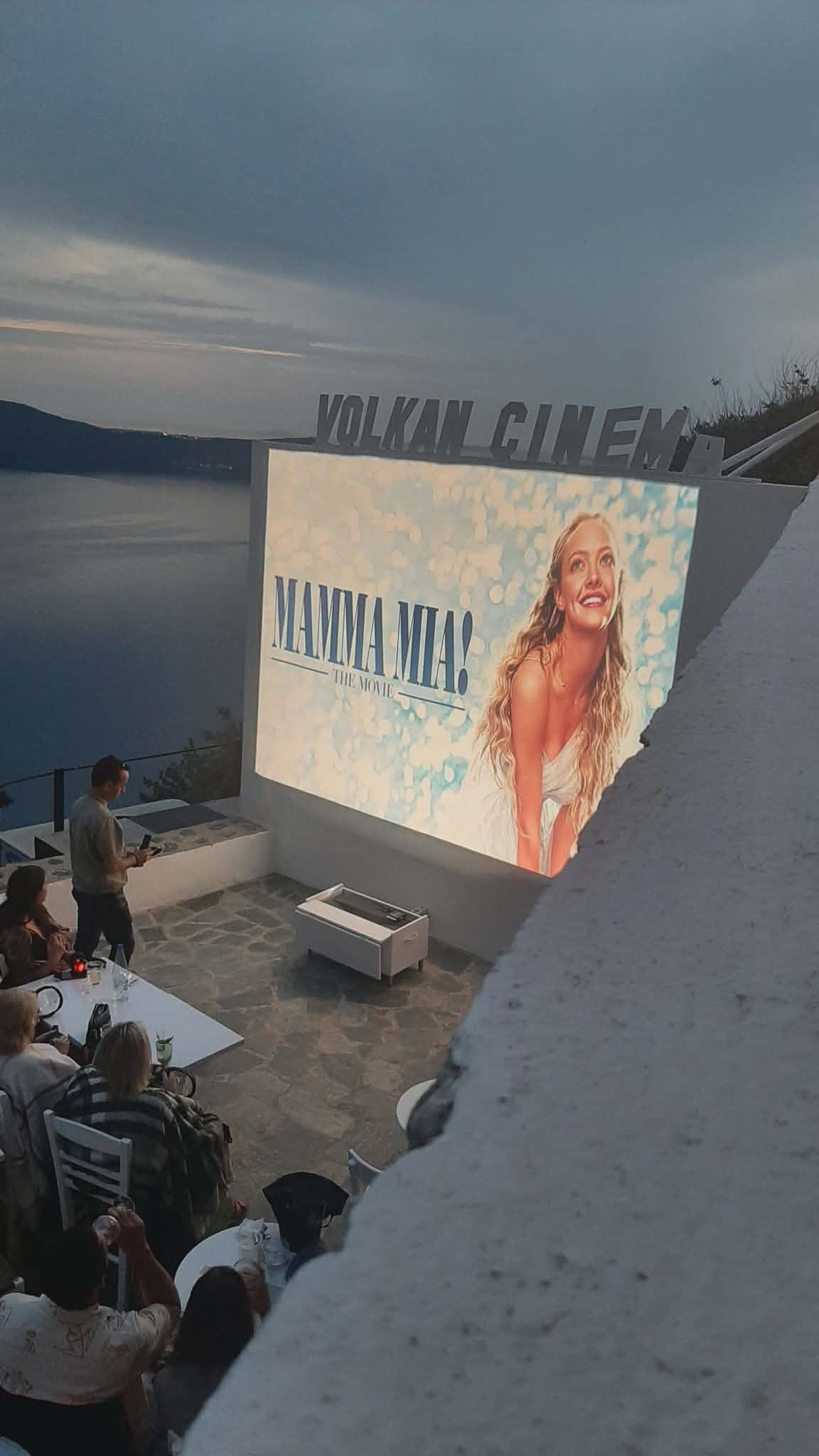
Up and down laneways on the cliffside, we then arrive at Volkan on the Rocks. The resort has an open-air theatre, and the audience is at their tables with headphones on. Six nights a week it screens the Abba-inspired film Mamma Mia. We look down at them. In this location that’s neither day nor night, but both land and sea, it could be diverting. We walk on.

A moored cruise ship hovers below, a colossal modern wonder, all steel and sleek lines. From it dance music erupts up and into the Greek heavens. We imagine those on the decks, clutching drinks, milling about. Then, a smaller wooden vessel, a ketch, glides into view, pop melodies also bellowing up from the silent sea. It slides beneath us to the cliff and disappears into the velvety night.

Dusk approaches. In amongst the endless, squealing wheels of travel, the stillness of our church visit now feels as an instructive lingering, a wonder of rapt silence.

0

Can It Already Be Five Years?

Triumphant and a little startled, we strolled into Kapunda Foodland. A supermarket, yes — but that day it felt like a secret cathedral, as though the ordinary had been quietly transformed just for us. We glided through the aisles, past magical shelves, freshly stocked and bold. It was a vivid intrusion in that old town: affirming light catching on the joyous earth, revealing colours and fragrances previously unknown. The trolley rolled easily before us, as if it, too, wished to blaze our celebrations.

Our congregation assembled on the croquet lawn of Kapunda High School while we stood within an intimate orbit, newly bound and certain. On that Saturday afternoon, beneath a leaden sky and the wide, welcoming arms of the Moreton Bay Fig, we traded whisperings during the ceremony — small, private currents skipping through a most public moment. A joke passed between us, barely audible, yet enough to capture and delight.

In the midnight quiet, the walk home from Dutton Park. We crossed the railway line, passing the train in its silent playground and Rawady’s Deli — all of it seeming to conspire, finally, in our favour. The world had softened into black velvet, the sky dusted with a delicate pepper of stars. The town slept, offering a kind of reverence, and Baker and then Hill streets became church aisles of their own. We walked them together, up and down the gentle rises, the trees along the footpaths like chaperones, bearing witness as we began.

1

Mystery Pub — Plenty of Room at the Hotel Colac

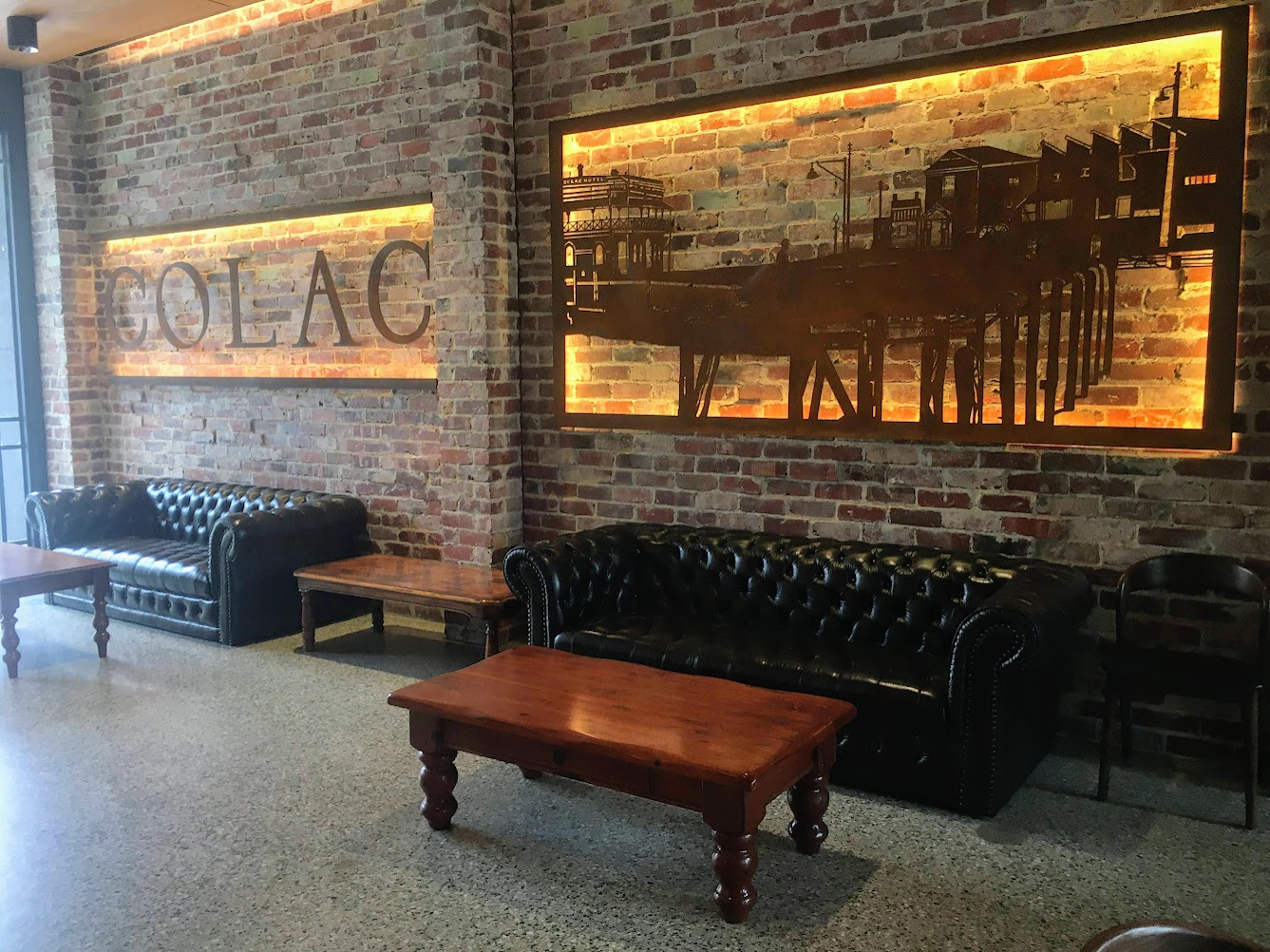
In a suburb stuffed with notorious pubs, The Colac was Port Adelaide’s worst. It was known as The Bloodhouse. It was abandoned for decades. The land around it formerly summoned The Great Gatsby.

This is the valley of ashes—a fantastic farm where ashes grow like wheat into ridges and hills and grotesque gardens

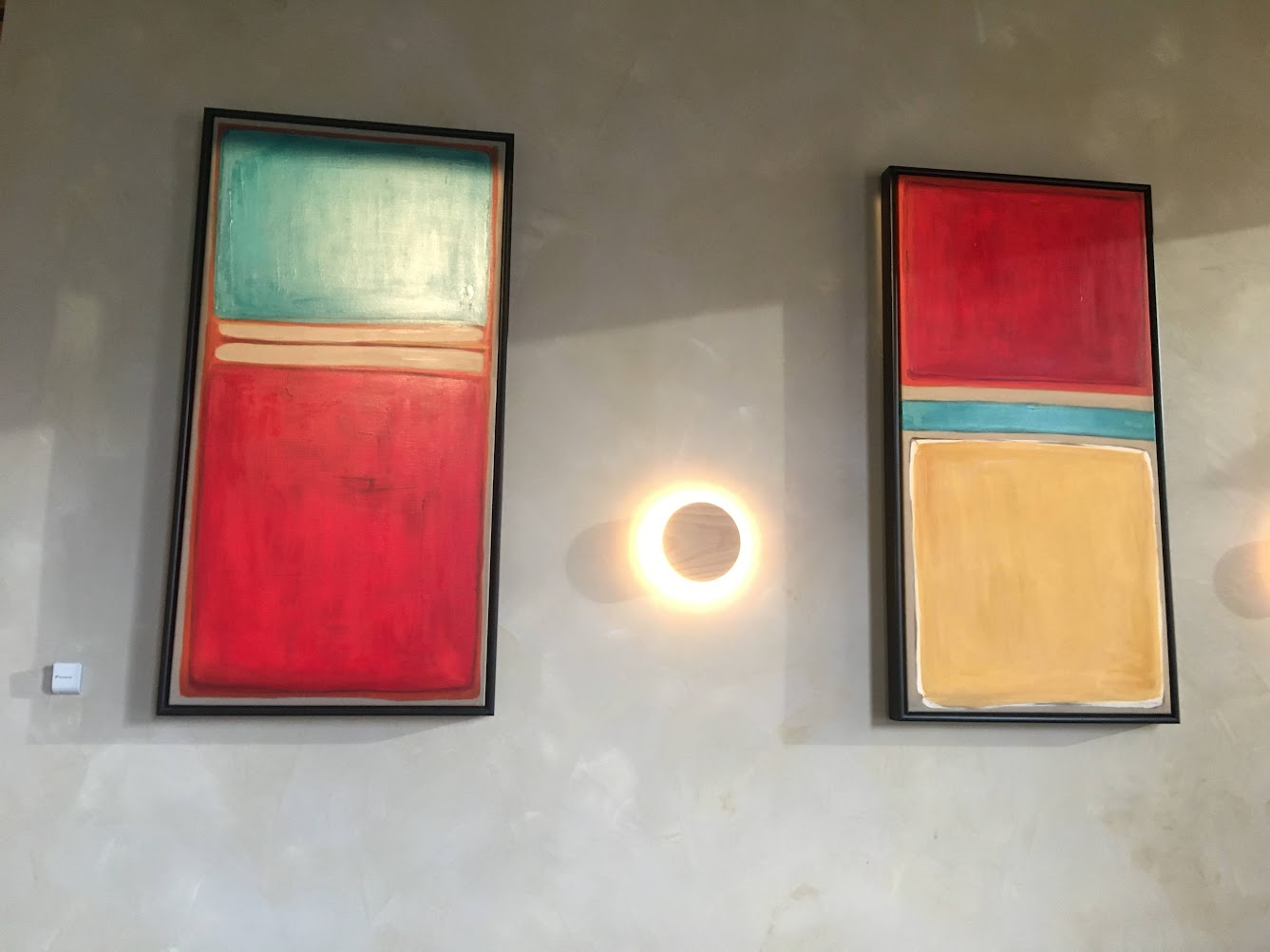
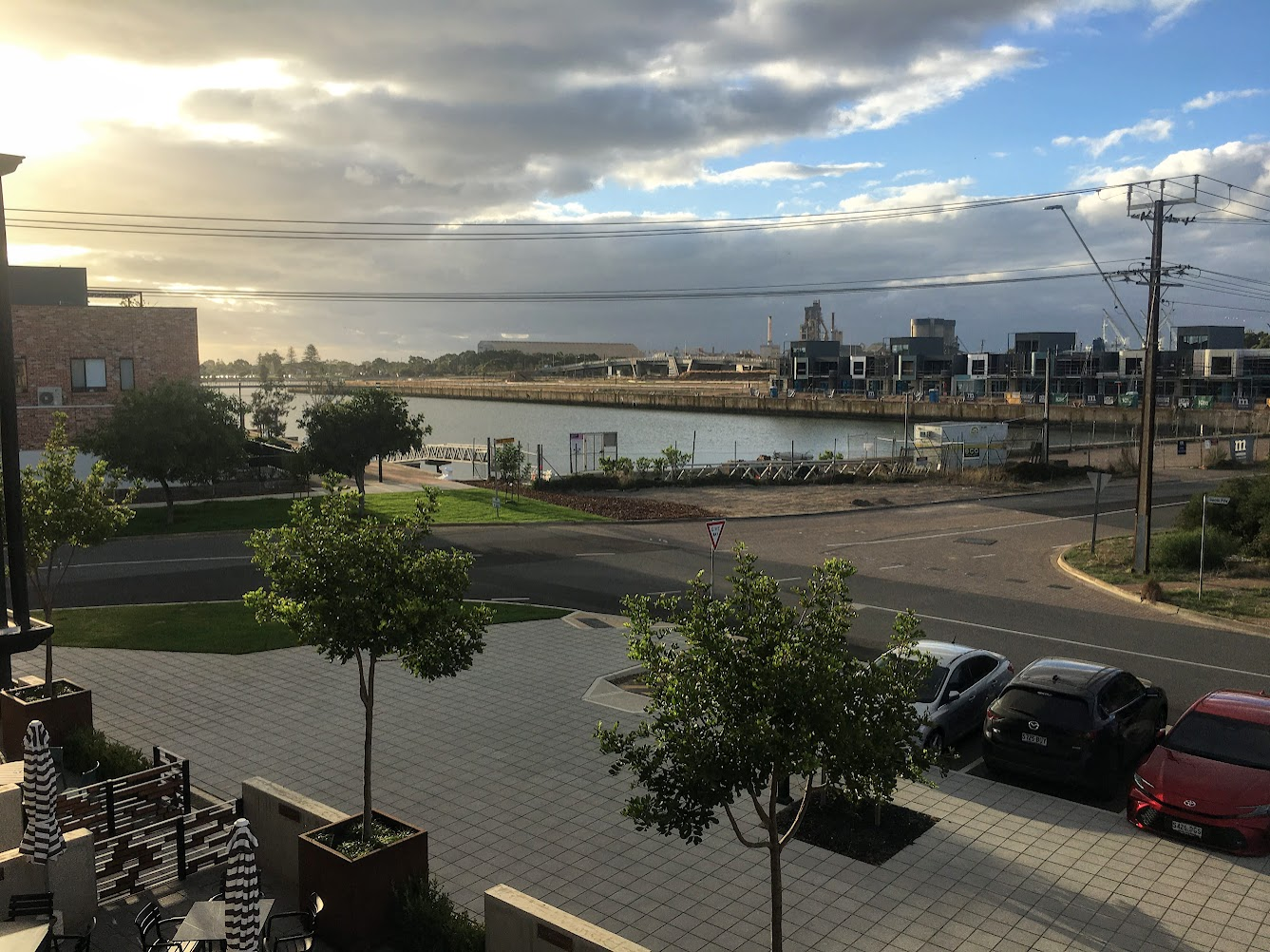
The pub has reopened and is splendidly appointed. Opulent furnishing, sublime art, strangely odourless air. Light drenches the two stories and three distinct spaces, having bent in from the becalmed Port River. Later jazz, a piano ready on the stage. Wagyu and other prized cuts in a cabinet.

The wait staff were welcoming but began yapping at us like terrier pups, having gone from attentive to nutso annoying.

How were the customary hot chips? Sprinkled with fetta, garlic oil, wolfed.

The Colac is now crowded in by eager rows of boxy terrace homes, like an English village. Is the invigoration of the Port finally underway?

*

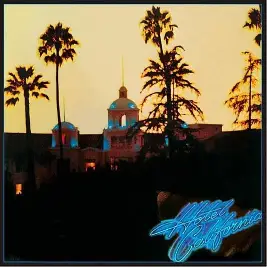
Home, with the dark descending. It’s my favourite hour for a vinyl album so I popped on Hotel California.  Shoeless, Claire busied herself cheerfully. I plonked myself in a chair.

I read recently the title track is, among many other things, a reggae song. This genre is difficult to love due to its repetitive boing-boing. For me The Eagles’ tour de force is now tainted. I hope I can reverse this.

Clasping a refreshment, Life in the Fast Lane began with its sunset swagger. As Claire scurried in and out, I contemplated how the guitars are like a Chevy Impala hurtling down Mulholland Drive. The melody and the lyrics marry. When sound mirrors the meaning is this word painting the musical equivalent of onomatopoeia?

The penultimate track is the sun-kissed Try and Love Again, sung by the late Randy Meisner. He’s best known for Take It to the Limit, where his voice soars — arguably their finest. But the nightly demand of it became a private terror. ‘I was always kind of shy… They wanted me to stand in the middle of the stage… but I liked to be out of the spotlight.’ He quit at the zenith of their fame. How cruel to be haunted by your gift?

*

Saturday saw the next in this year’s succession of milestone parties. A 5.30pm start for our dear friend, JB. On the veranda, I wondered aloud to nobody that our social functions now conclude at the hour they once would have begun.

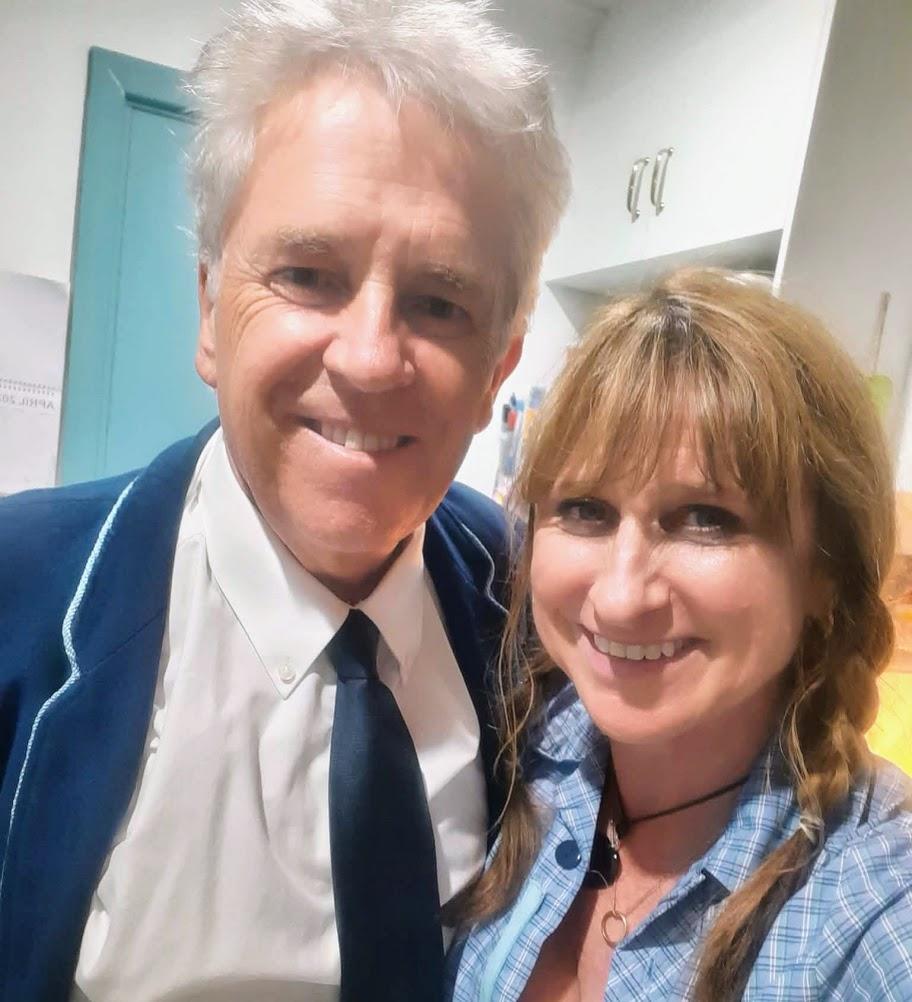
The theme was a reprise of her previous big celebration: come as the person, you’d like to be, so Claire and I both transmogrified to seventeen-year-olds. A school dress (Claire) and Kapunda High blazer (me). Are we misguided in wanting to be younger versions of ourselves?

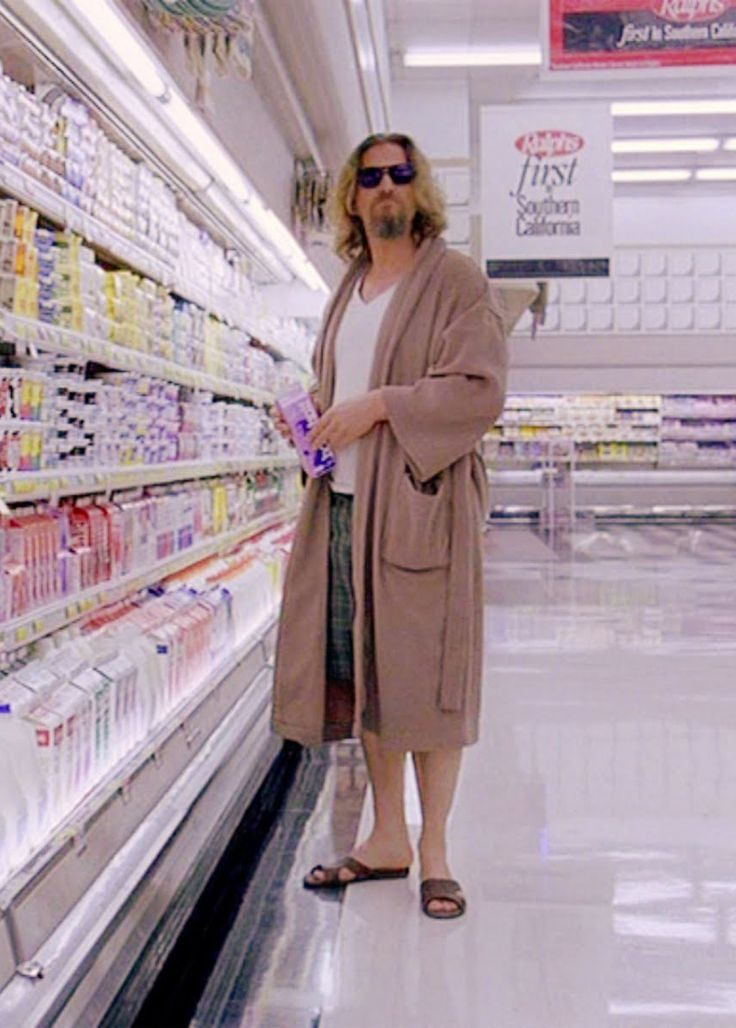
At JB’s 2016 birthday, I’d gone as The Dude from The Big Lebowski. He remains a profound inspiration but now proved too difficult to properly source, sartorially.

Across the backyard, Eagle Rock chugged. With Michelle’s kind kidnapping, I participated — trousers hitched. Later the song Mickey played. Trish performed a cruelly accurate impression of year 12 me doing the Health Hustle.

In the courtyard, they danced on, sweet with summer sweat — some to remember, some to forget.

It was a heartening weekend.

0

The Eighth Caller Through — The Cars, Neil Young, and Goanna

Aside from Derek and Clive, Caddyshack, and late capitalism, old mucker Lukey and I natter and laugh about music. He played drums in 90’s Adelaide bands Imelda’s Shoes and Fuge. I remember my late-night excitement at hearing him keeping time on a song Richard Kingsmill introduced on Triple J. At 10pm on a Tuesday, it was fame by association.

Last Christmas, Lukey dropped off a stack of old vinyl — hefty, musty, and packed with sentimental promise.

*

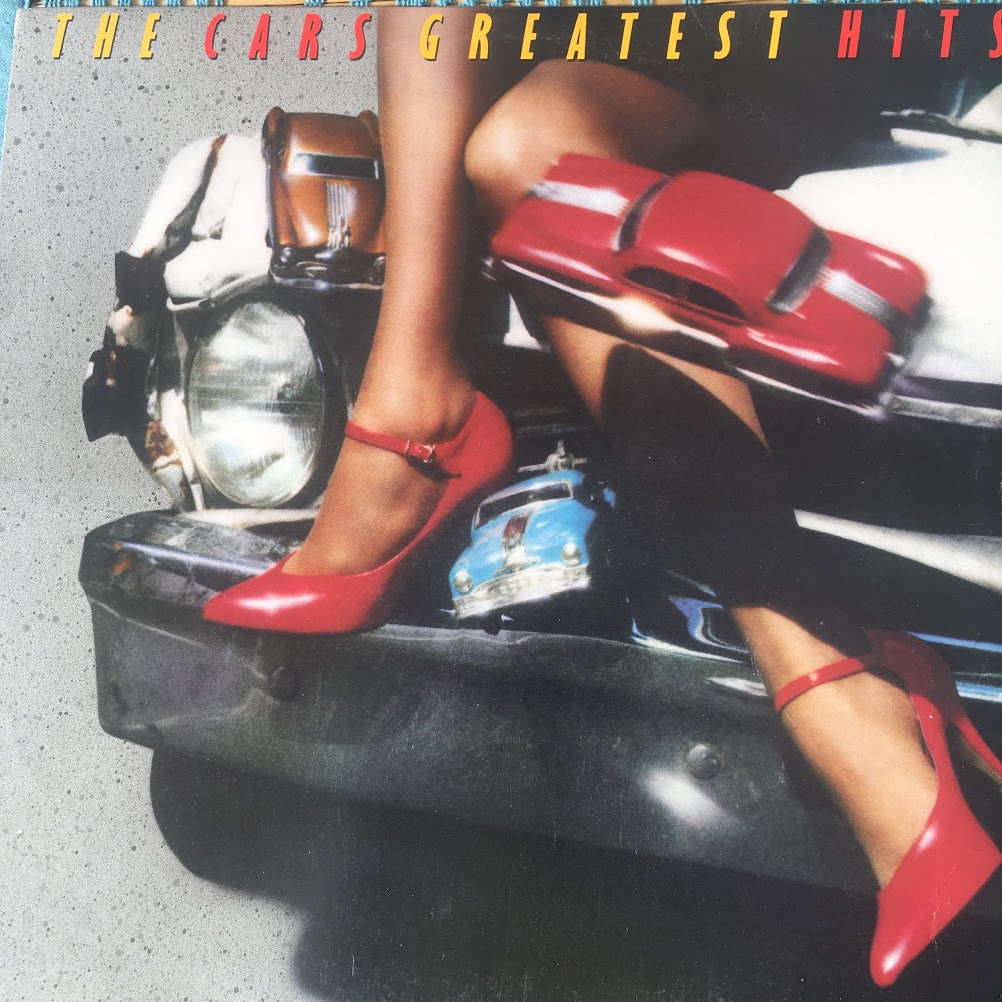
The Cars – Greatest Hits

I recall Shake It Up as a mood-lifter, and I’m sure the Grand Prix night of 1986 when Chrisso, Lukey, and I were in Nick’s unhinged Honda on the Freeling straight, there was plenty of brotherly love. Doubtless, The Cars roared out the open windows of that hatch-back as we hurtled past the darkened barley.

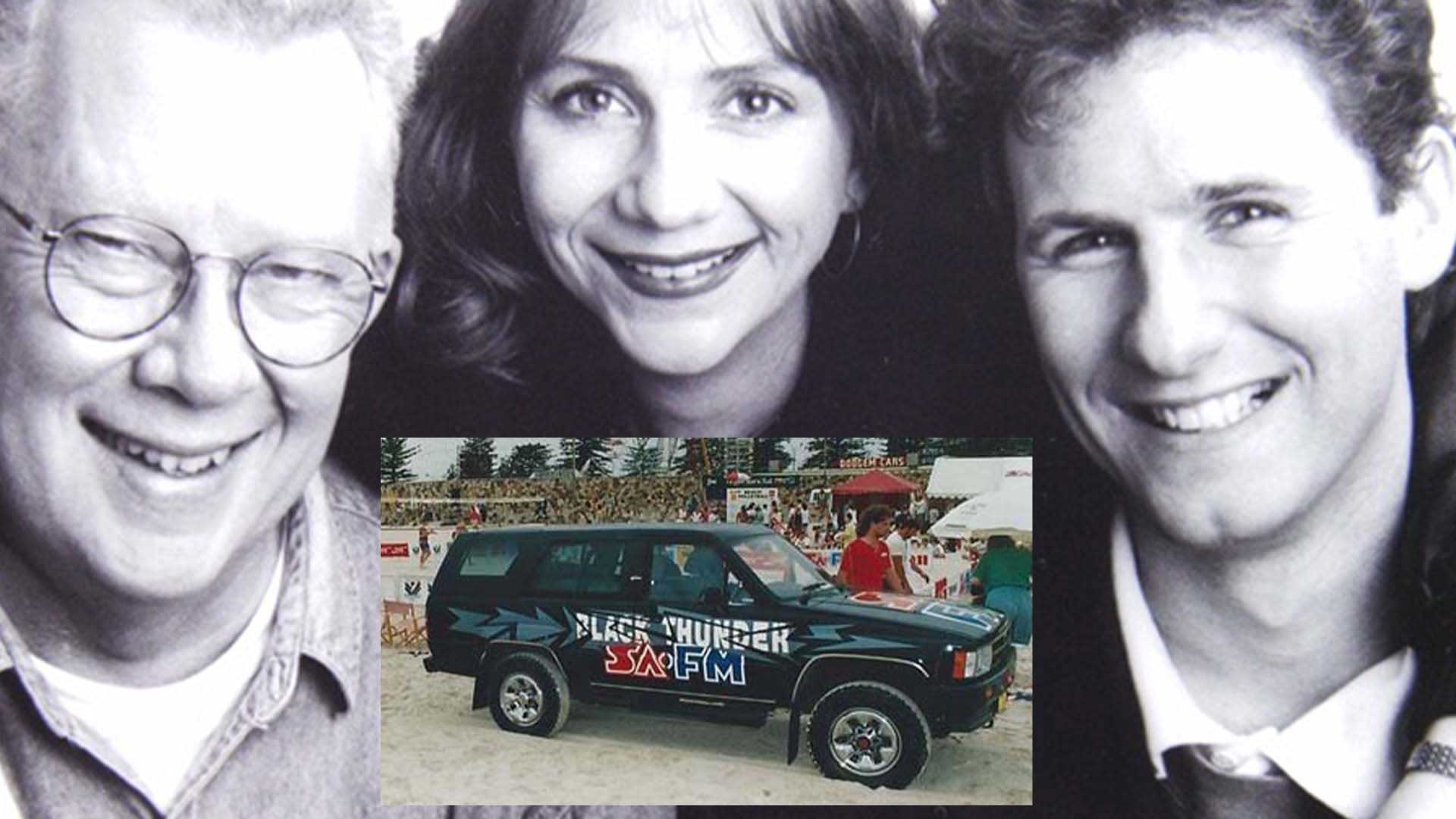
Can you imagine how many Triple Tracks of The Cars were rolled out on SA-FM across the 80s? If I had an icy-cold can of coke for each one then, well, I’d be diabetic and dead. I connect this Boston band with adolescent summers and oddly enough being in cars — like Nick’s Honda — rushing to the cricket, the drive-in, the beach at Port Willunga.

The songs are mostly upbeat with guitars and robotic Roland synths. Although I’ve made no deep investigation, the lyrics were the usual love’s good or love might be good or love’s a mess formula. Yes, mostly empty but we were nineteen, music didn’t need to be apocalyptic and Dylanesque. Solemn examinations of the human condition optional.

Uh well dance all night and whirl your hair
Make the night cats stop and stare
Dance all night go to work
Do the move with quirky jerk

Given The Cars drove, err, in a tight lane, you could be forgiven for thinking it’s all the same song, but I like Just What I Needed, You Might Think, and My Best Friend’s Girl.

*

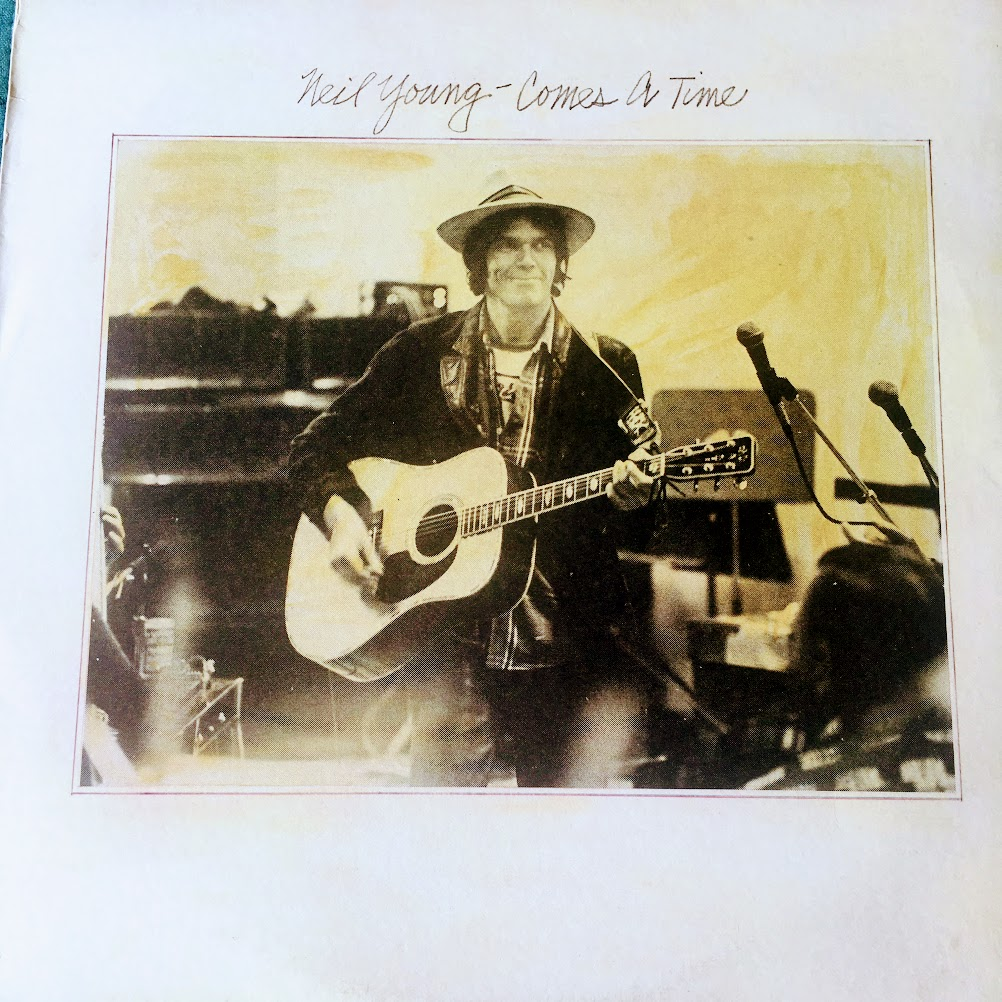
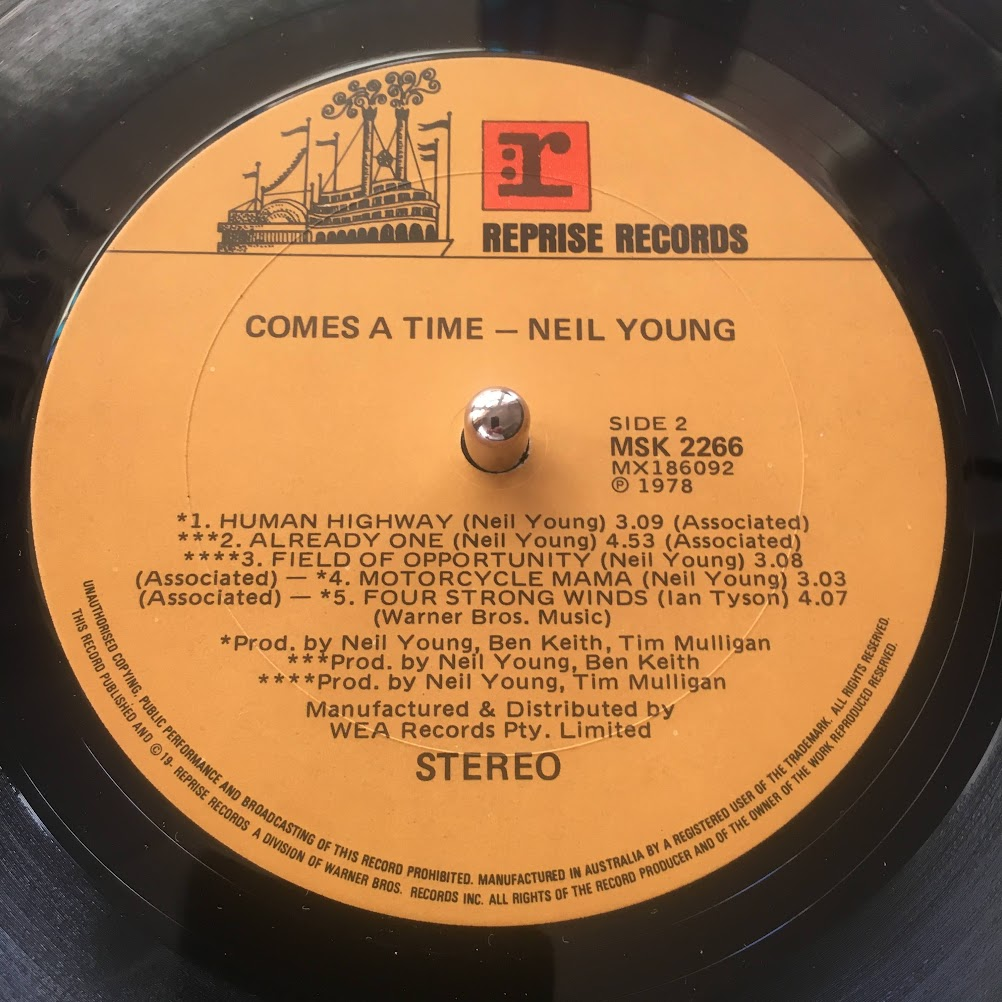
Comes A Time – Neil Young

The muted tone of the sleeve triggers a memory of a TDK C-90 tape, though I can’t remember who dubbed it for me. I was fourteen — an age when life arrives without notice. Side 2 could’ve been Glass Houses by Billy Joel. How does music find us?

Unlike his noise-guitar work with Crazy Horse, this is mostly quiet — occasionally country, but entirely Sunday afternoon.

Lotta Love is a favourite song from it. He sings in a fragile, upper-register voice that threatens to fray into a whine. But doesn’t. Nicolette Larson provides harmony vocals on it and across the album. She covered it soon after and it became her signature song. Melburnian Courtney Barnett did a worthy version too.

The title track, Peace Of Mind, and Four Strong Winds are other standouts.

*

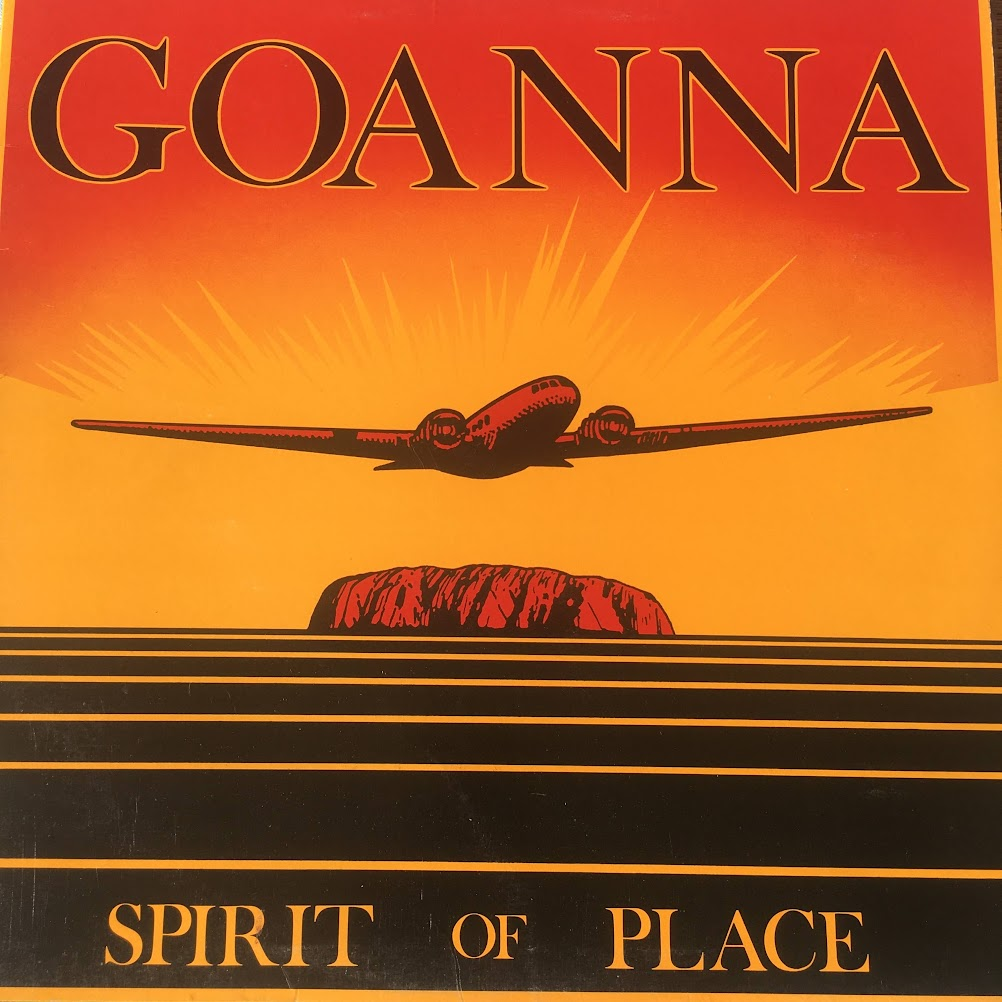
Spirit Of Place – Goanna

Arriving during the summer I turned sixteen, whenever I flick across my car radio at the lights and the urgent drums of Solid Rock pound through the speakers, I’m instantly back in hot and hilly Kapunda.

It was among the first pricks to my conscience regarding the harm caused to Australia’s original inhabitants. The satirical use of marketplace warned me that money could be more important than people.

Out here nothin’ changes
Not in a hurry anyway
You can feel the endlessness
With the comin’ of the light of day
You’re talkin’ ’bout a chosen place
You wanna sell it in a marketplace, well
Well, just a minute now

I haven’t dropped the needle on it since I had nut-brown hair, so I’m gladly startled by its warmth. Burnt country and ragged outsiders hang in the melodies. I partly expected it to feel dated, but the songs and the storytelling are timeless. Shane Howard’s vocals are gracefully commanding, all woodsmoke and Kimberley sunsets.

Razor’s Edge, On the Platform, and Four Weeks Gone are my top picks.

*

Thanks, Lukey, for rocketing by in the DeLorean/ Black Thunder to drop off my prize pack. I must’ve been the eighth caller through to Vinny and Cameron on SA-FM’s Morning Zoo. Vinyl isn’t just a nostalgia machine — the needle, the hiss and crackle come first, and then the music — and for a heartbeat, it isn’t the past at all. It’s right now — the way it found us in the first place.
0

50,000 Residents of Corny Point Can’t Be Wrong

Woodsy was from Kadina and moved to Kapunda. We hung out. He was always bumping into people from Corny Point. We’d be at a Gold Coast theme park, clambering off a rollercoaster, and Woodsy would spy a bloke from there. Or walking through Kings Cross in Sydney, he’d run into two more. Always spotting somebody, he’d tear off to chat and upon his return Lukey or Chrisso or I’d inquire, ‘Corny Point?’ — and Woodsy would reply, ‘Yeah.’ And then tell us all about it. After a while, I wondered if 50,000 people must have lived there.

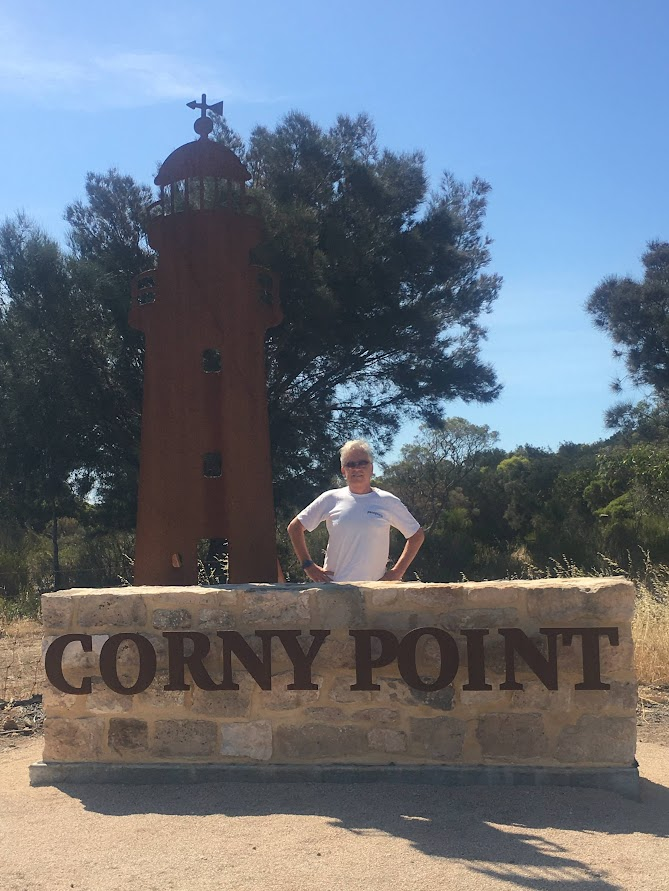
Claire and I stayed in Marion Bay and drove to Corny Point. The first Friday of this year seemed perfect for this. I expected the township to be by the beach. Instead, it was inland, at the crossroads — caravan park, CFS, community church.

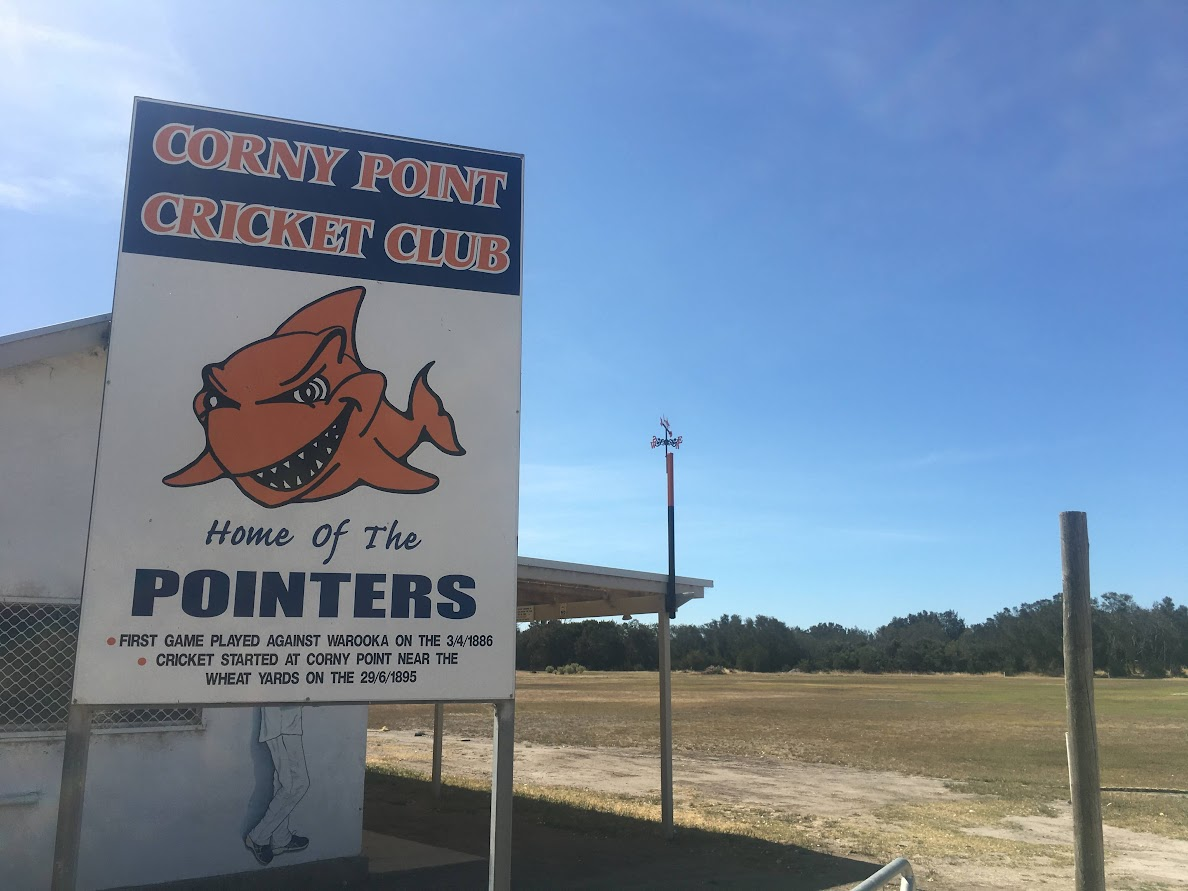
The Corny Point Cricket Club is also in the middle of town. Two sprinklers gallantly try to brighten the grass around the pitch. There are cosy clubrooms with old wooden benches and a couch in its alcove. I imagine the clatter of a bat being flung by a disgruntled batsman. Then, a spurt of applause for a crisp drive scurrying over the baked outfield — someone encouraging, ‘Yeah, good shot, Blue.’

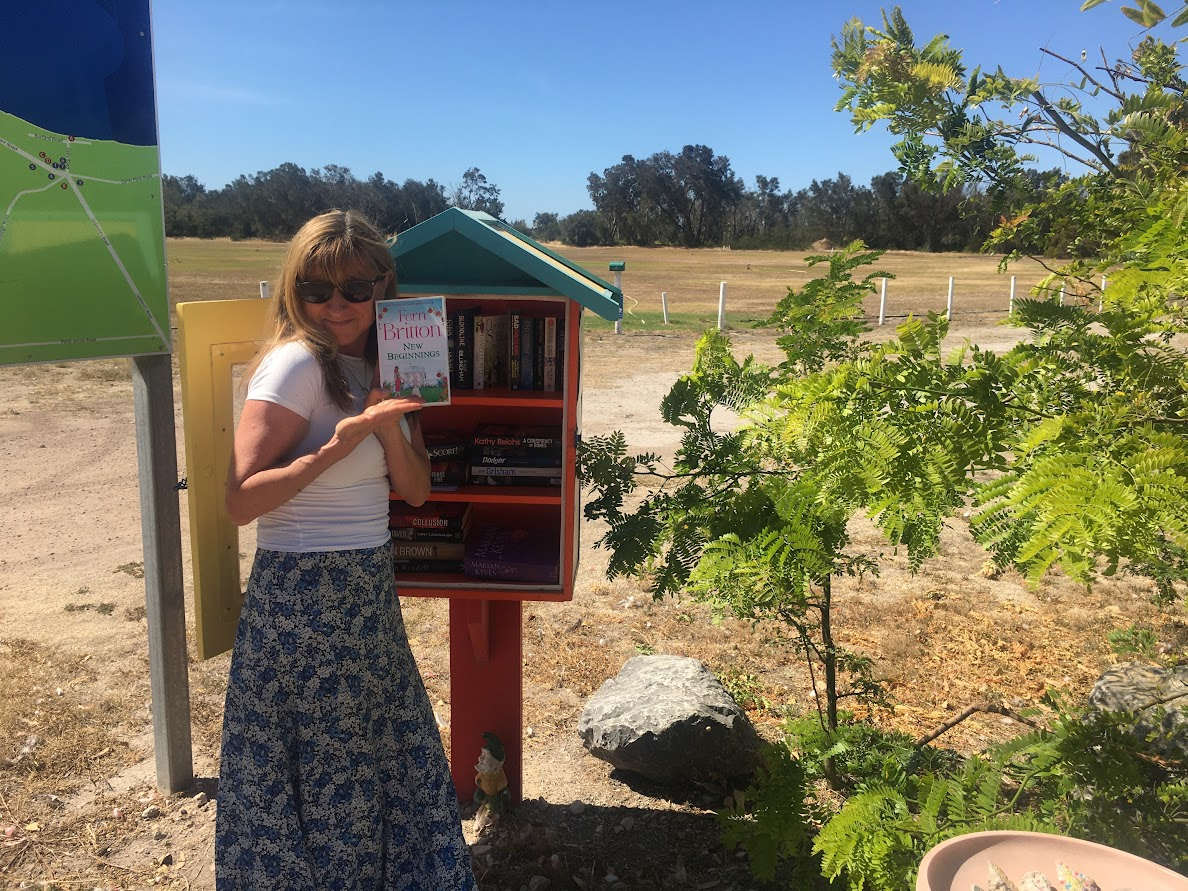
A neighbourhood book exchange sits by the cricket oval entrance — a windowed wooden box on a stand. We see these in many towns during our holiday. How great to have one right by the cricket ground? Claire and I flick through the collection. You could select a historical fiction title, park beneath a tree, and with the first innings underway, lose yourself in a few chapters, only glancing up when the thud of ball on willow disrupts your sleepy immersion. Later, just after tea, you could amble into the clubrooms and say, ‘I’ll have a shandy, thanks Fred.’ Cricket was always the most literary and dignified of sports — even here, in dusty Corny Point.

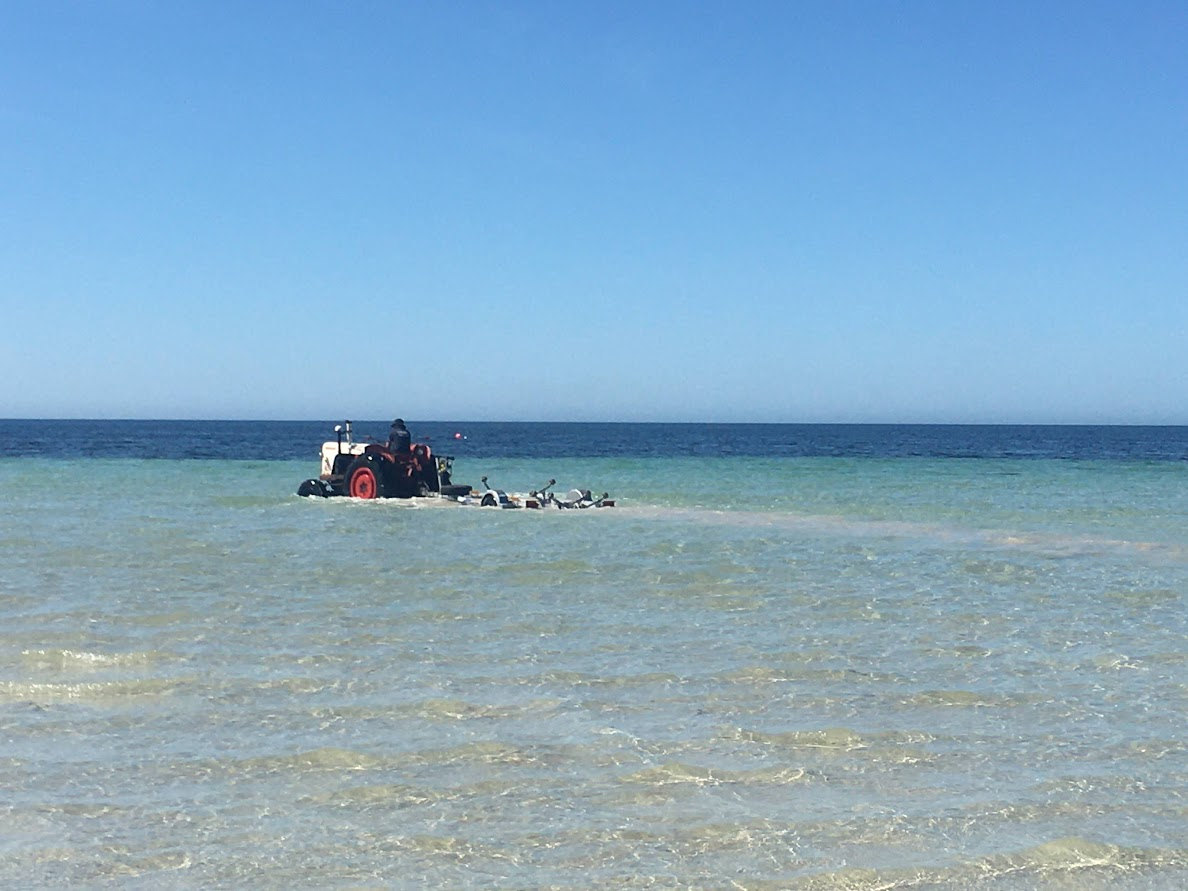
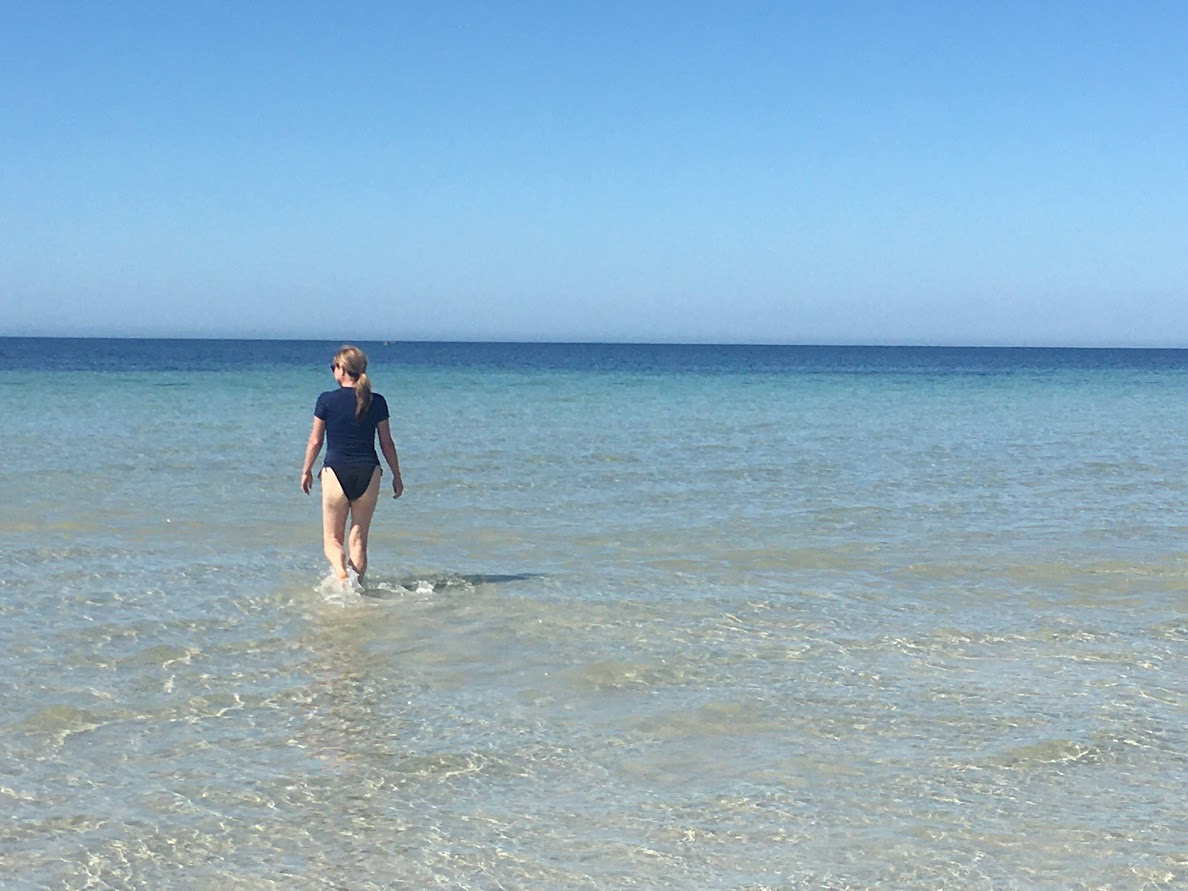
Parking on the beach, we absorb the panorama. The sand is crunchy beneath our toes. We’re both instantly delivered to our childhoods. The salty afternoon breeze is resuscitating. We wade about, the water shimmering. Claire remembers a holiday in Cooboowie. ‘It was one of the few times I remember Dad swimming,’ she offers. The wide and clean sand takes me to a place too. When I was ten, Mum, Dad, Jill, and I went to Port Vincent. I recall my plastic bucket of tiny crabs, scooped from the balmy sea. At Corny Point boats glide in. A tractor tugs out a fishing vessel. With the promise of fish, pelicans gather patiently. It’s among the best beaches I’ve visited.

The Howling Dog Tavern is named for a mention in Matthew Flinders’ journal. It was five-ish, so we veered into the carpark. Ours was the smallest vehicle there. Happy hour, and a noisy crowd’s in. The new owners dart about behind the taps, eagerly dispensing refreshment. With a Pike’s white and a Pale Ale, Claire and I take a pew on the veranda — where the ceiling fans bother away the flies. Folks drift in from the caravan park, or on Saturdays, from the cricket oval. For the hundredth time, I ask Claire, ‘What’s the difference between a pub and a tavern?’ We still don’t know. I wonder how many people in the buzzing bar know Woodsy. I’m sure at least one or two.

Driving out, I scan the crossroads one last time. I don’t see Woodsy, or too many of the 50,000 residents, but I finally understand.

0

The Light Around Dad’s 82nd Birthday

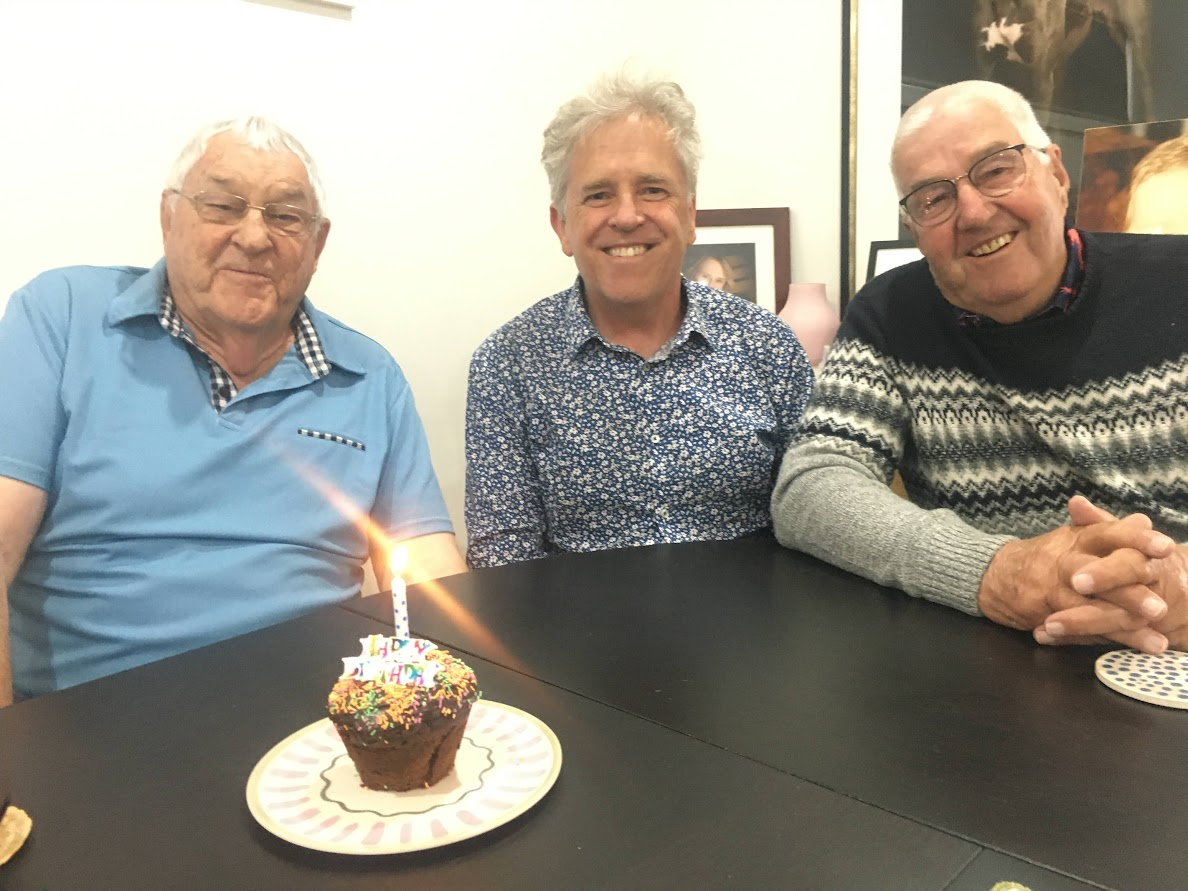
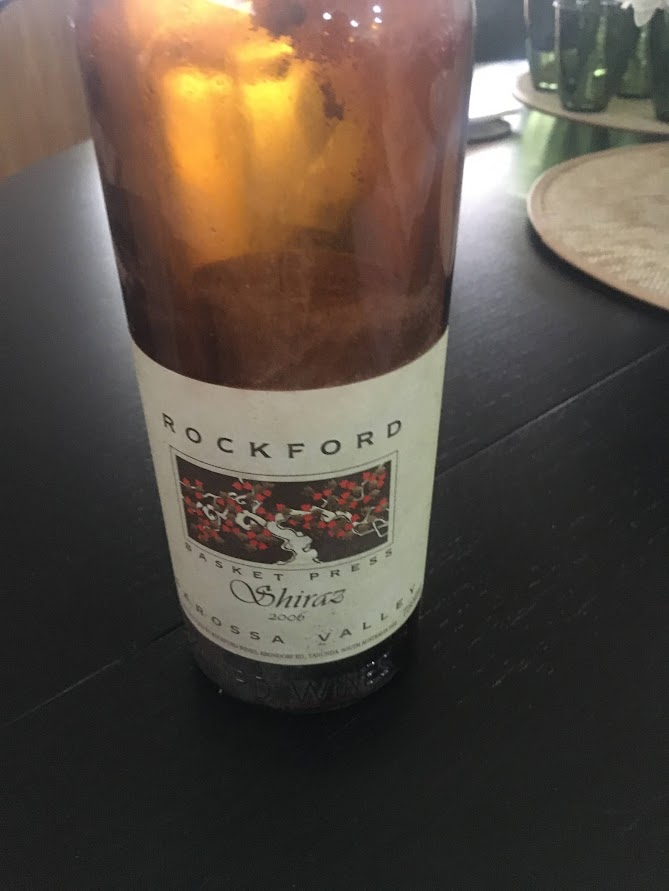
Those of us who drink red raised a glass to our patriarch. We enjoyed a glug of the 2006 Rockford’s Basket Press Shiraz — purple, velvety, immediately seductive. Dad, Claire, my nephew Mitchell, his girlfriend Alisha, and my son Alex all nodded their approval as Sunday lunch settled in with warm ease.

Under my sister Jill’s veranda, the cold November rain pushed in rudely — the kind that makes you reconsider going to the footy. We traded stories of Balinese dangers with cobras and scooters (Claire and me, imperilled), Kuta escapades (my cousin Ben, curious) and brazen prostitutes (Dad and Mum and my Uncle John and Aunty Liz, bemused).

Then, naturally, we drifted to Kapunda stories: antics in adolescent cars, the burning rubber of Uncle John’s Ford Zephyr (allegedly), and my HQ Holden versus the high-school fence (guilty, Your Honour). The following morning, I had to front, in glum succession, the school headmaster, the local Senior Sergeant, and of course Mum and Dad. All before breakfast.

A tickled Alex outlined his gap-year plans — Europe and the Stans: Kazakhstan, Kyrgyzstan, Tajikistan, Turkmenistan, Uzbekistan. I was suddenly distraught. Here was aural proof that he would soon be in the other hemisphere, an alien time zone, and forever vanished into adulthood.

Lunch was superb: lamb shoulder, roast chicken, and salads — vermicelli my standout — all made by Jill, a self-declared lover of cooking. She finished with a classic country pavlova piled with whipped cream and strawberries.

Still around the table, we sang Happy Birthday to Dad. I now remember that Americans don’t do the Jolly Good Fellow coda, which has always struck me as the spirited, fun bit of the tradition — the tune barrelling home, people lifting their volume and arm-swinging gusto. Ideal for the tone-deaf like me.

The previous afternoon, I’d gone in search of a shiraz, declaring that Dad’s birthday deserved a generous red and wandering the aisles of Dan’s, I spied some plonk that reminded me of an ageing bottle on the rack in the spare room. With that I left the store empty-handed, rushed home, rescued the dusty Basket Press Shiraz, and told Claire, ‘I was keeping it for a big occasion — and surely Sunday qualifies.’

It was instantly the best glass of wine I’ve ever had — and I hope everyone else felt the same. Context is everything, and it was superior to the Grange I’ve tasted on a couple of occasions. I reckon past a certain age, birthdays narrow into the things that matter: the closest people, engaging wine and food, and old stories we’ve all heard before — and will gladly recite again, with delighted ritual, next year.

2

Country Roads, Take Me Home — Again and Again

Sedans feel selfish in Bali. The local brothers picked Claire and me up at the Taksu Sanur Motel in their boxy people mover. Here, there are only two types of vehicles: scooters — cheap and nimble — and people movers that carry half a dozen or more.

Heading north up the east coast the brothers queued up some music on a phone. We immediately recognised the twangy guitars of a beloved American performer. The brothers sang along in broken but affectionate ways. You know the words. Join in!

Almost heaven, West Virginia
Blue Ridge Mountains, Shenandoah River

Claire and I suppressed our giggles, barely. What better way to engage with Western culture and to learn English (should you wish) than courtesy of the clear-eyed melodies of John Denver’s ‘Country Roads, Take Me Home.’ I do think it’s a terrific song about the love for home with its introspective, soaring bridge that often makes me misty and want to jump in my car and hurtle up to Kapunda.

I hear her voice, in the morning hour she calls me
Radio reminds me of my home far away
Driving down the road I get a feeling
That I should have been home yesterday, yesterday

Lunchtime on Monday and the traffic’s dense but moving as we slowly weave our way to Sideman, east of Ubud. The song finishes and I wonder what will be up next. To our aural surprise we have: ‘Country Roads, Take Me Home’ by John Denver. Except it’s not JD on repeat but the tune’s been pinched by some gormless baritone, likely with a too large hat draped on his too large, empty (Texan) bonce.

It’s a wonderful song, of course, but nothing should be played twice in a row. The second listening is always diminished, an entirely foreseeable disappointment. Still, for us in the back seat, it’s an intercultural education. Finally, the Appalachian Mountains have come to south-east Bali.

Tragedy! One of the brothers — he has pretty good English due to his stint on a cruise ship — was poking about in the console and glovebox when he timidly announced, ‘Oh, I’m sorry. I left my phone at the hotel so we’ll have to go back.’

Rather than spend an unnecessary hour in the car, Claire and I are deposited at Sanur Harbour. Strolling around, we’re constantly asked if we’d like a taxi. It’s like being questioned in a bakery if you’d like sauce on your sausage roll. I want to scream, ‘Yes, I’m so unspeakably dim that I need a stranger to alert me to my condiment requirements. Of course! Sauce. Thank you kindly retail assistant.’

Sometime later the brothers return in the people mover, all phones now present. We’re hot so it’s a relief to be in the cool of the car. Again, we steer north. The brothers both fumble with their phones — driving’s no impediment to this — and for our shared, involuntary pleasure, they recommence the tunes.

We then hear that familiar guitar picking — in the key of A minor — and the warm vocals of one Henry John Deutschendorf Jr whom you may know better as John Denver.

Almost heaven, West Virginia
Blue Ridge Mountains, Shenandoah River

Three times in under an hour — and we were still stranded in Sanur, vehicularly and musically. Claire and I squeeze each other’s hand in silent, intimate acknowledgement. We’ll hear it twice more before we leave — drifting from waterfalls and restaurants, the song now a comical motif, an improbable Asian companion.

Listening to the song in the future, I’ll remember those lovely brothers and that captive drive along the coast of a small Indonesian island.

Music really does surround our tiny, receptive world.

0

The (Claire Louise) Beverage Compliance Manual

Congratulations on your appointment as Claire Louise’s sommelier, barista, mixologist (oh) and general drinks help. Of course, it’s not really about beverages. It’s about knowing someone’s favourites, their rhythms, their fussy preferences — and loving them not in spite of them, but because of them

To assist you in your duties here’s a (brief) list of requirements.

1. Green tea. Taken regularly throughout the day. Any number between 4 and 7 cups. Teabags must undertake multiple tours of duty. Tea strength, as Goldilocks knows, should not be too weak nor too strong but just right.

    2. Coffee. Taken morning (one at breakfast) and afternoon (also one). As per tea should be moderate in strength. Sometimes, the afternoon one is purchased from a café or the evil Scottish corporation (drive through, not walk-in) and must be nice. As in a nice coffee. A chocolate muffin might accompany the later. Pro tip: Half the muffin is to be taken home and graciously offered to the husband. This, too, is nice.

    3. Water. Above all else this cannot be yukky. Filtered water that has fallen as gentle, nice rain in a country location is best. Do not buy in plastic bottles. Repeat. Do not buy in plastic bottles. Unless circumstances demand. These may include hikes in Europe across especially rocky terrain like the Cinque Terre.

    4. Orange juice. Taken in a small glass upon rising. Must be diluted (not overly) to allow for ease of consumption and to avoid citrus shock. NB- this is in stark contrast to #9.

    5. White wine. Must be cold but not too cold. 8 degrees Celsius seems ideal. Fill to (Rodney) line if using glass acquired* from pub. Do not add ice, regardless of outdoor temperature. But it’s nice to ask.

    6. Red wine. If using glass acquired* from pub fill to just below the Rodney line. No, I don’t know either. Add a single magic drop—no one really knows what it does, but it feels important.

    7. Sparkling white. Occasionally taken as first drink in pub. Only one glass and this is described as nice.

    8. Sparkling red. Despite early enthusiasm, this is now shunned. No loss.

    9. Brandy. In order to obtain your mandatory Cert IV, the Brandy unit must be passed at a minimum B level. Large, wide-mouthed tumbler. Substantial ice cube. Ice first to allow for spirit-cooling. How much brandy? Covering the brandy and ice, but not really, only conceptually. Then add new coke not pre-opened coke for it’ll be flat. Then again, the new coke will demonstrate a disappointing lack of fizz (see enshittification). Take care to not over-fill the tumbler to leave room for coke-topping to alleviate the intense brandy hit. To support you with this, a range of face-to-face and online groups are available such as the Brandy Assistance Division (BAD) who meet every month on the second Tuesday and 1 – 800 – BRANDYHELP has proved useful to some.

    10. Gin. Similar to but not quite the same as #9. Probably less spirit but with the addition of botanicals — though don’t let Miss overhear you saying that word, a dehydrated lemon wheel — don’t let Miss overhear you saying that either, mint et al.

    11. Cocktails. No genuine insight. Just make ‘em strong. Unless 10% ABV, don’t bovver.

    12. Pimm’s. (correct use of possessive apostrophe, thanks) See #11.

    13. Beer. The sole exclusion. Simple rule to remember.

    14. Hot chocolate. Taken mid-evening (mostly during the southern hemisphere winter) around 9pm. Sometimes as early as 8.30 and as late as 9.30. Never a giant mug’s worth. Regardless of the temperature, microwave for an additional 30 seconds (minimum) but do not allow to boil. May be accompanied (irregularly) by treats.

    15. Baileys et al. Taken occasionally, mostly on a Sunday. Often with an ice cube. Do not be alarmed when, days later, you find a glass with a barely-there centimetre of (diluted) milky beverage hidden away (in seeming shame) on a low fridge shelf. Sometimes poorly sealed with a sad square of cling wrap.

    I wish you well and trust you’ll enjoy this lively and exciting role.

    2

    No Helmets at Silly Mid-On — A Birthday Letter to Rocket

    Hello there Rod

    Happy birthday! I thought it a fine moment to pause and raise a glass (West End if available) to a few tremendous memories from the vault…

    Let’s begin with the ongoing tradition of our SANFL Grand Final texts in the case of Sturt or Glenelg winning. You had the upper hand in 2016 and 2017; I had a turn in 2019, then received a text in 2023 and 2024. Surely one of us gets a message this year. Watch out!

    *

    I still think back to those Adelaide Oval Test matches of our youth. We loved the cricket, of course, but also the economy of the cheap kid’s ticket. More cash for beers. I can see us now at the Victor Richardson Gates — me first, just 17, sliding through. Then Davo. Taller. He’s waved in too. Chrisso, taller again, gets the nod after a suspicious squint from the bloke on the gate. But then comes you, all six-foot-five of you, last in the queue. The old guy takes your ticket, peers up, irritated, and says, ‘Are you sure you’re all under sixteen?’ Davo doesn’t miss a beat: ‘Yeah, we’re from the country. Breed ’em big out there.’

    We all then galloped straight to the hill and set up shop just in front of the Duck Pond. We heard the whistling of stems being pulled from empty kegs. Shortly after one of us came back with a plastic cup holder bursting with beers, slopping West End Draught onto the sloping lawns.

    *

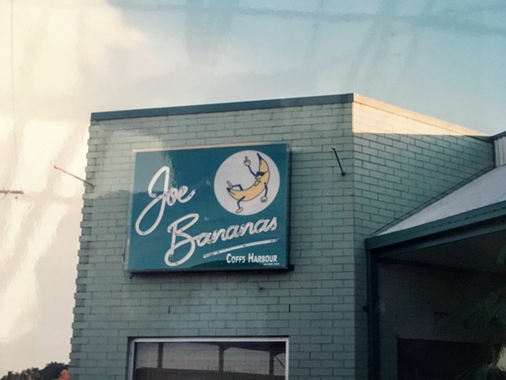
    A highlight was most certainly the trip Chrisso, and I made to Coffs Harbour in July of 1990 to visit you and Michelle. We had a great week. I recall Mutton Bird Island, Par 3 golf in Coffs, the cocktail party with your footy club friends, going to the Sawtell RSL and Joe Bananas for dinner, lots of fun along the way and — of course — the triumphant meat tray at a local pub.

    Good people, good weather, and that ancient stubby holder still tells the tale!  

    *

    A less successful expedition was the 1982 Lutheran Youth trip to Naracoorte with Stephen in the Gem. Ending up in a ditch and travelling home by train! Found sanctuary on the Fanks farm. In between was a theological and beery blur. But we survived — just.

    *

    Then there was Melbourne in 2017 — you, me, the Hayward brothers, Lukey and Nick. Listening to Phil Carmen at the North Fitzroy Arms. He was truly compelling. It was a great event and as people say, you know it’s a big day when you get to the pub at noon and next thing, you’re ordering dinner there too before zipping into Young and Jackson’s for a midnight nightcap. Collingwood and Port the next day! Free bird seed. A funny weekend.

    *

    It was also terrific to be part of two Senior Colts cricket premierships. Fergy our coach. Tanunda and Angaston Ovals. I had a stint at silly mid-on when you charged in. No helmets in those days — and no shortage of courage. Both the Tanunda batsman and I in danger of fouling our whites. Especially when he defended one of your short balls using only his (four-cornered) head. I was sure it’d come straight off his double scoop Gray Nicolls.

    *

    But it wasn’t all bouncers and meat raffles. That you and Michelle asked Chrisso and I to act as ushers at your wedding ceremony in Hamilton remains an utter honour. The Yalumba reception was also excellent!

    Thanks for all this, Rod — the cricket, the laughs, the travel, the stories we can now retell like old blokes at a reunion. Hang on! Enjoy your extended birthday celebrations. Well played!

    Love

    Michael and Claire

    July 2025

    2

    Kapunda, Monday — A Drive Through the Quiet

    From the top of Gundry’s Hill, Kapunda lies soundlessly below — half-hidden in its jumbled valley.

    The topography gifts this view — and encourages a certain kind of reflection. I consider how some of the nearby towns such as Freeling, Nuriootpa, and Tanunda are largely flat — perhaps a little reserved in their landscape. Our steeper hills allowed for a testing upbringing of bike and billycart riding.

    Once, the surrounds of Gundry’s Hill were simply paddocks — rolling and empty. Now, a housing estate sprouts, improbably dense. There’s about twenty homes hounded in together — you’d struggle to swing a nine iron between them. However, unlike other locations further north, the population’s climbing.

    Driving about I’m gladdened by the early-week industry. People on foot and in vehicles are moving about collecting and depositing stuff, accomplishing transactions, making things happen.

    A blue sky presses down on Kapunda, dragged by an icy wind slashing at the trees and roofs. I remember days like these from my childhood. A friend once called it a lazy wind — ‘It doesn’t go around you, just straight through your torso.’ She was right.

    I’m curious — profoundly invested — in the high school’s rebuild after the 2022 fire. Eringa now looks familiar and is regaining much of its grandfatherly glory. It’s reclaiming its place as the town’s reassuring heart. The croquet lawn lies beneath a compact row of building site offices and the apron sloping from the grand front steps is crowded with what I hope are temporary structures. The old palm tree stands noble by the basketball court.  

    *

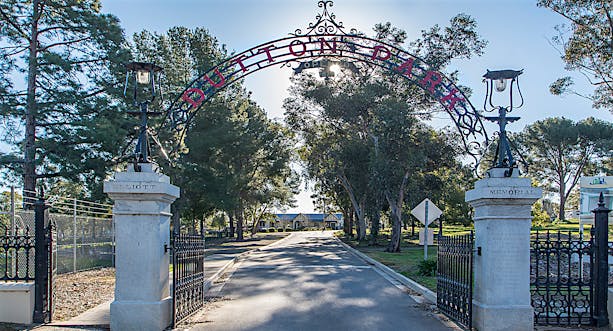
    Idling through the Dutton Park gates I take a slow lap around the sporting precinct, passing the clubrooms where Claire and I had our wedding reception. I then see the sleek bowls club, tennis and netball courts, and sadly becalmed trotting track — remembering long, dust-kicked laps in the heat of footy’s pre-season. The encircling gum trees bend in the crisp June gusts.

    I veer past the old Railway Hotel. Most of it’s intact behind some hopeful orange bunting. I wonder for a moment at what it could become. A motel? Café? Restaurant?  I then shake my head. It’s been decades since the pub fire and nothing’s happened.

    Across the road is the Railway Station. It’s now luxury accommodation but I remember Mum taking my sister Jill and I to collect our monthly parcel of State Library books and cassettes. There was always excitement in pulling open the brown paper wrapping to see what’d made the train trip up from North Terrace.

    I note mechanics garages all around town. A number have sprung up to service patiently waiting trucks and utes. Diesel motors have feelings, too. A boxing club’s in a shed across from Bald Hill.

    The North Kapunda pub is shut although the forlorn loss is yet to drape itself glumly over the veranda and windows. I hope it reopens but Kapunda has probably always been overserviced by pubs. Smiling at the thought of Saturdays in there during the 1980’s — the rowdy white smear of a couple dozen cricketers and I hear, ‘Where are you goin’? You owe me a beer for the Schooner School!’   

    In contrast, The Prince of Wales drive-through has been trading steadily since dawn and just over on Clare Road’s a flashing sign urging punters to drop by for morning coffee and afternoon delights. I love pushing through the front door into its cosy bar but before noon on a Monday’s not really the time. One day soon.

    Turning onto Hill Street I spy the sporting mural about which I’ve heard much. I’m carried back to the past and beam at Rocket Ellis, Paul O’Reilly, Davo, and other portraits. Macca — iconic teacher and sportsman — is also there and he once told me, ‘You’ve got it arse about. You hit a cricket ball in the air and a golf ball along the ground!’

    I smile at the adjacent mural more broadly acknowledging Kapunda’s story. Much-loved deli owners and revered citizens Eli, Brian, and Reg Rawady are at the rightful centre. I can still hear their distinctive voices, especially Reg’s bellowing baritone. A town that appropriately praises its people and history is surely a healthy place.

    At the Kapunda Bakehouse, I park outside the former Eudunda Farmers store. Inside’s noisy with older folks concluding their morning tea. As I’m ordering most amble towards the door — leaving behind their coffee cups, chatter, and crumbs. A murmuring din bounces around. ‘See you next week, Bill. Enjoy your golf on Thursday!’ It’s an encouraging hub for the town and a bustling café.

    Deciding to eat on the balcony, I spot the dental clinic across the Main Street. It’s new although Dad later tells me it’s been open a while. After too many chocolate donuts, stride across the road to get your teeth fixed.

    My sausage roll is excellent. Scrutinising it after a bite or two, I’m thrilled to spot that neglected ingredient: carrot! The taste is delicate and flavoursome. It’s not massive — no need to compensate for tastelessness or oily pastry. It’s a treat.

    *

    Monday mornings teach you things in a country town. I’ve taken a tranquil drive through memory but have also glimpsed something of Kapunda’s boisterous and bright future. There’s movement beneath the quiet.