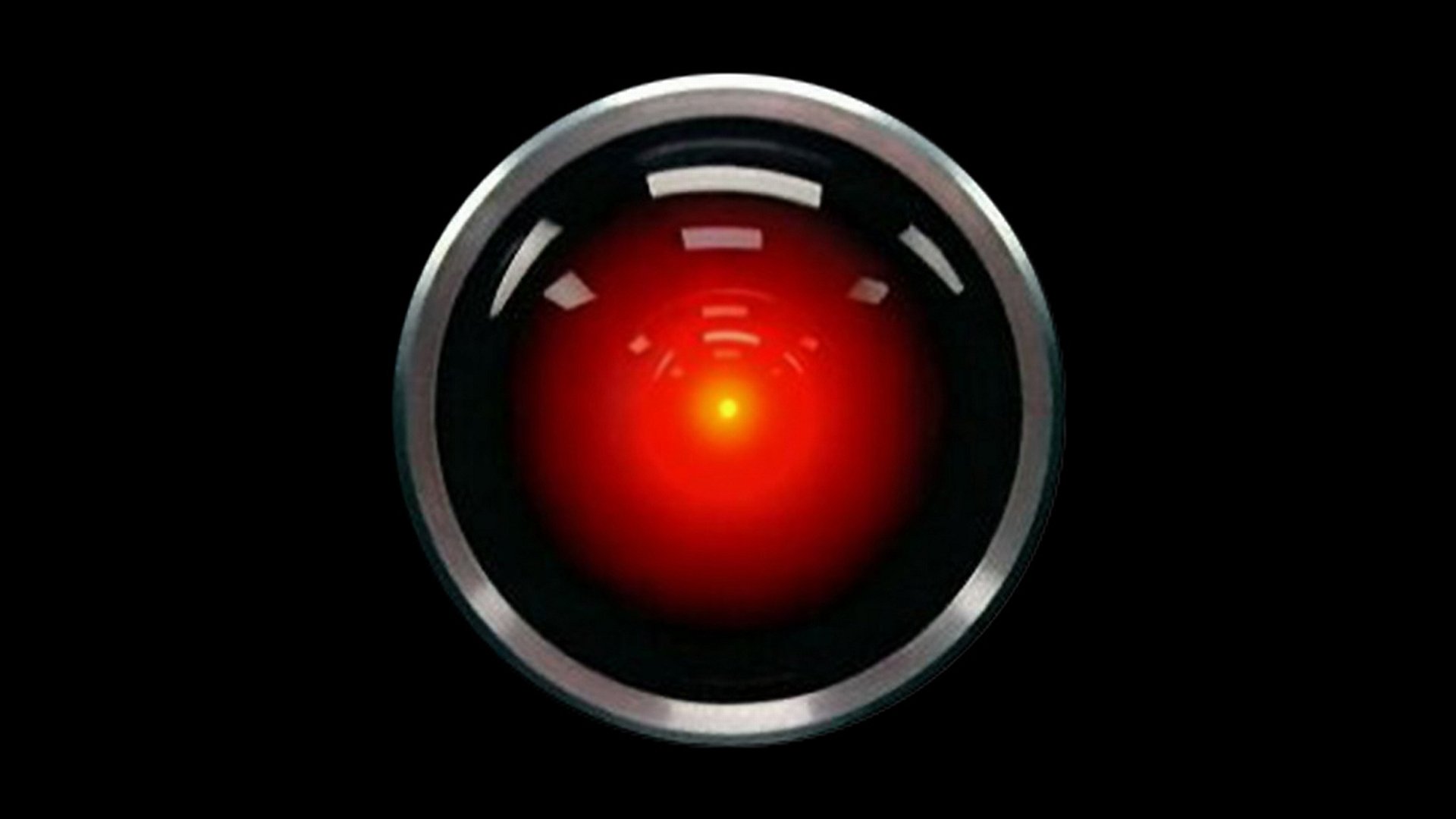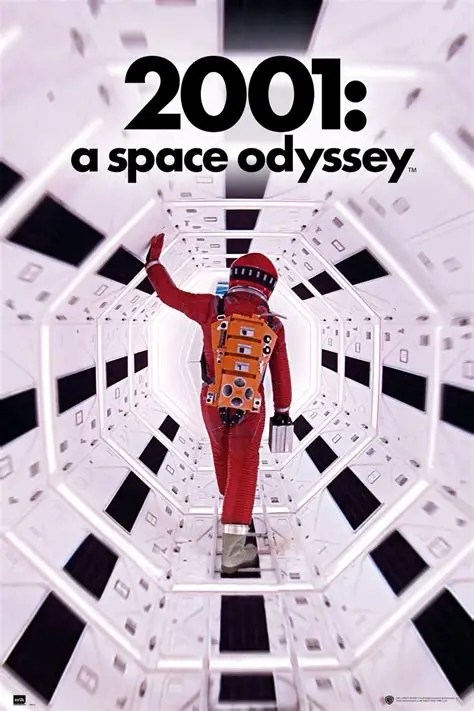
Alex and I watched Kubrick’s magnum opus one Sunday afternoon when he was in year 9. The other night Max and I did too. Not only a film, it’s a cultural icon, and is representative of the rich, examined life I want them both to enjoy. Max asked great questions and found it puzzling and provocative.
The next morning while he was asleep, I watched the DVD of extras with its series of documentaries and I found myself taking pages of notes — part observation, part response. What follows are a few of those reflections.
*
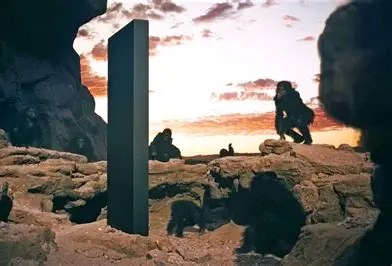
The famous jump cut features the spinning animal bone. The slow motion drags us all into the poetic arc and the bone is concurrently a tool, weapon, and art. It is replaced by the space station. In a single cut, the infinitesimal holds millions of years. We are forced to leap across a chasm of history. This invites contemplation on the aspirations and achievements of humanity. The presence of the monolith with its 1:4:9 ratio invites us to consider that an external intervention may be responsible for our evolution.
When Dr. Floyd is travelling to the moon, he does so as a commuter who is often asleep. He never looks out the window as the view has become mundane to him. Ironically, Floyd’s lack of interest in his journey provokes awe in us: imagine being bored by the majesty of space! What a life it must be, to nap on your way to the moon. Or is Kubrick warning us not to be seduced by our own cleverness, and to retain our innocence and wonder? At various points, Max leant forward from his chair.
While profoundly visual, the film also functions as an opera. Strauss’s Blue Danube was chosen as it conjures unsurpassed beauty, and Kubrick wanted us to also see space as joyful. This, and the other music, form the film’s architecture. It slows the action and makes us behold the exquisiteness of space travel and the machines in which we push out into the universe. It is a tranquil prayer, as all prayer should be.
Kubrick also allowed silence to act as its own instrument. This is most telling when Bowman uses an explosion to re-enter Discovery One — there is no sound in space, so we hear nothing. We’re conditioned to expect a large accompaniment of noise but the lack of it heightens the drama. Silence enhances our response.
The score is singular with often only one sound at a time unlike the dense and complex noise common in cinema. The dominant, disturbing breathing of the space-suited astronauts can be interpreted as rhythmical or even musical, and it draws us into the character while evoking empathy and fear. It’s tempting to see its influence in Darth Vader’s breathing — but here Bowman is prey, not predator. Max and I spoke of the legacy of 2001. He recognised its influence in Star Wars and Project Hail Mary. I told him he should next watch Interstellar.
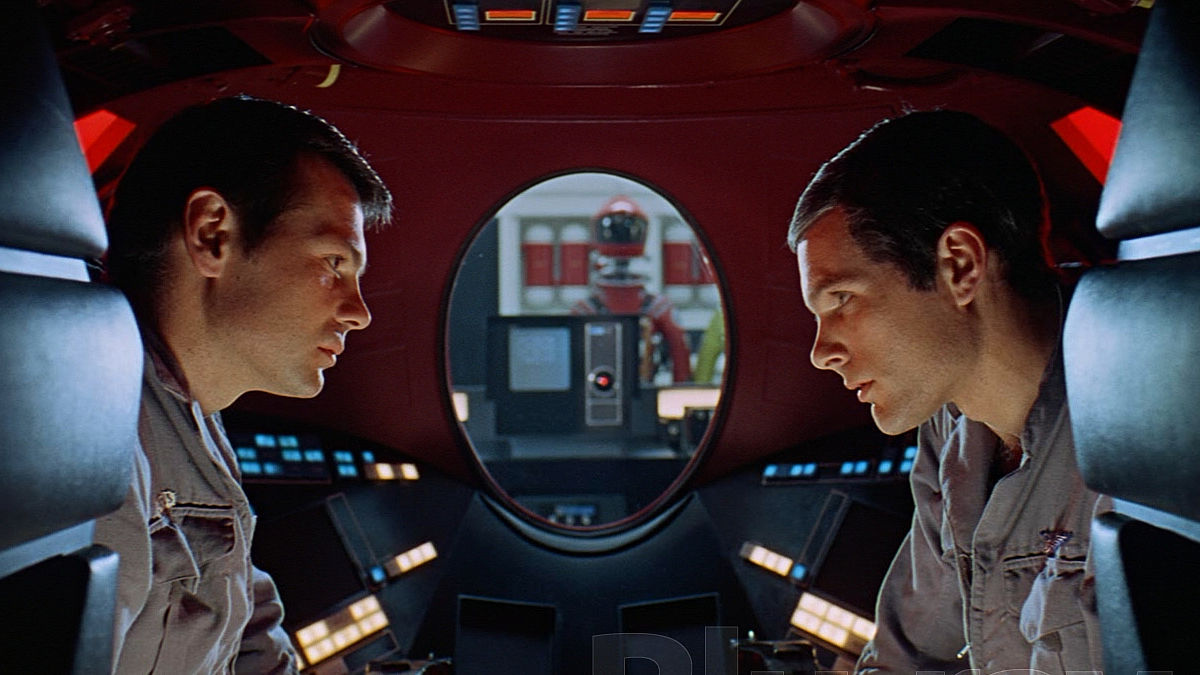
Taking advice from Carl Sagan, Kubrick decided to not show the aliens responsible for the monoliths — located on the African veld, lunar surface, and above Jupiter -— but only their unseen influence. He wanted to move away from the science-fiction of the 1950’s with its unconvincing humanoid aliens, preferring wisely to not ‘show the face of God’. Their appearance is not relevant, it is the impact they have, represented by the monoliths. This is like the first hour of Spielberg’s Jaws when we don’t see the full shark and this amplifies our terror. Even now when swimming in the shallows I know the worry is not what you can see but rather, what you can’t.
The final scene with Dave Bowman in a neoclassical bedroom is inspired by the Dorchester Hotel located near Hyde Park in London. The notion being that the aliens would want him to feel comfortable as he undergoes the transformation to Star Child. He is now foetal, yet preternaturally alert and serene. Bowman is about to be born into a form beyond the physical in which he’ll exist as pure consciousness and light.
*
Like the film’s black monolith, I hope 2001: A Space Odyssey promotes a life of curiosity and contemplation for Alex and Max. I cherished the chance to invite them into this luminous world and wish that it might be a catalyst for a small, continuing evolution in both.