2

Time on a Myponga Hill

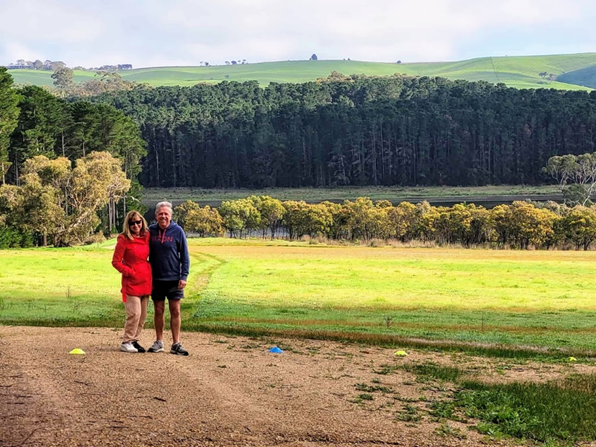
Claire and I stand side by side on the ochre path, a splash of red and a patch of navy against the panoramic landscape. Her coat flares like a small flag of likable boldness, while beside her I carry — optimistically — the casualness of weekend ease.

The land unfurls in layers: first the pale grass sprinkled with dew, then a row of shrubs in muted gold, and behind that the uncompromising wall of dark pines, straight as sentinels. Beyond, the green hills roll upward, their ridgelines softened by distance and a sky pressed with a haze of placid, reassuring cloud.

The coloured cones at our feet — blue, yellow, scattered like afterthoughts — are relics of the parkrun, yet in this setting they appear ornamental, like petals casually dropped along the path.

Together, we seem anchored but at peace with the vast quiet extending out all around, an image of warmth set against nature’s wide canvas.

It’s a moment on our annual Carrickalinga escape with dear old friends during which certain traditions have taken happy hold. Pizza Friday night, Saturday morning market, evening cocktails. As with most traditions, the joy comes largely from shared anticipation although the rituals remain delightful in their luxury.

That the photo was taken by Trish is special. She has known us both so long and so well and caught this moment as a gesture of kindness, an unspoken but mutually understood gift. The picture isn’t of us alone; it carries Trish’s affectionate eye.

Photos make permanent the ephemeral, and cryogenically freeze us all, sometimes against our will. Are these images dishonest in their fleetingness or quiet protests against life’s cruel acceleration? We look eternal but already the past has fled, with tempo like a chariot.

After, we ambled back down the hill in our chatty knot and past the retreating parkrun crowd of huffing participants and hovering volunteers.

Saturdays, at their best, spread out from dawn with kaleidoscopic possibility, hours to be coloured, festive windows through which to view self and others.

We go from forest and reservoir to coffee and toast. Like time, we are never still — least of all when we believe we are — and I consider that boundless, comic truth. I feel this thought prickle, until for a breath, I outpace it.

2

Kapunda, Monday: A Drive Through the Quiet

From the top of Gundry’s Hill, Kapunda lies soundlessly below — half-hidden in its jumbled valley.

The topography gifts this view — and encourages a certain kind of reflection. I consider how some of the nearby towns such as Freeling, Nuriootpa, and Tanunda are largely flat — perhaps a little reserved in their landscape. Our steeper hills allowed for a testing upbringing of bike and billycart riding.

Once, the surrounds of Gundry’s Hill were simply paddocks — rolling and empty. Now, a housing estate sprouts, improbably dense. There’s about twenty homes hounded in together — you’d struggle to swing a nine iron between them. However, unlike other locations further north, the population’s climbing.

Driving about I’m gladdened by the early-week industry. People on foot and in vehicles are moving about collecting and depositing stuff, accomplishing transactions, making things happen.

A blue sky presses down on Kapunda, dragged by an icy wind slashing at the trees and roofs. I remember days like these from my childhood. A friend once called it a lazy wind — ‘It doesn’t go around you, just straight through your torso.’ She was right.

I’m curious — profoundly invested — in the high school’s rebuild after the 2022 fire. Eringa now looks familiar and is regaining much of its grandfatherly glory. It’s reclaiming its place as the town’s reassuring heart. The croquet lawn lies beneath a compact row of building site offices and the apron sloping from the grand front steps is crowded with what I hope are temporary structures. The old palm tree stands noble by the basketball court.  

*

Idling through the Dutton Park gates I take a slow lap around the sporting precinct, passing the clubrooms where Claire and I had our wedding reception. I then see the sleek bowls club, tennis and netball courts, and sadly becalmed trotting track — remembering long, dust-kicked laps in the heat of footy’s pre-season. The encircling gum trees bend in the crisp June gusts.

I veer past the old Railway Hotel. Most of it’s intact behind some hopeful orange bunting. I wonder for a moment at what it could become. A motel? Café? Restaurant?  I then shake my head. It’s been decades since the pub fire and nothing’s happened.

Across the road is the Railway Station. It’s now luxury accommodation but I remember Mum taking my sister Jill and I to collect our monthly parcel of State Library books and cassettes. There was always excitement in pulling open the brown paper wrapping to see what’d made the train trip up from North Terrace.

I note mechanics garages all around town. A number have sprung up to service patiently waiting trucks and utes. Diesel motors have feelings, too. A boxing club’s in a shed across from Bald Hill.

The North Kapunda pub is shut although the forlorn loss is yet to drape itself glumly over the veranda and windows. I hope it reopens but Kapunda has probably always been overserviced by pubs. Smiling at the thought of Saturdays in there during the 1980’s — the rowdy white smear of a couple dozen cricketers and I hear, ‘Where are you goin’? You owe me a beer for the Schooner School!’   

In contrast, Puffa’s drive-through has been trading steadily since dawn and just over on Clare Road’s a flashing sign urging punters to drop by for morning coffee and afternoon delights. I love pushing through the front door into its cosy bar but before noon on a Monday’s not really the time. One day soon.

Turning onto Hill Street I spy the sporting mural about which I’ve heard much. I’m carried back to the past and beam at Rocket Ellis, Paul O’Reilly, Davo, and other portraits. Macca — iconic teacher and sportsman — is also there and he once told me, ‘You’ve got it arse about. You hit a cricket ball in the air and a golf ball along the ground!’

I smile at the adjacent mural more broadly acknowledging Kapunda’s story. Much-loved deli owners and revered citizens Eli, Brian, and Reg Rawady are at the rightful centre. I can still hear their distinctive voices, especially Reg’s bellowing baritone. A town that appropriately praises its people and history is surely a healthy place.

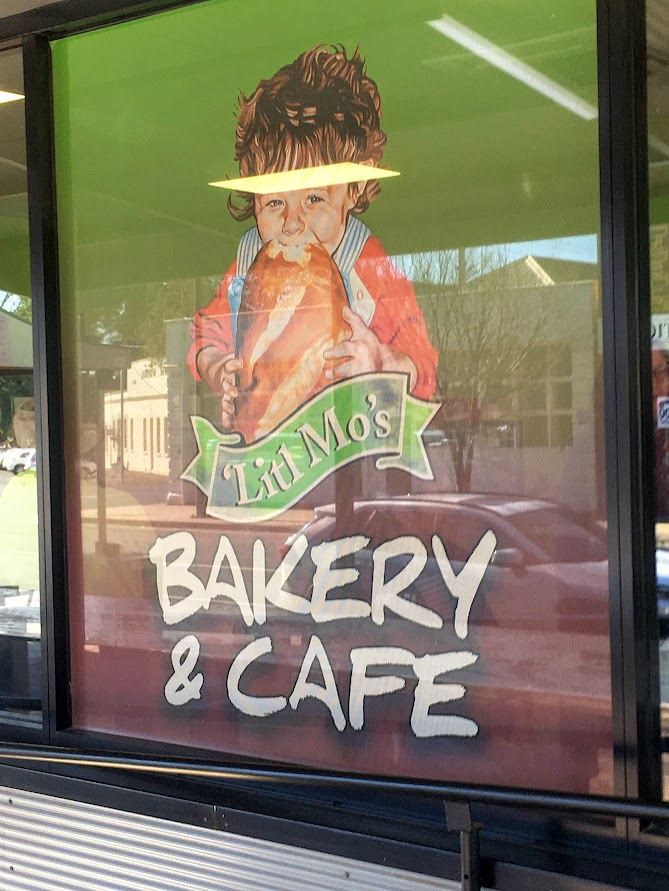
At Litl Mo’s bakery, I park outside the former Eudunda Farmers store. Inside’s noisy with older folks concluding their morning tea. As I’m ordering most amble towards the door — leaving behind their coffee cups, chatter, and crumbs. A murmuring din bounces around. ‘See you next week, Bill. Enjoy your golf on Thursday!’ It’s an encouraging hub for the town and a bustling café.

Deciding to eat on the balcony, I spot the dental clinic across the Main Street. It’s new although Dad later tells me it’s been open a while. After too many of Mo’s chocolate donuts, stride across the road to get your teeth fixed.

My sausage roll is excellent. Scrutinising it after a bite or two, I’m thrilled to spot that neglected ingredient: carrot! The taste is delicate and flavoursome. It’s not massive — no need to compensate for tastelessness or oily pastry. It’s a treat.

*

Monday mornings teach you things in a country town. I’ve taken a tranquil drive through memory but have also glimpsed something of Kapunda’s boisterous and bright future. There’s movement beneath the quiet.

0

Pub Review: The Windmill

A great man once said that every time you walk into a pub, there’s a story. As Dale Kerrigan would’ve narrated if he were me, “I’m Mickey Randall and this is my story.”

Suburbs like Port Adelaide, Norwood and North Adelaide are home to many pubs and geographers and historians and pissheads will happily bend your ear with a truckload of reasons for this. Prospect, just to the north of the city, is not one of these blessed locales.

However, fear not for it hosts the Windmill Hotel.

Our Kapunda group was slightly diminished in number, largely due, I suspect, to some not knowing the date. The week between Christmas and New Year can interrupt one’s sense of time, what with all the couch, all the cricket, all the Coopers.

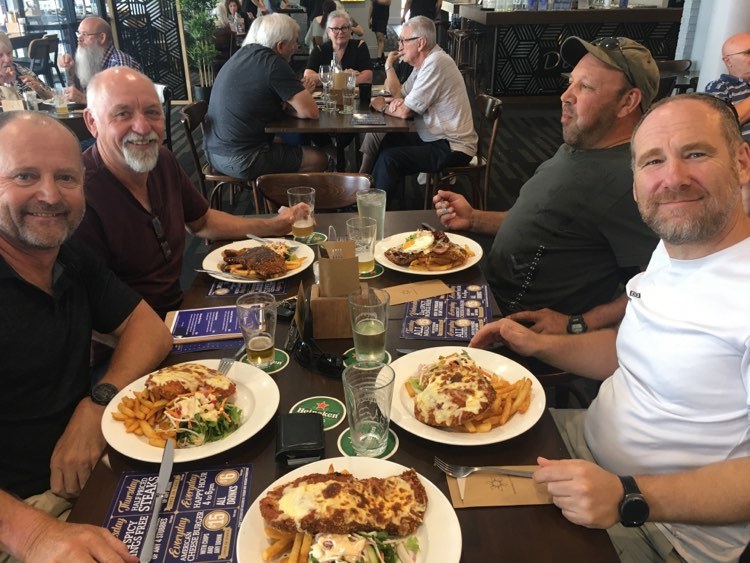
We dine inside and not in the beer garden and this seems an accurate choice given that the garden is wholly cement and fake grass, and two of our party are drinking cider as if they’re elderly extras miscast in a Welsh coming-of-age movie. But, far be it for me to editorialise upon the refreshments of old friends.

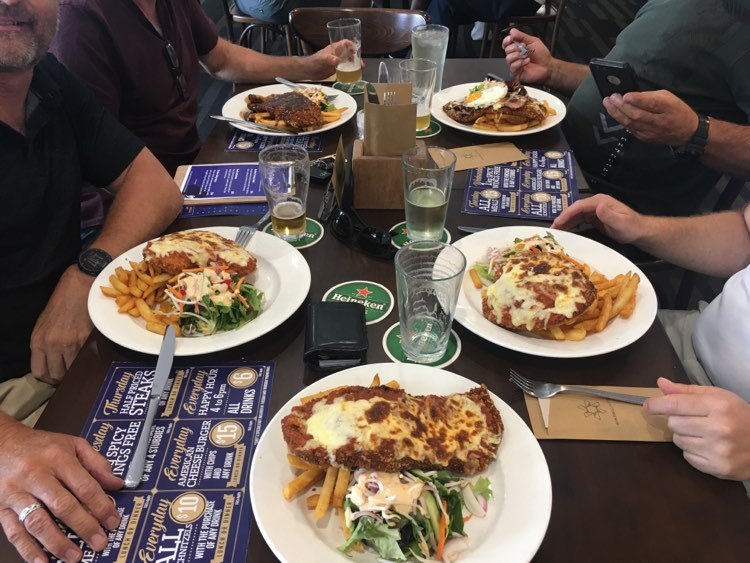
I can report that the Windmill has a daily schnitzel special, offering these for only $10, as if it’s September, 2007 and Port is a very good chance against Geelong in the AFL grand final. While toppings such as gravy or parmi are extra this still represents tremendous value.

The meals are great and punctuated by talk of the cricket and local boy Travis Head who, we agree, has poor foot work and seems to make too many very handsome thirties. Discussion then moves to cars and more particularly four-wheel driving across various outback settings, and after a fashion I deftly move the subject to a topic with which I’m more familiar: neurosurgery and specifically neurosurgery as it pertains to the cerebrovascular system.

As Crackshot has recently moved to Prospect and indeed, lives around the corner, he suggests adjourning there for a mid-afternoon coffee. Once we’re there and enjoying our post-lunch lattes, Fats comments that, if he thinks about it deeply, this really is a disastrous state of affairs. “Coffee, Bah!” he almost spits across the immaculate stone bench-top. “Never mind”, I comfort him, “It’s OK.”

And it is for in early 2021 we have planned to go to Puffa’s, one of Kapunda’s iconic pubs, for a Saturday barbeque on the balcony.

There’ll be no coffee.*

Chip suffocation is the biggest killer of over-40s in this country

*No, we actually enjoyed our coffee and being hosted by Crackshot

0

Kenny Rogers and me

K D

In 1983, during Year 12, these are the songs I unforgivably thought were cool:
“Twisting by the Pool” by Dire Straits
“Bop Girl” by Pat Wilson
and this, yes, this
“Safety Dance” by Men Without Hats.

How could this ever have happened?

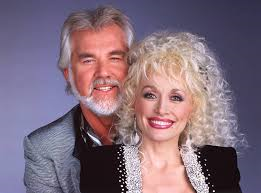
Later that year, just after I turned seventeen, Kenny Rogers and Dolly Parton released “Islands in the Stream” (named after a Hemingway novel) and I scoffed at it. Country music! Old people! Corny! I was seventeen.

It was unlikely played on 5SSA-FM as SA-FM was then known. I can’t recall hearing it on the Morning Zoo with John Vincent and Grant Cameron as I drove my sky-blue HR Holden to Kapunda High to endure the poetry of Gerard Manly Hopkins (“I caught this morning morning’s minion, kingdom of daylight’s dauphin, dapple-dawn-drawn Falcon”).

SAFM_Banner_600px

I didn’t appreciate its alternating lead vocals, superb harmonies, and thrilling key change until, I’m ashamed to share, much later in life. And Dolly, somehow both tiny and colossal, is the perfect partner to Kenny’s warm yet seasoned voice.

Often now making an appearance on the back patio at a BBQ it’s one of the great duets.

*

Growing up in the 70s, Mum and Dad had some of Kenny Rogers’ vinyl including his greatest hits and the compelling Eyes That See in the Dark (of course, he could never have been Ken Rogers for he’s obviously the manager of your local hardware store). The albums are long gone but I remember him spinning on the Pye 3-in-1 (turntable, cassette and radio) and his voice. It was golden but with an edge of experience and slight menace as needed. It also hinted at a mythic America of adventure and promise. It evoked a place I wanted to go.

As with much in art and music there’s often a dramatic gap between the sunny melodies and the lyric’s dark narrative. “Coward of the County” is about sexual violence, “Reuben James” explores deep-seated racism and “Ruby” concerns a Vietnam veteran whose disability renders him unable to satisfy his wife so she ventures into town- “painted up your lips and rolled and curled your tinted hair”- to get her needs met, but my childhood ears were deaf to these distant themes.

*

The Big Lebowski is my favourite film and Kenny contributes to this too. In this shaggy-dog story bringing together a congregation of random, found objects, “Just Dropped In (to See What Condition My Condition Was in)” fits the much-loved dream sequence perfectly. It’s by The First Edition and lead vocals are by Kenny. The scene begins when porn star Jackie Treehorn drugs The Dude’s White Russian.

BL

The Dude is the main character played by Jeff Bridges and presents like Kenny if he’d let himself go and frequented his local supermarket Ralph’s in his house pants and dressing gown. Featuring bowling, Saddam, love interest Maude in Viking costume, and some Johnson-dismembering Nihilists welding novelty-sized scissors, this psychedelic pop track is an irresistible accompaniment, and gave Kenny some late-career pop culture panache.

The lyrics open thus:
I woke up this morning with the sundown shining in
I found my mind in a brown paper bag within
I tripped on a cloud and fell-a eight miles high
I tore my mind on a jagged sky
I just dropped in to see what condition my condition was in.

Just like the Dude, and most of The Big Lebowski, these are joyously nonsensical.

*

Early this century on my first big overseas trip I saw much that bedazzled me. The Berlin Wall, Big Ben, the Colosseum. But, among the strangest sights was one at the start in Penang. Wandering about Georgetown, the muggy, sister-city of Adelaide, and staring at the Chinese, Indian, Islamic and British architecture beyond the downtown markets, I saw what appeared as yet another American restaurant.

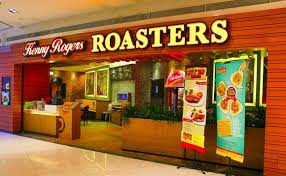
Getting closer, I squint at the signage. Kenny Rogers Roasters. Oh, must be another of that name I thought. A local icon I’ve not heard of. Fantastic. That’s why we travel. But the face seems familiar. White beard, grandfatherly. Vaguely Colonel Sanders so that is right for a chook place. Intrigued I stroll in.

It was that Kenny Rogers. With his own restaurant! In the middle of Asia! A long way from Nashville. What a glorious, unforeseen world.

Inside the walls were festooned with gold records and beaming (possibly photo shopped) pictures of Houston’s favourite country star. “The Gambler” strummed out beneath the slowly circulating ceiling fans. Still disbelieving, and considering the menu, it seemed neither Southern American nor Asian but possibly a Mississippian/ Malaysian fusion.

A decade or so later there was a Kenny Rogers Roasters (although the last American KRR diner closed in 2011, it’s still powering in Asia) across from my Singaporean condominium at the geographically-confused shopping centre Great World City. Fresh to the country, I took the boys there once for a dreadfully expensive meal of chicken and chips, and wondered how mad the unrelenting stream of Kenny’s Greatest Hits might send even the most devoted of wait staff.
KRR

*

Kenny Rogers has drifted in and out of my life in both affectionate and minor ways. Glancing at his back catalogue, there’s an ungodly number of Christmas albums, but he’s made a personal mark. Yesterday with everything spiralling, a mate sent me a message which said:
Kenny Rogers dippin’ out in the middle of an apocalypse is the most “know when to fold ‘em” shit I’ve ever heard.

Well played, Kenny. Thanks.

KR record