0

Sicily: Baroque but Physiologically Perilous

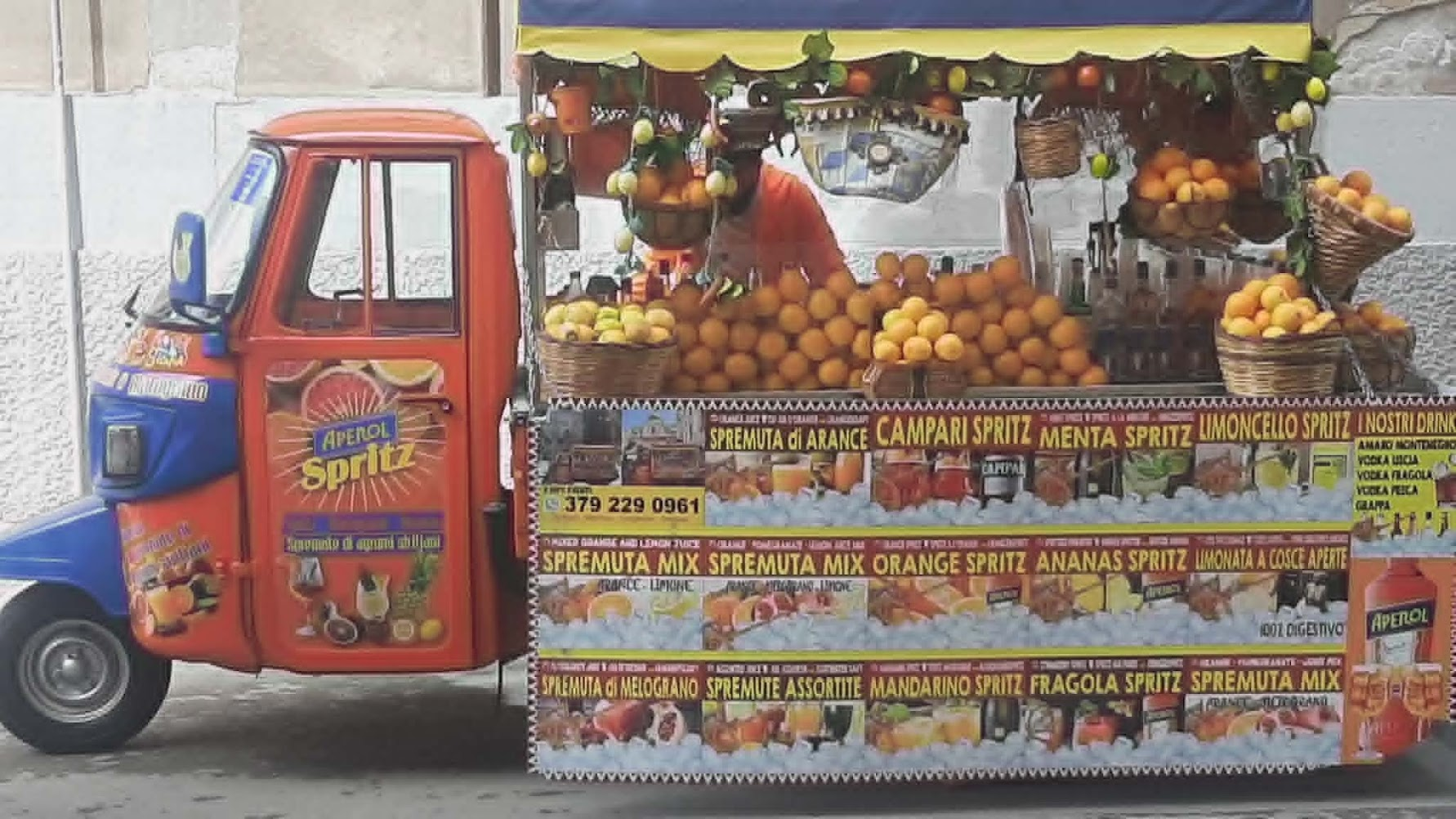
Ape taxis are distinctive fun. They’re a scooter with a tray and cabin. In Italian, Ape means bee and not primate and is pronounced AH-peh. A nod to their industriousness, it’s a companion vehicle to the Vespa which indicates wasp. Designed and manufactured after the second world war, they helped Italy rebuild and are suited to the narrow, twisting lanes of the cities. How cool is this? The mere sight of one wobbling past is instantly cheering.

*

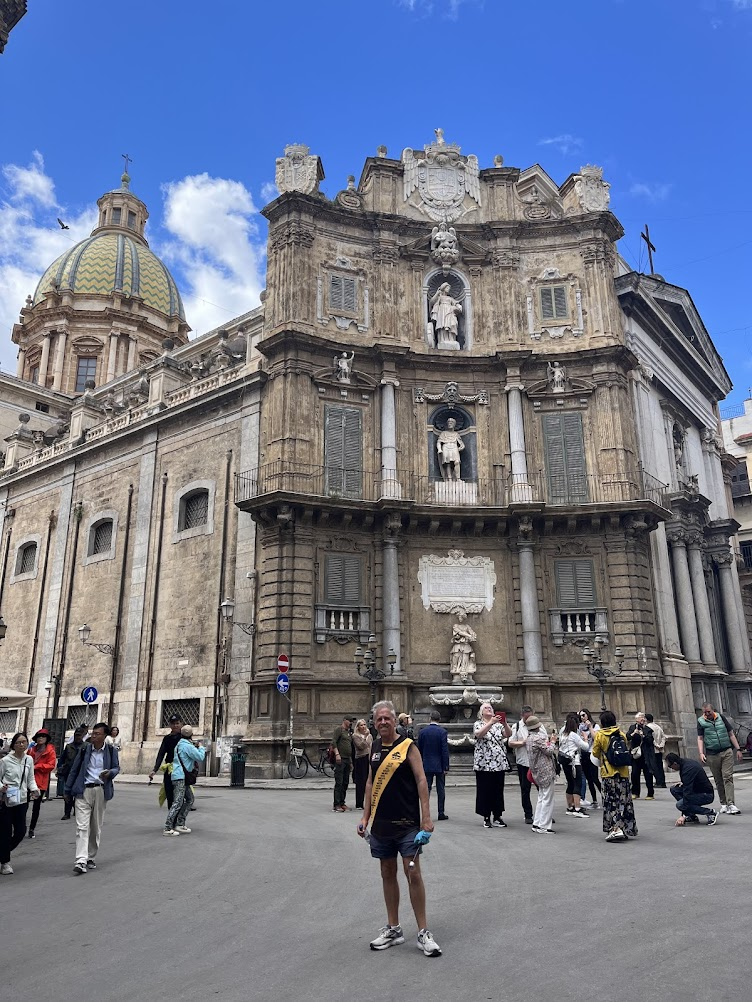
Pedestrian streets return cities to their citizens. In Palermo and Catania, they’ve wrestled control back from vehicles. This is best seen at Palermo’s Quattro Canti. A Baroque square, it hosts buskers, weddings, gawping tourists, and probably thieves. Strolling down cobblestoned Via Vittorio Emanuele towards the harbour we pass The Navy, a darkly tempting bar.

Cobblestones — those evocative European symbols — are delightful to contemplate and photograph. However, they are horrifically medieval upon which to walk any distance. They’re romantic but physiologically perilous.

*

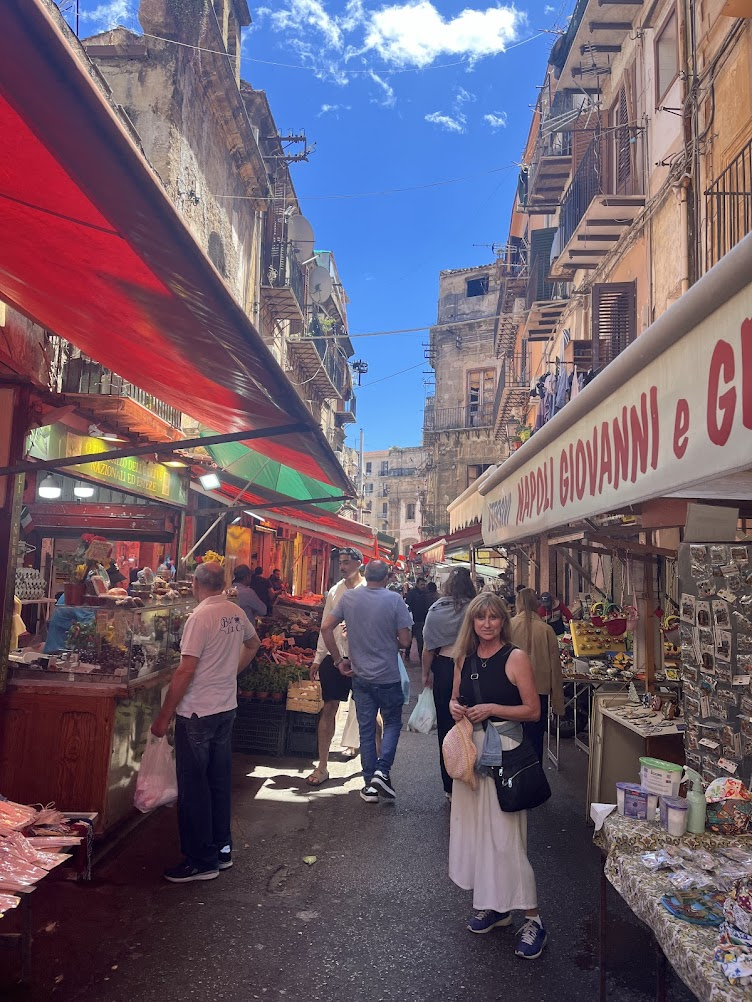
The highlight of our Sicilian trip was Saturday. Venturing into the Mercato Ballarò, a famed food market, the noise is physical. Shouting and selling, music and meat sizzling on open grills — imagine tending these in a Mediterranean summer! The slender laneways heave with traffic and sensory assaults. Claire and I squeeze through together, gawking at the stalls groaning with non-refrigerated octopi and giant tuna and arancini. Orange juice — squeezed as you stood there — cost less than the 4 euro we were almost slugged in Catania for a tiny cup.

*

Unbeknownst until too late, right next door was the Tatum Art Jazz Club & Ristorante. Opening on weekend evenings, we could’ve swung by for a Talented Mr. Ripley hour — minus the messy murder. Instead, 9pm on Saturday was Eurovision o’clock on the TV. Cue: much wailing and moaning and overwrought vocals plus cartoonish imagery and bombastic music. It was largely irony-free. Representing the Antipodes was our the Australian popster, Delta Goodrem. But what fun to see it as it happened — on the continent itself.

*

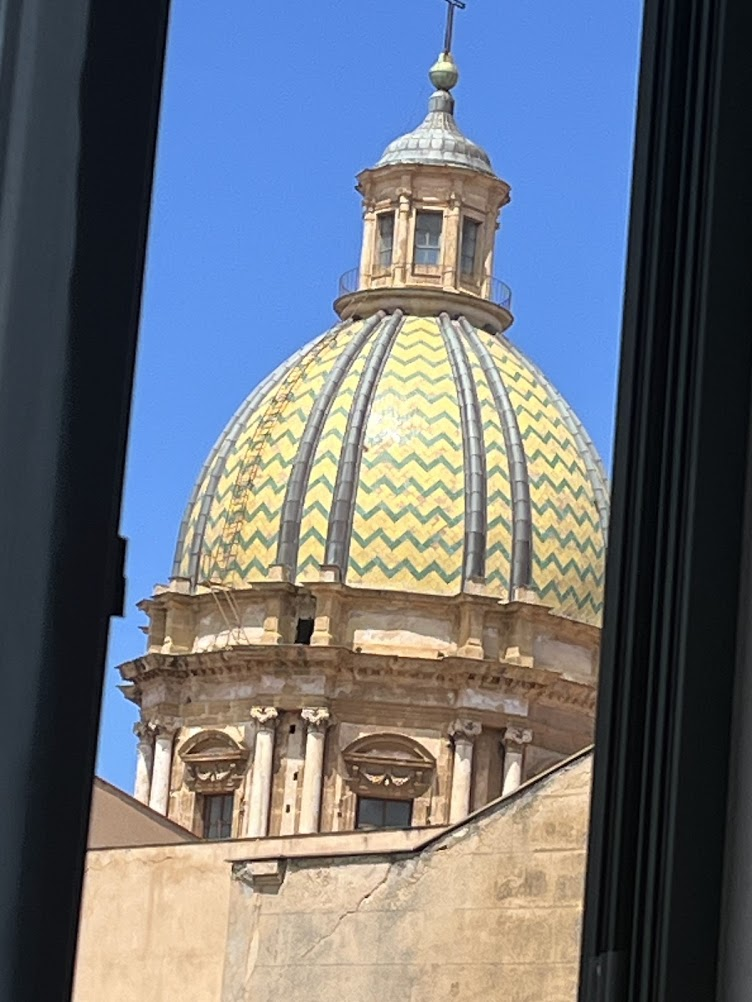
With abundant love, Claire always secures atmospheric accommodation. In the Historical Centre of Palermo, we had a seventh-floor balcony from which we looked out at the Church of San Giuseppe dei Padri Teatini and its yellow and green dome. Our rooftop colleagues were wheeling and squawking gulls.

Giggling, Claire said, ‘They’re laughing at some very funny jokes.’ I think they were. What joy to sit on that narrow ledge with a Birra Moretti and a limoncello and plates of pasta with pistachio pesto (PPP in certain elite circles).

*

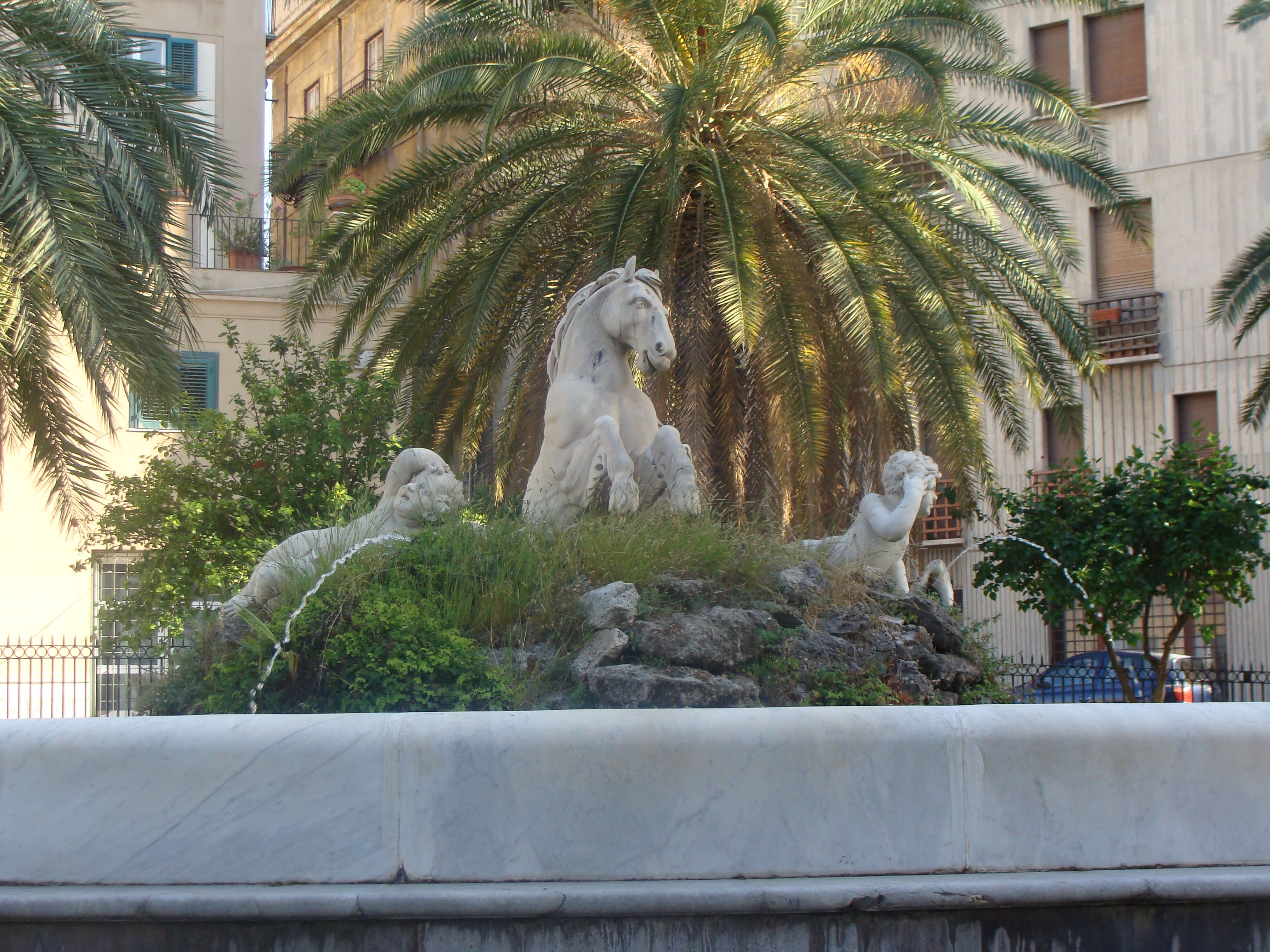
The Sicilian capital is now among my favourites. Its insistent energy, compelling history, and painterly cityscape demand this. However, it’s also home to what we named the Sad Fountains of Palermo. Near us is one called the Fontana Pretoria or Fountain of Shame — think marble nudes on a ghostly building site — but the grimmest example is in the otherwise delightful Piazza Marina. This fountain was, I think, a dribbling garden hose and a horse — lame, bemused, and in a dying bush.

*

Often, passing in a train or on foot we’d spy aged men leaning forward on a balcony. They’d be peering out wistfully if not glumly, neither smiling nor frowning. The lines between private and public lives are blurred here. Are they seeking company or fleeing it?

*

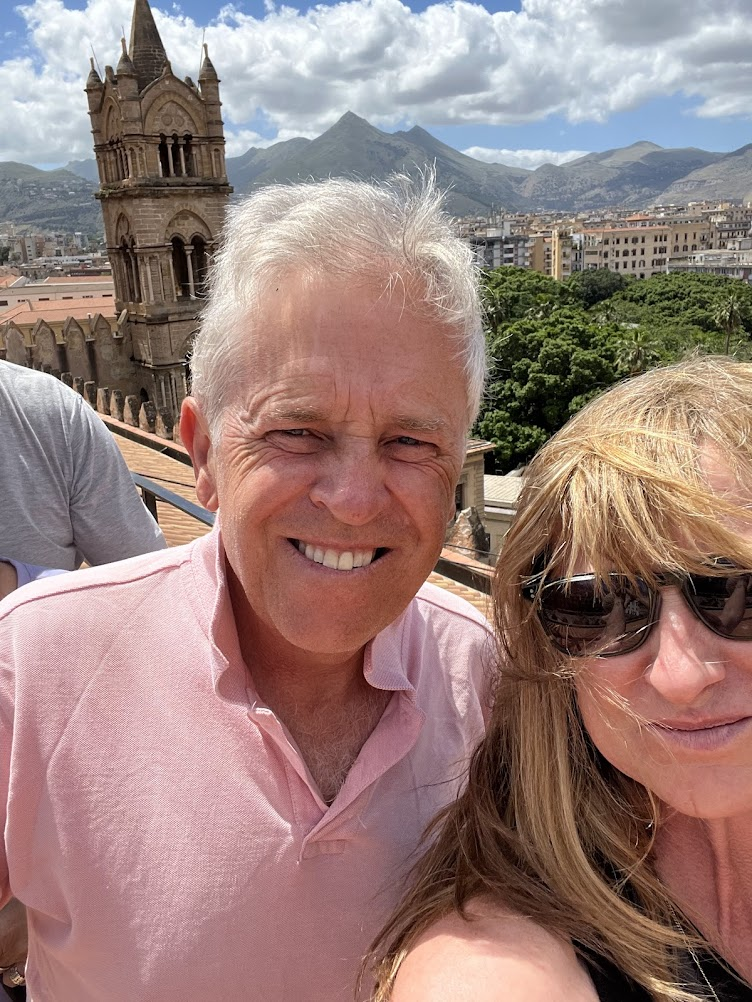
Sicilian parks are grass-less but loved. This is the opposite of some London parks which are beautiful if entirely ornamental in that gruff signs forbid any human use. In transit to the Cattedrale di Palermo we bisected the Villa Bonanno. It’s unkempt with weeds, parched dirt, and irregular litter. However, it’s well-patronized and bustling with people sauntering, talking with spectacular animation, and eating gelato. Often, all three at once.

*

Scampering through a golden twilight square on Sunday evening, we found a crowd bunching outside a bar. One loose circle chattered and drank with fearsome energy. And around what were they gathered? Yes, that’s right! A couple of green wheelie bins! Some were resting their beers on the plastic lids while they yelled joyfully at each other. This is why I love Sicily.  

0

Three Italian Beers

Varenna

It’s late afternoon in Lake Como.

Claire and I are sitting on our second-floor balcony and in the cool twilight, we help ourselves to dreamy snatches of the water. As the mist settles, snowy mountain peaks fade into the bluish light of Switzerland.

We listen to our scenery, the breeze, and the folks below.

Birra Moretti’s mustachioed mascot makes my beer instantly recognizable. He’s patriarchal, encouraging in that European way, and timeless. He’s urging me to be my best beer-consuming self. Luigi Moretti launched the brewery in 1857.

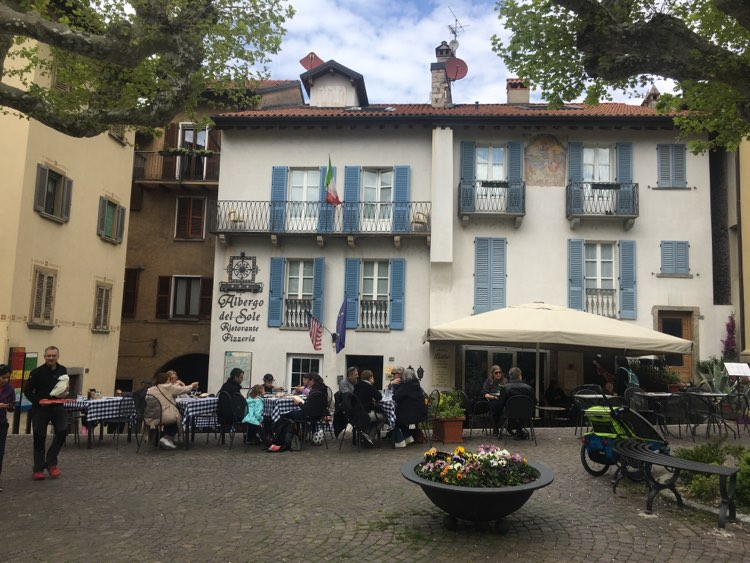
Our initial Italian meal was a belated lunch at a bistro on Piazza San Giorgio. We both had variations upon lasagna as, wide-eyed, and happy, we gazed at the cobblestones, the church, and the black scooters, lined up like fast, rebellious smears.

Given this postcardy context how was the beer? Moretti’s a fruity lager; energetic and offering of infectious excitements. Mine is in a cooperative tumbler.

Of course, it was great. How could it not be?

Vernazza

Arriving by train in the Cinque Terre we had to yank our luggage up a cliff around sunset. It was nearly three-hundred uneven and ancient steps, clinging to the rock face.

We struggled past two (American) couples, securely dining and wining in a café, and these both remarked helpfully on how our physical chore appeared as if it, ‘Sucked.’

My philosophical question remains: Is it good to warrant a holiday beer? Are they to be earnt while travelling?

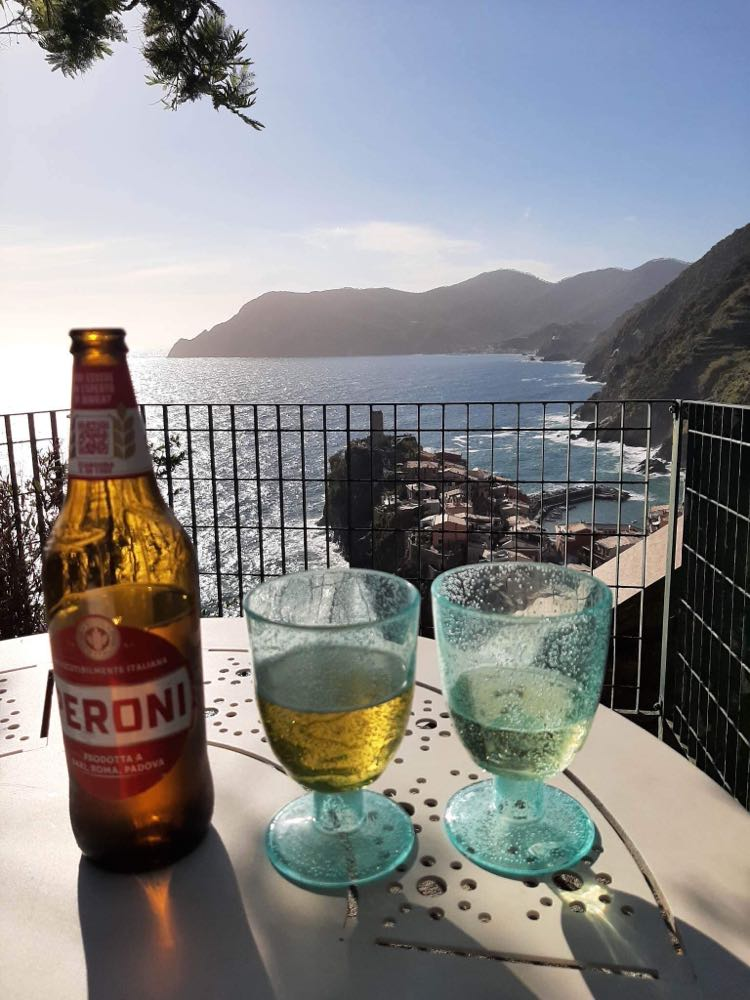
Either way, sitting on our lofty terrace I had a Peroni Red. I can’t recall an unwelcome coastal beer and this one certainly wasn’t.

We also drank in the view of the rolling Mediterranean where to the north the blinking lights were the Cinque Terre’s first village in Monterosso. We’d explore it in a day or so.

The ale is slightly darker than its more famous stablemate, Nastro Azzurro, but is flavoursome and feisty. The brewery was established in 1846 in Vigevano, just south of Milan. Its aroma and palate are fetching.

As we sipped and chatted, we heard the bells ring out from Santa Margherita di Antiochia Church.

Glenelg North

Back home and it’s the Sunday before work. I’ve a near-fatal case of post-holiday dreads.

Dr. Dan prescribes a medicinal excursion to his liquor emporium. A variation on our Mystery Pubs and Mystery Days, I come home with Mystery Drinks. I get beer and on occasion, something tentative and spiritual (alcoholic not holy) for Claire. It’s an opportune distraction.

Pirate Life’s Italiana lager catches my mourning eye. It’s brewed down at the Port, the Napoli of Adelaide, or not.

At 5.2% take caution after a few so you don’t get lippy with Nonna. If you did, I wouldn’t want to be you.

A zesty beer, I found Dean Martin in my glass, and it made me think of zig-zagging home after the opera at La Scala; birdsong by a Lake Como church; scampering along the platform to make our train to Pisa.