
The Rolling Stones carry metaphorical wallop. Mick may love cricket, but I sometimes drag them—unlikeliest of guests—into footy. After all, sport and music can both be art.
Full forwards are Jagger, midfielders are Keef, and backmen, of course, are Charlie Watts behind his Gretsch set, vacant of expression and caressing his drums almost awkwardly, giving occasion for the melodies and vocals, allowing everybody else to happen.
Charlie’s first love was jazz, but he kept time for the planet’s greatest rock band. Was it his day job? Like SK Warne, the best ever leg-spinner, preferring deep down, to run around on a forward flank for St. Kilda?
Did both choose excellence over longing?
I wonder about Charlie in his Savile Row elegance, offering percussive minimalism to a Wembley crowd while his inner ear yearned for Miles Davis—and the other Charlie (Parker)—in their 1947 version of Out of Nowhere.
Like Charlie’s rearview of the band, football’s defenders monitor proceedings up the ground, eyes vigilant for imminent threat. They bear the dreadful burden of vision. There’s Mick—elastic, swaggering, now self-parodying—and here’s Keef on his 1954 Telecaster, summoning the spirit of Blind Willie Johnson, cloaked in his own phantoming smoke.
Kids love goals and a huge hanger—or specky, as we called them at school. Muddling through middle age and with retirement morphing in the fog, footy’s defensive acts increasingly appeal. I’ve never loved so much the redemption of a spoil or a smother.
Grit has succeeded glamour.
As we age, do we adjust from attack to protection, our crumbling biology shaping a third-act philosophy? Is there any footballing instant with higher psychological value than an intercept mark? Paul Kelly once described sport’s best theatre as danger converting unexpectedly to grace and, as always on matters liturgical, he’s right.
*
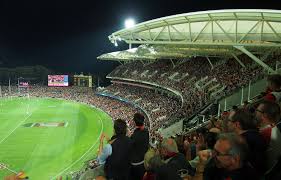
Showdown 57 had been pulsating. In the final quarter Port Adelaide was ferocious, generating a fully invasive twenty inside-fifties in as many minutes.
Emboldened and ravenous, they surge again—and from inside a tangle of smearing limbs, Finlayson flicks his leg and conjures a goal. With thirty-one minutes gone, the margin dwindled to a fraught four points.
Centre bounce. Jason Horne-Francis snatches the ball and rolls to the outside. He is heir-apparent to the Dangerfield accolade: explosive. But he is also volatile—and this amplifies his peril.
Like a reddish comet, his drop punt slices across the night sky, then begins its return to earth in the forward arc.
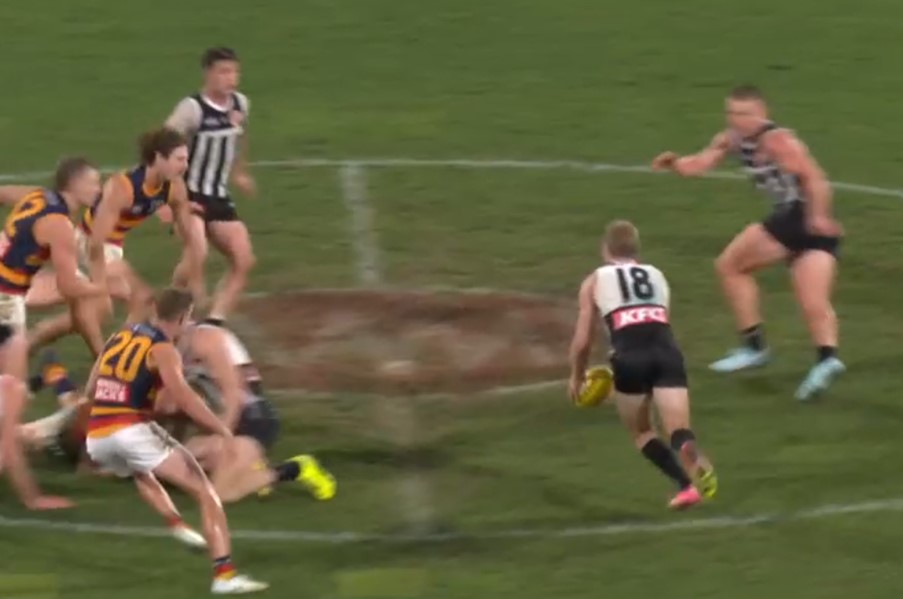
Five games in two years at Collingwood. Five games in his first year at Adelaide. Mark Keane is from County Cork and was skilled at both Gaelic football and hurling— a game featuring amended jousting sticks— with the latter requiring substantial pluck.
He takes six marks tonight, and all attention lands on the last. Maybe moments late in a match acquire falsely enhanced acclaim, but sometimes in life and football, context subverts the text.
Keane’s eyes fixate on the ball with a purity of commitment. He crabs backward and across, almost akin to a country hall line-dancer—I can hear Far Away Eyes chugging along—but the Irishman is more slippery of hip.
His tenure as a backman requires obliviousness to ominous traffic, which can arrive like a freight train—fundamental to the mythic bluesmen so adored by Jagger and Richards.
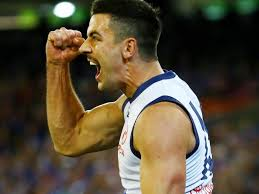
Up go his periscopic arms and—clunk—the Sherrin’s path is truncated. It might have been an uncontested interception, but the preceding imagination and gallantry offer Keane instant cult status.
With this the remaining 107 seconds unfold in a terse sequence of disposals and turnovers before Sam Berry kicks a behind on the siren.
Did Keane’s grab save the game? Or was it any of a hundred prior events?
*
It was a moment at which to gasp and then smile.
Just like hearing Get Off My Cloud and realising abruptly that while the melody and vocals are frantically urging, and the lyrics are buoyant fun—In the morning the parking tickets were just like flags stuck on my windscreen—Charlie’s drumming was always the deeper, mostly unheralded magic in the song.
Ultimately, whether it’s music or footy, some of the finest artists are those who don’t take centre stage—but make the centre hold.




























 mickeytales