5

Wichita Lineman and me

wl

In my mind I’ve mapped the itinerary. Of course, a massive RV will hurl us along some of Route 66’s celebrated black ribbon. All the iconic music cities: Chicago, Memphis, Nashville, New Orleans.

On my first sojourn stateside I noticed a Hotel California in Santa Barbara. Just off the handsome esplanade of palm trees and roller-bladers, it was unexpectedly modest. Of course, I didn’t go in because, as the Eagles cautioned back in 1976, the leaving gets a bit tricky.

It may surprise that Kansas is a personal musical attraction, and more particularly its largest metropolis. Why? Jimmy Webb’s “Wichita Lineman” as performed by Glen Campbell.

Like many remarkable artworks; Mona Lisa and The Great Gatsby spring to mind, it’s smaller than anticipated, coming in at only 117 words, which, let’s understand, might only be part of a Dylan verse, as magnificent as the Noble Laureate is. Webb could’ve penned this song on a beer-coaster.

With only two verses and a fractional refrain, it’s also chorus-free. Each verse opens with a modest personal observation

I am a lineman for the county

And I drive the main road

And then in the second

I know I need a small vacation

But it don’t look like rain

Whilst the song is simple in structure, its meaning is complex, and following each verse’s introductory image we find an abstract idea

I hear you singin’ in the wire

I can hear you through the whine

There’s expert use of alliteration here with “wire” and “whine” as the lyricist announces our central character’s romantic yearning. As many could attest living and working away from loved ones is tough, although the narrative’s about being lonesome, but not lonely. It’s also solemn, but not melancholy.

Like so much in life my “Wichita Lineman” journey is circuitous. I’d always known the song as Mum and Dad had a Glen Campbell record or two, but was alerted again to its genius by REM, who’ve performed it occasionally.

My thinking was that if Michael Stipe liked it then it must be magnificent, and his plaintive singing invests it with quiet elegance. Sometimes we need to come to something through a third party, like overhearing a stranger remark how great your friend is, which makes us smile and remember why we liked them in the first place. From time to time we all need this reassurance.

Sparsely presented but broad in their evocations, the peak of Webb’s craft is

And I need you more than want you

And I want you for all time

Here, he arranges simple words into a profound sequence, and these are among my favourite lyrics. Have you heard anything more romantic?

Rightly called the “first existential country song,” the considered angsts of an electrical worker in Kansas are as instructive as any, but they’re also universal in their poignancy. There’s aching authenticity of voice too, and his earthly investment is real. Someone once said that it’s a song about nothing, but also a song about everything.

Is it country music or a pop song? Probably neither, probably both.

One muggy Singapore afternoon I was with friends in an Orchard Road bar, bursting with American sailors. Drowning their final hours of shore-leave before departing for Iraq, we talked with a few of them. Already some were homesick and missing their family, while others were eager for some desert adventure.

Above the throng a vast TV screen played continuous country music: awful, thoughtless fodder. Think, “Achy Breaky Heart” but without the subtle insights into the human condition, and majestic instrumentation.

Between Budweisers I said, “Hey Colin, have you noticed that every singer is wearing a Stetson?” Considering the televisual entertainment Colin took a swig, and replied, “Yep. Uncanny, isn’t it?” Indeed, the primary musical skill seemed to be the generally accurate and unaided wearing of a hat.

That night there was no “Wichita Linesman.” On the cusp of its fiftieth anniversary it transcends the dusty prairies, and remains suspended above time.

It’s the perfect distillation of hope. Play it to someone you love.

*

I am a lineman for the county

And I drive the main road Searchin’ in the sun for another overload

I hear you singin’ in the wire

I can hear you through the whine

And the Wichita lineman is still on the line


I know I need a small vacation

But it don’t look like rain

And if it snows that stretch down south

Won’t ever stand the strain And I need you more than want you

And I want you for all time


And the Wichita lineman is still on the line

And I need you more than want you

And I want you for all time

And the Wichita lineman is still on the line


Here’s a 43-minute version. Highly recommended.


0

Dead Korean Boxers and a Songwriter from Ohio

leaves

I’ve only just parachuted into an intriguing world: the music of Mark Kozolek. Named after a Korean light-weight, his current project is Sun Kil Moon and many of the lengthy, digressive songs reference boxing and death.

Along with Paul Kelly’s 1989 song, “Everything’s Turning to White” the film Jindabyne was inspired by the Raymond Carver short story, “So Much Water So Close to Home.” In it a matriarch laments the passing of her daughter, “When people die in the wrong order, that’s when it all turns to shit,” and Sun Kil Moon explores this, every parent’s dread, in a ten-minute epic on the recent collaboration, Jesu.

Exodus

Continuing the boxing motif this track is entitled after Mike Tyson’s late daughter, and she is but one mentioned in a catalogue of the tragically-taken, including Nick Cave’s twin boy Arthur and the son of San Franciscan author Danielle Steele, gone at nineteen to heroin. Whatever your religious position it’s hard not to nod at this

I don’t believe in God, but sometimes I hope there’s Heaven

In the middle section of this funereal hymn the singer then lists those he’s personally known who also departed early, and the effect is haunting.

We recoil: this poor man’s drowning in death.

My cousin Carissa

My friends Chris’s, Brett’s, and Dennis’s

And my ex-girlfriend Katy’s mum and dad

All became a part of the family of bereaved parents

Sprechgesang is a German operatic style characterised as a hybrid of singing and speaking, and matches perfectly Kozolek’s worldview. The mundane and the poetic sit together atop a twinkling piano as he conveys a stream-of-conscious monologue. It’s strange and compelling and in stunning effect on “Exodus.”

Fittingly, the song closes with a chorus and the lead singer harmonizing on this simple refrain

For all bereaved parents- I send you my love

Sun Kil Moon aficionados know that the opening track from the previous record, Benji,  documents the sudden death of Kozolek’s second cousin, Carissa, and the intertextuality of these amplifies the impact. Their discography functions in ways reminiscent of Robert Altman’s 1993 opus, Short Cuts which weaves together nine Raymond Carver stories. These have been described as “K-Mart realism,” and the plaintive grittiness applies here too.

Among the Leaves

In contrast is the title song of his 2012 album. With its rousing strings and themes of generosity there’s melody and sunshine, and the lyrics arrive through a warm baritone as Kolozek invites a homeless girl to use his downstairs room when he’s away on tour.

I’m away for weeks, arrive at night

She hears my steps, turns off the light and runs

No mind at all, more space than I need

It’s just me among the weeds, among the ghosts, among the leaves

 But with mention of ghosts we again note that death is unceasing, even in this effervescent context. There’s resignation, and no evasion from this deepening shadow. Despite this, Kolozek welcomes the light through the windows; the universe is not utterly dark, and we must keep offering, connecting; forever alert to the possibilities

When evening comes I play guitar

 For the planets and the stars

 I leave the porch light on

 Like I do when I’m gone

 Winter, spring, summer, fall

 Basement’s yours, have a ball

Sun Kil Moon is a confronting aural space. There’s elegy, confessional crush, and the open pages of a diary you’d rather didn’t catch your eye on your way past.

But it’s uplifting and cathartic, and we learn how even obscure Korean boxers can instruct our tiny lives.

0

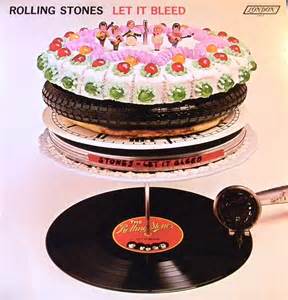
The Sinner of ’69- The Rolling Stones’ Let It Bleed

bleed

It was a hot day in Tanunda and lunch was done. A Sunday, there was energetic engagement with some Carlsberg lagers, and sitting in the garden, Nick and Holmesy1 agreed that these were excellent session beers.2

Of course, there was music. In its desolate, dirty beauty Let It Bleed burst from the outdoor speakers, and I now confess to you, dear reader, that I’d not heard it before. What had gone so wrong for me? My diet had been confined to Get Your Ya-Ya’s Out, Tattoo You 3, and various compilations.

Nick and I saw The Rolling Stones at Football Park in 1995, partly driven by fear of Keith’s mortality. Why did we worry? But I hadn’t properly investigated them as an albums band and was denying myself history’s ultimate run of releases.

Beggars Banquet. Let It Bleed. Sticky Fingers. Exile on Main St.

For me their 1969 record is their best, and while its bookends of “Gimme Shelter” and “You Can’t Always Get What You Want” are correctly celebrated, there are other songs worthy of our attention.

Let It Bleed

This song is so languid; it could be summer in Tallahassee. Each component: guitars, piano, drums and vocals is lazy and loose. The slide guitar and autoharp evoke places remote from the band’s London home while Charlie’s drumming, especially on the outro, is spectacular.

Twenty-year-old Mick Taylor debuted on the album which would be the last for Brian Jones, so incapacitated by drugs and drink that his contributions were minor, and indeed he was soon lost to music, lost to himself. Drowned.

On blossoming display is the genius of Jagger’s singing as his vocals assume an American country twang that could’ve fallen into parody, but here is homage. Over the ensuing decade he’d continue these reverent performances on tracks such as “Dead Flowers” 4 and “Sweet Virginia.”

Damningly, I’ve never heard the song on Australian radio, but its sexual decadence and portraiture would henceforth define the band.

I was dreaming of a steel guitar engagement

When you drunk my health in scented jasmine tea

But you knifed me in my dirty filthy basement

With that jaded, faded, junky nurse oh what pleasant company

 You Got the Silver

For me “Jumping Jack Flash” is caricature. As hard rockers they’re competent, but this is uncomfortable territory; they’re in the wrong church. Nashville and the Mississippi Delta appeal to the band more than Chelsea.5 Blues and country rock are their spiritual habitat.

I’d never appreciated Keith as a singer. But on this song, the first on which he’d take lead vocals, he adopts a character so plausible, in such robust sympathy with his public persona, that it creates a compelling world. Its antagonism was likely inspired by Richards’ then girlfriend Anita Pallenburg, which gives it bemused venom, a telling context.

Hey babe, you got my soul,

you got the silver, you got the gold

A flash of love has made me blind,

I don’t care, no, that’s no big surprise

Both songs reveal The Rolling Stones’ song writing and performing powers, but within a genre not commonly acknowledged. These show imagination, a hunger to grow musically, and remarkable poise- especially as they were not yet thirty.

Our age of downloads and streaming services has made a curio of the album concept, but Let It Bleed is a record of a time and a place that denotes the stratospheric talents of Mick and Keith and their coterie.6

Play it this summer in its ragged, murky entirety. Over a couple Carlsbergs.

Footnotes

  1. Their real names.
  2. Session beers do not include either Coopers Sparkling Ale or Carlsberg’s Elephant beer. Failure to realise this can be catastrophic for all involved.
  3. Tattoo You came out in 1981 and was played on cassette in many HQ Holdens in Kapunda, the town of my youth. “Slave” was an audio calling card for many as we could hear our mates coming around the corner before we saw them, especially for some reason, late on Sundays before we’d go to the Railway Hotel.
  4. A wonderful version of this song by Townes Van Zandt features during the end credits of The Big Lebowski. It captures the laconic nature of the film magnificently and links thematically to The Dude, “possibly the laziest man in Los Angeles County.”
  5. Chelsea, the west London suburb mentioned in “You Can’t Always Get What You Want” the album’s closing song about disillusionment.
  6. Ian Stewart and Nicky Hopkins contribute brilliant piano throughout the album. Merry Clayton’s background vocals on “Gimme Shelter” are rightly recognised as iconic, and in the view of this author are the best of all time.

keef

0

Tonight I’m gonna party like it’s 1993

wellington

Gee, I love the early nineties. Indeed, my wife has often remarked that I’m still living there. She may have a point. So, I’m listening to some old songs. Here’s two that reverberate.

Girlfriend- Matthew Sweet

I remember the first time I heard Triple J. I was driving around Adelaide on a Saturday during 1990 in my VK Commodore. Roy and HG and This Sporting Life was on, and Roy was telling of the occasion he was marlin fishing off Bermuda with It’s a Knockout host Billy J. Smith, Kylie Minogue and celebrated cricketer Steve Waugh. He narrated with such earnestness that like all good satire I believed him for a few minutes.

Back then Helen and Mikey did the breakfast shift on Triple J and it remains the most exciting, deranged radio I’ve heard. They regularly played Matthew Sweet’s “Girlfriend.” It’s power pop perfection with its exhilarating, urgent guitars and ambiguous lyrics. It still transports me back to 1992 when I and Greg Anderson both sported (unironic) mullets.

A few years later Mikey was still on breakfast, but with the Sandman, and this happened.

Sandman: I’ve often wondered what it’d be like to be a woman.

Mikey: Come here.

I’m not sure if Matthew Sweet is a one-hit wonder, but “Girlfriend” endures as a glowing artefact from a fun time.

Saints- The Breeders

Emerging as a Pixies side project for Kim Deal, their signature song is “Cannonball” from their album Last Splash. I bought this when I was down from Kimba, in Adelaide to undertake my first City to Bay fun run. My aim for the gently downhill twelve kilometres was modest. I wanted to break the hour mark.

The run was Sunday morning, the day after the 1993 preliminary final between the Adelaide Crows and Essendon Bombers. I watched it in Magill with a couple mates who were enjoying some footy beers. Adelaide was up by 42 points at half time. How exciting was this? We were going to our first grand final!

As things unravelled in the second half I was tempted to apply some medicinal lagers, but resisted as I’d been training for two months. Of course we lost and a week later Essendon claimed an unlikely premiership.

I completed the run in 58 minutes.

Last Splash is an eclectic listen comprising surf music, off-kilter ballads and infectious pop. “Saints” recounts a summery day at the fairground, but through an alternative prism. There’s disconnected imagery and a driving beat with Kelley Deal on a growling guitar. Invited by her sister Kim to join the band as a guitarist presented but one problem: Kelley did not know how to strum a chord. “Saints” shows she picked it up pretty well.

The following Christmas I was in Wellington, the capital of New Zealand, on a Contiki tour.  I learnt that the Breeders were playing a small venue around the corner from our digs. I didn’t go because I had to drink Steinlagers in a pub with other Australians and talk footy and cricket. As Australians do when overseas in beautiful places they might never again visit.

Ridiculous.

knockout

0

Belle and Sebastian: The State I’m In

B and S

The opening track on Belle and Sebastian’s debut album Tigermilk is “The State I’m In” and this vignette hosts some memorable characters. I first really listened to it on Karon Beach in Thailand, and often played it walking around Singapore beneath her towering skyscape. The jangling, Byrds-like guitar adds to its sunny glow.

The initial verse contains remarkable personal and family detail, and insight into our narrator’s psychological condition. “The State I’m In” utilises language in clever and complex ways to create vivid characters. The first line’s hyperbole offers humorous, arresting insight into our narrator.

I was surprised, I was happy for a day in 1975

I was puzzled by a dream, stayed with me all day in 1995

These simple, matter-of-fact, year-specific declarations engage the audience by provoking many questions, and the revelations continue through the following verse

I got married in a rush to save a kid from being deported

Now she’s in love

With this we learn that he’s compassionate, and even self-sacrificial, but then wonder who the girl’s now in love with: is it our narrator, or another? He then recounts another relationship in which he has been vulnerable: that with the priest whom takes his admissions, breaks confidentiality and the Seal of the Confessional, and turns these into art

He took all of my sins and he wrote a pocket novel called

“The State I Am In”

By the finish of the opening stanza’s confessional intimacy we’ve learnt of the family’s dynamics, challenges and history courtesy

He stood up with a sailor friend

Made it known upon my sister’s wedding day

We then hear the final affront where his highest authority hesitates before belatedly accepting our narrator; no wonder he’s in a despondent state

So I gave myself to God

There was a pregnant pause before he said ok

His self-loathing finds pathetic and final expression in the song’s last verse

            Now I’m feeling dangerous, riding on city buses for a hobby is sad

The language used in the lyrics is deceptively simplistic, but depicts vivid characters.

With this complex domestic context established our protagonist, or possibly antagonist, reveals in a striking act that shocks

I was so touched, I was moved to kick the crutches

From my crippled friend

Is this truth, or is it a comedic device; a strange metaphor? Certainly its oxymoronic nature invites deeper thought. Should we be horrified, amused, or both? Subsequently the narrator confesses this act of violence, and events take another unexpected turn with the priest acting immorally.

We find dark humour in the idea that a religious figure would steal a story and publicise it in a novel. Little wonder that our main character is disturbed! With this development the song title is invested with wicked irony that generates sympathy.

This powerful vignette catalogues key moments in the narrator’s life as he seeks purpose and meaning. The final image offers a positive picture of one, troubled as he is, wanting to do earthly good. There’s poignant use of circularity with the repetition of previous detail

Lead me to a living end

I promised that I’d entertain my crippled friend

My crippled friend

Expertly using first person perspective, the lyricist provides understated descriptions to provoke us, and our reactions encompass the witty, the sad, and the frightening. Belle and Sebastian have created some vivid characters, and this song invites deep contemplation.

karon

0

Round 23 – Adelaide v West Coast: Optimistically and Misty-Optically

casper

I’m at the game tonight, but would’ve been happy at home as it’s the last Friday night, minor round clash to be called by Dennis Cometti. With his 1970’s AM radio drive time vocal stylings he’s become a cherished feature of our game. Combining this with precise description and fabulous wit has made him iconic.

“Gasper, the unfriendly post” is his best line in a galaxy of gems. Imagine his joy as the Sherrin was launched by the star Tiger and banged into the upright. How long must he have sat on that?

My personal metric indicating his influence is that every time I say in my head, “West Coast Eagles” I can only complete it in the voice of Dennis. And now like the famous definition of an intellectual: a man who can listen to the William Tell Overture without thinking of the Lone Ranger, I challenge you to silently repeat, “West Coast Eagles” but not in the honeyed tones of Dennis. See? Impossible.

We saw the 2006 preliminary final at Footy Park between the Crows and Eagles in which we were ahead comfortably at half-time. Probably cursing us, a friend texted- We’re going to the GF. As Ben Cousins gathered disposals at will and shrugged off desperate, lunging Crows in the second half, and the result became certain a mate grunted, “Bloody Cousins is killing us. It’s like he’s on drugs.” Mmm.

Drafted as an emergency ruckman former Kapunda boy and church minister offspring Jonathan Giles is at his fourth AFL club having been at Port, Essendon, and most productively, the Giants. He enjoyed an interregnum at Sturt where he won the 2010 best and fairest, while his SANFL life started at Central District. I’d like him to next go back to Kapunda and win a flag, then go to Glenelg and do the same before finishing his career, like many a road movie, in Fort Lauderdale. His “Places I’ve Played Footy” Facebook app is busy.

Giles is brilliant tonight, and makes the Crow ringleader appear tired. Interviewed after the match, Sam Jacobs confessed, “The only one who could ever outreach me was the son of a preacher man.”

As has been the season’s pattern the home side is sloppy early, and save for a couple clean bursts, this endures all evening. The Eagles apply good pressure across the ground and we make catastrophic quantities of errors in every facet of the game from kicking to handballing to dropping easy marks to unplumbed decision-making, most notably when Lyons snapped at the Riverside goal and missed, instead of getting it to a team-mate in the square. I’m also certain that for their post-match meal some of the Crows even went the tofu option.

It takes the Crows twenty minutes to register a major and this comes through McGovern. At the other end the Coleman Medalist is murdering us, continuing the long relationship between grassy expanses, deadly accuracy and Kennedys. He gets five in a solid outing.

Gaff, Priddis and Shuey are getting industrial volumes of ball, and we don’t seem to be doing much about this. Having reinvented himself as a half-back flanker, former Hoodoo Gurus guitarist Brad Shepperd is going well. Good times for him, indeed.

Local highlights are rare, but Tex offers some after midnight insights with his deft footwork in the centre before it lobs to Eddie who goals. The competition’s biggest scoring forward line has a Bolivian prison evening with but two majors to its members.

Our third quarter is goalless. Someone later comments that the match felt like a forfeit. Let’s hope the Adelaide Crows’ 600th game was an exorcism.

Leaving a sullen Adelaide Oval as the West Coast Eagles song plays I realise where I’ve heard it before. It was in 1985 during the final credits of a (bad) Andrew McCarthy film.

steeple


0

Belle and Sebastian: Dress Up In You

model


Belle and Sebastian is a Glaswegian indie band formed in 1996. Named after a French children’s television series, their nine albums have received critical acclaim, and are known for their literate and wistful lyrics. I enjoy how characters and narratives feature in their songs so decided to investigate the ways language is used.

*

“Dress Up In You” comes from their 2006 album The Life Pursuit. Characterisation is a key element in this song. Establishing who the people in the song are is our first problem as the identities of the singer (the narrator) and the person they’re singing for (the addresse) present challenges for the listener.

The song is sung in first person, with lead singer Stuart Murdoch beginning,

I’m the singer, I’m the singer in the band

You’re the loser, I won’t dismiss you out of hand

This appears straightforward and autobiographical, and an obvious interpretation is that he’s (assuming Murdoch is singing as a male character) addressing a fan or groupie. “You’re the loser” is brutal, but suddenly softened in the next line.

As quickly as Murdoch presents this relationship he changes it, with a simple couplet that is striking

Cos you’ve got a beautiful face

It will take you places

He has rapidly moved from calling the addressee a “loser” to “beautiful.” Either way the relationship seems to only exist in the present tense, and might be temporary. However, in the second verse he again surprises us by revealing more about the two characters and the progression of their relationship.

You kept running

You’ve got money, you’ve got fame

Every morning I see your picture from the train

Now you’re an actress!

Typically for Belle and Sebastian, humour and sarcasm are employed to good effect, and here these help to establish both the narrator and the model who was once a friend and then a rival. Interestingly, the last line is also a cliché which softens the impact of the observation

Now you’re an actress!

So says your resume?

You’re made of card

You couldn’t act your way out of a paper bag

The great American writer, Norman Mailer, said that writing ultimately concerns the nature of power, and this is true here for in six lines we move from the narrator calling the other a “loser” to now confessing that he/she can “see your picture from the train.” This implies that the narrator has a regular job and sees this other person, a model, on a billboard, presumably in an advertisement. With sparse lyrics Murdoch conveys vivid characters and an intriguing relationship. This continues with the accusatory

You got lucky, you ain’t talking to me now

Many listeners might’ve realistically presumed their relationship was romantic, but yet again the lyricist changes our view by gradually disseminating information: it was platonic and sisterly. Murdoch leaves the precise nature of their connection unspoken with use of what Keats called Negative Capacity

We had a deal there

We nearly signed it with our blood

Antithesis is used by the lyricist to suggest the complexity of the relationship, and show that the narrator and the model were once close, possibly when they were at school. Their relationship has changed over the years, and this drives the narrative behind the song

You give me stomach pain

I wish that you were here

This sudden and dramatic revelation keeps the listener engaged, and its twin emotions of revulsion and longing evoke a relationship dynamic with which many would associate. Belle and Sebastian is perceived as bookish, and literate, but the diction within this song is plain, and casual: suitable for a personal monologue.

As the narrator’s anger lessens, he becomes confessional, with an accolade that’s metaphorical and striking

If I could have a second skin

I’d probably dress up in you

This couplet is telling for the use of the pronoun “We” which confirms the strong connection the two characters once shared. In a surprisingly minimal number of words the lyricist has depicted a complex relationship between two contrasting people. Given the song’s initial representation of the relationship, the title is startling, as it is most complimentary metaphor

The divergent paths the lives of the two characters have taken are symbolised by the crisp imagery of

You’re a star now

I am fixing people’s nails

with the former evocative of glamour and travel, and the second connoting a mundanity and suburban imprisonment. This song uses language with deceptive simplicity in creating haunted and wistful creatures.

In the final verse, the full extent of the truth; the gritty reality is laid bare for us, and we see just how mislead we were in the song’s opening, only a few minutes previously

You’re a star now, I am fixing people’s nails

I’m knitting jumpers,

I’m working after hours

I’ve got a boyfriend, I’ve got a feeling that he’s seeing someone else

girls

0

Jazz and me

trumpet

My own musical career was fleeting. When I was eight I learnt guitar until the teacher moved, and Kapunda being a country town, that was it. I remember strumming in that measured, funereal way to “Banks of the Ohio” and being uneasy at having to sing

 I plunged a knife into her breast

 And told her she was going to rest

 She cried “Oh Willy, don’t murder me

 I’m not prepared for eternity.”

*

While at university I discovered Vince Jones, jazz vocalist and trumpeter and his album For All Colours. Its sophistication reminds me of Frank Sinatra, and “Straighten Up and Fly Right” stars a rowdy Wilbur Wilde sax solo. I then knew that the saxophone could be as cool as a guitar.

The first concert I attended was Midnight Oil at Memorial Drive (Julia) and Vince Jones at Le Rox in Light Square was the second. Standing with other students in the airless dark I note that Vince wears a suit and tie, and in contrast to Peter Garrett’s frenzied jumping the jazz ensemble appears uninterested.

But, I was in. Jones himself once said, “I want to be inside every atom of every note.” Over the next decade I saw him often, usually in the Piano Bar of the Festival Theatre. And then, I don’t know why, he stopped regularly touring Adelaide.

*

One wet Saturday in England I heard a BBC Radio 4 documentary on John Coltrane’s A Love Supreme, so immediately jogged up the high street to a HMV and bought it for ten quid. And as rain and sleet lashed our windows, its saxophonic hymn brightened the crushing winter sky.

The storms of Coltrane’s personal life thundered in counterpoint to the spiritual still of A Love Supreme, and within two years of its 1965 release he would be dead.

*

One distant summer some Kapunda boys and I drove across the Hay Plains to spend a fortnight in Sydney with an air-traffic controller mate. He was among rude privilege in a Drummoyne apartment. We parked Woodsy’s Datsun 180B on the street. As we’d daily exit the Western Distributor there was a looming billboard with a huge fanged spider warning us to watch out for funnel-webs. We did. I still do.

Besides playing cricket by the Parramatta River, and body-surfing at Bondi and Curl Curl I hauled everyone to The Basement in Circular Quay. I was a fan of Live at the Basement on ABC Saturday evenings, and Galapagos Duck was the house band, and Don Burrows and James Morrison were often guests. I can’t tell you who played that sultry evening, but I liked it. The wooden tables, the ambiance, the enveloping melodies.

*

Among the more brilliant things about living in England is chucking a sickie, and knicking off at dawn on a Friday to another country. Easyjet flew us from Luton to Cologne so we could explore their Christmas markets.

The city is largely unremarkable save for its compelling cathedral; the Dom. With twin spires ascending to 515 feet, it was the world’s tallest building until the Washington Monument. Similarly astonishing is that in 1162 Emperor Barbarossa secured for the Dom the authenticated remains of the Three Magi. We drifted about its vast interior and leaving, presented some Euros to a nodding priest.

Papa Joe’s En Streckstrump is Cologne’s premier jazz venue so we find our seats early for Sun Lane Ltd, an ensemble from nearby Aachen. Slender waitresses disperse wine and beer. We can scarcely see through the stinging blue smoke. The punters surge in. Bespectacled, ample musicians squash timorously onto the picnic-rug stage. The pianist looks like a sheet has been stretched about a lumpy, wobbling refrigerator.

Standing unnaturally close, an energetic type suddenly clambers up and straddles a nearby stair- and me, as if he and I are posing for a gay fire-fighters’ calendar. I am startled. Forgetting that Europeans are often bilingual I blurt, ‘What the fuck are you doing?’

As the gentleman dismounts the step, and my groin, I mutter, “Thank you.”

“You’re welcome!” my intimate twitters.

“Say what you really want!” adds his friend. We don’t see them again.

The traditional jazz is brisk and zestful, and spilling out onto the Rhine’s bank Nina’s “99 Red Balloons” bursts from a heaving club. Lingering at the chilly Alter Markt, the wife sips a concluding gluhwein; the spiced, red wine and we confirm that Cologne jazz goes pretty well.

*

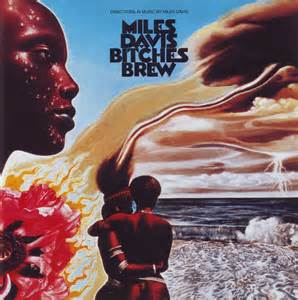
It was nearly an hour commute across Adelaide’s most miserable suburbs; Snowtown territory. After many months afternoon radio had become tiresome; especially when the old-age surrender of organising life around news bulletins, those ridiculous frissons began, so I fought this inevitability, by committing to Miles Davis. I submerged myself in Bitches Brew.

Menacing and swirling about you like a phantasm, the music is a sexual maelstrom, and its recording began within hours of Hendrix and his pyrotechnics at Woodstock. Was it jazz? Was it rock? Was it funk? I wasn’t sure, but I again knew that the trumpet could be as cool as a guitar.

Despite its ominous cadences and rhythms, I found it transportive and therapeutic as I’d make my way home to the beach. Bitches Brew is vital to jazz-fusion, and while the opening two tracks are rightly celebrated, “Miles Runs the Voodoo Down” on side four is the standout. I still love getting lost in this 94-minute ocean.

*

This story begins with Mum and Dad’s record collection. Don’t they all? In among the usual 1970’s fodder of Ripper ’76 and the Best of Abba there’s some curios, and in the not on 5AD or 5KA and certainly not on Countdown section are some jazz albums, one a Dixieland compilation. I don’t especially recall any of the tracks, but these made significant impacts upon my psychology and vocabulary.

The jazz evoked widescreen travel and the speaking of strange tongues and moving about in dazzling metropolises that one day I might be permitted to visit. It was New York and Chicago and New Orleans. It wasn’t that I was trapped in dusty little Kapunda, it was that a planet was out there, and Mum and Dad’s jazz records captured these teeming, thrilling possibilities.

They still do.

BB

0

Courtney, cabernet and camels

camel

“Boxing Day Blues

I know that I let you down

You’re not keen on what you found

Courtney Barnett has many musical skills. Blistering guitar and compelling deadpan vocals, but chief among her gifts is crafting exquisite lyrics. The Melbournian uses sparse, arresting questions with potency.

When’s the funeral?

Do you want me to come?

I like how within a couplet she creates a backstory of considerable heartbreak. The questions speak of a sudden schism, destruction visited upon an intimate relationship. It’s sad.

Questions hang, and generate an ocean of regret. Courtney knows when to provide space for her listeners. The song breathes and gently sobs. It’s stunning.

*

In the days after we flew back from Queensland I chaperoned into our house a dreadful Clare shiraz. It was as if the grapes had been grown unnaturally out the back of a chip shop and the wine made, even more unnaturally, in the shed of an Ipswich car detailer.

I then ventured to the safer cabernet country of Langhorne Creek. Bleasdale is a ripper winery and its Mulberry Tree from 2013 is most companionable on these bracing evenings. The luscious fruit was an insulating treat, and I’ll engage it again soon. Friday looks likely. In Singapore it’d cost one of your limbs: prosthetic or God given. Here there’s change from twenty. Genius.

*

Despite being well beyond its sesquicentenary Adelaide continues to grow up. It’s moving from big town to city. An example of this is how the Torrens Parade Grounds was recently transformed into the Alpine Winter Village.

Borrowing heavily from German Christmas markets there was mulled wine, bratwurst and sauerkraut. Decidedly warmer than Munich in December it was brief fun under last Sunday’s pale rays. As it was booked out we couldn’t go ice skating (probably not me anyhow) but found a table and drank (and ate) in the continental troposphere.

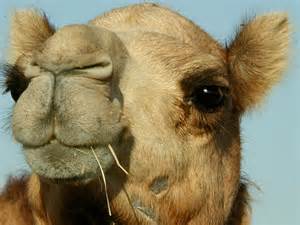
And as you’d expect in this wintry European enclave there was a string of camels! The huge, silent beasts were led through along the village paths, their bulbous, poop-matted knees brushing my shoulders as they went past like noiseless, coffee-coloured combi-vans. Just like Bavaria!

Of course, our boys scampered off about the village to do some exploring. They returned, fresh camel turds smeared and speckled across their coats, ready for our evening at the football.

We look forward to the return of the Alpine Winter Village. But the camels can go back to the desert.

The Gobi will do.

courtney

0

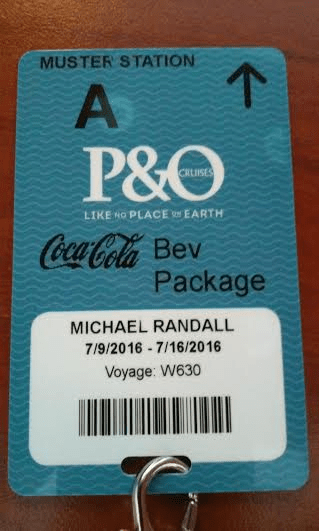
The Oceanic Adventures of Bev Package: Our Week on a Cruise Ship

bev


It’d be fifteen years since I last heard it. But it’s irresistible and in the cosy chairs of the Pacific Dawn’s Promenade Bar we all sang along

It’s nine o’clock on a Saturday

A regular crowd shuffles in

There’s an old man sitting next to me

Making love to his tonic and gin

Chugging across the Coral Sea during our week I heard Billy Joel’s “Piano Man” about a dozen times, and often twice an evening. Kieran, a Welsh fellow who looks a little like the comedian Jimeon was our favourite performer, did a grand version, and indeed, the first airing was, with planned theatricality, at precisely nine o’clock on the Saturday.

Earlier, we’d endured a curious, scatting, jazz interpretation, complete with messy harmonica, by a young pianist. We also heard it a couple times on the blustery pool deck.

Although it’s about broken dreams the song rollicks along in 3/4 waltz time and demands those with refreshments to raise and swing them about like pre-fight pirates. It’s an amazing narrative, dominated by the stirring affection with which the barroom tragics: John, Paul, Davy and co are described.

It was his first hit, and in its fifth decade, still works magnificently. Just as “Fairytale of New York” always takes me to Christmas in London, and with “LA Woman” I’m driving in Santa Monica, “Piano Man” will endlessly transport me to that rousing place on the Pacific Dawn.

*

We squeeze onto a water-taxi in Port Vila and transit across Vanuatu’s harbour. It’s an attractive winter’s morning and we’re buoyant with sea spray and the promise of exploration. Rounding Iririki Island, the coast is speckled with dozens of half-sunken yachts, ghostly victims of 2015’s Cyclone Pam. Seeing these dead craft reminds me that idyllic Pacific atolls frequently turn hellish, and that people are really, really small.

Zig-zagging along the main street it’s clear that our massive ship disgorging a couple thousand folks is an event. Some load-up at a duty-free shop and then I see it, that most ubiquitous of Australian chains: Billabong. It speaks of the worst colonial toxicity; a symbol of Australia’s reptilian hegemony and doomed local aspiration. I find it troubling to visit a country which is economically obliged to try to sell me surf wear.

*

I’m hoping that somebody can help me with this. Is it true that “Reminiscing” by LRB features on each of Cruise Ship Classics: Volumes 1 – 12?

Yeah, I thought so.

*

I love regressing to boyish wonder and again finding it awesome that a plane like an A-380 can fly. The Pacific Dawn, is also a leviathan which, if dropped onto Footy Park, would flatten both sets of goal posts. Of course if this were during a 2011 Power home game, it’d scare the be-jesus out of the scattered punters and Kochie while possibly also tearing the tarps.

That our ship glides seaward across a rippling bay can appear, from our vantage point, over one-hundred feet above the sea, as the muscular act of a magical god.

Aside from the Promenade Bar my favourite place within this hydropolis was on the pool deck, with my Jonathan Franzen novel, and a crisp Peroni courtesy of everyone’s bestie: Bev Package. How could I not love being drenched in languid holiday rhythms and their drifting afternoons? Up there, our petty urgencies evaporate into brief irrelevance.

*

Each morning over the PA and in his Genoan tones our captain addressed the ship: “So, we are travelling north-east through the Coral Sea at eighteen knots. Later today we’ll cross the Tropic of Capricorn and by afternoon the winds should abate. There’s currently around four to five metre swells, and we’ve activated our stabilisers to give you greater comfort. It’s nineteen degrees centigrade and should reach a top of twenty-three. Up next, a 1973 singalong classic by Billy Joel.”

*

Trudging up the tropical hill to Our Lady of Lourdes Chapel on the eastern coast of Lifou the terrain and vegetation remind me of Singapore’s Pulau Ubin, but without the aggressive monkeys. It’s an energetic stroll across this member of the Loyalty Islands and the view is fetching. Inspired by the beauty and proximate godliness, Bazz and I exchange observations:

“Look out there. See that yacht. That belongs to Richard Branson’s butcher.”

“Sure. Did you know that Sister Janet Mead isn’t buried beside this chapel?”

“Have I told you that Leo Sayer has never toured here?”

We then gathered on the beach, and some confronted the cruel, blue water. Alex and I clambered up to the village market to buy him a coconut. As we came back down the rocky track I see my wife, crying and saying something, but it’s lost in the wind. I think: someone’s been stung by a stingray, or worse, someone’s lost their phone, or even worse, Tex Walker’s done his knee (again).

Bursting onto the seashore, the cruislings are gathered about my brother-in-law Richard and his girlfriend Jasmine. They’ve just become engaged. Months prior to this voyage, he’d bought a ring to make this their moment. There’s tears and hugs and laughter. Families are meant to get bigger. Ours just did.

And with this Lifou is changed. For us, it was just an anonymous islet, a previously unencountered paradise, but now it’s invested, and forever enchanted. Isn’t this what people should do? With love, drape their stories upon an innocent geography, and transmogrify the terrain into something wonderful and harmless and humanly sweet?

*

Billy Joel hasn’t released a new song since 1993, and like many musicians he peaked early. But how fantastic that his biggest tune was born of grinding slog in an LA piano bar. That this song about crushed dreams would make his come rapidly and unthinkably true is a joyful irony.

For most of us, going on a cruise ship was new, and “Piano Man” an old friend, a smiling stowaway, waiting to surprise us. It was excellent to catch up over a beer or two, and like the best of songs it became a unifying motif for us, on our little holiday.

 Sing us a song you’re the piano man

Sing us a song tonight

Well we’re all in the mood for a melody

And you’ve got us feeling alright

BJ

0

Trish

Imp


Hello from Caloundra, on the Sunshine Coast. If you’re seeing me read this, it means that Pauline Hanson and I have been kidnapped.

I remember when we were in Year 12 at Kapunda High. How could any of us forget? We’d the wonderful Mrs Schultz for English, and had to read the distinctly un- wonderful poetry of the British poet Gerard Manley Hopkins, or GMH for short. Maybe it was this poet from Essex who set Trish on her particularly British-flavoured life journey. However, before he’d a chance to inflict his tortured verse upon us I often wished that a GMH-assembled vehicle had run over Hopkins.

As great as Mrs Schultz was, it was you Trish who helped me most in year 12 English. With your brutal intellect, passion for argument, and literary insight you showed me how to interrogate a text. In the depths of that soggy winter I was awestruck by your skill as we also read The Grapes of Wrath. I knew it well, but what a ridiculous title! Grapes of Wrath? Grapes, I remind you, make wine. If the book was vaguely accurate it’d be called The Grapes of Enormous Eternal Joy.

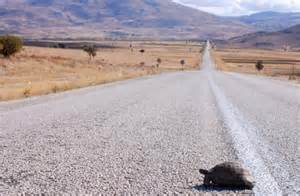
There were tutorials and Trish volunteered to chaperon us through the garden of symbolism. We were in expert hands, and were about to be symbolism-ed to within an inch of our proverbial. She took us through page after page, merrily dissecting the novelist’s exhaustive, and exhausting use of motif. Most impressively, she provided tremendous detail on the book’s famous recurring turtle that somehow represents the poor, evicted families. I know! A turtle! In this Trish enthused me and challenged me and, yes, she terrified me.

And if ever again I encounter a fictitious turtle signifying displaced Oklahoman farmers, I know who to phone.

*

As is often the case with the talented, Trish flirted with many university courses. She began a teaching degree with Claire and me and in my old Holden we’d travel together daily to and from Salisbury. With the girls imprisoned in my car I’d inflict all sorts of teenaged cruelty upon them courtesy of my music. I simply refused to have the radio on. No evil mastermind leaves things to choice, and I permitted only my curated set of cassettes, and as we hurtled through Smithfield along Main North Road, accompanied these dreadful songs with my unfathomably awful singing and, on special occasions, even more unfathomably horrid kazoo playing.

For this Trish, I unreservedly apologise.

Over the long decades Trish began multiple degrees; including education, arts, and finally, communications at Magill. She’d have excelled in any of these. But, in keeping with her life’s English theme I maintain that she should’ve pursued animal husbandry, through which she might have become a Mrs Herriot, living in North Yorkshire and happily inseminating grateful cows.

*

It’s a mark of her individuality that she owned a most British vehicle too. An MG? No. A Rolls Royce? Sadly, no. Our Trish, I tell you with some delight, drove a Hillman Imp. This duo was as distinctive as Mr Bean and his 1976 British Leyland Mini 1000. Of course we’d banter about this car and I’d tease her with my revolutionary wit, for example, calling her Imp a wimp. Ha-ha. But revenge was Trish’s for when I had my mid-life crisis twenty years early, and bought an obviously phallic sports-car, she labelled it, or possibly me with the abbreviated form of “Richard.” Game over. Trish wins.

*

An idea in this speech has been the decidedly British nature of Trish’s life. She is reminiscent of an “English rose” but unlike a Kate Moss, has expressed herself through the creative and performing arts as an accomplished writer, editor, visual artist, singer and actor. Of these achievements we’re all most proud.

I reckon she’d live well in Cambridge. I can see her discussing poetry mid-morning over camomile tea, before taking a trudge through the muddy fields of Grantchester. Then returning to her homely cottage to make Brett and Riley a supper of gluten-free scones.

Indeed, as evidence that my notion is not so silly she also worked for a while in a Geezer-styled boozer, the Norwood Hotel. Like a much-loved character from East-Enders I can see Trish smiling from behind the bar, and saying to the shuffling menfolk, “You orright darling? Can I get you a ‘alf?”

*

Dear Trish. You’re a faithful and precious friend who’s taught me much about people and our planet. As you know, when she laughs with you in that beautifully abandoned way she has, it is to be alive and loved. For this, and everything else, thank you, and happy birthday!

In concluding, I can assure you that I’m on the balcony of our holiday apartment, and at this very moment, as a tribute to you Trish, am Salsa dancing in a most fetching fashion with a turtle who goes by the name of Gerard Manley Hopkins.

Enjoy your afternoon.

turtle

3

It must be like Keef teaching you guitar: our footy day

eddie

On some days footy can come at you from many directions. Like Mum’s roast it can be expected, but occasionally it’s a happy combination of the old and the new.

My wife had gone to Sam Jacobs’ territory, the Yorke Peninsula, for a friend’s birthday so on a whim the boys and I drove up to the Adelaide Hills for an early lunch. Heading to the Aldgate Pump Hotel we passed a footy ground with the reserves fixture underway, and there were sparse knots of blokes along the fence, the red beer cans contrasting with their navy rain jackets. Up here footy is often beneath a Yorkshire fog. Not far down the road as the hills become the plains is Chad Wingard’s home territory at Murray Bridge. Chad was about to wow them for Port in Alice Springs.

Between my Laksa and not plonking some coin on Music Magnate in the Doomben 10,000 I looked at my phone to check the Alice Springs score especially as my old school mate Chris is related to the Hoff from the Power. No signal. But, I reminded myself this English village sleepiness is the attraction of the Adelaide Hills. It’s why we visit.

Descending through the mist and back into the sunshine we listened to In The Superbox With The Coodabeen Champions and because it’s a family standard, sang along with Greg Champion, “You’re the player, you’re the player, Gary Ablett! Gary Ablett!” I told our eight and six year-old boys that the tune was originally about the Gold Coast star’s dad. They ignore me and keep singing. One day, it could be about a third generation Ablett too. Footy ditties, like Paul Kelly songs, are also timeless.

The car was warm with nostalgia when I found myself turning left down Belair Road and parking outside a handsome villa in Kingswood. I’d decided the boys might like to see where their Dad had a kick and a catch with the Unley Jets before his career finished one August afternoon (split eyebrow; hours waiting in Flinders Medical Centre). As the pale sunlight bent onto the forward flank, we saw the reserves get up against Port District. To celebrate we each had a Freddo Frog (caramel).

How wonderful is local footy? I love the unpredictability. There’s the moments when grace rises above danger as the gangly kid blind turns and jags one from the pocket, and the roar makes the BBQ veterans look up from their hotplate of snags. Later danger reaffirmed itself when a Jets defender surged thrillingly across the wing, but didn’t steady, and his kick squirted across the boundary, like a drive shanked onto a neighbouring fairway.

Our evening was the Crows and the Giants. As had been our day’s theme, the past and the present would again meet. Entering the competition in 2012, Greater Western Sydney has only been discussed in future tense, as a club to whom success would surely come. That day is now speeding towards us, like a growling Monaro.

For Crows fans, ’97 and ’98 have transmuted from glorious history to nostalgic, troubling distance. Is it nearly twenty years? But, yesterday and today often connect, and Andrew McLeod is the football name Eddie Betts rates above all others. Who better to mentor him than the great running half back, as beautiful a player as has strapped on footy boots? It must be like Keef teaching you guitar. With his poise and promise, Wayne Milera, Adelaide’s first selection in the 2015 draft, has been compared to McLeod by judges like Scott Thompson. It’s tantalising.

Eddie’s a senior player now; a leader. Just before the third quarter siren Eddie fabricated yet another miraculous major, one that could net him successive goals of the year. While the kick itself was impressive, it’s how he gained possession: materialising on the boundary and somehow trapping the Sherrin with the surety of a NFL holder assisting in a field goal kick, then accelerating away from a grasping Giant and curling it through at the Cathedral End.

It’s fitting that the Indigenous Round’s best moment came from a Port Lincoln Nunga, a footballer like Sir Doug Nicholls: diminutive, exquisitely skilled and shaping the game in remarkable ways.

The young Giants raced home, but once more Eddie created a goal from gossamer and his fifth in the final seconds guaranteed my Adelaide a fine victory.

It’d been a brilliant day. Yet again footy had jumped out at me in unexpected and blissful ways. Just like footy can.


This story was first published in Inside Football. For more go to http://digital.insidefootballonline.com. My thanks to co-founder and contributing editor of The Footy Almanac, John Harms for the opportunity to write this story.

BBQ

0

Jonesy

car

We met in the Orwellian year of 1984 at the Salisbury SACAE and studied English together. It then turned into UniSA, and is now, perhaps poignantly given tonight’s splendid occasion, a retirement village where on Thursdays, I believe, they do a wicked two fruits and ice cream. But it was tremendous fun when we were there in the ridiculous and pastel 1980’s. Among many, many memories of my friend Jonesy, here’s just a few-

Joneso, do you remember how we’d plod off to fourth year English, heartlessly scheduled on Mondays from 4 – 8pm? Having survived, at 8.01pm I’d point my 1973 HQ Holden Kingswood southward, you’d beg me to crank up the cassette player with some mid-period Bob Dylan, and we’d navigate speedily if not unlawfully to the Botanic Hotel. Safely there, we’d review the lecture’s major themes, or not.

Back in those days pubs had to serve food to stay open late and the Botanic often offered spaghetti bolognaise, which was slopped out of a large steel pot, just like in a prison movie. And indeed the food was criminal. But, on more than one occasion, as uni students, we ate it.

One of my favourite Jonesy moments was on a Friday at uni when she performed a monologue by Barry Humphries’ best character; not Dame Edna or Sir Les Paterson, but the decent man of the suburbs, Sandy Stone. Jonesy’s performance was fantastic. I laughed like a drain. It was funny and poignant. That monologue is called Sandy Claus, and as I share an extract from it, imagine I’m a doddering, lisping old man, which’ll be impossible for I’m not the actor that she is. So, picture Jonesy in a dressing gown and slippers, with her hair gray

On top of the pudding Beryl had made a delicious fruit salad which she’d put in the big cut-crystal bowl she keeps for best. She’s had it for years now but it’s still got the Dunklings sticker on it. However, everyone was full up to dolly’s wax and I was absolutely stonkered, so unfortunately it was hardly touched and Beryl said it was a wicked shame after all the fag she’d gone to. With the exception of the banana which goes brown overnight, she’d preserved every bit of that fruit herself in her Fowlers Vacola and I can vouch for it personally; Beryl’s been bottling all her married life.

Is this the best reference to the Fowlers Vacola you’ve ever heard? Is this the only reference to the Fowlers Vacola you’ve ever heard?

Teaching at leafy and prestigious Marryatville High Kerry suffered or rather I suspect, enjoyed, a wardrobe malfunction. Yes, at school. Yes, in front of her students, like a shameless Kardashian. Many would’ve blushed and ran screaming from the room, but not our Jonesy, who confronted the issue with her students, saying,” Yes, I know it’s funny, have a good look, I’m sure this has happened to some of you too. Yes class, you’re correct, I am wearing odd shoes.”

Like a puppy I’ve followed her around professionally. Decades ago, early in our working lives, she went to Cleve and I went just up the road, to Wudinna (Woo-dina for those of you from Oxford). I then followed her to Marryatville, after she’d wisely left, and recently the exam and assessment authority called the SACE Board, after she’d wisely left, but at which we might work together in a few months.

If you return, we could sneak off early on Mondays, and yet again, regularly journey to the Botanic Hotel. I could hire a Kingswood. You could drive. I’ll bring the Bob Dylan tapes.

Happy birthday, loyal, funny, dear friend.

dylan


0

Skyhooks and me

ego

Urgency. I reckon this is the best word. For they were always urgent. Midnight Oil was aggressive, and Sherbet was summery. But even when they were brooding, Skyhooks was urgent.

Learning of their 1991 reunification tour, some mates and I instantly booked our tickets. However, on the day of their Adelaide concert I awoke 565 kilometres away on the West Coast as I had to pack up my Ucontitchie Road farmhouse for the move to Kimba.

With my earthly goods flung through the front door of my new house, we leapt into my mate’s SS Commodore, pointed the 4.9 litre beast eastward, and rumbled the five hours, through a January thunderstorm, to North Adelaide’s Old Lion Hotel. We arrived with moments to spare. The pub already stinging in its smoky, hot fug. There were but three beers on tap. Red Symons was at his belligerent Red Faces best. It was a night of huge fun.

I love crowd singing on a live album. It amplifies the sense of being there, when in all likelihood, you weren’t. Great examples include “Army” from Ben Folds Live and,” Don’t Look Back in Anger” by Oasis, but supreme for me is “All My Friends Are Getting Married” from Skyhooks’ Live in the Eighties. When Shirl invites the crowd to sing the chorus they do in such an adoring fashion. Back at the Old Lion this, too, was a highlight of that summer night.

*

Sophomore albums often rate highly. Think Nevermind, The Bends and Astral Weeks. Buoyed by the acclaim of their debut offering, there’s often a young band or artist, teamed up with a noted producer. Their confidence is unparalleled. An equivalent could be, again from 1991, when Mark Waugh made an elegant hundred on debut at Adelaide Oval. However, a friend observed, “It’s not such a surprise. After all, you only get picked for your country because you’re in fantastic form.”

Bearing this in mind, Ego Is Not a Dirty Word is their finest album. I know that Living in the Seventies is the much-loved debut, selling over 300,000 copies, and enjoying the infamy of six of its offerings being banned. But, on this second release, there’s an increased breadth in the songs, with “Love’s Not Good Enough” musing on suburban loneliness, “Smartarse Songwriters” featuring Greg Macainsh’s meta-cognitive explorations, and the title track, pushing the patience of many (I can’t imagine Sir Joh was a fan) with its brazen reference to the triumvirate of Richard Nixon, Leonard Cohen, and in an Australian music first, Jesus.

My favourite is side 2, track 2. I know it’s a hundred types of wrong, but I recently played it in the car for the boys. On the first note of “Mercedes Ladies” they both giggled at the larrikinism of bass line, the cheeky guitars and Freddie’s comical tom-tom drumming. It rollicks along with the musical highlight the double hi-hat chick at the end of each line. It’s a great way to spend three minutes, and encapsulates the band, their time, and their legacy. In this, as in much of their material, Skyhooks satirise the suburbs while also rejoicing in them.

Of course, we’re all apprehended by our creative context. Even here in smug 2016, history will eventually scold us. 1975 imprisoned many with multiple charges: sexism, homophobia, stereotyping. But despite this, Skyhooks also pioneered themes concerning the suburban and the local. It was music of the largely untold other; it was not of NYC or London.

Such is the significance of Skyhooks for me that the mention of Carlton evokes the song first, and the footy team second. The band’s collected lyrics still generate an imagined google map of Melbourne, and a reference to Toorak or Balwyn returns me to my original conceptions of the city by the Yarra. If the Beatles are Liverpool, and the Rolling Stones are London, then Skyhooks is Melbourne. Their music has always presented the geography of a highly human environment, as there’s colourful pictures of grimy pubs, menacing streetscapes, and widescreen vistas too.

Open photo

It was in my school mate Lumpy Nixon’s lounge room (I’m sure there were ceramic ducks flying up the wall) that I first saw, and heard Straight in a Gay, Gay World. I was mesmerised by the guitars on the title track, and the sonic trickery of a swarm of insects hovering overhead on the outro, moving from the left speaker to the right. I was fourteen and this was beyond cool.

The album’s artwork gripped me equally with its triptych of a solitary black sheep, butcher shop and lamb dinner. It was the first humorous cover I’d seen. The art often functioned as a portal to an album’s narrative. I was especially intrigued by Pink Floyd’s Wish You Were Here and tried to decipher the cover photo of the two businessmen, one calmly ablaze, shaking hands on a Californian backlot. However, I couldn’t unlock its mystical meanings. In our age of Spotify and digital downloads, these happy distractions have largely disappeared. But vinyl’s fighting back.

*

And finally, to Shirl. He’d a remarkably complex voice, blending a tradie’s building site swagger with the footballer’s front-bar cockiness. It was effortlessly confident, and also reassuring, saying, “Why would you live anywhere else?” as it slapped your back and shouted, “Forget about it, I’ll buy you a beer!” He sung to, and for, us. But his vowels were knowingly crisp and aware of the telling subtext. He delivered his stories with affection, while also investing the songs, as appropriate, with a sneer. “Million Dollar Riff” could be his best performance. Shirl was the perfect front man.

I love that I can go years without listening to a band, and then one afternoon find myself dragging out a dusty CD, and with the opening chords, being teleported to a distant, thrilling place. With Skyhooks that place is in the dimming distance and unreconstructed, but from time to time, I really enjoy going back there.

hooks

3

The Beatles and me

radiogram

Sunday at the Adelaide Grand Prix. Former Speaker of the House Arthur Whyte and his wife Mary were on pit straight. Respected folk from Kimba, local royalty. Every lunchtime Arthur went to the Kimba pub. Blistering heat or punishing cold, he’d have a stout. Just one. Mostly. Arthur lived to ninety-three.

Being outgoing and with a healthy curiosity in people Mary exchanged pleasantries with the man in the neighbouring seat. He was gentle, possibly even a little shy. Sounded English. He made gracious inquiries, asked about life in Australia, in Kimba, on farms. Nigel Mansell seemed to be leading the race, and with the octane thunder booming about them Mary reciprocated.

“So, what do you do?” Gosh, what was his name again?

“I’m a musician.”

“That’s nice. So which instrument do you play?”

The cars were making astonishing noise. It was hard to hear.

“I play guitar.”

“That’s lovely. Do you play on your own? Or with others?”

Mary took a sip of her tea. He was an agreeable chap.

“I just play by myself now.”

“That’s probably easier. So you were in a group?”

“I was.”

“Oh, yes. What was the name of the group? I probably won’t know them, but you never know.”

“They were called the Beatles.”

*

Mum and Dad had a radiogram. Wooden, heavy, solemn in appearance. The turntable sunken into its teak depths. I remember Creedence Clearwater Revival and Anne Murray and The Carpenters.

But what I recollect most vividly is a 45. In the digital age when artefacts like vinyl are discretionary, these seem primeval, unnecessarily real. It was “Love Me Do” with the B-side “PS I Love You.” Both songs crackled constantly when you dropped the needle, but were exhilarating. John Lennon’s harmonica was rowdy while Ringo’s drumming crashed out of that old radiogram.

I was only five, but I was in.

*

The first cassette I owned was It’s a Long Way There by the Little River Band. I’m pretty sure my first record was Ripper ’77; on which the highlights are, “This Is Tomorrow” by Bryan Ferry and, “A Mean Pair Of Jeans” by Marty Rhone. As catchy as it was my cousins Boogly and Froggy and I thought “Blue Jeans” by David Dundas the superior denim-themed pop confection. We’re still right.

Fresh from uni and working on the West Coast I bought my first CD player, second-hand from old school mate Fats with whom I shared a passion for Bush Biscuits, tepid Southwark, and Mondo Rock. Acutely aware of my personal responsibility I went into Allans music along Rundle Mall- just up from the Malls Balls. I bought two CDs- Sgt. Pepper’s Lonely Hearts Club Band and The White Album.

Living by myself in a big farmhouse I blasted these out into the dusty summer dark; brutally cold July mornings; before cricket; after school. These provided a soundtrack to my early twenties after I’d left home, and was making my way.

*

Having spent a week in Penang my girlfriend (now wife) and I then flew to London. It remains the world’s best theme park. Is there a better way to spend a day than walking the ancient streets before flopping exhausted, in a Soho boozer?

In exquisite St Johns Wood, Abbey Road’s frontage appears modest, giving no indication to the history, and the thrilling, unparalleled creativity that’s occurred within. But the fence across the front is remarkable for it’s a giant thank you card to the Beatles, electric with graffiti and black-texta tributes. It’s re-painted every week or so.

“Strawberry Fields Forever” unfailingly takes me back to this time and place.  I especially love George Martin’s cello arrangement; it’s blue skies in Hyde Park, a string of Routemaster double-deckers along Oxford Street, and planter boxes bursting with late spring colour on the façade of a Themes pub.

*

What are the most exciting moments in music? Guns ‘N Roses’ “Paradise City” and Axel Rose’s whistle urging his band into the song like a mad football umpire? The Who and Roger Daltery’s apocalyptic scream in “Won’t Get Fooled Again”?

No, it’s George Harrison’s Rickenbacker guitar opening to “A Hard Day’s Night.” The chord’s undeniable, an invitation, a golden promise. Fifty years on, it’s still rock music’s most iconic grab.

*

My favourite Beatles’ album has changed as I have. Curiously, I’ve moved retrospectively through their discography. Starting at the ambitiously expansive church of The White Album, I moved to Sgt. Pepper’s Lonely Hearts Club Band, and was then besotted with Revolver, and especially George’s spectacular guitar work on “And Your Bird Can Sing.” Is there a sunnier riff in rock?

Where am I now? Rubber Soul.

The record’s a confident transition by a band sensing that the boundaries might be further than even they’d imagined. It’s a languid listen, but there’s telling experimentation- most notably with Harrison’s use of sitar on “Norwegian Wood.”

But it’s “You Won’t See Me” which is the album’s standout.  At 3.22 it was the longest song the band had recorded. It’s perfectly placed, appearing at track three.

It connects to Scott Fitzgerald’s The Great Gatsby. In it the author explores some dark themes that are critical of much in America- the greed, the selfishness, the appalling lack of responsibility, but he delivers these bleak ideas beautifully, in achingly gorgeous prose, and I’m always struck by the poignant contrast between method and message. It stays with me, haunts me. I like art which displays a thoughtful divide.

For me it’s the driving jauntiness of Paul’s piano, Ringo’s tambourine and inventive drumming, and the uplifting harmonies of Lennon and McCartney. “You Won’t See Me” has up tempo hooks in counterpoint to the gloomier nature of Paul’s seemingly autobiographical lyrics, documenting his challenges with then girlfriend Jane Asher, who might still be the most famous former girlfriend in rock music. This song marks a maturation for the Liverpudlians. It’s colossal fun.

In time I’m sure I’ll bow before other Beatles’ albums, other Beatles’ songs. Just like I always have. The labyrinthine beauty of their palace ensures this.

But tonight, as my family sleeps, I slide on my headphones and press play. Again.
Beatles