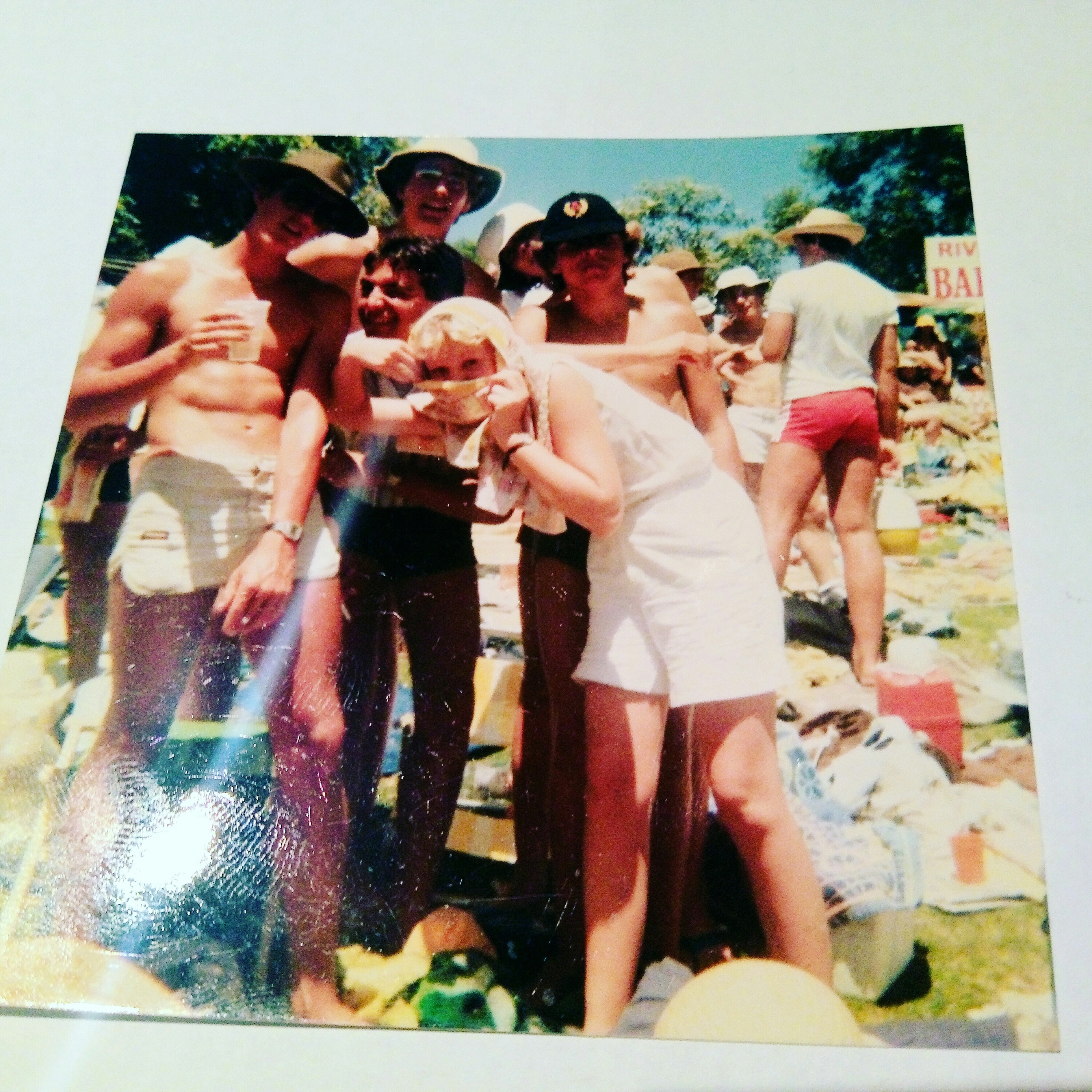
Woodsy was from Kadina and moved to Kapunda. We hung out. He was always bumping into people from Corny Point. We’d be at a Gold Coast theme park, clambering off a rollercoaster, and Woodsy would spy a bloke from there. Or walking through Kings Cross in Sydney, he’d run into two more. Always spotting somebody, he’d tear off to chat and upon his return Lukey or Chrisso or I’d inquire, ‘Corny Point?’ — and Woodsy would reply, ‘Yeah.’ And then tell us all about it. After a while, I wondered if 50,000 people must have lived there.
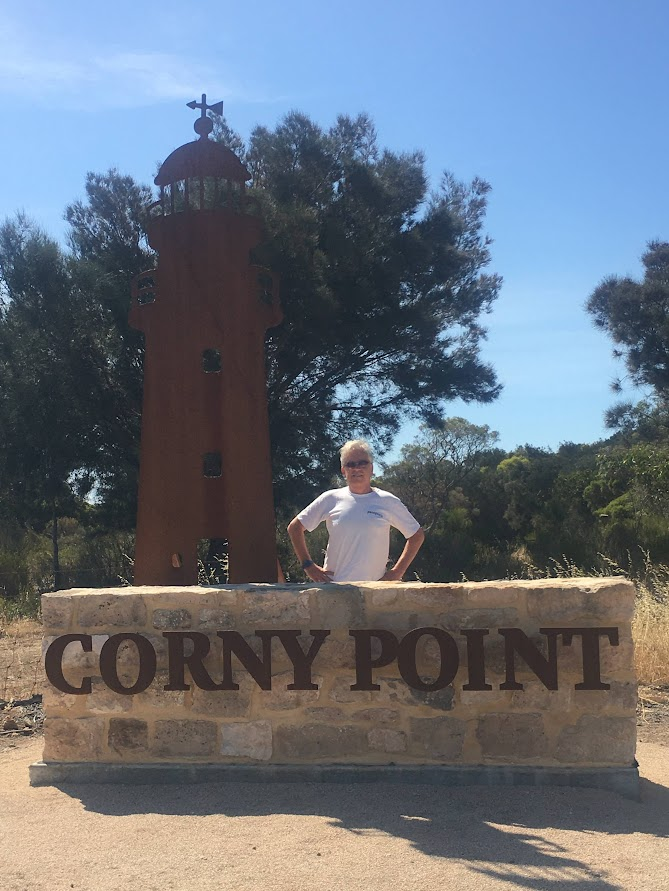
Claire and I stayed in Marion Bay and drove to Corny Point. The first Friday of this year seemed perfect for this. I expected the township to be by the beach. Instead, it was inland, at the crossroads — caravan park, CFS, community church.
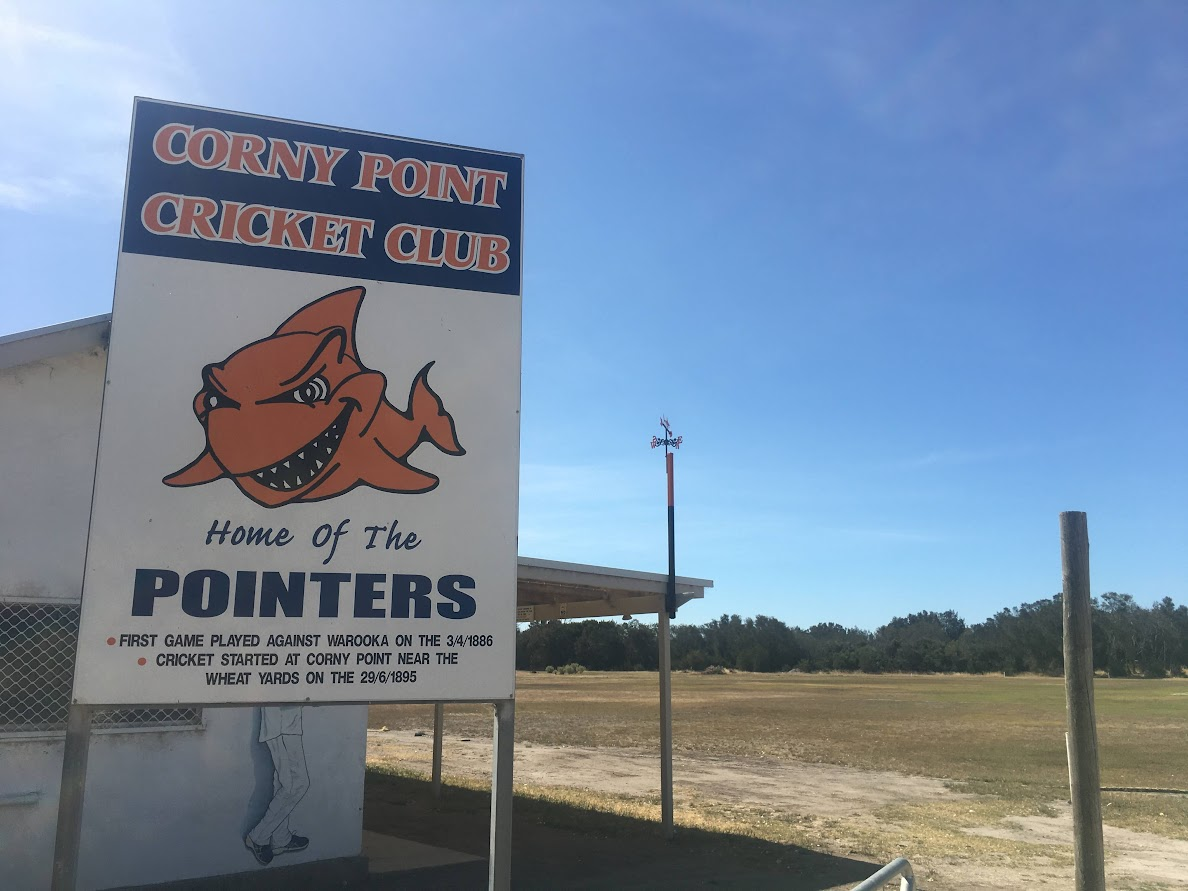
The Corny Point Cricket Club is also in the middle of town. Two sprinklers gallantly try to brighten the grass around the pitch. There are cosy clubrooms with old wooden benches and a couch in its alcove. I imagine the clatter of a bat being flung by a disgruntled batsman. Then, a spurt of applause for a crisp drive scurrying over the baked outfield — someone encouraging, ‘Yeah, good shot, Blue.’
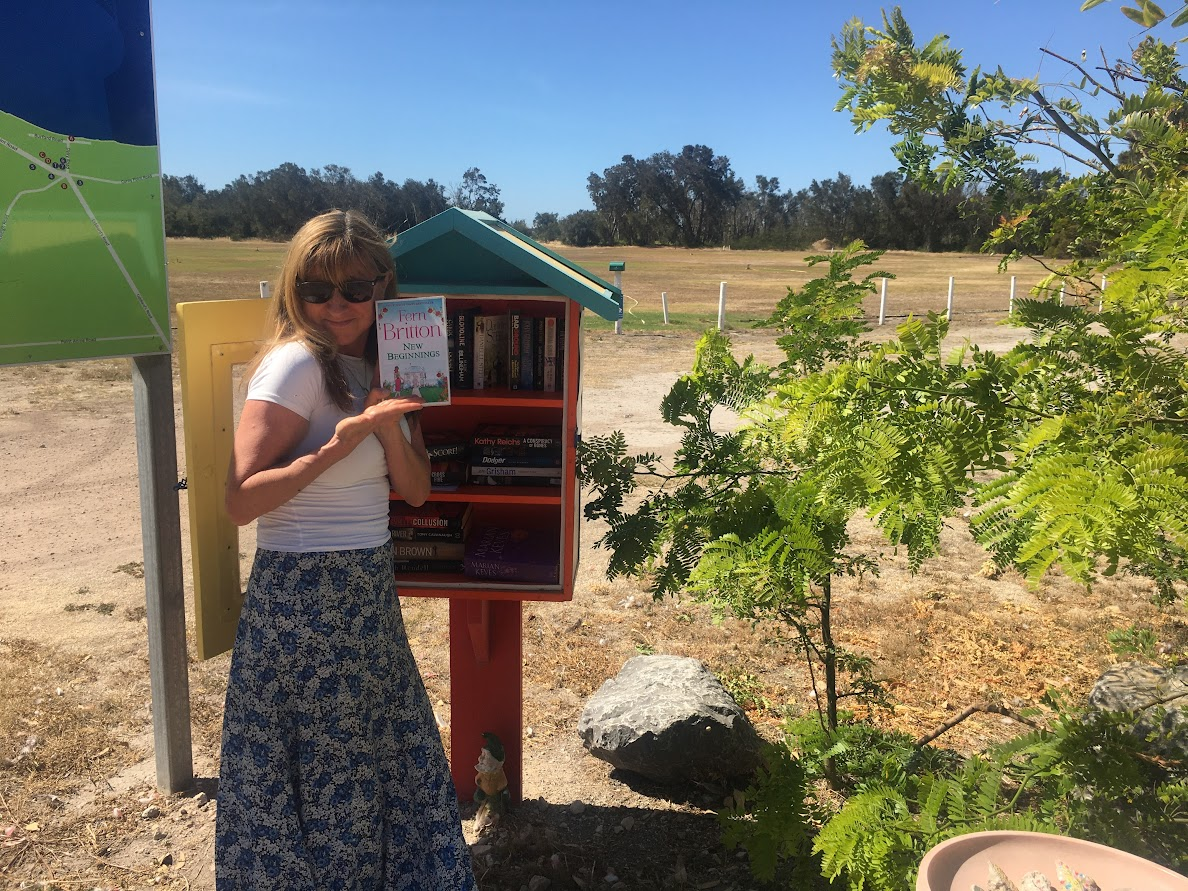
A neighbourhood book exchange sits by the cricket oval entrance — a windowed wooden box on a stand. We see these in many towns during our holiday. How great to have one right by the cricket ground? Claire and I flick through the collection. You could select a historical fiction title, park beneath a tree, and with the first innings underway, lose yourself in a few chapters, only glancing up when the thud of ball on willow disrupts your sleepy immersion. Later, just after tea, you could amble into the clubrooms and say, ‘I’ll have a shandy, thanks Fred.’ Cricket was always the most literary and dignified of sports — even here, in dusty Corny Point.
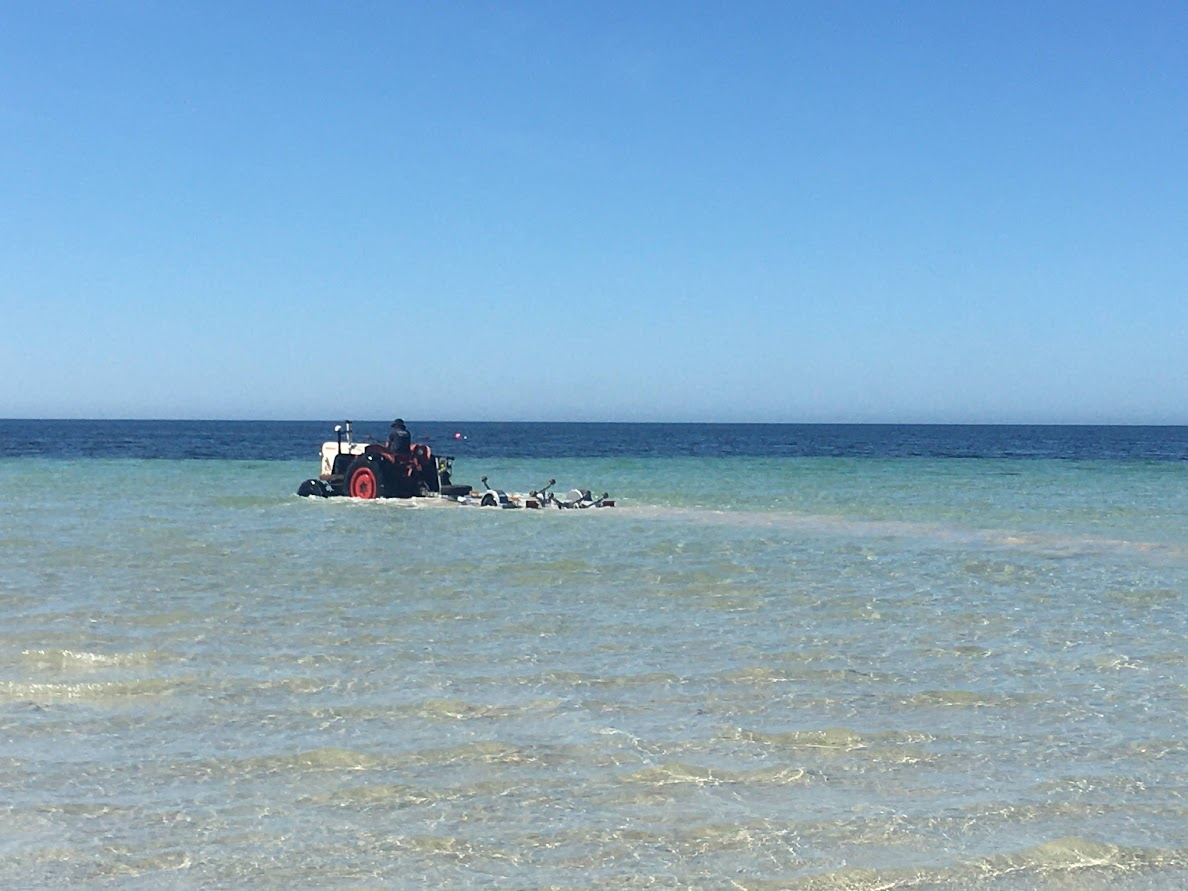
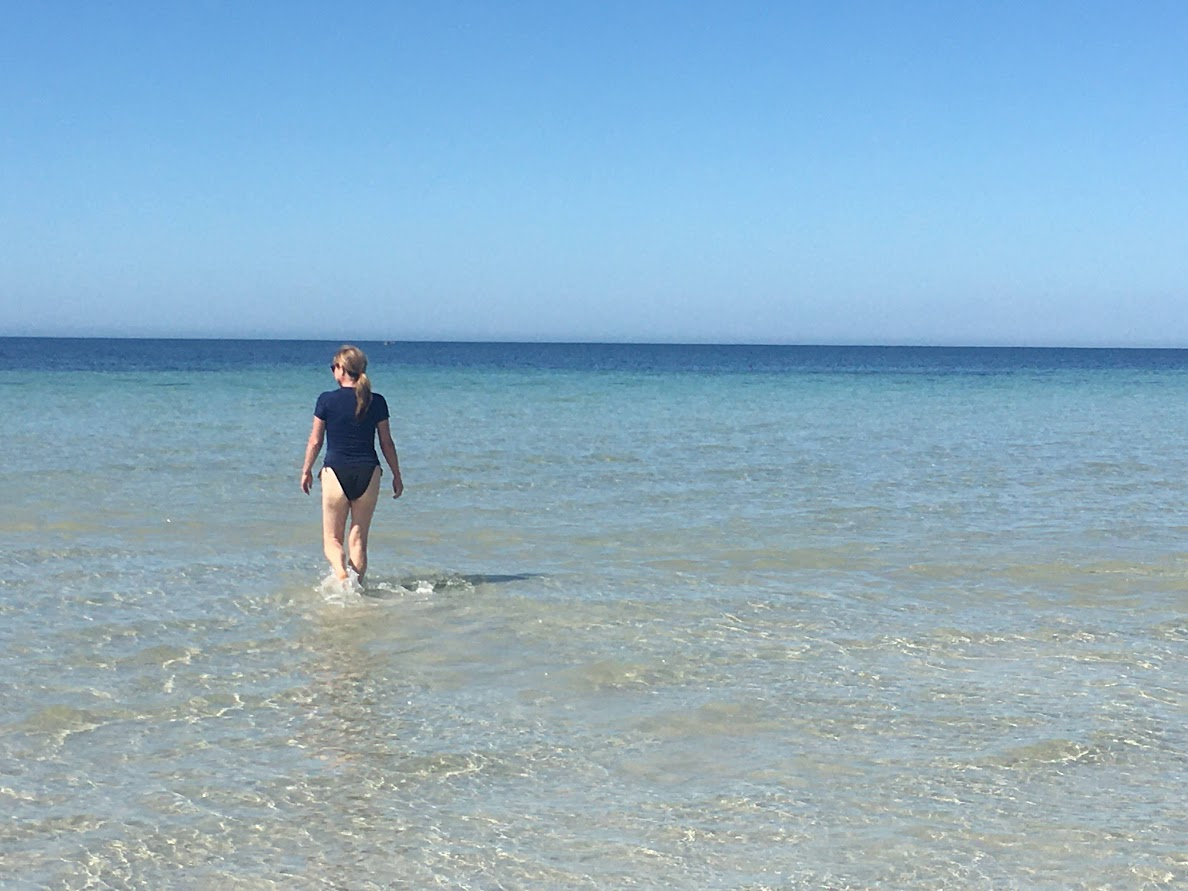
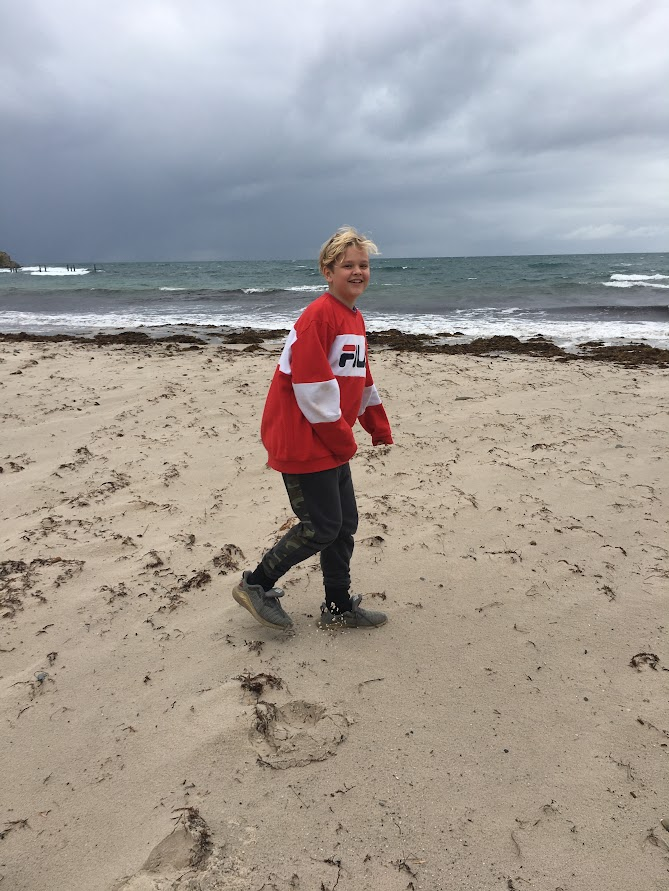
Parking on the beach, we absorb the panorama. The sand is crunchy beneath our toes. We’re both instantly delivered to our childhoods. The salty afternoon breeze is resuscitating. We wade about, the water shimmering. Claire remembers a holiday in Cooboowie. ‘It was one of the few times I remember Dad swimming,’ she offers. The wide and clean sand takes me to a place too. When I was ten, Mum, Dad, Jill, and I went to Port Vincent. I recall my plastic bucket of tiny crabs, scooped from the balmy sea. At Corny Point boats glide in. A tractor tugs out a fishing vessel. With the promise of fish, pelicans gather patiently. It’s among the best beaches I’ve visited.
The Howling Dog Tavern is named for a mention in Matthew Flinders’ journal. It was five-ish, so we veered into the carpark. Ours was the smallest vehicle there. Happy hour, and a noisy crowd’s in. The new owners dart about behind the taps, eagerly dispensing refreshment. With a Pike’s white and a Pale Ale, Claire and I take a pew on the veranda — where the ceiling fans bother away the flies. Folks drift in from the caravan park, or on Saturdays, from the cricket oval. For the hundredth time, I ask Claire, ‘What’s the difference between a pub and a tavern?’ We still don’t know. I wonder how many people in the buzzing bar know Woodsy. I’m sure at least one or two.
Driving out, I scan the crossroads one last time. I don’t see Woodsy, or too many of the 50,000 residents, but I finally understand.
You’re among the last of the 250-odd students to cross the stage. It’s the 2025 Brighton Secondary School valedictory event and I’m in Section E of the Adelaide Entertainment Centre. Adjusting my suit jacket, I browse about at the parents, siblings, and grandparents. Cologne pushes at me from a neighbouring dad. The jazz ensemble now hushes and we’re ready.
Our social contract is that we wait good-naturedly for our child to have their moment and be formally farewelled. I elect to clap each graduate while surveying their year 8 and year 12 photos, projected onto twin screens.
The sudden ruthless truth hit me this morning as I drove down Port Road, past the Entertainment Centre and saw the ceremony advertised on the colossal display. The height of the digital lettering was striking and the idea of you finishing school and entering the adult world became suddenly tangible and undeniable.
A long hour into the presentations and I’m impatient to see you. I repeatedly glance to the right of stage, hoping to spy you into the theatrical dark, searching for your blonde mop. But the unbroken procession of students persists.
Finally, your home group is announced. I can just see you in the wings: tall, cheerful, casual. Your turn approaches. An amplified voice says, ‘Alex Randall.’
I watch from Section E. Entering the stage, your long legs are relaxed and you’re respectfully laconic. I note that you’re purposeful but not panicked, in reaching centerstage. Years of drama productions have taught you to luxuriate in this, to add an extra beat. As a school student, it’s your final bow.
Now firmly under the spotlight, you arrive alongside the principal, Mr. Lunniss, and pause, beaming your easy smile. You almost look like you’ve just been told a small (Dad) joke and find it bemusing. Next to the angular, retiring educator, you establish your affable presence on the stage. There’s no arrogance in your stance, only a natural, infectious joy.
As you take your souvenirs — a navy-blue book and programme — my evening’s most poignant moment arrives. As your Dad, sitting in the vast auditorium, it sparks an inner welling and a hot tear for it shows heartening regard, and gratitude. It’s a hope-inspiring gesture, likely undetected by most in the audience, on this evening of goodbyes and celebrations.
You’ve told me you’ve no relationship with the principal and this is better than you being marched habitually into his office where he peers over his glasses and despairingly asks, ‘What have you done now, Randall?’ Instead, the reality is far more gracious. Beneath the arena lights I’m thrilled when Mr. Lunniss hands you the official gift of school stationery and you nod acknowledgment at him.
I instantly recognise this voluntarily offered thankfulness as a buoyant symbol. It’s gladdening. I wish for a dazzling adulthood in which you possess a sophisticated grasp of the silent machinery required to make life bend to your happy will.
Such was the equivalence that I could imagine you and the principal at a front bar: ‘Alex, your shout.’ It’s also, any witness would attest, a courteous transaction between two men — but with it away rushes the last of your childhood and in Section E, I’m an anonymous, hushed spectator.
The entire village has invested in you Alex, and some now watched on and could smile to themselves at the illuminating role they’d performed, the kindnesses they often extended, the gentle hands placed on your shoulder. It’s been an acutely elevating instance — a bright, cloudless dawn. A single, fleeting nod on a wide stage — and just like that, your school years are done.
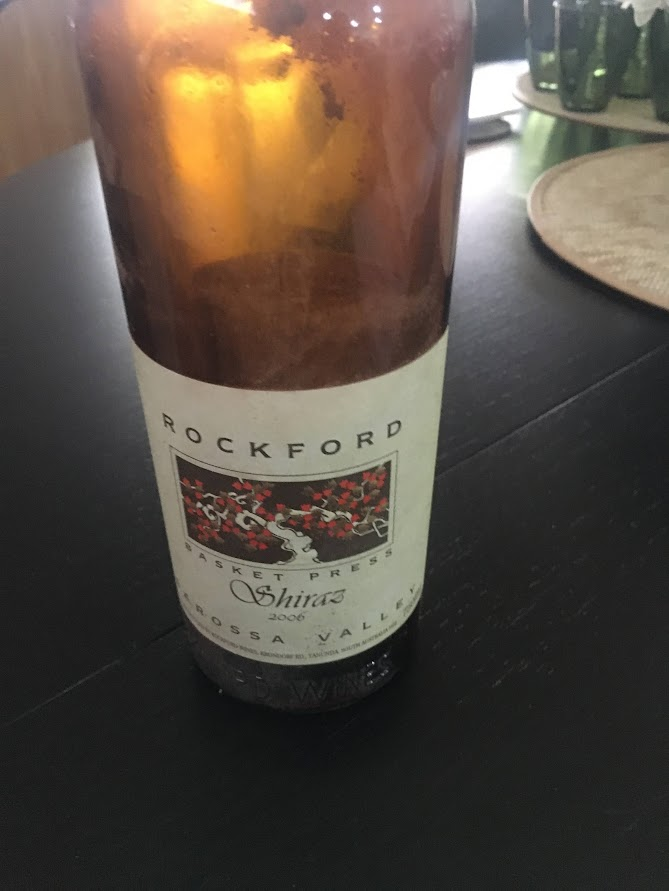
Those of us who drink red raised a glass to our patriarch. We enjoyed a glug of the 2006 Rockford’s Basket Press Shiraz — purple, velvety, immediately seductive. Dad, Claire, my nephew Mitchell, his girlfriend Alisha, and my son Alex all nodded their approval as Sunday lunch settled in with warm ease.
Under my sister Jill’s veranda, the cold November rain pushed in rudely — the kind that makes you reconsider going to the footy. We traded stories of Balinese dangers with cobras and scooters (Claire and me, imperilled), Kuta escapades (my cousin Ben, curious) and brazen prostitutes (Dad and Mum and my Uncle John and Aunty Liz, bemused).
Then, naturally, we drifted to Kapunda stories: antics in adolescent cars, the burning rubber of Uncle John’s Ford Zephyr (allegedly), and my HQ Holden versus the high-school fence (guilty, Your Honour). The following morning, I had to front, in glum succession, the school headmaster, the local Senior Sergeant, and of course Mum and Dad. All before breakfast.
A tickled Alex outlined his gap-year plans — Europe and the Stans: Kazakhstan, Kyrgyzstan, Tajikistan, Turkmenistan, Uzbekistan. I was suddenly distraught. Here was aural proof that he would soon be in the other hemisphere, an alien time zone, and forever vanished into adulthood.
Lunch was superb: lamb shoulder, roast chicken, and salads — vermicelli my standout — all made by Jill, a self-declared lover of cooking. She finished with a classic country pavlova piled with whipped cream and strawberries.
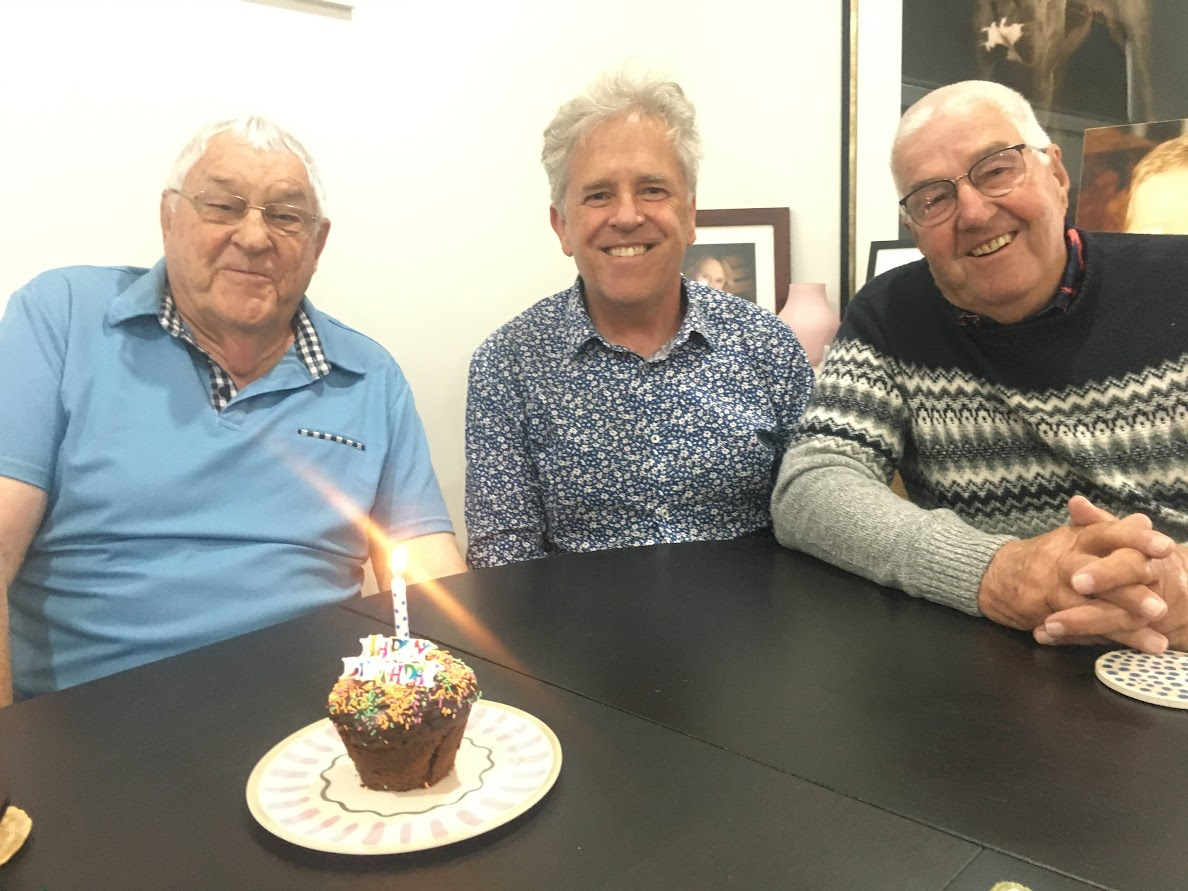
Still around the table, we sang Happy Birthday to Dad. I now remember that Americans don’t do the Jolly Good Fellow coda, which has always struck me as the spirited, fun bit of the tradition — the tune barrelling home, people lifting their volume and arm-swinging gusto. Ideal for the tone-deaf like me.
The previous afternoon, I’d gone in search of a shiraz, declaring that Dad’s birthday deserved a generous red and wandering the aisles of Dan’s, I spied some plonk that reminded me of an ageing bottle on the rack in the spare room. With that I left the store empty-handed, rushed home, rescued the dusty Basket Press Shiraz, and told Claire, ‘I was keeping it for a big occasion — and surely Sunday qualifies.’
It was instantly the best glass of wine I’ve ever had — and I hope everyone else felt the same. Context is everything, and it was superior to the Grange I’ve tasted on a couple of occasions. I reckon past a certain age, birthdays narrow into the things that matter: the closest people, engaging wine and food, and old stories we’ve all heard before — and will gladly recite again, with delighted ritual, next year.
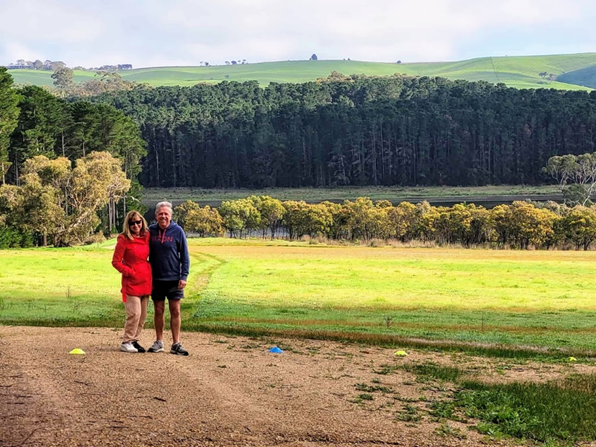
Claire and I stand side by side on the ochre path, a splash of red and a patch of navy against the panoramic landscape. Her coat flares like a small flag of likable boldness, while beside her I carry — optimistically — the casualness of weekend ease.
The land unfurls in layers: first the pale grass sprinkled with dew, then a row of shrubs in muted gold, and behind that the uncompromising wall of dark pines, straight as sentinels. Beyond, the green hills roll upward, their ridgelines softened by distance and a sky pressed with a haze of placid, reassuring cloud.
The coloured cones at our feet — blue, yellow, scattered like afterthoughts — are relics of the parkrun, yet in this setting they appear ornamental, like petals casually dropped along the path.
Together, we seem anchored but at peace with the vast quiet extending out all around, an image of warmth set against nature’s wide canvas.
It’s a moment on our annual Carrickalinga escape with dear old friends during which certain traditions have taken happy hold. Pizza Friday night, Saturday morning market, evening cocktails. As with most traditions, the joy comes largely from shared anticipation although the rituals remain delightful in their luxury.
That the photo was taken by Trish is special. She has known us both so long and so well and caught this moment as a gesture of kindness, an unspoken but mutually understood gift. The picture isn’t of us alone; it carries Trish’s affectionate eye.
Photos make permanent the ephemeral, and cryogenically freeze us all, sometimes against our will. Are these images dishonest in their fleetingness or quiet protests against life’s cruel acceleration? We look eternal but already the past has fled, with tempo like a chariot.
After, we ambled back down the hill in our chatty knot and past the retreating parkrun crowd of huffing participants and hovering volunteers.
Saturdays, at their best, spread out from dawn with kaleidoscopic possibility, hours to be coloured, festive windows through which to view self and others.
We go from forest and reservoir to coffee and toast. Like time, we are never still — least of all when we believe we are — and I consider that boundless, comic truth. I feel this thought prickle, until for a breath, I outpace it.
A summary of your recent achievements includes your continuing excellence in Drama and, just as impressively, in all of your Year 12 subjects; the inspiring trajectory and resilience you’ve shown in your work at Pasta A Go-Go; and the abundance of positive relationships you cultivate. All wonderful — and of these, I’m truly proud.
But what I want to talk about lies deeper than the visible architecture of these accomplishments. I want to get to the heart of things.
Although capable of admirable assertiveness — you can be feisty on occasion as I well know — there’s a gentleness in you that’s noble and principled. And this connects to kindness, which I believe is the most important quality a person can possess and practise. Here we think of The Dalai Lama, who as the head of Tibetan Buddhism, reminds us that, ‘kindness is my religion.’
The first time I became aware of your gift for kindness — and how others saw it — was in Singapore. Do you remember that boy in your class called Mitt? I don’t think he was enrolled for long but his Mum told me more than once how very compassionate you were to him. You’d included him, looked out for him, and made easier the passage of his young, challenging life. I don’t know how any of this came to be but it gladdened me that your role in this appeared to be voluntary and offered unconditionally. I was delighted, and moved, to be the Dad of someone kind. I still am. Wherever they are, I expect his family still remembers you warmly.
I also admire your appetite for experiences and your receptiveness towards possibility. For me, a chief joy in going somewhere with you and Max is in witnessing your engagement and the subsequent meaning you then collect from travelling. Agreeably curious, you’re inclined towards an open-hearted life.
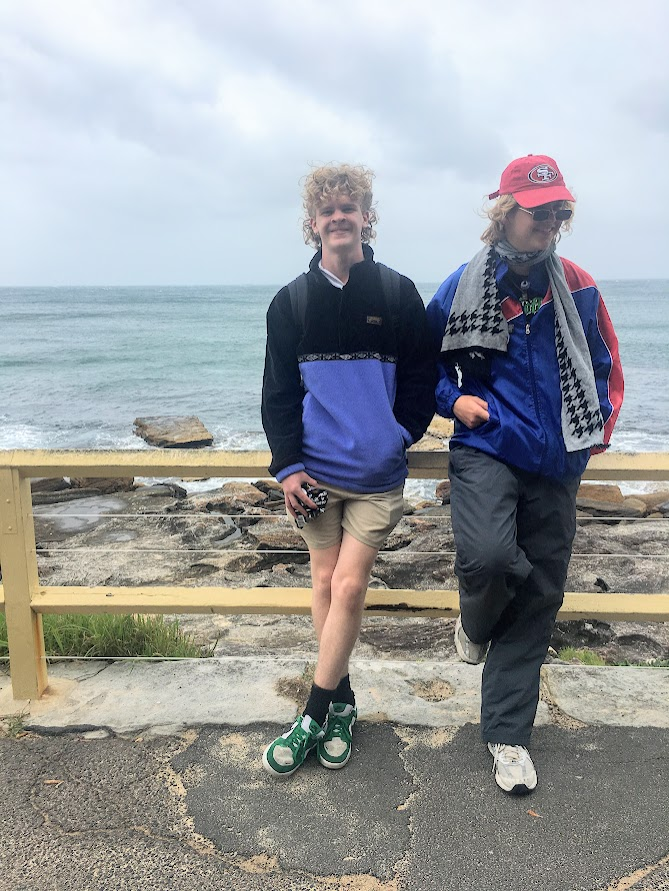
This was especially evident in Sydney on our coastal walk from Bondi to Coogee. Striding along, chatting with your brother, taking in that rugged sprawl of ocean and sky, clicking some photos — I loved being both a participant and witness to it. And how you do so in a good-natured way is, I hope, a predictor of a happy and fulfilling life.
Another favourite memory: the Lake Lap. I loved how quickly you turned our late afternoon drives around Lake Bonney into a ritual — and how you not only relished the anticipation and the loop itself, but also the talk that followed. You’ve always had the rare ability to find joy and connection in life’s simple rhythms.
Being a dad involves a lot of watching — scanning for all kinds of clues. Happily, in you, I’ve mostly seen encouraging ones.
Last March, I made you a spontaneous offer: let’s go to Adelaide Writers’ Week to hear my favourite writer, Richard Ford, and then drive down to Moana — swim, eat at a café, and later, back in our cabin, watch a Bond film. Of course, you accepted with your usual, wholehearted enthusiasm. You bought into this with immediate unreservedness and listened to the literary discussion with patience and real interest. This passage from The Sportswriter — one of Ford’s best — speaks to perspective, hopefulness, and curiosity
I read somewhere it is psychologically beneficial to stand near things greater and more powerful than you yourself, so as to dwarf yourself (and your piddlyass bothers) by comparison. To do so, the writer said, released the spirit from its everyday moorings, and accounted for why Montanans and Sherpas, who live near daunting mountains, aren’t much at complaining or nettlesome introspection. He was writing about better “uses” to be made of skyscrapers, and if you ask me the guy was right on the money. All alone now beside the humming train cars, I actually do feel my moorings slacken, and I will say it again, perhaps for the last time: there is mystery everywhere, even in a vulgar, urine-scented, suburban depot such as this. You have only to let yourself in for it. You can never know what’s coming next. Always there is the chance it will be — miraculous to say — something you want.
I was delighted — you’ve always been someone who brings me frequent delight — when unprovoked, you announced that you’d like to go to this year’s Adelaide Writers’ Week to hear one of our idols: Shaun Micallef. I was impressed that you’d investigated the programme and this showed a healthy disposition towards a cultured life and learning. It also showed me that your curiosity now moves under its own steam.
For a number of seasons watching Mad As Hell on Wednesday nights was our ritual. I loved how ready you were to laugh at it and appreciate its absurd satire. It was tremendous fun and I was thrilled by your quick sense of humour — a necessity as well as a reliable forecaster of future success. We’d roar at Sir Bobo Gargle (release the Kraken!), gasp at Draymella Burt, and laugh at the cigar-chomping Darius Horsham who’d always finish with, ‘Don’t be an economic girly-man.’ There was a quiet magic and symmetry in us meeting and obtaining autographs from both Ford and Micallef. I hope you and I can continue to attend Adelaide Writers’ Week.
This letter is also meant to reflect on ambition and integrity — and I know you have an abundance of both. They’ll serve you well in this life which needs them. I remember your first day at school in Singapore — the morning heat rising, the skyscrapers shimmering — when you climbed aboard that little bus bound for Orchard Road and the great unknown. Your journey had begun.
These brief years have vanished, your final school day looms, and you’re about to go into the world. In my quiet moments, I used to wonder about the future and how you would look, sound, and be as an adult. Now, suddenly, that future is here. You stand at its edge — optimistic, imaginative, kind. I know you’ll be all types of magnificent.
Happy birthday! I thought it a fine moment to pause and raise a glass (West End if available) to a few tremendous memories from the vault…
Let’s begin with the ongoing tradition of our SANFL Grand Final texts in the case of Sturt or Glenelg winning. You had the upper hand in 2016 and 2017; I had a turn in 2019, then received a text in 2023 and 2024. Surely one of us gets a message this year. Watch out!
*
I still think back to those Adelaide Oval Test matches of our youth. We loved the cricket, of course, but also the economy of the cheap kid’s ticket. More cash for beers. I can see us now at the Victor Richardson Gates — me first, just 17, sliding through. Then Davo. Taller. He’s waved in too. Chrisso, taller again, gets the nod after a suspicious squint from the bloke on the gate. But then comes you, all six-foot-five of you, last in the queue. The old guy takes your ticket, peers up, irritated, and says, ‘Are you sure you’re all under sixteen?’ Davo doesn’t miss a beat: ‘Yeah, we’re from the country. Breed ’em big out there.’
We all then galloped straight to the hill and set up shop just in front of the Duck Pond. We heard the whistling of stems being pulled from empty kegs. Shortly after one of us came back with a plastic cup holder bursting with beers, slopping West End Draught onto the sloping lawns.
*
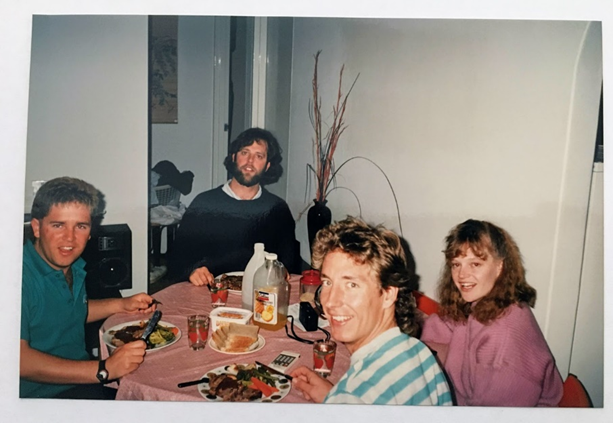
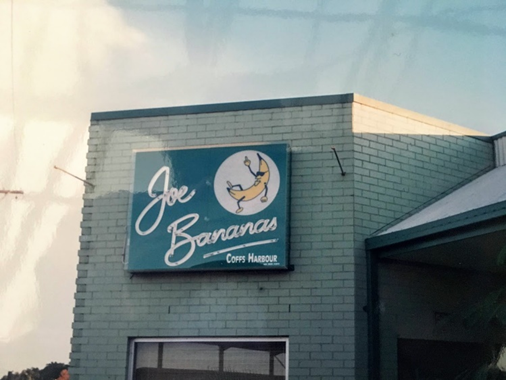
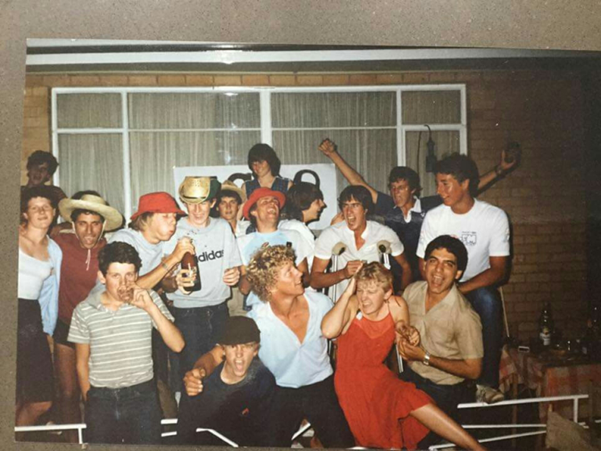
A highlight was most certainly the trip Chrisso, and I made to Coffs Harbour in July of 1990 to visit you and Michelle. We had a great week. I recall Mutton Bird Island, Par 3 golf in Coffs, the cocktail party with your footy club friends, going to the Sawtell RSL and Joe Bananas for dinner, lots of fun along the way and — of course — the triumphant meat tray at a local pub.
Good people, good weather, and that ancient stubby holder still tells the tale!
*
A less successful expedition was the 1982 Lutheran Youth trip to Naracoorte with Stephen in the Gem. Ending up in a ditch and travelling home by train! Found sanctuary on the Fanks farm. In between was a theological and beery blur. But we survived — just.
*
Then there was Melbourne in 2017 — you, me, the Hayward brothers, Lukey and Nick. Listening to Phil Carmen at the North Fitzroy Arms. He was truly compelling. It was a great event and as people say, you know it’s a big day when you get to the pub at noon and next thing, you’re ordering dinner there too before zipping into Young and Jackson’s for a midnight nightcap. Collingwood and Port the next day! Free bird seed. A funny weekend.
*
It was also terrific to be part of two Senior Colts cricket premierships. Fergy our coach. Tanunda and Angaston Ovals. I had a stint at silly mid-on when you charged in. No helmets in those days — and no shortage of courage. Both the Tanunda batsman and I in danger of fouling our whites. Especially when he defended one of your short balls using only his (four-cornered) head. I was sure it’d come straight off his double scoop Gray Nicolls.
*
But it wasn’t all bouncers and meat raffles. That you and Michelle asked Chrisso and I to act as ushers at your wedding ceremony in Hamilton remains an utter honour. The Yalumba reception was also excellent!
Thanks for all this, Rod — the cricket, the laughs, the travel, the stories we can now retell like old blokes at a reunion. Hang on! Enjoy your extended birthday celebrations. Well played!
A silver tray with vintage glasses of sherry greeted us by the door. It looked like something quietly borrowed from Antiques Roadshow.
Setting the afternoon’s genteel, English drawing-room tone, if Claire had on a hoop dress and I’d just doffed a top hat, it’d be a period drama.
We were at the Stirling Community Theatre for Sunday’s matinee of Almost, Maine.
Stirling is the most Hertfordshire-like of the Adelaide Hills’ villages. Outside was July-cold and drizzling. Clasping our sherry vials, we stole past the soft scarves and murmurs. I quite enjoy ‘Sherry’ by Frankie Valli & the Four Seasons but don’t have the fortification for fortifieds. Claire may have had both snifters. I prefer not to ask.
We claimed a spot by the orange flame of the fireplace. Its considerate warmth was another unanticipated bonus. It was thrilling. I could almost smell a Chesterfield and I enjoyed the quiet happiness.
Making our way into the theatre proper, Claire collected a black blanket from a wooden box. Although it was thin and provided symbolic rather than physical comfort, draping it over our laps was a terrific addition to this pastoral excursion. The anonymous, attentive care was uplifting.
At the door was a kindly couple checking tickets. I showed the woman my phone. By her side was a spritely, smiling usher in a black suit. He also had on a bowtie.
Our theatre visit was now more Downton Abbey than off-Broadway. Sherry. Fire. Blanket. It made an affirming triptych. My inner octogenarian — he’ll be among us before we know it— was preternaturally ecstatic.
At intermission we returned to the fireplace. I nibbled my half of the carrot cake we’d bought (reluctantly) at the Stirling Bakery.
On the adjacent wall was a poster promoting love — the play’s key theme — and in the modern spirit of interactivity we were invited to share our thoughts on this — via heart-shaped sticky notes to be affixed to the poster.
Claire resumed her seat for the second act while I confirmed and displayed my suggestion.
How was the play?
It was engaging and the young cast was enthusiastic if uneven. Eight interwoven stories, each set on the same winter’s night, as the Northern Lights shimmered over a small town near the Canadian border. As a concept Almost, Maine gave us much to consider. Love and loss, hope and pain, a missing shoe, and magic realism. It’s the most performed play in American schools this millennium, should this be any metric.
Claire deposited our blanket back into its box and went to the love poster. ‘Where’s your message? I can’t see your writing.’ I pointed to an unholy scrawl.
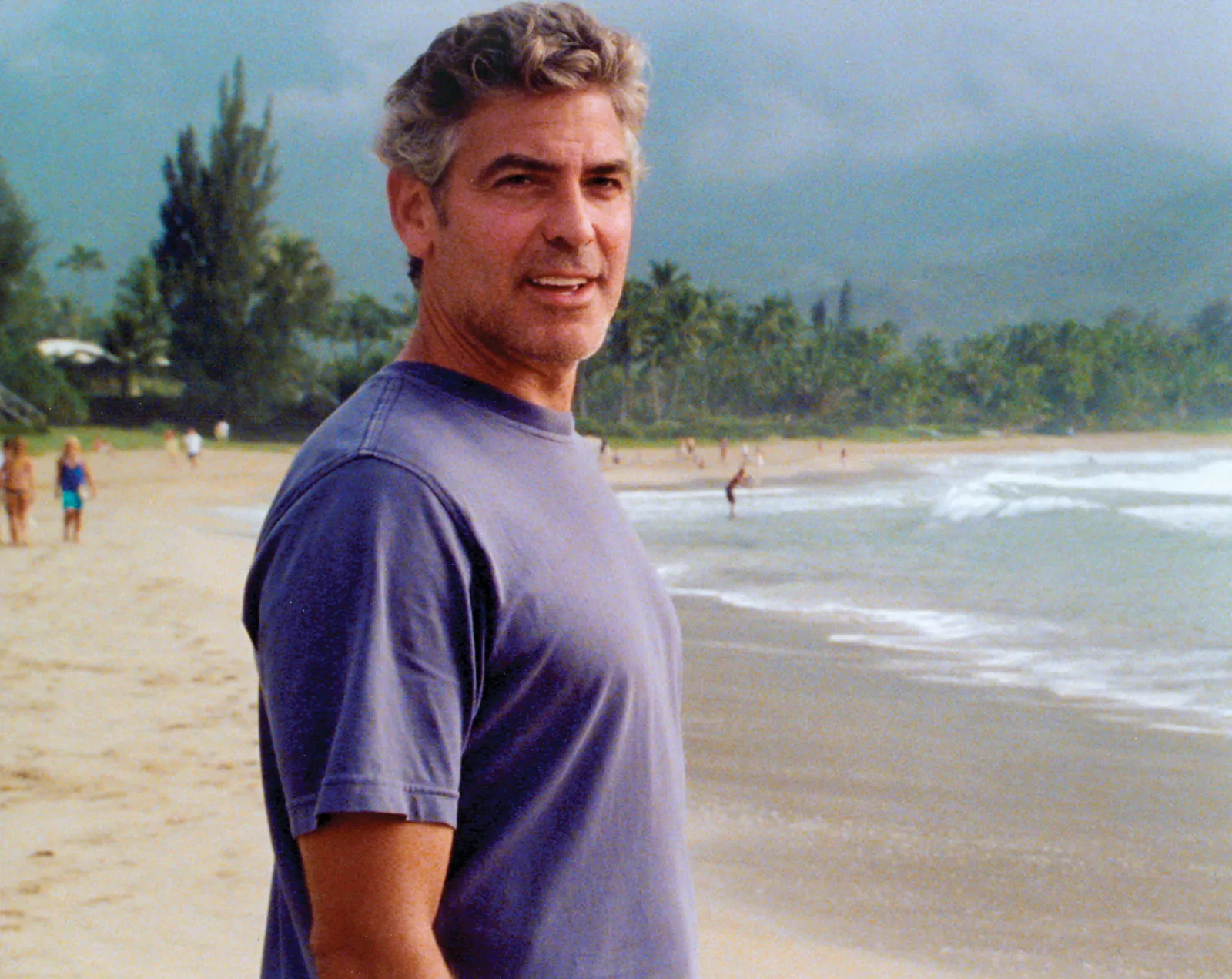
Starring George Clooney in what I think is his best role, The Descendants, is a blackly comedic drama set in Hawaii. Clooney’s character is Matt King who, in the second act, delivers a monologue to his wife. Among other poignant and despairing things, he observes that the function of a marriage should be
to make easier the passage of each other’s life.
Claire took a photo of the sticky note. She then rubbed my arm.
With the lights on and wipers ticking, we descended to Adelaide’s spacious plain. We prodded gently at the play, and our past. It really is a lovely thing — to have shared so many almosts.
From the top of Gundry’s Hill, Kapunda lies soundlessly below — half-hidden in its jumbled valley.
The topography gifts this view — and encourages a certain kind of reflection. I consider how some of the nearby towns such as Freeling, Nuriootpa, and Tanunda are largely flat — perhaps a little reserved in their landscape. Our steeper hills allowed for a testing upbringing of bike and billycart riding.
Once, the surrounds of Gundry’s Hill were simply paddocks — rolling and empty. Now, a housing estate sprouts, improbably dense. There’s about twenty homes hounded in together — you’d struggle to swing a nine iron between them. However, unlike other locations further north, the population’s climbing.
Driving about I’m gladdened by the early-week industry. People on foot and in vehicles are moving about collecting and depositing stuff, accomplishing transactions, making things happen.
A blue sky presses down on Kapunda, dragged by an icy wind slashing at the trees and roofs. I remember days like these from my childhood. A friend once called it a lazy wind — ‘It doesn’t go around you, just straight through your torso.’ She was right.
I’m curious — profoundly invested — in the high school’s rebuild after the 2022 fire. Eringa now looks familiar and is regaining much of its grandfatherly glory. It’s reclaiming its place as the town’s reassuring heart. The croquet lawn lies beneath a compact row of building site offices and the apron sloping from the grand front steps is crowded with what I hope are temporary structures. The old palm tree stands noble by the basketball court.
*
Idling through the Dutton Park gates I take a slow lap around the sporting precinct, passing the clubrooms where Claire and I had our wedding reception. I then see the sleek bowls club, tennis and netball courts, and sadly becalmed trotting track — remembering long, dust-kicked laps in the heat of footy’s pre-season. The encircling gum trees bend in the crisp June gusts.
I veer past the old Railway Hotel. Most of it’s intact behind some hopeful orange bunting. I wonder for a moment at what it could become. A motel? Café? Restaurant? I then shake my head. It’s been decades since the pub fire and nothing’s happened.
Across the road is the Railway Station. It’s now luxury accommodation but I remember Mum taking my sister Jill and I to collect our monthly parcel of State Library books and cassettes. There was always excitement in pulling open the brown paper wrapping to see what’d made the train trip up from North Terrace.
I note mechanics garages all around town. A number have sprung up to service patiently waiting trucks and utes. Diesel motors have feelings, too. A boxing club’s in a shed across from Bald Hill.
The North Kapunda pub is shut although the forlorn loss is yet to drape itself glumly over the veranda and windows. I hope it reopens but Kapunda has probably always been overserviced by pubs. Smiling at the thought of Saturdays in there during the 1980’s — the rowdy white smear of a couple dozen cricketers and I hear, ‘Where are you goin’? You owe me a beer for the Schooner School!’
In contrast, The Prince of Wales drive-through has been trading steadily since dawn and just over on Clare Road’s a flashing sign urging punters to drop by for morning coffee and afternoon delights. I love pushing through the front door into its cosy bar but before noon on a Monday’s not really the time. One day soon.
Turning onto Hill Street I spy the sporting mural about which I’ve heard much. I’m carried back to the past and beam at Rocket Ellis, Paul O’Reilly, Davo, and other portraits. Macca — iconic teacher and sportsman — is also there and he once told me, ‘You’ve got it arse about. You hit a cricket ball in the air and a golf ball along the ground!’
I smile at the adjacent mural more broadly acknowledging Kapunda’s story. Much-loved deli owners and revered citizens Eli, Brian, and Reg Rawady are at the rightful centre. I can still hear their distinctive voices, especially Reg’s bellowing baritone. A town that appropriately praises its people and history is surely a healthy place.
At the Kapunda Bakehouse, I park outside the former Eudunda Farmers store. Inside’s noisy with older folks concluding their morning tea. As I’m ordering most amble towards the door — leaving behind their coffee cups, chatter, and crumbs. A murmuring din bounces around. ‘See you next week, Bill. Enjoy your golf on Thursday!’ It’s an encouraging hub for the town and a bustling café.
Deciding to eat on the balcony, I spot the dental clinic across the Main Street. It’s new although Dad later tells me it’s been open a while. After too many chocolate donuts, stride across the road to get your teeth fixed.
My sausage roll is excellent. Scrutinising it after a bite or two, I’m thrilled to spot that neglected ingredient: carrot! The taste is delicate and flavoursome. It’s not massive — no need to compensate for tastelessness or oily pastry. It’s a treat.
*
Monday mornings teach you things in a country town. I’ve taken a tranquil drive through memory but have also glimpsed something of Kapunda’s boisterous and bright future. There’s movement beneath the quiet.
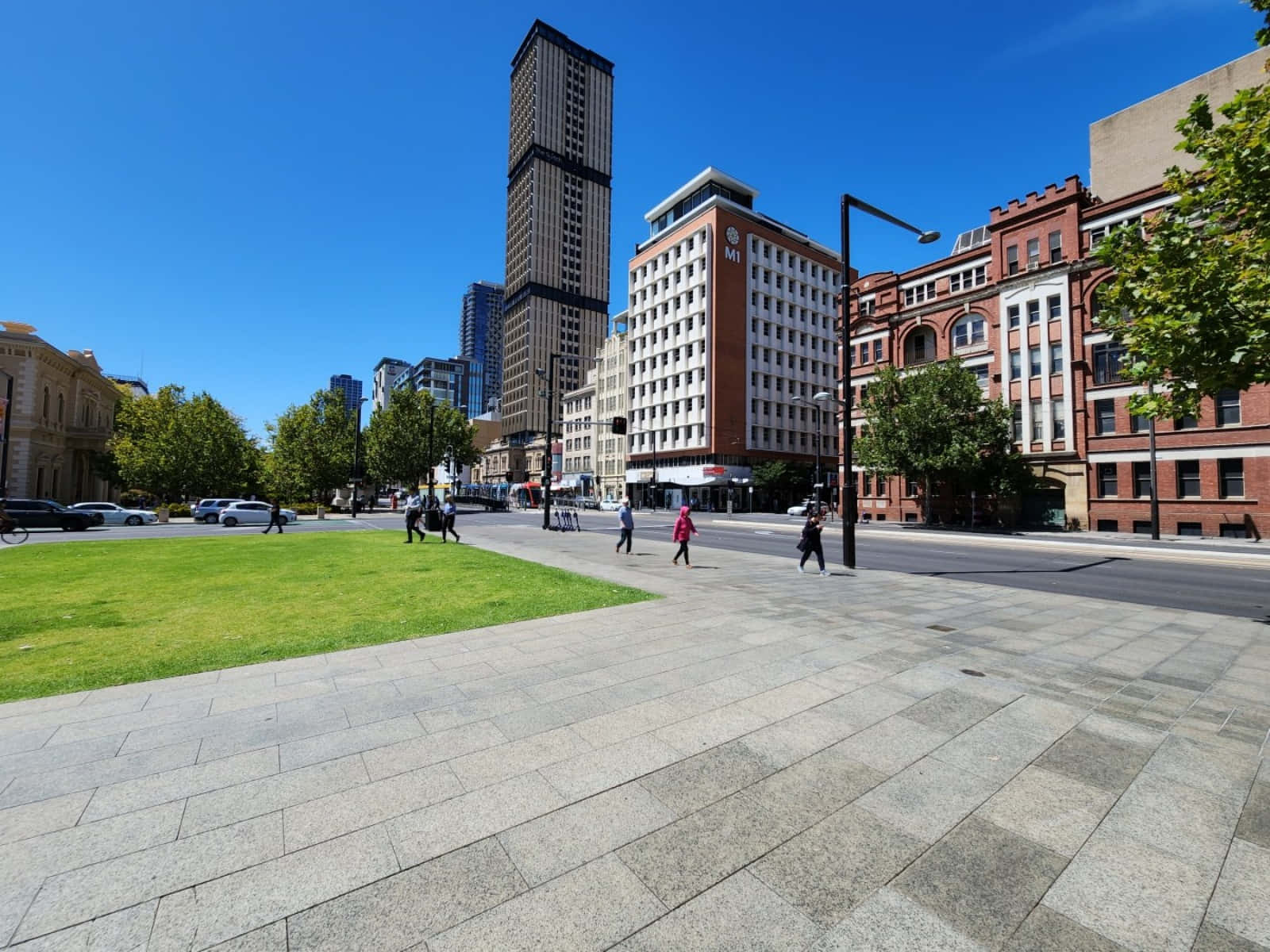
I’m jogging west along Adelaide’s most distinguished boulevard on this dazzling Sunday morning. Much of this street I’ve never explored.
The footpath is wide and tree-lined, and the streets are hushed, empty. The warm weather’s more akin to October and not late May so I flip between viewing this as serene and approaching apocalypse. Claire had an Auslan interpreting job at the Lion Arts Factory — a burlesque dance competition — so we decamped to the Intercontinental (Hotel not a nuclear-armed ballistic missile).
Next door, the Adelaide Convention Centre sprawls— so vast, Boeing could assemble planes in it. I enjoy it best at big events like the Cellar Door Festival when over splashes of red wine and among the Merlot-ed masses, Claire and I whisper in snug, secretive ways.
I pass the medical precinct — towering, assured, glittering — on which I’ve never set foot. Formerly overlooking the railyards, it was the road to nowhere. Like much of our privileged world, its function has transitioned from industrial to knowledge, a Victorian badlands to a district of profound applied intellect.
A duo of male joggers materialises. Relaxed with each other, they’re chatting comfortably. We exchange a chirpy round of, ‘Morning.’
I cross the terrace at the Royal Adelaide Hospital. It’s among the most expensive buildings on the planet. With relief rather than pride, I nod at this thought. Nuclear plants, much of Singapore, and those futuristic Gulf state mirages, all sit higher up the list. Even the American football stadium at Inglewood, in LA, cost more (five billion) and yet much of it is (fake) grass. How could this be?
The Newmarket Hotel stands silent, a ghost ship. Its legacy is to the nomenclature of glassware with the butcher, named for the small beer preferred by abattoir workers at lunchtimes. Where can we now find these 200ml tumblers? Maybe in lonely country pubs. Are these victims of the American (read: global) trend for upsizing?
Peering in at a cluster of UniSA buildings, it’s another mysterious pocket of North Terrace, an architectural Siberia. The intriguingly named Elton Mayo building (a pianist and salad dressing hybrid) has an almost mocking confidence. One day, I should stroll in. He was a celebrated psychologist.
Striding along now. The Oaks Horizon. We had a couple of stays there with my boys to explore the city. I wanted them to experience Adelaide’s cultural riches and investigated the Botanic Gardens, Museum, and Art Gallery. We also played mini-golf at Holey Moley near Hindmarsh Square. Education complete at the Pancake Kitchen.
Red and blue flashing lights and my heart quickens. What? Why? A paused police car menaces a white SUV just by the Stamford Plaza. I amble through during that tense interlude when the car-of-interest stops and the pair of police alight — adjusting their belts, straightening their navy caps — and I imagine the driver’s halting, ‘Morning, Officer. Is there a problem?’ What has gone badly at breakfast on this Sunday?
A convenience store window offers a super deal: two unlikely allies finally together — Farmers Union Iced Coffee and a ham and cheese croissant. I’m proud that South Australia is one place where Coke is outsold — Glasgow and its carbonated Irn-Bru being another. Bravo, iced coffee! Take that Paris! Take that Rue du Faubourg Saint-Honoré! Take that Atlanta!
No traffic. Flouting the crossing light’s red man, I scurry over King William Road. I see solitary pedestrians, the homeless interrupted by dawn into forlorn, shuffling movement and I’m grateful for my fortune. Turning around at the former Botanic Hotel, there’s evocations of my untroubled university life. The building’s majestic, its raucousness now becalmed.
With the sun on my face, the future technopolis of Lot 14 swims into view. It’s only hoardings and a barren block but could erupt suddenly, all dazzling glass and steel. Taking in the University of Adelaide and Bonython Hall’s honeyed façade, I’m reminded, not unjustly, of Bath and Oxford.
This is a handsome boulevard.
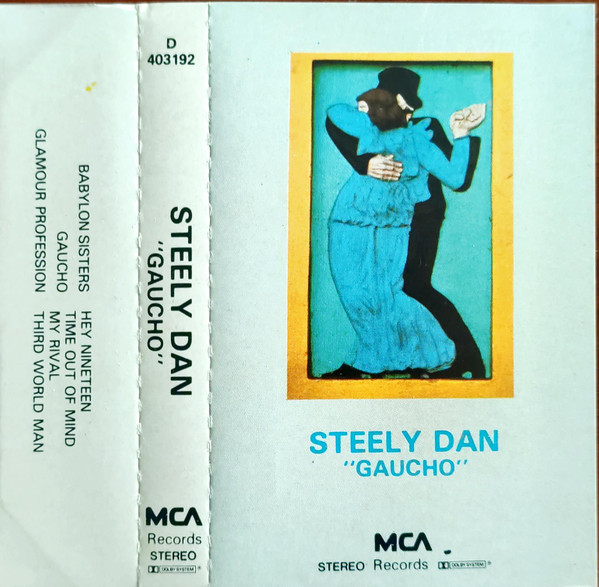
Kintore Avenue dips down to the River Torrens and hosts the State Library. I spent hours there at uni — the reading room’s newspapers (Ooh, there’s the Wagga News) and borrowing Steely Dan cassettes to play in my HQ Holden. The ease of shaping my days with leisure and study.
Adelaide remains tranquil and I again spy the pair of male joggers. They’re still nattering and unbothered by exertion. It could be a pre-coffee pretense.
The casino emerges. Australian cities have increasingly thorny relationships with these, and glamour has largely given way to wretchedness. Seeking dinner last night, Claire and I foolishly walked through one of its eateries. Glaring lights. Cafeteria tables. All the allure of a Soviet hospital. We declined.
Adelaide Casino’s a boorish, puffed-up pokies barn. You could get in wearing double-plugger thongs. Nearly. It annexed the splendid Railway Station. But I remember being disgorged from the Gawler train in the 1980’s, heading to the one-day cricket and this rushes back to me, riotously. Eskies, flags, Adidas Romes. AB, whistling kegs, zinc.
I jog on, buoyant, smiling at my younger self and his friends.
Outside the Intercontinental’s an idling fire truck with Technical Rescue emblazoned on its side. Ignoring these blue and red lights, the hotel elevator then ejects me on the seventeenth floor.
Each of us studies the lunch menu like it’s a sacred text, applies some unnecessary critical thinking, and in succession — as anticipated — orders a schnitzel. It’s a collective declaration of mateship, and an acknowledgement of being deep into our sixth decade. Growing up in Kapunda, we’ve a lengthy and easy friendship.
Outside’s blustery but we’re in the pub’s cosiness.
With the dining room’s blazing fireplace, pot belly stove in the front bar, and rib-ticklers (for her pleasure) soliciting purchase in the toilet’s vending machines ($2 each) there’s still much that appeals. Happy groups are dotted about the tables amidst a humming Thursday ambience.
In a world hurried by notifications, noise, and busyness, the Greenock pub resists performative velocity. Storytelling is our afternoon’s purpose and theme, and we’re now less about bedlam and more about meaning.
Chris (Rohde) tells us of his recent trip to Europe and Berlin, of steins and asparagus, and staying a drop-punt from Checkpoint Charlie. Of Copenhagen and the Tivoli Gardens. We also hear more about Chris and Letitia Hayward’s golfing and post-golfing explorations of Ireland, Scotland and London. All described as, ‘magnificent.’
A photo shoot’s happening in the neighbouring anteroom, and I spy etched glassware filled with wine the colour of ox blood, arranged in a pretty tableau. A silver reflecting umbrella illuminates the human and vino talent, and I nod into my ale at the prospect of a glossy double-page spread. It’s as deserving as any pub. I wonder if there’s a magazine in Germany called Schnitzels Monthly.
A log shifts in the fireplace, and there’s a scrape of cutlery. Easing my chair back, and with our beer rhythm wordlessly established, I fetch another pint of Coopers Draught for Lukey and a Pirate Life for me.
Chris (Hayward) continues his animated observations. ‘We found a great pub in Soho, and I thought that’d be our local for the week. But then we came across another that was even better!’
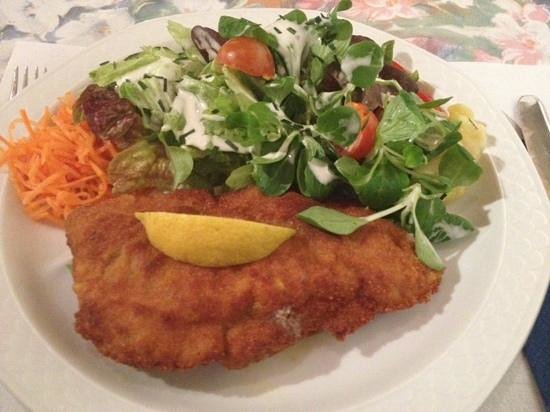
Our schnitzels arrive and these, too, are magnificent. Lukey says, ‘Good that everyone has a schnitzel. About time you all got with the programme.’ Pepper gravy sweetness wafts through the snug air along with the hot comfort of chips and steamed broccoli. These hearty plates — though probably not us — could star in the magazine shoot.
Talk accelerates to footy and the upcoming Kapunda Bombers premiership reunions. Teams from 1965, 1985, and 2005 will gather in the club. With this comes the mandatory story of Lukey’s stratospheric hanger in the 1985 grand final. It was a colossal mark but the sole VHS tape of the game is lost. I can see the back-slapping, and hear the bellowing laughter erupting above the din of the Dutton Park clubrooms. That the 2025 Bombers are struggling won’t matter one bit.
We consider relocating to the front bar but linger, preferring the stillness. I love how the Greenock pub is humbly and wilfully unrenovated. In middle life, competition yields to communion — and today and annually for us, this is a chapel. It hosts our companionship and remains a landscape for thought and gratitude.
This annual lunch is where we reconnect with younger versions of ourselves, even as we sit with our shifting adult responsibilities. It’s also a place to remember who we were — teenagers piling into dusty Holdens blasting Midnight Oil — and to marvel at how this whole scrappy, beautiful mess is turning out.
Whether it’s a repeated holiday, yearly lunch, or the lame recurring joke I inflict upon Claire, I reckon tradition offers psychological warmth. Do you have your own conventions that you repeat over and over again?
My rituals unfold like this: the deliberate or accidental start, the adhering — however long it endures — and the anticipation for next time, commencing immediately once the event’s done.
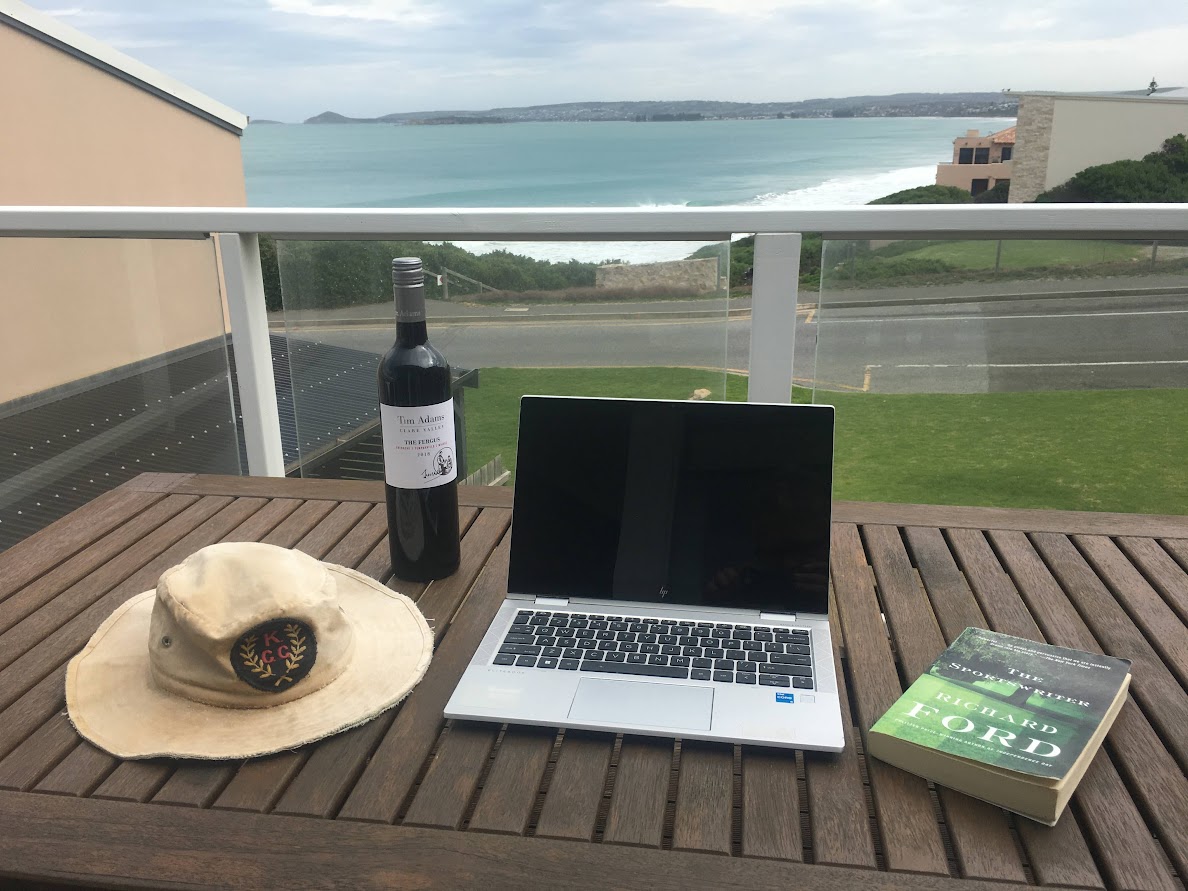
I’ve known Claire since we were thirteen so with much to consider and scribble, head to Port Elliot for a few days to immerse myself. At the beginning of my now biannual writing retreat, I conduct an opening ceremony. This is done by arranging a tableau of items on the townhouse deck’s wooden bench, overlooking Knights Beach. As is our modern way I then take and share a photo, mostly for self-amusement. Like the youngsters.
So, what’s in the photo?
I include my Kapunda Cricket Club hat; the Greg Chappell version (c.1982). It’s my oldest piece of apparel and a life-long companion. It represents youthful frivolity and fellowship. Having been on my head during many summers, I hope it inspires a sunny, grateful tone in my writing. Or at least not a golden duck.
It’s well-worn—perhaps even an heirloom. It’s certainly a talisman from another era—something with personal gravy gravity. Just this week, my eldest, Alex, wore my other beloved cricket cap (Kimba CC) while playing an old, broken-down PE teacher in his Year 12 drama performance. It was a star! Upstaged everyone. So maybe I can pass various cricket items down through the generations. Surely, there are more miserable inheritances. I reckon they’d prefer this to a house.
We can all learn lots from a hat.
Also in the photo is Richard Ford’s The Sportswriter. Paired with the cricket memorabilia, it suggests a longing for past versions of masculinity—or the shifting seasons of life. The Sportswriter is the first in a series of five stories I’ve read three times across this past decade. It’s about loss, introspection and hope.
As I’m striving for enlightened forms of myself, I want both hat and novel, as personal texts, to be illuminating. To work like flares in the fog.
This writing retreat is for contemplative isolation —not loneliness. I generally seek no company — not even during my late-afternoon pub visits — but see the time as an opportunity to swim in words. Not drowning, waving. My sentences take shape from memory and its attendant considerations. Being beside the glittering, pounding Southern Ocean and adrift in language and reflection is spiritual.
The horizon line on the glass balustrade is enlightening. Did Frank Lloyd Wright once say this? Though it sits near the top third of the photo’s frame, it suggests both elevation and humility—the viewer just above the sea, but not grandly removed from it. I hope this projects gratitude for the occasion and the painterly environment, and encourages the idea that these are combining together, in serene concert.
This tableau proposes that through the laptop and novel, I’m straddling the border between writer and reader. Additionally, I’m fluctuating between labour and leisure and ultimately, thought and the expression of it. My retreat is simultaneously and indistinguishably all of these.
It’s my idea of fun.
Lastly, this is a portrait of myself in retreat— not from life, but toward something. Maybe a particular reckoning with age, or self, or meaning. The animating idea is that we harvest the past to better command our present.
Saturday afternoon and I’m home alone. Chores are in hand. Nothing on TV and the book I’m reading, the collected stories of cult American author, HP Lovecraft, is more medicinal than recreational, so it sits untouched by our bed.
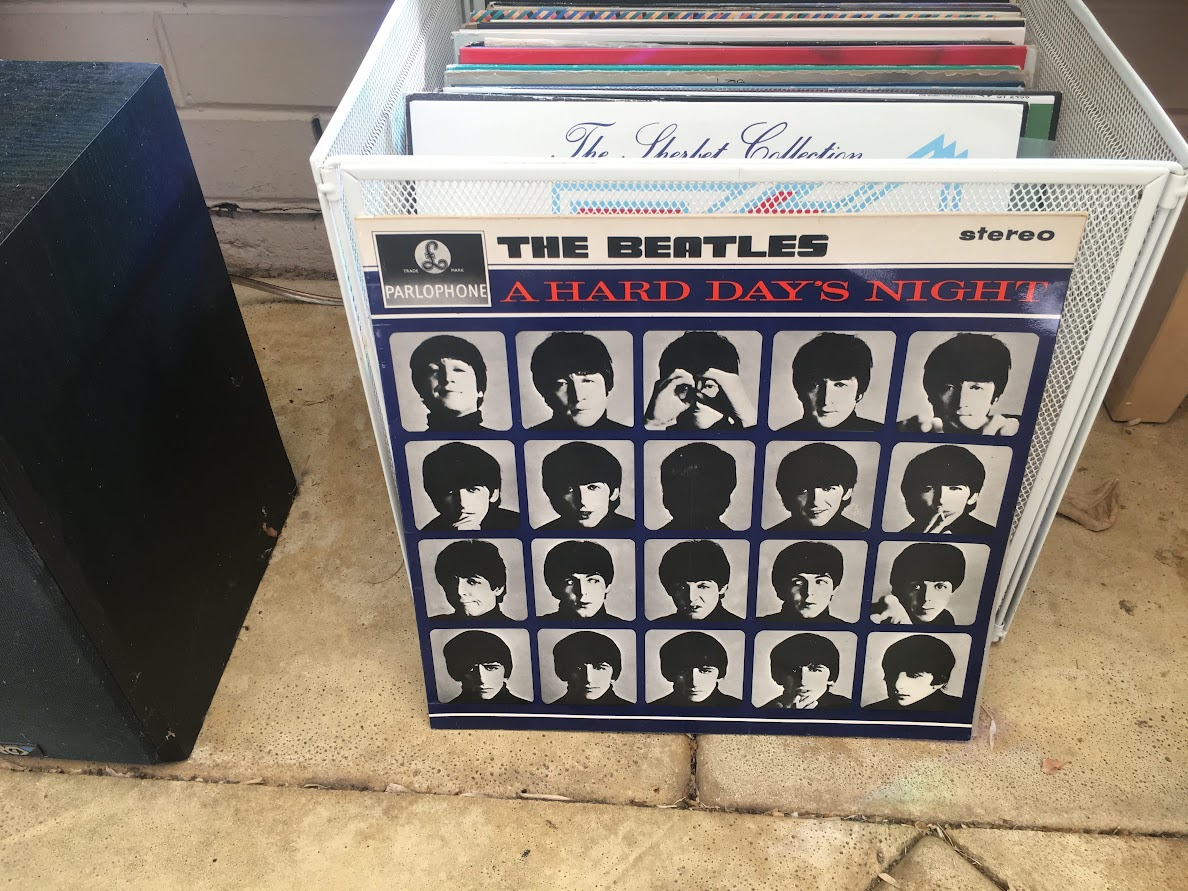
On Record Store Day (globally recognised on April 19th) I swung by Mr. V’s on Semaphore Road, and because one of the very best ways to invest half an hour is by listening to a Beatles’ album, I bought this. The music transports me to my childhood. It remains thrilling and urgent and while Paul is my favourite, I can understand why George Martin, their producer, commented that of all the great things he got to do with the Beatles, his absolute preference was mixing the vocals of John. As I type, the album’s on and it’s utterly joyous and innocent and compelling.
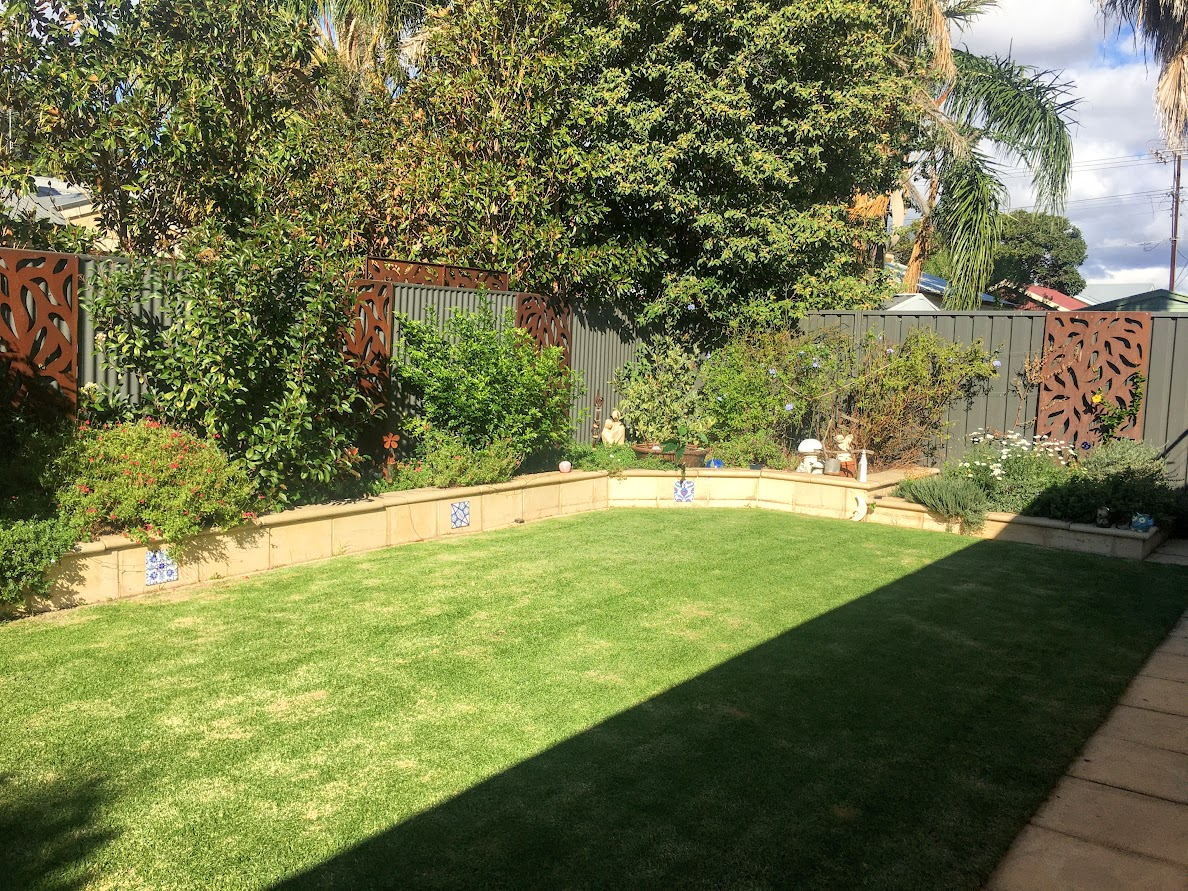
I love our backyard. And the time of peak admiration is, of course, in those first minutes after it’s been mowed on an autumnal afternoon. The breeze is coaxing the trees and shrubs towards folksy dance and there’s bursts of birdsong. I’m in debt to Claire who, with her artistic eye, designed and brought our garden to painterly life. Later, I may sit out here with a quiet ale and admire the view.
I purchased Glenelg Footy Club’s 2023 premiership jumper at Adelaide Oval during last year’s finals for tuppence and my appreciation of this simple item is twofold. Yes, the dual flags (nice win yesterday over Norwood in the Anzac Day grand final rematch with Lachie Hosie kicking eight goals) but the guernsey is my default running top. It’s frequently a conversation starter and when I’m on the beach in the morning a passerby will sometimes say, ‘Go Tigers’ as we puff by each other. I had it on this morning at the Patawalonga parkrun (my 110th, the 200th such local event and day number 729 of my current streak) and it was a fun 5k (24.49 which is decent for me). I’m grateful for footy and running.
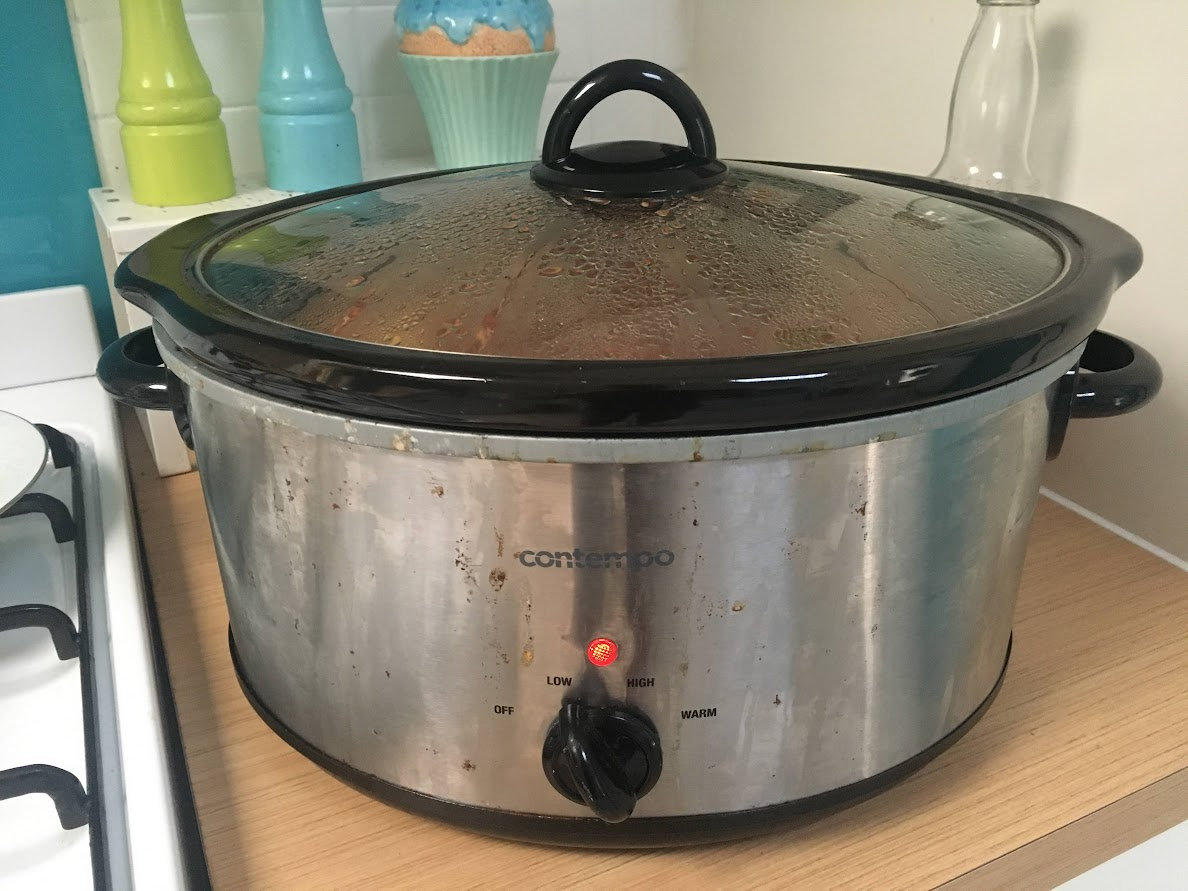
Dinner is slowly cooking in the slow cooker. Which is what the label promised, Mr Spock. It’s a beef casserole and I look forward to it. I assembled it late morning with the help of a Ball Park Music playlist. Can you remind me to throw in the beans around six o’clock? Thanks.
It’s a bit of a narrative but Claire has been in receipt of red wine. Needing some for the aforementioned dinner, I opened a bottle of the 2005, McLaren Vale. This was done with nervousness for I anticipated it might have aged as well as the K-Pop song, Gangnam Style.
How is it? It was a little cantankerous during those early minutes, but I commented to Claire that if I’d been trapped in a bottle for twenty years I would be too. I slopped a few generous glugs into the cooker and popping into the kitchen across the afternoon, both casserole and plonk are doing well.
You wear an elegant, off-the-shoulder sequined dress—sparkling, even in monochrome. In your left hand is a small bouquet of white roses. Your right hand rests gently on mine.
We are gazing at each other with affection, both smiling softly—it’s a candid and heartfelt demonstration of connection.
The setting is outdoors, beside Kapunda’s duck pond. In the background gum trees contemplate while the island’s soft, weeping branches add to the serene, almost dreamlike atmosphere. Late afternoon light filtering through bathes everything in tranquil reverence.
As kids, how many times had you and I walked, rode or driven here? It was always evocative but I dared not imagine it as a setting for such a photograph.
You exude warmth, elegance, and joy. Even in the black-and-white image, you are catching the autumnal light. Your hair is styled in soft waves, loosely pinned back with a natural, graceful finish that frames your face with an artful, effortless beauty. As you look up at me, beside you, you have a luminous smile and your expression is one of affection and contentment. Your face, as well-known to me as my own thoughts, is wholly familiar but somehow brand-new.
With this, my world is remade.
Your posture—relaxed, leaning slightly into our embrace—conveys ease and deep correlation to this instant. The sparkle of the dress, paired with the tenderness in your eyes, contributes an almost cinematic glow. There’s an attractive balance of glamour and surrender in your appearance, making the scene striking.
We had a timeless and profound minute—the photo’s composition accentuates love and natural beauty.
Your face is turned slightly toward me, and you’re looking with a warm, affectionate smile. There’s a calm confidence in your gaze—you look truly content and immersed. You are muse and memory, myth and moment.
For this moment, my life had been a faltering, often uncertain rehearsal.
On this day of orchestration and meticulous planning and staging it is an improvised tableau. A reverential moment at a childhood location. Late afternoon you and I drove past and were drawn to this poignant place. An intermezzo between the ceremony and the reception. It is a place that catches the magical narrative of our wedding.
And here, in this quiet place, is where the light found us.
Well, the South side of Chicago is the baddest part of town And if you go down there, you better just beware Of a man named Leroy Brown Now, Leroy, more than trouble You see, he stands, about, six foot four All the downtown ladies call him ‘Treetop Lover’ All the men just call him ‘Sir’
We were beneficiaries of Kapunda High being a progressive school with teachers who were innovative. When I was in Year 11, vertical homegroups became part of the ongoing reform and this meant students from Years 8, 9 and 10 joined us in the Home Economics Centre under Mrs. Trinne’s watchful and occasionally fierce eye. This arrangement was representative of our bold education.
Mr. Schell was influential in setting up a daily fitness programme. Every day we’d have a different activity and the entire school would rotate through these, including all the staff. Most of this happened on the oval. But one memorable— if haunting session— was scheduled weekly in the former stables.
It’s called the Health Hustle, comprised three or four songs and each tune had a set workout routine. Our class members would claim their space on the rough concrete floor of the Stables and Schelly played the songs on a boombox. For some in our class this was fun and for others like me, it marked the beginning of my descent into dancephobia!
Technically, it’s known as chorophobia and yes, I’ve been attending the Monday meetings for many, many years. No, not really but to describe my dancing as uncoordinated would be a gigantic underrepresentation.
The mere mention today of Health Hustle prompts Claire and Trish to leap up from their otherwise comfy chairs and give a hilarious recreation of me feebly trying to dance in the stables all those years ago. All done with uncontrollable laughter. Look! There they go mimicking me and my tangle of disobedient, droopy limbs. Arrythmia not of the heart but of the body. Still, our friendship, if not my choreography, flourished.
Catching the opening notes of ‘Mickey’ or ‘Teach Your Children’ nowadays I’m sure many of the class of ‘83 also have a Pavlovian response that causes them to break into those deeply embedded routines. But I somehow retain affection for the Chicago gangster jaunt of ‘Bad, Bad Leroy Brown.’ The marriage of the Scorsese lyrics and the wide-eyed piano stomp is terrific.
He got a custom Continental He got an El Dorado too He got a 32 gun in his pocket full a fun He got a razor in his shoe
*
Resuming our drone flight over Kapunda, we’re now on the Main Street and peer under the veranda of Rawady’s Deli. Pausing at the front window we see sporting team sheets sticky-taped to the glass. Handwritten names on a paper footy oval or for cricket, a list of eleven boys along with details of when and where. If it was a summer’s Saturday morning, there’d be a white huddle on the veranda, ready to head to Eudunda or Angaston or maybe Truro.
Gazing further into the shop we witness a constant flurry of activity behind and in front of the long counter. Reg is moving about, helping people with his baritone that always seemed too large for his tiny frame while out the back Brian’s endlessly cooking chips in the deep fryer. Rawady’s Deli was the town’s heartbeat and epicentre for much communal good.
On any given day, my Mum or sister, Jill could be working or it might be Claire making me a post-cricket milkshake. If I was in there with Greggy Higgins getting mixed lollies before Thursday afternoon RE with Mrs. Schultz at the former convent then we’d see this transaction-
‘Yes, thanks. Can I have ten cobbers?’
‘Sure.’ Ten cobbers would then be shoved into the white paper bag by someone like Eli. ‘Okay. What’s next?’
‘How about some of those red ones?’
‘Which ones?’ This question would emerge from deep in the lolly cabinet. A headless voice.
Greggy would sometimes say, ‘See where your hand is? Not there. Over to your left.’ We’d then both giggle.
‘Okay. These?’ An impatient finger would point at a box of bananas or teeth or red snakes.
‘No. Not my left. Your left.’
We then fly down the street to the outskirts of town and the Esso service station. A man of relentless motion like the Rawady brothers, the owner, Rex Draper was also a Musical Society devotee. Like Rawady’s Deli many locals worked there. The girl fourth from the left (here too), Damian Trotta (still there) Nevvy Ellis, Grantley Dodman— who called himself a petroleum transfer engineer—and for about six years, me.
Most Sundays around six my cousin Paul ‘Boogly’ Ryan would drive in, piloting his HQ Holden Kingswood. Hearing him before I saw his car, he’d cruise past Trotta’s Hardware and swing up the volume on his Kenwood stereo and it blasted across the dusty, otherwise tranquil townscape. This ritual always made me laugh.
We were massive fans of the Rolling Stones and knew how cool they were. From their last great album, Tattoo You, ‘Slave’ was a blues jam and part of our shared vernacular. It was always greeted with nodding heads and wry smiles.
Do it, do it, do it, do it, do it Do it, do it, do it, do it
Don’t wanna be your slave Don’t wanna be your slave Don’t wanna be your slave
Let’s zoom in now as a sinister black motorbike has rumbled onto the forecourt of Rex’s servo and shuddered noisily to a stop. In 1983 full driveway service was expected. Fill her up, check the oil and tyres, clean the windshield. I recall my utter terror when a bikie—always fat and gruff and menacing—would scowl before murmuring instructions to me. This was scarier. Their lifeless eyes always hidden by impenetrably black sunglasses.
He’d order, ‘Fill it up.’ I’d gulp, knowing what was next. My hands shaking as I eased the now unwittingly weaponised nozzle into the tank of the Harley. Brain surgery would’ve been less intimidating. They’d often be returning from a day trip to Cadell Prison. He’d then whisper in a barely disguised death-threat. ‘Don’t spill any on the tank. I’ve just had it repainted.’
Of course. These feckers had always just repainted their tank. They lived only for their Harleys. They didn’t have lives or hobbies or volunteer to goal umpire the junior colts. Just repainting the fecking tank on their fecking murder machines.
*
Late in 1983 we had our final school social. These were terrific fun and the last dance was always ‘Hotel California.’ With the duelling guitar solo still ringing out as the lights came up in the Parish Hall, Davo, Chrisso, and I pointed my sky-blue HR Holden towards our friend Stephen’s unit in Plympton where we spent the night.
The next day was Friday and our last at Kapunda High. Some like Chrisso didn’t appear fussed and Paul Hansberry was already working at the silos for the summer. I remembered my first day in year 8 when I was scared at what high school would hold. Now, on our concluding day I was scared at what life beyond school might hold as the world opened up in vast and uncertain ways.
I’m quite sure I didn’t thank my teachers—Mrs. Schultz, Miss Searle, Ali Bogle (she was young so didn’t have an honorific, sorry), Mr Krips and Mr. McCarthy. Macca—who would speak at the footy club wedding reception Claire and I would have many years into the future. So, I thank them now.
Trish and Claire and Belly and Lisa and Davo and Penny and Chrisso and Crackshot and I would’ve said things like this to each other-
‘Well, we’re done. See you round.’
‘Bye, you.’ Accompanied by a friendly punch and a grin.
‘I’ll see you soon, probably before Christmas.’
And that was it.
I didn’t realise it then but Kapunda High—indeed the entire town—had prepared me well. They had accomplished that most miraculous feat, the very thing that every day drives our teachers, parents and coaches. Despite our frequent resistance, they persevered. They had helped create our lives.
1983 was soon replaced and off we all went. Uni, the air force, nursing, work. The world was waiting. Kapunda High had been great.
Gundry’s Hill is the natural place for it to commence with its views across our undulating town. There’s St Roses’ spire, a patchwork of roofs, and the silos standing quietly down near the road to Freeling. The vista is smeared green from the trees lining Clare Road, Mildred Street, and Hill Street which is home to the ancient playground and its old black steam train.
We’re now above Dutton Park and its fetching oval protected by those silent eucalypts. If we listen carefully, we can hear the Mickans chuckling and telling stories. It’s a short flight then to the Duck Pond and if it’s a weekend evening there might be half a dozen cars parked haphazardly on the southern bank, near Dermody Petroleum. There are teenagers draped all across the lawns. My friends. From the tape deck of a car, possibly a Gemini or a Kingswood, you hear this soulful song
Karma, karma, karma, karma, karma chameleon You come and go You come and go Loving would be easy if your colours were like my dreams Red, gold, and green Red, gold, and green
We then zip over to the swimming pool. On this hot afternoon we see dotted on the grass untidy groups of kids. Zoom in and they’re munching on Bush Biscuits or a Zooper Dooper before running to the diving board. From this they leap off aiming desperately and adolescently at the canteen, run long-sufferingly by Mrs. Chappell. They try to splash her by doing a storkie, arsey or a coffin. They’re tiresome but determined. The supervisor—an elderly Englishman—yells to the skinny boys, ‘Pack it in!’ They ignore him but he yells again. ‘Pack it in or you’ll have a rest for five minutes!’
A short journey and we pause over the Pizza Bar on the Main Street. Johnny Guzzo is the boss. Again, inside there’s some of the town’s youth and they’re huddled about the Formica tables. Some spill onto the footpath, weighted by black duffle coats and ripple boots. With P plates blutacked to their windows, assorted cars lined up outside. There’s a knot of motorbikes too.
Inside by the windows and next to the pinball machines, a mate’s trying for his best ever score on Frogger. He’s trying to cross the river on logs and—be careful—skip over on the backs of hopefully drowsy crocodiles. But he gets munched and the game’s over. He thumps the glass top of the arcade machine. Johnny’s throwing pizza dough up into ever widening circles and hears the racket. ‘Hey! Do that again and I kicka you out!’
It’s 1983 and for one group of kids, they’re in year 12. Seventeen is an age when much happens but you’re no longer a child and not yet an adult. It’s a fraught, fantastic time. Let’s zoom in and see who they are.
*
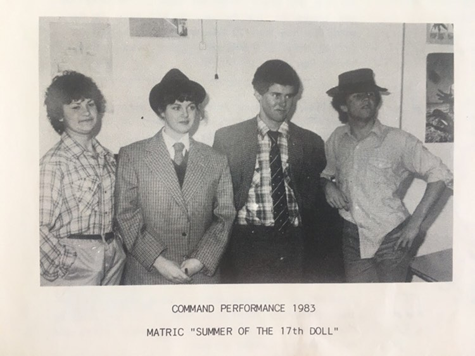
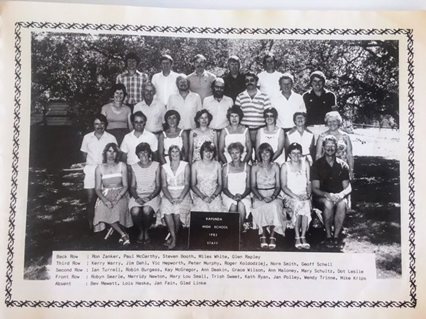
Here’s Kapunda High’s class of 1983. There’s only thirteen of us although this was boosted by the subsequent return of one Paul Masters, and arrival of Eriko, our Japanese exchange student. Then, of course, most of the fifty-odd who began with us in year 8 had left school for a job. Year 12 was matriculation which meant qualifying for university. It an innocent and wonderous time.
This photo was taken on the croquet lawn at the front of the school. I never saw any croquet but sitting on its grass under the autumn sun was calming and peaceable. And it’s such a picturesque setting that a few short decades later it was where the girl fourth from the left and I would be married. No other location presented itself.
There were only fifteen of us, but I thought us an unruly collective. All day long we laughed and yelled and interrupted each other. Thirty years on, talking in the footy club with Macca—our beloved History teacher Paul McCarthy—he told me we were, ‘bright and well-behaved. A really great group.’ In 1983 I sat in a corner next to Chrisso and Davo and we did much together.
Claire and Trish and I had long enjoyed our triangular friendship, and this continued. There were a couple of classmates with whom I barely exchanged words. I didn’t dislike them; we just had little in common and I hope they’re happy and well.
*
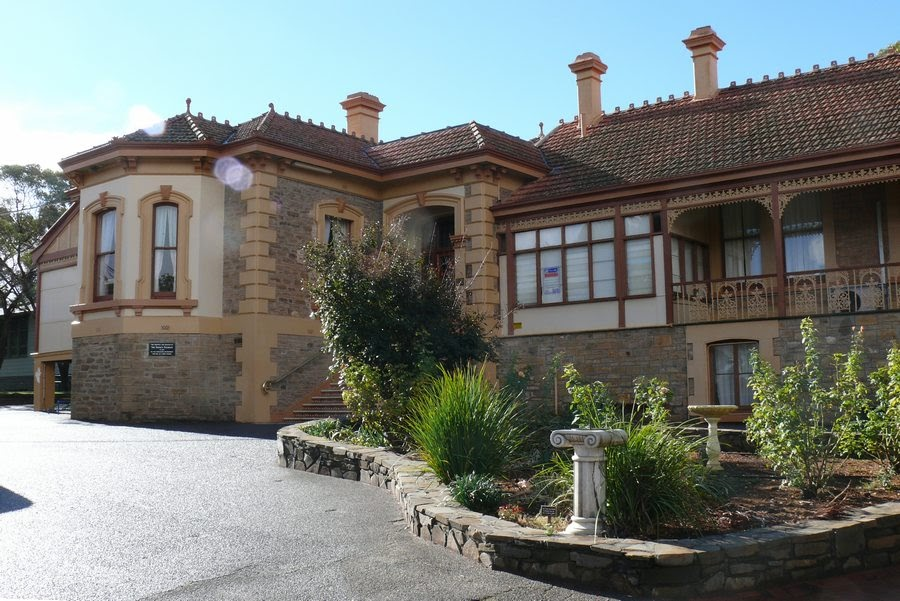
Our matric centre was at the front of the school just near the croquet lawn. It was down the cement steps and in Kidman’s bequeathed mansion, Eringa, it had been a servant’s bedroom. A tiny room, it could only fit ten or a dozen of us around the little student tables.
A blackboard hung to the side and an old gas heater sat above the mantle and we’d use it to toast sandwiches until we weren’t permitted. A corridor ran around two of the walls and our individual carrells were lined up there. How lucky that we had our own private desks? Much of our year was spent at these.
In that little classroom we’d conversations which influenced us. Mrs. Schultz, our gentle and wise English teacher, chaperoned us through The Grapes of Wrath with the Joads as they made their emblematic and weighty way from Oklahoma to California through the Mojave Desert.
I recall my terror as she and Trish talked at length about the novel’s symbolism, focusing upon the turtle crossing a highway and how it represented struggle, determination, and hope. Committed to making my own life difficult, I read many Steinbeck novels over the summer and loved them. But, of course, I didn’t finish the compulsory Grapes of Wrath, and generally only saw the turtle as a turtle.
Our Australian History teacher, Mr. Krips, escorted us through a study of our national identity and the apotheosis of the nomad tribe. I’d not encountered the word apotheosis before. It wasn’t used on the cricket, even by Richie Benaud or by Graham Kennedy on Blankety Blanks. It impressed me and I vowed to keep it in my vocabulary as I thought it could have future value. I swiftly forgot it.
Of equal value was the extra-curricular stuff we learnt from our teachers. The girl fourth from the left and Trish always had enthusiasm for curating our experiences and so set up communal diaries in big scrap books. Quickly becoming known as the Crap Books, these enjoyed daily entries, with some contributing more than others. Occasionally Kripsy did too. How great was he? Early in the year he noted the discovery of a musical gem.
Last night I saw Marvin Gaye on TV singing, ‘Sexual Healing’ which was terrific. What a voice! What a performance!
It is a great tune and now when I hear it I instantly think of Kripsy and that tiny, windowless classroom. I hear it with fondness for my classmates and teachers and that fleeting, singular time and place.
Get up, get up, get up, get up Wake up, wake up, wake up, wake up
Oh, baby now let’s get down tonight!
*
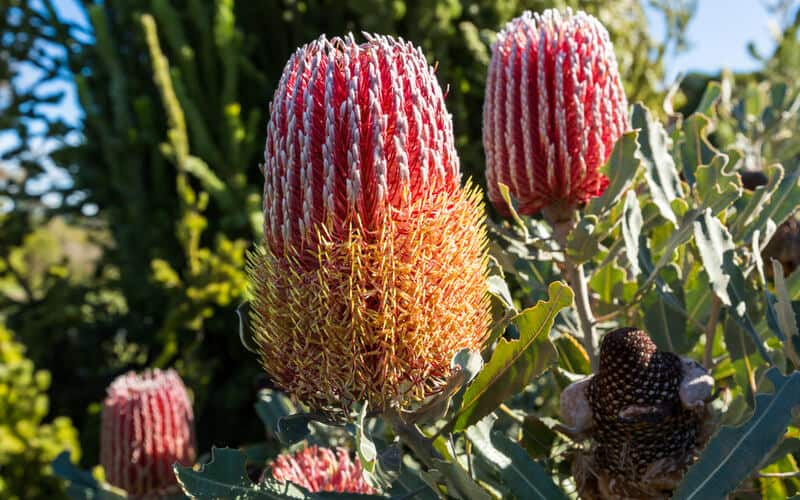
The Coorong is a distance from Kapunda, south of the mouth of the Murray. Until our matric year, school camps had been breezy and amusing affairs. More like holidays than educational experiences. As we had to study both a science and a humanities subject, I found myself in Biology and had to undertake a special personal project. For reasons which over time have only become more bleakly absurd, I was about to immerse myself in the heady, sparkling world of Banksias.
Yes, my teenaged fantasies were all becoming real. I would undertake a vegetation transect. It’s not, however, as glamorous as it sounds.
We stayed in rustic accommodation with Mr. Zanker and Miss Searle. Curiously, I would work with Mr. Zanker decades later at Marryatville High where I taught his daughter in year 12. In 1983, there were about eight of us in Biology and we drove down on Sunday. I recollect none of the journey.
It was cold and grey but one night by a shared metal sink I had a novel experience. One of my classmates, the girl fourth from the left, leant towards me, giggling, and announced, ‘Hey you. Listen to this!’ A brief subterranean rumble followed. We both collapsed into laughter. It was the first time I’d heard a girl fart.
This remains the clear highlight of that camp.
Monday morning was grim and wretched, and it began to rain. I was utterly alone in the middle of a forest of banksias. My task was to measure all sorts of variables like tree height, number of banksia flowers, distance between trees, and other things too hideously dull to itemise for you now.
Until then I think I was a kid who just got on with stuff. But this was new for it was an obligation in which I had zero interest. It was a necessity and there was no escape. I sat on the wet ground and my bum became damp. Three more days of this! I reckon it was the first time in my life I was truly bored. Even now I twitch if I see a Banksia. They’re for life, not just the Coorong.
It gave me a glimpse into the dark world of adulthood responsibility. I didn’t like it.