In contrast to the previous torrid energy it was an uncontested mark with nothing in the way of opposition pressure, such as a spoil, or a sudden, secretive fist to the ribs.
Resulting from a David MacKay disposal it was an unhurried and simple catch; the kind associated with circle work at a country oval’s Tuesday night training, while inside the glowing clubrooms volunteers squeezed pies and pasties into warmers.
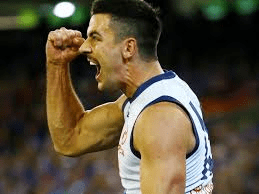
In January 2015, many were surprised that Patrick Dangerfield wasn’t appointed captain of the Crows. However, with a likely acceptance that their star player would soon wish to return to Moggs Creek, there was a quiet nodding of sage heads at the news that the role had been assigned to Taylor Walker.
A key component of the Phil Walsh legacy, he was about to demonstrate the wisdom of this decision.
Having taken the grab Walker wheeled around like a rattling cattle truck and assessed his options. He made a quick, barely perceptible scan of the landscape and decided.
Despite his Barry White/ Stephen Kernahan/ Dad joke baritone possibly suggesting otherwise Tex is an astute footballer who knows intimately the ecosystem of Adelaide Oval. With the Riverbank Stand towering taller than the MCG he knew that its surrounding microclimate, largely windless and advantageous on this autumnal evening, would assist his endeavours.
Watch now as into that rare real estate, sufficient space, he strides, not as a gut-busting midfielder, but as sizable, agile forward. Yes, he thinks, the time is right. The fifty-metre arc slides into distant view.
He balances and connects.
Despite the infantile and myopic scrabblings of the game’s rules committee and cash-drunk administrators and the carnivorous stadium vendors and the grasping media outlets and the petty trivia of the footy news-cycle, it’s these moments that’ll endure, that’ll guarantee the endless charisma of our game.
For lesser footballers, this spot on this long, lean ground might be no man’s land, an uncomfortable location where the options are crippling. Do I pass to a leading forward? Centre the ball? Aim for the top of the square? Handball to team mate on the burst? However, at this spot, seventy metres from goal there’s another possibility, but it’s only available for an elite few.
Tex Walker has a kicking technique that’s akin to a David Warner pull shot. Elegant in its simplicity, it marries outback power, untainted physics and Mick Jagger arrogance.
Now launched, the ball spins in a somewhat ungainly fashion, lurching through the air, slinging itself goalward with hungry velocity, rather than with the pure, fizzing momentum of, say, a Luke Hodge pass.
It travels through the roaring night and there’s now a sudden, muted quality to the stadium soundtrack that’s universal disbelief, Port Power horror and Adelaide Crow awe. The ball travels and travels and continues to travel. The pregnant seconds stretch onward, invested with everything we love about our mighty, Indigenous code.
Unlike a Malcolm Blight torpedo, it traces a low parabola across my screen as the crowd rushes past in the background, a smeared Monet. Walker’s drop-punt is at once sublime, but also gigantic. It taunts the line between possibility and impossibility.
It’s a goal.
As the Sherrin thuds into the turf midway between the goal line and the fence, leaving a crater in the Santa Ana, the clock announces that four minutes remain. Adelaide is three goals up.
Now, for all present at the ground, or at home or in a pub across Australia, or peering at a screen in midday London or Auckland or Albuquerque, all is denouement.
The necessarily curved narrative of football is concluded. We’ve had a moment.
This week the Footy Almanac sought opinion on our favourite pubs. I instantly penned a digital love letter to some cracking watering holes. How could I refuse?
Ye Olde Fighting Cocks- St Albans, Hertfordshire
England’s oldest and most charismatic boozer. Ceiling so low it made me feel like a centre half-forward when I walked in, and most certainly as I left. We lived about a Par 4 away, and invested some time there on weekends. When we returned in 2014 it was the only pub in town we visited twice with Alex and Max.
The Magpie and Stump- Mintaro, Clare Valley
Gum trees and vineyards; idyllic beer garden. No aural pollution from within or without, just birdsong. Happily by its bar on a rainy Sunday morning before the SANFL grand final I first heard a publican say, “Another cup of tea, Vicar?” which amuses me more than it should.
Prince of Wales- Kapunda, South Australia
Hometown favourite. Colossal former mine host. When I lived five hours away in Kimba, and would visit, he’d greet me with, “Hello, West Coast smack-head.” I knew then that he missed me. Also home of spoofy.
The Kings Inn- Mousehole, Cornwall
Redolent of pirates and rum, romance and treasure. Of course, it’s pronounced Moz-all.
The Exeter- Rundle Street, Adelaide
Eclectic perfection. Once, this happened: Dawn’s closer than dusk. Only Nick and I remain, our Doc Martins moored to the floorboards. He’s from a farm in Shea-Oak Log. We met in school. Years ago, we saw the Rolling Stones at Footy Park.
*
Honourable mentions
The Goat- St Albans, Hertfordshire
The Taminga- Clare
All Nations- Richmond (frequently home to Mick Molloy and Bill Hunter, drinking in concert)
Greenock Tavern- Barossa Valley (mine host Norton, and then Mick)
Lemon Tree- Carlton (sadly now gone; snuck in there when in Melbourne during my mulleted 1980’s)
Seacliff Hotel- Adelaide
*
What’s your top battle-cruiser?
*
The original Footy Almanac post is worth a look and you can find it, and other great stuff here-
And a polite patter of applause is hird (sic) for Crows coach Don Pyke on defeating Essendon. Congratulations to Don on another first in his debut year.
Like the Stay Puft Marshmallow Man in Ghostbusters, the spectre of the disgraced 1996 Brownlow Medallist looms large. With which metaphors do we now designate this fallen figure? Is he a cultic prophet who fabricated his own Waco? Macbeth is probably too obvious a motif, so could the golden one now be the spectral illuminatus?
But, he was an astonishing footballer. When the Bombers stole a flag in 1993 I became a fan. However, it wasn’t until this millennium when I finally watched him at Footy Park that I became certain of his genius. His grace, immaculate skill, and tellingly, preternatural vision made him among the best I’d witnessed.
*
Roy and HG once considered the sledging skill of a rugby league player, who’d run around with the Lithgow Shamrocks, under the gruff tutelage of Grassy Grannall, expertly baiting his opponents, while using subordinate clauses.
The boys and I begin our afternoon on the Northern Mound at the Adelaide Oval, a secular temple of colossal beauty. We’re adjacent to the heritage scoreboard. With its elegant lines, and yellow and white lettering evoking Bradman and Chappell and Ebert, it’s a majestic icon. I hear no insults of lexical prettiness.
*
Despite the negligible obstacle of being delisted in 2009, a disappointment is that former Crow Robert Shirley isn’t in the side to tag Bomber Jayden Laverde. Who wouldn’t love the match-up of Laverde and Shirley? Happily humming, “Making Our Dreams Come True” I skip to the bar and request refreshment from Milwaukee’s finest, the Shotz Brewery, but instead am presented with a West End Draught.
Adelaide gets one within thirty seconds courtesy of McGovern, but then the footy is marooned for six turgid minutes in the Bombers forward line. It’s much like spending Christmas in Iron Knob: unexpected and increasingly disconcerting. Then, out it pops, and Eddie is scampering across half-forward and the crowd response is customarily seismic. He bounces thrice and goals.
Former Norwood boy Orazio Fantasia replies and Essendon are away too. The early period is characterised by a tussle before the Crows begin to assert themselves and the inevitable occurs. Watching Adelaide mechanically dismantle their opponents is largely joyless. Among the many negatives of the Essendon drug saga is the loss of narrative. It’s difficult to locate a compelling story.
But, footy fights back and presents Joe Daniher. With his moustache and oddly laconic dial, he looks like he should feature in the slow-motion action of a Carlton Draught advertisement. He takes multiple contested grabs, and must be the Bombers highpoint in this most wintry of winters. With less grace than the sacrificed buffalo in the last scenes of Apocalypse Now he stumbles on the grass, but somehow goals. Daniher’s high marking is exhilarating, but his kicking is more Travis Cloke than Travis Cloke.
At the other end of the paddock Charlie Cameron is also generating joy for his club. Like David Cameron his last month hadn’t been flash, but unlike the Tory lizard Charlie triumphed today with clear public approval in getting four majors, and keeping us in Europe.
The last quarter is forgettable until Josh Jenkins- he’d been quiet, possibly fiscally pre-occupied, marks assertively and goals. A dreary Festival of Fifty Metre Penalties ensues, but only the umpires have bought tickets. Eddie earns a free and handballs to ex-Magpie Paul Seedsman who again converts from the arc with a penetrating spear. Thank you Collingwood.
Tomorrow’s a school-day for the boys, and Escape to the Country is due to soon begin, doubtless featuring a smug empty-nester couple from Middlesex who’ve convinced themselves that they really do need seven bedrooms, so we start our Riverbank Stand descent towards basecamp. The Bombers get three late goals and the Crows remain outside the top four. It’s an evening carved with Baroque shapes.
In the truly tremendous Hitchhiker’s Guide to the Galaxy the central character Arthur Dent laments, “This must be Thursday. I never could get the hang of Thursdays.” Shortly after, and with effervescent style, the planet Earth is destroyed.
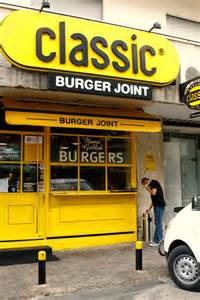
Thirsty university students refer to Thursday as the new Friday. If American paint-by-numbers rockers The Knack was the new Beatles, and sauvignon blanc is the new chardonnay (or is it the other way round?) and burger joints are the new burger joints, then let’s agree that Thursday can imitate Friday.
With light snow forecast for our state’s upper ranges the fixture begins, and following a few scrappy minutes Rory Atkins kicks a cracker which is reviewed, extraterrestrially, to a behind. However, soon after, like Arnor Ingvi Traustason in Iceland v Austria, the good Tom Lynch soccers it through.
The Crows padlock it in and Dick Douglas (did he star in a 1940’s Hollywood musical?) snaps accurately. North move the ball without method or fluency, and this increases the spectacular early lack of spectacle.
My Barossa shiraz is jovial in a rumbling, earthy, Thursday way, and it shields me against Ziebell’s goal. Still, it’s the first opposition score in nearly a fortnight. Yet another Crows’ goal review degenerates into circus with the process seemingly being timed-out. As my first-ever boss might say, “The AFL couldn’t organise a root in a wood yard.”
Good Eddie jags a point, and with five consecutive minor scores Adelaide lurches into wastefulness. It reminds me that once there were two British parliamentary committees simultaneously investigating pointless governmental duplication.
The Kangaroos can’t twine together possessions, while the Crows are better in close, especially by hand. Of course, I’d just confidently completed that previous sentence when North get two goals in a minute, and my keyboard is abruptly stricken.
*
A shiraz-aided recovery allows me to now type that Tex ghosts unaccountably to the front of the pack. He grabs it, and slots it to shove the lead to a couple goals.
Lindsay Thomas drops the ball as if it’s an allergen, and to the crowd’s predictable umbrage, he attracts a free. Shortly after there’s a goal by Mason Wood- didn’t this golf stick debut at Troon in 1926 along with the Mashie niblick?
Half way through the second quarter the Kangaroos have impetus and the lead, and then when kicking at goal Adelaide is Ernie Els on the first green at Augusta, tapping it everywhere and really often, but never fecking straight.
After the main break Crouch crashes through a hasty torpedo punt and we’re away. Good Eddie follows within a minute. It’s a frenetic start and typing maniacally requires my shiraz to sit abandoned. Tex tyrannosauruses one from sixty and my glass and I reunite. Just now.
With the wife and boys abed I scramble back into my chair and Thomas sneaks the opposition in front again. Our sixteenth behind. No, make that the seventeen. Spare me. Then, good Eddie triangulates it through, and we’re just up.
Following more frisson from Charlie Cameron in which he’s has moved the ball with scintillating pace, but crude disposal a video review goes against Tex, and as an eye laser surgery beneficiary glaring at a big TV, I’m sure the stinking camera is lying. Why am I watching this atrocious Australian farce? I turn over to ABC 1 for Rake and its superior Australian farce. Cleaver, Barney and company are at their ridiculous best.
No, I don’t. How could I?
A furious scoreless epoch ensues. Buck Roo Ben Brown continues to display deliberately maddening hair. To use a cliché, which is itself a cliché, the next goal is crucial. And the digital ink isn’t dry when it goes to Adelaide, right now.
Suddenly, the Kangaroos are twenty-eight points, and eighty grand down. It’s peculiar to think that these two haven’t played a final since the 1998 decider. September may see these two again clash, and it would be ripping.
*
My wife and I didn’t meet, nor were either of our boys born on a Thursday. However, these happened on Thursdays: as a United Kingdom resident I voted in their 2005 general election (sadly just once); at Thebby we saw a raucous Violent Femmes; and one summer’s evening at the Tower hotel I had a tidy earn with a Hobart greyhounds trifecta.
When I was home looking after our second son ABC News 24 began. Two events of note occurred during those months. Osama bin Laden was killed in his Pakistani compound, and the actor Bill Hunter passed away.
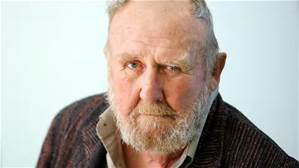
One day just after lunch as Max slept I watched Bill’s memorial service on the television. Mick Molloy worked with Bill, most impressively on Crackerjack, and as a touring double-act across many inner-suburban pubs.
In his eulogy at the Princess Theatre, Mick recalled Bill’s favourite sayings. Operating within a narrow theme, the first was, “I’m just two schooners short of the horrors” and often used in response to a cheery salutation, the second was, “Get fcuked.”
At the Footy Almanac lunch, and in conversation with our Kapunda crew, John Harms observed that every Melbournian has a Bill Hunter story. And key to these fabled tales was Bill’s seeming ability to be relaxing with a lager at multiple pubs. Simultaneously. He defied quantum physics for Bill could teleport himself, when thirsty. Forget arc-welding, here’s an enviable life-skill.
In town for the weekend with five mates to celebrate my looming birthday, I was keen to pay homage to Bill.
It had begun well.
*
How do you build a publican?
As there is no instructive literature, I suggest the following. Make him slow of gait, even lumbering; commanding yet enigmatic; an employer of understatement as his primary method of communicating, and drench his back-story with equal measures of hyperbolic myth and striking reality.
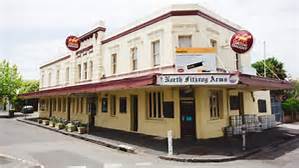
In short, you make him Percy Jones: proud Tasmanian, Carlton royalty, and mine host at the North Fitzroy Arms.
In this pub bursting with memorabilia, the best example is a photo in the back corner of Percy, standing shoulder to shoulder with another hulking 1970’s icon, Gough Whitlam. It’s invested with historical context, colossal vitality, and fun.
Happily, we now have our own photo with Percy, taken at a front bar table, as he worked unhurriedly through his steak, hands like dinner plates, further enlarged by long seasons of ruck-work. Somehow, reminiscent of Bill Hunter’s corporeal talent he sat with, around, and over us by the window as twilight stole the day. Increasingly, Percy appeared to have descended a North Fitzroy beanstalk, with the scent of an Englishman (Collingwood pest) twitching in his nostrils.
Having concluded the luncheon we repair to our Elizabeth Street digs. A bunk bed sets an appropriate tone and function, for our trip is merrily reminiscent of a school camp. We lie there giggling at, well, nothing in particular, each with a brown paper-bagged Coopers Sparkling Ale to close our proceedings, as against the Tigers, the Hawks predictably close theirs.
*
The top deck at the MCG for the Magpies and the Blues. Footy can be of heightened appeal, especially when you’re disinterested in the result. The man-bun count is dangerously high, and incurable offender Bryce Gibbs is doing well. He’s a Glenelg boy.
Soon, we locate a narrative in Levi Casboult’s afternoon. He’s a great mark, but his kicking is a curious tribute to James Manson: former Magpie and according to the Coodabeens, a “rock and roll Tasmanian.” Still, his inelegant disposal wins me ten bucks from one of the old muckers. Collingwood present as fragile, listless, and impotent. Is this uncharitable?
As the Carlton song booms about the Olympic Stand, our ears detect Percy and Bill Hunter, adding their baritones to the celebration.
*
Pausing involuntarily at Young and Jackson for a head-count and pot of tea we then move to the Docklands for the Crows and Dogs. This could now be the competition’s finest rivalry. Anecdotal evidence suggests that on that September day in 1997 over quarter of a million Dogs supporters were behind those goals for Libba’s notorious point.
Earlier in the day, and fittingly around lunchtime, we were enjoying boys’ church at the All Nations Hotel in Richmond when above the fetching old bar, Bill Hunter’s apparition appeared, declaring, “Trust me Mickey. I was there. Don’t listen to ‘em. It was a fcuking behind.”
Tonight, though, the Crows are walloped in the middle, and have to launch too many attacks from deep in defence. This makes it tough, especially as the Dogs are on. Jenkins kicks a career-best eight, and while the free kick count is lopsided, it’s an excuse, and we lose a thriller.
Bontempelli shows poise and creativity in becoming tonight’s difference. He’s only just concluded being a teenager. When I was his age I could almost speak in sentences, and keep my Kingswood on the left.
After the siren, and walking along the swirling concourse a Dogs fan barks, “Crows supporters are two-headed at birth, and they’ve cut off the rong (sic) one.” This, of course, required appropriate rebuttal, and with volume one of our group replied, “Hey mate! You best get home and watch the ’97 prelim on your Mum’s Betamax.”
Twenty years in, this rivalry is escalating. It’s a ripper.
*
Because it’s the best method of dealing with our (temporary) Crows grief, we each purchase another Coopers Sparkling Ale and return to the school camp confines of our hotel room.
Safely snoring in the tiny space, we’re again visited by Bill Hunter who nods, just like he so often did in Muriel’s Wedding, and remarks, “You boys have had a bloody good weekend. Now go home tomorrow to your wives and families. If you behave, you can come back next year.”
The following essay is a discussion of what makes Queensland a unique state, as observed by an outsider, and using a recent Bundy rum TV advertisement. Here’s a link to the clip-
I took a sip.
“He’s trying to kill me,” I thought (politely) to myself.
I took another sip.
“Yep, he is.”
Late Brisbane afternoon with my wife’s extended family. Uncle Fred had poured me a homebrew beer. “It works out at eighty cents a bottle.”
Fred’s a businessman, and his millinery company sells hats to southerners for the Melbourne Cup Carnival. He also travels overseas. He’s been around.
“New York. Shanghai. London,” he scoffed as I stared at my muddy glass.
“Between the Gold Coast and Rockhampton, the Queensland coast’s the best place in the world. Why would you wanna live anywhere else?”
Raising my beer I thought, this bloke’s serious. I stifled a laugh and looked at him.
For Uncle Fred, Queenslander, this is no joking matter.
*
In the colourful history of Australian booze marketing, the iconic VB campaign is king. It features a gallant orchestral score, and John Meillon’s distinctive voice:
You can get it liftin’
You can get it shiftin’
You can get it working a plough
You can get it any old how
Matter of fact, I got it now.
Nodding to Henry Lawson and Banjo Patterson, these poems continue to charm.
Meillon was vocally perfect. His recitations were not of the people, but to and for the people. Warm like a sunset and eager, he continued to promote the beer long after he’d downed his last lager; a ghostly advocate; the spirit of beer-drinking and of Australian life.
Yet VB ads often present a work ethic, the idea that clocking off after the day’s duties, a drink awaits: “For a hard-earned thirst, you need a big cold beer and the best cold beer is Vic.”
It’s what you deserve.
This contrasts with the Queensland dynamic. In this we’re often sold the notion that drudgery’s irrelevant. But, you’ve got to have the sense to live there.
Back when it called itself Castlemaine an advertisement in the “I can feel a XXXX comin’ on” series captured that thinking. Allan Border’s on a Great Keppell beach, and lying back in a deck chair, with a few tinnies while Jeff Thomson, Greg Ritchie and Ray Phillips are fishing. That work’s unwelcome in paradise comes through as James Blundell sings
I wish this lazy Sunday would never disappear
And I could hold back Monday for the rest of the year
As captain and saviour, AB’s exempt from dangling a line. Historically, it’s 1987 and he required all his energy to repeatedly resuscitate Australia’s miserable batting. It matters not that AB and Thommo are native Sydneysiders, Queensland is welcoming. Both had become as local as mangoes.
After a curious, homoerotic conga line across the sand, the batsman, bowler and wicketkeeper join the captain for a XXXX. Then like synchronised swimmers, the three fishing rods double over at once, dinner hooked. However, our sporting legends ignore them because, as we know, the beers won’t drink themselves.
The rest of Australia seemingly needs its collective thirst to be won, toil first, to legitimise the rEward of beer. But in Queensland relaxation is king. That’s the promise; life is better. You can forget work.
Things’ll take care of themselves.
*
What does the recent Bundy Rum campaign show us of the Sunshine State?
“Men Like Us Like Bundaberg Rum” delivers many ideas. It’s 2015, but we’re not talking to women.
The second concept is found in the title’s assertion, “Men Like Us.” Meaning, we the blokes from Up North. Not just geographically, but attitudinally. You’re either a Queenslander or should wish you were. The delicious dichotomy.
A beach. Some fellows (one wearing a fez) are cluelessly building a Viking boat. Its anchor’s blacksmithed from cheese graters and saucepans. Upon premature ejection it sinks; all head to the pub, and toast with swirling mugs of Bundy.
There’s rustic defiance in this. An outlook which (again) decries work. Over-achievement? Not us. Technology and modernity? How would these help up here in God’s own?
As a South Australian I envy the confidence, the sense of self-containment. The advertisement’s moderately mocking, but underpinned by a subtextual boast: This is Queensland, this is Queensland, this is Queensland.
Another link to the past is the ship’s Bundy Bear figurehead. Now pretty much absent (where has he gone?), the Bear was Bundy rum. He was everyone’s mate. He had a deep voice. He was the smartest bear (bloke?) in the room.
In one vignette Bundy Bear takes a pre-party bath, into which a housemate deviously drops a red sock. Modishly late, the now pink bear arrives at the gathering, and is ribbed by the boys.
A gorgeous girl admires that he’s, “brave enough to wear pink” and invites him over to meet her girlfriends. Bundy’s more attractive to women than his forlorn, human mates. He’s outplayed them; for he is Bundy, hear him roar!
*
The Bundy ad imagines us as sea explorers. Save for draft ineligibility, we’d surely have got up in a shoot-out with the Portuguese! But, here we are with only imported South Australian half-back flanker Dougie Mawson getting umpires’ votes. Rather than heroically sending boats out; we’re now infamous as a nation, for not letting boats in.
Borrowing from a pirate narrative tradition, we’re also invited us to see ourselves as buccaneers. Again, here’s a scorning of traditional work. Caribbean swashbucklers? No, less glamorously, we’re the world’s best video pirates.
*
My encounter with Bundy was brief. Advertiser drinks columnist Philip White once considered Nelson’s Blood, and I was idiotically inspired. It was first made with rum from the very barrel which stored Lord Nelson’s body following his death on the Victory, at the Battle of Trafalgar.
Modern interpretations of Nelson’s Blood exist, but White reckons the Adelaide variety’s a tankard of Coopers Best Extra Stout, drowned by an unholy baptism of Bundy. No, it doesn’t taste nearly as good as it sounds.
Like the witches around their bubbling cauldron in Macbeth, a friend and I made some at a party. He’s from Wales. The next morning he was driving six hundred kilometres, across the desert. It was truly, ferociously, colossally grog.
*
Itself a type of work song, the sea shanty’s used ironically, with geographical alertness rewarded by
We sail from here to Bogota.
It’s a fun line given the Columbian capital’s landlocked position up on an Andean plateau.
Having launched, the good ship Bundy sinks like a delightfully feeble entry in a 1970’s birdman rally.
Our sails are filled with wind and pride,
Explore the world – well at least we tried.
The pirates survive, and rush to the pub. Their shoddy shipbuilding reinforces the low status of work. Not landing in Bogota? The outside world’s cruel, and treacherous. Stay in Queensland, and get on the rum.
The shanty’s sustained last note reminds me of the opening page (I’ve got no further) of Finnegans Wake on which Joyce included a 101-letter word, evoking the fall of Adam and Eve
Our sailors are euphoric. But caution. A bar full of men full of hijinks full of Bundy? Fast forward a fierce hour. We’ve all seen how this film finishes. You’d usher gran out to the Cortina before she’d finished her shandy. Just relax. This is Queensland, nothing nasty’ll happen.
*
The slogan is Welcome to Bundaberg. So, it’s not only a city in regional Queensland, but an aspiration, a sultry nirvana, especially alluring to those of the cold wowserish south.
What can you expect upon arrival? A place in which you’d don a fez, and sink Viking ships. An idyll of cattle and cane, where the living is easy-going. A parish in which work is enthusiastically ignored.
The Lone Star and Sunshine states share much. Tellingly, for his 1940 recording, “Beautiful Queensland” country music pioneer Tex Morton adapted, “Beautiful Texas.” On airless Brisbane evenings Uncle Fred puts the needle on the vinyl, nods at the prudence of his life choices, and sings along
There are some folk who still like to travel
To see what they have over there
But when they go look, it’s not like the book
And they find there is none to compare
This may go some way to explaining the passion for Queensland in State of Origin football.
This essay was originally commissioned for Long Bombs To Snake, the magazine of the Footy Almanac community. It is 68 pages of quality feature-length writing on numerous sports by twelve of the talented Footy Almanac contributors. My thanks to John Harms for the opportunity. Long Bombs To Snake is available for purchase here-
Urgency. I reckon this is the best word. For they were always urgent. Midnight Oil was aggressive, and Sherbet was summery. But even when they were brooding, Skyhooks was urgent.
Learning of their 1991 reunification tour, some mates and I instantly booked our tickets. However, on the day of their Adelaide concert I awoke 565 kilometres away on the West Coast as I had to pack up my Ucontitchie Road farmhouse for the move to Kimba.
With my earthly goods flung through the front door of my new house, we leapt into my mate’s SS Commodore, pointed the 4.9 litre beast eastward, and rumbled the five hours, through a January thunderstorm, to North Adelaide’s Old Lion Hotel. We arrived with moments to spare. The pub already stinging in its smoky, hot fug. There were but three beers on tap. Red Symons was at his belligerent Red Faces best. It was a night of huge fun.
I love crowd singing on a live album. It amplifies the sense of being there, when in all likelihood, you weren’t. Great examples include “Army” from Ben Folds Live and,” Don’t Look Back in Anger” by Oasis, but supreme for me is “All My Friends Are Getting Married” from Skyhooks’ Live in the Eighties. When Shirl invites the crowd to sing the chorus they do in such an adoring fashion. Back at the Old Lion this, too, was a highlight of that summer night.
*
Sophomore albums often rate highly. Think Nevermind, The Bends and Astral Weeks. Buoyed by the acclaim of their debut offering, there’s often a young band or artist, teamed up with a noted producer. Their confidence is unparalleled. An equivalent could be, again from 1991, when Mark Waugh made an elegant hundred on debut at Adelaide Oval. However, a friend observed, “It’s not such a surprise. After all, you only get picked for your country because you’re in fantastic form.”
Bearing this in mind, Ego Is Not a Dirty Word is their finest album. I know that Living in the Seventies is the much-loved debut, selling over 300,000 copies, and enjoying the infamy of six of its offerings being banned. But, on this second release, there’s an increased breadth in the songs, with “Love’s Not Good Enough” musing on suburban loneliness, “Smartarse Songwriters” featuring Greg Macainsh’s meta-cognitive explorations, and the title track, pushing the patience of many (I can’t imagine Sir Joh was a fan) with its brazen reference to the triumvirate of Richard Nixon, Leonard Cohen, and in an Australian music first, Jesus.
My favourite is side 2, track 2. I know it’s a hundred types of wrong, but I recently played it in the car for the boys. On the first note of “Mercedes Ladies” they both giggled at the larrikinism of bass line, the cheeky guitars and Freddie’s comical tom-tom drumming. It rollicks along with the musical highlight the double hi-hat chick at the end of each line. It’s a great way to spend three minutes, and encapsulates the band, their time, and their legacy. In this, as in much of their material, Skyhooks satirise the suburbs while also rejoicing in them.
Of course, we’re all apprehended by our creative context. Even here in smug 2016, history will eventually scold us. 1975 imprisoned many with multiple charges: sexism, homophobia, stereotyping. But despite this, Skyhooks also pioneered themes concerning the suburban and the local. It was music of the largely untold other; it was not of NYC or London.
Such is the significance of Skyhooks for me that the mention of Carlton evokes the song first, and the footy team second. The band’s collected lyrics still generate an imagined google map of Melbourne, and a reference to Toorak or Balwyn returns me to my original conceptions of the city by the Yarra. If the Beatles are Liverpool, and the Rolling Stones are London, then Skyhooks is Melbourne. Their music has always presented the geography of a highly human environment, as there’s colourful pictures of grimy pubs, menacing streetscapes, and widescreen vistas too.
It was in my school mate Lumpy Nixon’s lounge room (I’m sure there were ceramic ducks flying up the wall) that I first saw, and heard Straight in a Gay, Gay World. I was mesmerised by the guitars on the title track, and the sonic trickery of a swarm of insects hovering overhead on the outro, moving from the left speaker to the right. I was fourteen and this was beyond cool.
The album’s artwork gripped me equally with its triptych of a solitary black sheep, butcher shop and lamb dinner. It was the first humorous cover I’d seen. The art often functioned as a portal to an album’s narrative. I was especially intrigued by Pink Floyd’s Wish You Were Here and tried to decipher the cover photo of the two businessmen, one calmly ablaze, shaking hands on a Californian backlot. However, I couldn’t unlock its mystical meanings. In our age of Spotify and digital downloads, these happy distractions have largely disappeared. But vinyl’s fighting back.
*
And finally, to Shirl. He’d a remarkably complex voice, blending a tradie’s building site swagger with the footballer’s front-bar cockiness. It was effortlessly confident, and also reassuring, saying, “Why would you live anywhere else?” as it slapped your back and shouted, “Forget about it, I’ll buy you a beer!” He sung to, and for, us. But his vowels were knowingly crisp and aware of the telling subtext. He delivered his stories with affection, while also investing the songs, as appropriate, with a sneer. “Million Dollar Riff” could be his best performance. Shirl was the perfect front man.
I love that I can go years without listening to a band, and then one afternoon find myself dragging out a dusty CD, and with the opening chords, being teleported to a distant, thrilling place. With Skyhooks that place is in the dimming distance and unreconstructed, but from time to time, I really enjoy going back there.
I’ve been reminiscing about horseracing and the tracks I’ve visited such as Randwick, Oakbank, and Port Augusta. But beyond Victoria Park, Clare, and Singapore, there’s one that holds a particular place.
*
The publican’s boyfriend stood in the dock. He was a bikie who showed dismal regard for the court. The prosecutor shuffled his papers and then continued. “Behind the front bar of the Iron Knob Hotel the police found firearms and drugs. You’ve admitted these belonged to you. Is this correct?” The bikie nodded.
Again the barrister spoke. “Additionally, knuckledusters were also seized. Were these yours?” Some of the jurors noted the bikie’s chest swelled a little before he replied. “They weren’t knuckledusters,” he smirked. “They were napkin holders.”
The court found that the bikie’s girlfriend wasn’t fit to hold a license, and she was given three months to sell the only pub in the outpost of red dirt and bemused kangaroos standing in the moonlit main street as you weave past in your sad little car.
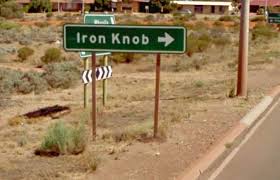
Welcome to Iron Knob. Population: 180.
*
The Middleback Ranges on Eyre Peninsula has been mined for many years. West of Whyalla and about an hour from Kimba a fifth of the steel required for the construction of the Sydney Harbor Bridge was quarried at Iron Knob.
Other local ore bodies are at Iron Monarch, Iron Prince, Iron Baron, Iron Knight, Iron Princess, Iron Queen, Iron Chieftain, Iron Duchess and Iron Duke. Local stalwart Bryan Lock, from the Iron Knob Visitor Centre confirmed that, “150 million tonnes of high grade ore came out over one hundred years.” I wonder if any future mines might be named Iron Gloves, Iron Butterfly or Iron Chef.
*
Among my old mates it’s a notorious item of clothing, and we talk about it more than we should. Fresh from the drive across Eyre Peninsula, Paul banged on my door. “How’s the trip?” I asked. We shook hands. “Not bad. I stopped at The Knob.” Iron Knob is sometimes, simply, The Knob. “And I bought a souvenir.” Hmmm, I thought, like sending a postcard from your proctologist’s.
From his bag he pulled a frighteningly fluorescent green and pink singlet. Festooned across the chest was an unlikely salutation, a surely ironic hooray from a forlorn petrol stop
G’day from Iron Knob
Paul loved that singlet. Every spring he’d drag it out. Over the years I saw him in it at the MCG and on Coolangatta beach. He also packed it when we went to Vegas, the Grand Canyon and California. Wearing it today, I doubt he’d be allowed into Disneyland.
*
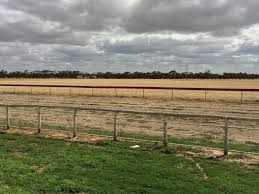
It was the first country race meeting I attended. I recall crushed Southwark cans mingling with the dust, and Akubras on every second squinting head. There was an energetic crowd of gnarled types, and blue-grey saltbush stretching across to the hills where The Sundowners was filmed over five decades ago with Robert Mitchum and Deborah Kerr.
Legendary bush jockey Phil McEvoy came from Streaky Bay, and made his debut at Iron Knob in 1970. He saluted. Three decades later his son Kerrin piloted Brew to victory in the millennium’s first Melbourne Cup.
I was at The Iron Knob Cup with friends from Kimba. We stood about on the edge of a cruel desert, but happily trapped within the racetrack’s exhilarating world. Gareth and Netty trained horses, and competed in equestrian events, and Gareth was the showjumping course builder at the Royal Adelaide Show. Netty’s father Arthur was a famed horseman, parliamentarian and one of the “Rats of Tobruk,” and if you asked Netty whether she’d rather a month in Europe, or a month at outback race meets, she’d answer immediately. No passport required.
I couldn’t tell you who won any of the races, or even The Iron Knob Cup. I doubt I bothered the bookies at all. But there was something strikingly elemental and persuasive about that place for it evoked a time long forgotten, when the men all wore porkpie hats and “madam” featured courteously in conversations, and cars didn’t have air-conditioning, and so, as kids in the back seat, we wound down the Kingswood’s windows, welcoming in wind and flies and the baked, shimmering earth.
*
The town had a peak population of 3000, and there were 800 residents when the mine closed in 1999. Within weeks it shrivelled to one hundred and fifty. Many of the shops and houses remain boarded up. Wardy’s take away food business is closed, and a for sale sign points sanguinely to its peeling façade.
Iron Knob’s annual race meeting is now gone.
Today, the mine has re-opened and employs about thirty. In a few, fleeting years the ore will be finally exhausted, and then like Coward Springs, Radium Hill and Yudnamutana the town will quietly expire. But, for now, the Iron Knob Tourist Centre sells tea towels, and has a gem bar. There’s a dusty School Dux Board on its wall.
I doubt it, but hope they still sell G’day from Iron Knob singlets.
They’re beyond dreadful. Flat and offering less support than Chad Morgan opening for Metallica. The Dunlop Volley is a cultural icon, but podiatric nightmare, and I often wonder how Ken Rosewell wore them and still won all those tennis matches?
But spotting them about, they’re like the rarely seen old mate banging on your door with a six pack of Coopers. House painters love them. The herringbone tread must be superb if your day involves leaping up and down ladders, and cutting in around annoyingly ornate ceiling features.
I wore them at uni. A fine library shoe, they also performed exquisitely in the bar, especially on Friday nights when fifty cent schooners were on. The Volley was exceedingly valuable for sitting in the uni quadrangle as the morning sun streamed onto our youthful dials. About three times a semester and with eyes stricken with terror, my friend David would shriek, “Essay? What essay? Due at four today?”
They were also great as we plodded off to fourth year English, cruelly scheduled on Mondays from 4 – 8pm. At 8.01pm I’d point my HQ Holden southward, and with my old friend Jonesy co-piloting, navigate speedily if not unlawfully to the Botanic Hotel where we’d review the lecture’s major themes, or not.
But I couldn’t wear Volleys for sport. On the cricket oval I was a Puma Barbados man, and everything else apart from footy was handled by my Adidas Romes.
To my curious comfort I later met someone who actually wore them on the sporting field. For three seasons Peter and I played cricket together at Wudinna. A handy bat, and lively fieldsman, he was an accomplished first slip and stealthy patroller of the covers. One Saturday he arrived in a new pair, and I asked
“New Volleys? Where did ya get ‘em?”
“Town.” Adelaide was rarely called Adelaide.
“How much?”
“Fifteen bucks.”
I was surprised. “That’s a really good price.”
“They did me a deal. Because I bought six pairs.”
“Really? Why did ya get six pairs?”
“I reckon that should see me through to the end of my career.”
And I’m sure it did. Over the decades I’d imagine Peter in his shed, pulling down a box of new but peculiarly aged Volleys, brushing aside any resident Daddy Long Legs spiders, and with impish delight, sliding on the Dunlops for spring’s first cricket training.
But six pairs! What a visionary. Succession planning of the utmost order. Cricket Australia: phone this fella now.
I had mine on last Friday when the boys and I were at the park kicking their new Sherrin. They (the shoes, not the boys) are still terrible for this. However, as I later sizzled some sausages on the park’s free barbeque they became magnificent. My tong work was sublime, and I’ve rarely squirted sauce with such crisp authority. I thank my Volleys. They were always more Dean Martin than Dusty Martin.
*
They’d doubled in price. This was much better than anticipated, but I did purchase my first pair of Blundstones from a rural supplies store in Kimba during 1993 for fifty bucks. Since then we’ve moved nine times across three countries, and they’re still travelling superbly, and remain as utilitarian as Mark Ricciuto, but with a mellifluous special comments voice.
A new job meant I had to buy some new footwear so I jumped on the tram to revitalised Adelaide menswear retailer, Trims. Where previously I had no choice there are now multiple styles of Blundstones, catering from bushie to micro-brewing hipster. It was like buying a newspaper in London. You glance at the dozen or so front pages. The Times. The Daily Express. The Independent. And then, having scanned the alternatives, you buy the one you always get.
On the tram home I thought about my new boots and me. What might the next twenty-two years bring?
*
I know it’s feeble, but sometimes you just surrender. To make life easier. In Singapore, and surrounded by Americans, Canadians and Brits I started calling them flip-flops. It was just simpler. And now back home among the throng, and with spring making a few tentative squeaks, I’m reclaiming the word thong.
In various equatorial bars I’d try to explain for my global friends. But never with much success. “So it’s wrong to buy your mum a thong, but perfectly acceptable (if a little cheap) to buy her a pair of thongs.”
*
Late Saturday evening my wife’s Grandpop passed away. He was ninety. Not knowing either of my grandfathers contributed to him becoming a significant figure. For most of the twenty years I knew him he and grandma lived in Gympie on the highest hill in town.
We’d sit on their front veranda in the thick air, noisy with eccentric tropical bugs and their assorted clickings and whirrings. Geckos would scamper up and down the walls, while I’d gaze down across the houses on stilts and valleys so different from my dusty home town thousands of kilometres to the empty south.
With the exception of our wedding I only ever saw Grandpop’s gnarly hooves in slippers. Or barefoot.
A magazine columnist once described the non-Queensland parts of our nation as being, “the shoe-wearing states.” Grandpop reinforced this. His slippers were comfortable, but he also went shoeless partly because he didn’t care what those, “bloody wombats” thought. He’d always pronounce wombats with a deliberately long vowel and make it woombats. In the extended family it’s a term of fun and gentle mocking. Mostly.
And now he’s gone. He lived long, but it’s still sad.
*
The boys and I will continue to be bedazzled by Patrick Dangerfield’s seemingly irradiated footy boots. Before the season’s first lawn-mowing I’ll buy a pair of thongs, some double-pluggers. For extra comfort and backyard safety.
Like a feisty yearling my new Blundstones will finally be broken in, and the Volleys, as always, will push me on into that bright, windy spring.
Sporting teams are rarely singular, and often present as splintered groups, but wearing the same uniform. Australian cricket is illustrative. Bradman’s leadership caused edgy subtexts between the Catholics and Protestants, while under Ponting and Clarke the dressing room was less camp fire cosy than front bar brawl.
The Gold Coast Suns is a peculiar ensemble. In one corner, gathered in pre-bounce worship, there’s the Gold Coast Sons (of God). Led sermonically by Gazza, the son of another God, they’re a puritanical enclave. And in a night-clubbish nook, under strobing lights, with UDL cans and thin boundary lines of white powder (not the type used at ancient footy ovals) we’ve the Gold Coast Sins.
This is our family’s first footy match. We’ve been back in Australia for a few weeks, and today our boys make their Mitani Chicken Salt Adelaide Oval debut. We take the Glenelg tram in.
For the first time the Crows have three Rorys in their side, but Gold Coast jump early with two brisk goals. Kade Kolodjashnij gets the ball across to Nick Malceski, and I wonder how local commentator KG Cunningham might have managed that with his exotic pronunciation. Soon after the Crows find some fluency with a neat sequence of disposals and Walker gets us away. The scoreboard’s level at the break.
Exploring the revamped Adelaide Oval’s eastern side I discover the Garry McIntosh Bar. In the pit of winter I once saw the iconic Norwood hard man in a Parade pub. Alone on a stool, wearing shorts, singlet and thongs, he looked as if he’d come from the cricket. He wasn’t having a drink, but a large cigar.
I then cross the Graham Cornes Deck, and think it well-named given that there have likely been many who’d merrily deck Graham Cornes.
The golden match-up of Tom Lynch v Tom Lynch hasn’t happened, but Betts is vibrant and slots the stanza’s first. Reminiscent of Nathan Burke with his black helmet, Rory Sloan provides his usual grunt.
It’s a bright and breezy afternoon, and monolithic Sun Chaz Dixon then takes a contested, one-handed grab. But we have Charlie Cameron, a fleet fox in our forward line. Confidence growing, he runs onto a loose ball, collects it and converts.
Our boys enjoy the footy. They clap and cheer and inhale food like Merv on twelfth man duties. The wife gets a chiko roll. It’s disappointing. I think she’s right. Conceptually great, but ultimately an inadequate vehicle for bad cabbage.
Some officiating decisions appear inconsistent, and the crowd boos like we’re at a Christmas panto. They have a point as you’d expect a better affinity between umpires Farmer and Hay.
Behind the grandstand at half time I spot a menu
Entree
Portions of lightly pan-fried fritz speckled with chicken salt
Main
A proudly upside-down meat pie submerged in swampy pea soup, tomato sauce and buried by chicken salt
Dessert
Sponge cake sculpted into the shape of a frog’s head and bejewelled with cream and green fondant icing*
* May contain traces of chicken salt
For the Crows Lever and Laird have been impressive in defence, against the Suns’ behemoths. In his breakout season Laird is magnificent. He’s a solid mark, and composed decision-maker.
Jenkins goals, but he’s got the chassis of a Leyland P76, while under his bonnet is a misfiring lawnmower engine. Mercifully, at the other end Charlie Dixon line is astray, with his kicking affected by the swirling gusts.
At three-quarter time we have a double substitution. Our youngest is done for the day, and he and his mum head to the tram. Both have played well.
Sixteen seconds into the final period, Douglas dashes to half forward and with his deceptively long kick he goals. Harley Bennell has been good in his first game back, but yet again the loss of Ablett is telling. Without the son, the Suns are eclipsed.
Young Crow Knight goals tidily to conclude the game, and just misses the Mitani Chicken Salt hoarding on the Riverbank Stand. If he’d struck it the entire crowd would’ve received a lifetime supply of chicken salt.
After the siren we’re siphoned across the Torrens footbridge to the canary yellow tram. We’ve had a top afternoon in Row X of the Gavin Wanganeen Stand.
It’s like being down at the park, and finding yourself having a bit of kick to kick with Luke Hodge.
You’re not sure how, but here you are with the finest modern exponent of the drop punt. The elegance, the unforced style. The footy thuds into your chest, and you gasp. But, as great as it is, you don’t feel worthy. How did this happen? You’re enjoying the moment, while being aware of your inadequacy.
*
A Thursday evening, on the edge of the desert. Old Kapunda mate Chris, Eddie and I around my kitchen table.
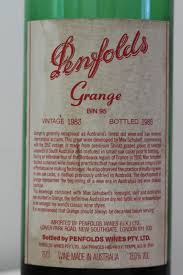
1983 Penfolds Grange Hermitage. And not one bottle, but two.
The kitchen table cost me a Southwark six pack. I bought it from Bo, fanatical barbecuer, and my cricket captain. Completing the transaction, we then drank the beer. At the table.
In the untidy blur of a Wudinna footy club progressive dinner, we were outside, beneath the cold stars, working the tongs. It was 3am.
“Hey, Bo.”
“Yeah, Mickey?”
“The barbecue’s gone out.”
“I turned it off.”
“Oh. How come?”
“This way we can stand out here a bit longer. You know, have a few beers. Enjoy ourselves. There’s no rush.”
*
As a kid I played footy and cricket in the Barossa Valley’s main towns. Nuriootpa. Tanunda. Angaston. This was its only purpose.
Moving away was the key to appreciating it. To enjoy that it was probably the country’s premium wine-making region. Folks’d ask, “Where you from?” I’d tell them, Kapunda. Next door to the Barossa. Dad works at Penfolds.
And so living six hours away on the state’s West Coast, I began to value the place. It became more than just the soggy oval where as a senior colts footballer you’d hoped to roll the Tanunda Magpies. Or where Bob Blewett, father of Greg, would patiently humiliate you and your team mates on Angaston oval, crafting yet another century.
*
Ucontitchie Road. I loved living beside this sandy track as it seemed elemental, and more authentically Australian than distant Kapunda. About two kilometres from town, the massive stone farmhouse sat on a rise, and offered a view from the wide verandah.
With clothes, books and golf clubs in the boot of my VK Commodore I moved there. A day’s drive. Billy Joel in the cassette player. My interior design theme was Young Bloke Spartan. Bo’s table was the stylistic centrepiece.
During my first Wudinna winter I kept waiting for it to rain. Back home in Kapunda there was a constant twenty inches annually. Here a drought punished the land surrounding my house. A grain farming community, that year saw only seven inches, with two of those just before Christmas.
In the bush quiet I’d think about how big our country was, how far away I was. Our geography confronted me, and I knew if I walked north, I might see no-one before I flopped into the Timor Sea, three thousand kilometres distant. It was very Australian, it was very foreign.
*
Like viticultural blood brothers we vowed to prepare well. No beers from Sunday to Thursday, even if someone, like Bo, suggested a quick snort in the club after Tuesday’s cricket training. We wanted to be drink-fit. During the week I glanced at our Grange bottles on the rack. They were the most valuable things in my home.
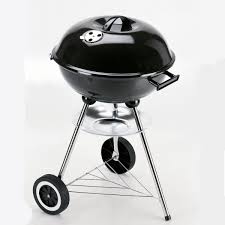
What to eat with Grange? The BBQ kettle craze was at its zenith. A hunk of beef. Roasted vegetables. A jug of thick gravy. A heat haze shimmered across the stubble, while on my verandah, the Weber spat and popped.
Dad was allocated two bottles of Grange. We claimed both, and the dark receptacles cost us forty bucks each. As the afternoon sunlight bent through my kitchen, we pulled the corks.
“Good choice fella,” remarked Eddie as I slid in Rattle and Hum, U2’s exploration of America, pre Bono-with-welded-on-sunglasses-wanker-era. We also listened to the first CD I bought, the Beatles’ White Album. As Paul sang “Blackbird” we attacked the Grange, in our clumsy and brusque ways. Gee, youth is magnificent.
Later, with beers as crisp as the descending night air, the Seekers rang out over the paddocks. They were ancient even then, but we felt a happy, ironic duty.
Hey There! Georgy Girl
Swinging down the street so fancy free
Nobody you meet could ever see
the loneliness there inside you
*
We drank the Grange Hermitage in the year of the titanic grand final. The best one ever. If you believe, the one personally attended by about half a million fans. Dermie’s ribs, Gazza’s goals.
So what did we think of the wine? It was excellent, but I didn’t have the necessary vernacular. I still don’t. I was inescapably inarticulate, and without language, there’s only partial meaning in anything, especially shiraz. It was confronting, but I’m glad we had it.
Ultimately, its depths were as incomprehensible to me as watching Michael Holding bowling at Adelaide Oval. Playing for Tasmania in the season our Grange was made, he glided deathlessly to the wicket, released, and instantaneously the ball was 130 feet away. Up in the Edwin Smith Stand I could only see it after it arrived in the keepers’ gloves. Delivery after delivery.
It was metaphysical, beyond the boundary. I could only stare. On this planet much remains mysterious.
*
It’s a coarse deliberation, but I’ll ask anyhow. Would I now rather a solitary Grange Hermitage or, for the same outlay, a dozen bottles of d’Arenberg’s The Dead Arm Shiraz? Do you climb Everest once, or regularly ascend the Matterhorn’s pyramidal peak, and risk it becoming routine? What would you do?
*
You nod at Hodgy, and run into space. Spinning perfectly, it rushes at you.






 mickeytales