2

My best pubs


Love a list. Love a pub. Don’t you?

This week the Footy Almanac sought opinion on our favourite pubs. I instantly penned a digital love letter to some cracking watering holes. How could I refuse?

Ye Olde Fighting Cocks- St Albans, Hertfordshire

England’s oldest and most charismatic boozer. Ceiling so low it made me feel like a centre half-forward when I walked in, and most certainly as I left. We lived about a Par 4 away, and invested some time there on weekends. When we returned in 2014 it was the only pub in town we visited twice with Alex and Max.

cocks

The Magpie and Stump- Mintaro, Clare Valley

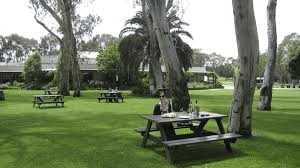
Gum trees and vineyards; idyllic beer garden. No aural pollution from within or without, just birdsong. Happily by its bar on a rainy Sunday morning before the SANFL grand final I first heard a publican say, “Another cup of tea, Vicar?” which amuses me more than it should.

Prince of Wales- Kapunda, South Australia

Hometown favourite. Colossal former mine host. When I lived five hours away in Kimba, and would visit, he’d greet me with, “Hello, West Coast smack-head.” I knew then that he missed me. Also home of spoofy.

The Kings Inn- Mousehole, Cornwall

Redolent of pirates and rum, romance and treasure. Of course, it’s pronounced Moz-all.

kings

The Exeter- Rundle Street, Adelaide

Eclectic perfection. Once, this happened: Dawn’s closer than dusk. Only Nick and I remain, our Doc Martins moored to the floorboards. He’s from a farm in Shea-Oak Log. We met in school. Years ago, we saw the Rolling Stones at Footy Park.

ex

*

Honourable mentions

The Goat- St Albans, Hertfordshire

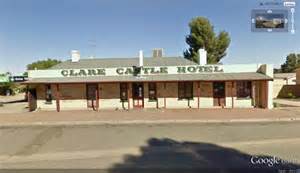
The Taminga- Clare

All Nations- Richmond (frequently home to Mick Molloy and Bill Hunter, drinking in concert)

Greenock Tavern- Barossa Valley (mine host Norton, and then Mick)

Lemon Tree- Carlton (sadly now gone; snuck in there when in Melbourne during my mulleted 1980’s)

Seacliff Hotel- Adelaide

*

What’s your top battle-cruiser?

*

The original Footy Almanac post is worth a look and you can find it, and other great stuff here-

Best pubs of all time?


5

Wichita Lineman and me

wl

In my mind I’ve mapped the itinerary. Of course, a massive RV will hurl us along some of Route 66’s celebrated black ribbon. All the iconic music cities: Chicago, Memphis, Nashville, New Orleans.

On my first sojourn stateside I noticed a Hotel California in Santa Barbara. Just off the handsome esplanade of palm trees and roller-bladers, it was unexpectedly modest. Of course, I didn’t go in because, as the Eagles cautioned back in 1976, the leaving gets a bit tricky.

It may surprise that Kansas is a personal musical attraction, and more particularly its largest metropolis. Why? Jimmy Webb’s “Wichita Lineman” as performed by Glen Campbell.

Like many remarkable artworks; Mona Lisa and The Great Gatsby spring to mind, it’s smaller than anticipated, coming in at only 117 words, which, let’s understand, might only be part of a Dylan verse, as magnificent as the Noble Laureate is. Webb could’ve penned this song on a beer-coaster.

With only two verses and a fractional refrain, it’s also chorus-free. Each verse opens with a modest personal observation

I am a lineman for the county

And I drive the main road

And then in the second

I know I need a small vacation

But it don’t look like rain

Whilst the song is simple in structure, its meaning is complex, and following each verse’s introductory image we find an abstract idea

I hear you singin’ in the wire

I can hear you through the whine

There’s expert use of alliteration here with “wire” and “whine” as the lyricist announces our central character’s romantic yearning. As many could attest living and working away from loved ones is tough, although the narrative’s about being lonesome, but not lonely. It’s also solemn, but not melancholy.

Like so much in life my “Wichita Lineman” journey is circuitous. I’d always known the song as Mum and Dad had a Glen Campbell record or two, but was alerted again to its genius by REM, who’ve performed it occasionally.

My thinking was that if Michael Stipe liked it then it must be magnificent, and his plaintive singing invests it with quiet elegance. Sometimes we need to come to something through a third party, like overhearing a stranger remark how great your friend is, which makes us smile and remember why we liked them in the first place. From time to time we all need this reassurance.

Sparsely presented but broad in their evocations, the peak of Webb’s craft is

And I need you more than want you

And I want you for all time

Here, he arranges simple words into a profound sequence, and these are among my favourite lyrics. Have you heard anything more romantic?

Rightly called the “first existential country song,” the considered angsts of an electrical worker in Kansas are as instructive as any, but they’re also universal in their poignancy. There’s aching authenticity of voice too, and his earthly investment is real. Someone once said that it’s a song about nothing, but also a song about everything.

Is it country music or a pop song? Probably neither, probably both.

One muggy Singapore afternoon I was with friends in an Orchard Road bar, bursting with American sailors. Drowning their final hours of shore-leave before departing for Iraq, we talked with a few of them. Already some were homesick and missing their family, while others were eager for some desert adventure.

Above the throng a vast TV screen played continuous country music: awful, thoughtless fodder. Think, “Achy Breaky Heart” but without the subtle insights into the human condition, and majestic instrumentation.

Between Budweisers I said, “Hey Colin, have you noticed that every singer is wearing a Stetson?” Considering the televisual entertainment Colin took a swig, and replied, “Yep. Uncanny, isn’t it?” Indeed, the primary musical skill seemed to be the generally accurate and unaided wearing of a hat.

That night there was no “Wichita Linesman.” On the cusp of its fiftieth anniversary it transcends the dusty prairies, and remains suspended above time.

It’s the perfect distillation of hope. Play it to someone you love.

*

I am a lineman for the county

And I drive the main road Searchin’ in the sun for another overload

I hear you singin’ in the wire

I can hear you through the whine

And the Wichita lineman is still on the line


I know I need a small vacation

But it don’t look like rain

And if it snows that stretch down south

Won’t ever stand the strain And I need you more than want you

And I want you for all time


And the Wichita lineman is still on the line

And I need you more than want you

And I want you for all time

And the Wichita lineman is still on the line


Here’s a 43-minute version. Highly recommended.


0

Dead Korean Boxers and a Songwriter from Ohio

leaves

I’ve only just parachuted into an intriguing world: the music of Mark Kozolek. Named after a Korean light-weight, his current project is Sun Kil Moon and many of the lengthy, digressive songs reference boxing and death.

Along with Paul Kelly’s 1989 song, “Everything’s Turning to White” the film Jindabyne was inspired by the Raymond Carver short story, “So Much Water So Close to Home.” In it a matriarch laments the passing of her daughter, “When people die in the wrong order, that’s when it all turns to shit,” and Sun Kil Moon explores this, every parent’s dread, in a ten-minute epic on the recent collaboration, Jesu.

Exodus

Continuing the boxing motif this track is entitled after Mike Tyson’s late daughter, and she is but one mentioned in a catalogue of the tragically-taken, including Nick Cave’s twin boy Arthur and the son of San Franciscan author Danielle Steele, gone at nineteen to heroin. Whatever your religious position it’s hard not to nod at this

I don’t believe in God, but sometimes I hope there’s Heaven

In the middle section of this funereal hymn the singer then lists those he’s personally known who also departed early, and the effect is haunting.

We recoil: this poor man’s drowning in death.

My cousin Carissa

My friends Chris’s, Brett’s, and Dennis’s

And my ex-girlfriend Katy’s mum and dad

All became a part of the family of bereaved parents

Sprechgesang is a German operatic style characterised as a hybrid of singing and speaking, and matches perfectly Kozolek’s worldview. The mundane and the poetic sit together atop a twinkling piano as he conveys a stream-of-conscious monologue. It’s strange and compelling and in stunning effect on “Exodus.”

Fittingly, the song closes with a chorus and the lead singer harmonizing on this simple refrain

For all bereaved parents- I send you my love

Sun Kil Moon aficionados know that the opening track from the previous record, Benji,  documents the sudden death of Kozolek’s second cousin, Carissa, and the intertextuality of these amplifies the impact. Their discography functions in ways reminiscent of Robert Altman’s 1993 opus, Short Cuts which weaves together nine Raymond Carver stories. These have been described as “K-Mart realism,” and the plaintive grittiness applies here too.

Among the Leaves

In contrast is the title song of his 2012 album. With its rousing strings and themes of generosity there’s melody and sunshine, and the lyrics arrive through a warm baritone as Kolozek invites a homeless girl to use his downstairs room when he’s away on tour.

I’m away for weeks, arrive at night

She hears my steps, turns off the light and runs

No mind at all, more space than I need

It’s just me among the weeds, among the ghosts, among the leaves

 But with mention of ghosts we again note that death is unceasing, even in this effervescent context. There’s resignation, and no evasion from this deepening shadow. Despite this, Kolozek welcomes the light through the windows; the universe is not utterly dark, and we must keep offering, connecting; forever alert to the possibilities

When evening comes I play guitar

 For the planets and the stars

 I leave the porch light on

 Like I do when I’m gone

 Winter, spring, summer, fall

 Basement’s yours, have a ball

Sun Kil Moon is a confronting aural space. There’s elegy, confessional crush, and the open pages of a diary you’d rather didn’t catch your eye on your way past.

But it’s uplifting and cathartic, and we learn how even obscure Korean boxers can instruct our tiny lives.

1

Grand Final 2016: Country Pubs and Club Sandwiches

magpie

A meandering drive north from Adelaide, the Clare Valley is among my favourite places on the planet. Lush hills host rows of Riesling and cabernet vines, and settlements are sprinkled about, appearing as English villages.

But allow me to be precise. The valley’s best town is Mintaro and in its centre is the superb Magpie and Stump Hotel (est.1851). I’ve minor affection for its architecture although leaning against its bar I first heard a publican say, “Another cup of tea, Vicar?” which amuses me more than it should.

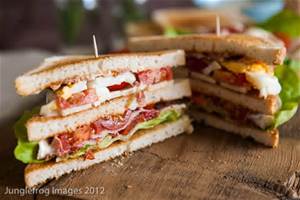
Its beer garden is perfect: generous lawn, tables and chairs, swaying gum trees. Luxuriating in the Magpie and Stump’s faultlessness my lunch arrived: a club sandwich. Of all the cultural contributions of New York state, this, I’d argue, is its finest. How can one not love a club sandwich?

*

Following a voluntary diaspora during which our group lived variously in Abu Dhabi, Singapore and Gilgandra, we’re back in Clare for the long weekend. I love tradition, and am thrilled that this one’s returned after too many years.

The old world tone of our visit is enhanced by the medieval floods and tempests. Notwithstanding the problematic marvel of electricity Clare suffers continuing phone and internet outages, meaning we must pay cash for everything. It’s like 1974. My sideburns seem fluffier.

The footy’s approaching so I veer into a winery to collect some sparkling cabernet-shiraz. Despite his splendid location, and gentle days crafting gorgeous things, in our lengthy experience the vigneron remains the grumpiest man within a light-year. I creep in.

“G’day mate. How’s things?”

“Yeah, well, you know we haven’t had internet for three days. Can’t use EFTPOS. What do ya want?”

But there’s something endearing in his longitudinal consistency, and I wonder if it’s a performance, a learned expectation. With two bottles of Anastasia (90+points) under my arm, I retreat.

*

With the wife away for work in Noumea (yeah, I know!) wrangling the boys during the grand final is a challenge, but there’s a pub, the Taminga, just down the street from our digs. On the footpath we’re welcomed by a bouncing troika of red, white and blue balloons while the red and white pair flutters too. Inside is bright and the floorboards and exposed brickwork are stylish. There’s a kids’ playroom. The boys bolt. Sorted. We claim some barstools.

The match is underway. Flagging the impending tension, minutes and minutes pass without the opening score. Old mate Mozz and I watch and chat, exchanging news over our crisp ales. The Bulldogs hurl themselves into the contest, but we know Sydney is undeniably classy.

A footytrip of lads bursts into the Taminga. They’re all wearing nametags. My collective noun is wrong- it’s a buckshow. I ask the groom’s brother, “So, what’s the plan?”

He replies, “The top pub, the middle pub, the bottom pub.”

Brilliant. On this afternoon his exact words are repeated by other buckshow participants, in country towns across this wide, brown, occasionally soggy land.

The second quarter is colossal with lead changes and surging, ruthless football. After a week of apocalyptic storms, the sunlight bends through the windows like liquid straw. Three farmers are anchored at the bar, and I don’t think they lift their backsides all afternoon. Josh Kennedy rampages across the MCG like a pirate, like a Wall Street wolf.

As it’s grand final day (and Mum’s in the Pacific) I get the boys a lemonade and bag of chips. If it was 1974 and I’d a HQ ute parked out the front, they’d be in it with the AM radio on.

With the groom having enjoyed a costume change from Freddie Mercury to nondescript showgirl the buckshow invades the middle pub. Thanks to mine host half time also heralds happy hour, and like Black Caviar on the turn, Mozz starts to accelerate.

The final hour of the season is astonishing. During other deciders I’ve been neutral, but today demands that like the rest of the galaxy my red, white and blue scarf is on, at least metaphorically. The Bulldogs are tremendous, and now the Taminga becomes seismic.

And at the siren there’s Boyd and Johanissen and Picken and Beveridge and Murphy. The boys watched the last quarter with us, and they’re excited too. How could they not be? I’ve appreciated this grand final more than any since last century. 2016 will forever be talked about with wide smiles and damp eyes.

It’s a weekend of rebirth both in Footscray and up here in this patchwork valley of vineyards and fetching hamlets. I can’t wait for next year.


sandwich


0

The Sinner of ’69- The Rolling Stones’ Let It Bleed

bleed

It was a hot day in Tanunda and lunch was done. A Sunday, there was energetic engagement with some Carlsberg lagers, and sitting in the garden, Nick and Holmesy1 agreed that these were excellent session beers.2

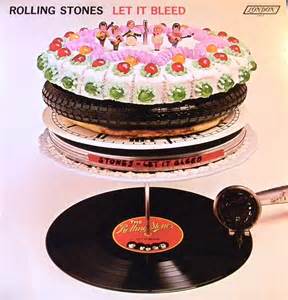
Of course, there was music. In its desolate, dirty beauty Let It Bleed burst from the outdoor speakers, and I now confess to you, dear reader, that I’d not heard it before. What had gone so wrong for me? My diet had been confined to Get Your Ya-Ya’s Out, Tattoo You 3, and various compilations.

Nick and I saw The Rolling Stones at Football Park in 1995, partly driven by fear of Keith’s mortality. Why did we worry? But I hadn’t properly investigated them as an albums band and was denying myself history’s ultimate run of releases.

Beggars Banquet. Let It Bleed. Sticky Fingers. Exile on Main St.

For me their 1969 record is their best, and while its bookends of “Gimme Shelter” and “You Can’t Always Get What You Want” are correctly celebrated, there are other songs worthy of our attention.

Let It Bleed

This song is so languid; it could be summer in Tallahassee. Each component: guitars, piano, drums and vocals is lazy and loose. The slide guitar and autoharp evoke places remote from the band’s London home while Charlie’s drumming, especially on the outro, is spectacular.

Twenty-year-old Mick Taylor debuted on the album which would be the last for Brian Jones, so incapacitated by drugs and drink that his contributions were minor, and indeed he was soon lost to music, lost to himself. Drowned.

On blossoming display is the genius of Jagger’s singing as his vocals assume an American country twang that could’ve fallen into parody, but here is homage. Over the ensuing decade he’d continue these reverent performances on tracks such as “Dead Flowers” 4 and “Sweet Virginia.”

Damningly, I’ve never heard the song on Australian radio, but its sexual decadence and portraiture would henceforth define the band.

I was dreaming of a steel guitar engagement

When you drunk my health in scented jasmine tea

But you knifed me in my dirty filthy basement

With that jaded, faded, junky nurse oh what pleasant company

 You Got the Silver

For me “Jumping Jack Flash” is caricature. As hard rockers they’re competent, but this is uncomfortable territory; they’re in the wrong church. Nashville and the Mississippi Delta appeal to the band more than Chelsea.5 Blues and country rock are their spiritual habitat.

I’d never appreciated Keith as a singer. But on this song, the first on which he’d take lead vocals, he adopts a character so plausible, in such robust sympathy with his public persona, that it creates a compelling world. Its antagonism was likely inspired by Richards’ then girlfriend Anita Pallenburg, which gives it bemused venom, a telling context.

Hey babe, you got my soul,

you got the silver, you got the gold

A flash of love has made me blind,

I don’t care, no, that’s no big surprise

Both songs reveal The Rolling Stones’ song writing and performing powers, but within a genre not commonly acknowledged. These show imagination, a hunger to grow musically, and remarkable poise- especially as they were not yet thirty.

Our age of downloads and streaming services has made a curio of the album concept, but Let It Bleed is a record of a time and a place that denotes the stratospheric talents of Mick and Keith and their coterie.6

Play it this summer in its ragged, murky entirety. Over a couple Carlsbergs.

Footnotes

  1. Their real names.
  2. Session beers do not include either Coopers Sparkling Ale or Carlsberg’s Elephant beer. Failure to realise this can be catastrophic for all involved.
  3. Tattoo You came out in 1981 and was played on cassette in many HQ Holdens in Kapunda, the town of my youth. “Slave” was an audio calling card for many as we could hear our mates coming around the corner before we saw them, especially for some reason, late on Sundays before we’d go to the Railway Hotel.
  4. A wonderful version of this song by Townes Van Zandt features during the end credits of The Big Lebowski. It captures the laconic nature of the film magnificently and links thematically to The Dude, “possibly the laziest man in Los Angeles County.”
  5. Chelsea, the west London suburb mentioned in “You Can’t Always Get What You Want” the album’s closing song about disillusionment.
  6. Ian Stewart and Nicky Hopkins contribute brilliant piano throughout the album. Merry Clayton’s background vocals on “Gimme Shelter” are rightly recognised as iconic, and in the view of this author are the best of all time.

keef

2

Observations from a Pair of Moving Legs

esplanade

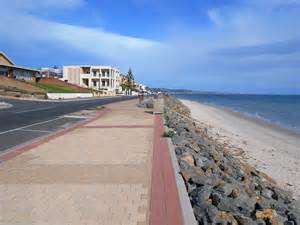
This story is from the change of millennium when old mate Bob and I used to run early mornings along the Glenelg South esplanade. There’s surprising stuff happening by the beach at dawn.

*

It is like facing up to an appointment with the dentist. You know that it is going to hurt, that you will make some alarming gurgling sounds and that when it is finished, you will try, with ample humiliation, to spit.

Friday. Dawn. Moseley Square. I twist and fold in a feeble attempt to prepare. Peering into the dark space of the Grand’s Pier and Pines bar, I see a lone cleaner vacuuming away the last scraps of yesterday’s conversation. “Let’s do this,” urges Bob- my accomplice.

With a beep my stopwatch is blinking and running and so are we!

At 6am the Esplanade is two babbling streams of people and dogs: one flowing toward Brighton and the other; lazily at the Patawalonga. We surge southward and a dribbling hound lumbers into my lane and then across to a yawning pine. He autographs it with the shamelessness of a footballer on an end-of-season trip.

On the horizon a tanker drags itself noiselessly toward the refinery. The breeze is crisp. A lanky teenager shuffles plastic tables outside the Broadway café, his black beanie pulled so low that some could suspect him of arranging a bank robbery for mid-morning. I spot a Chupa-chup poking jauntily from his jaw and relax, pleased that he is unlikely to feature on tonight’s TV news. He nods, “G’day boys.” We nod back.

Knots of chatty walkers drink up the seaside zest and provide welcome entertainment. It’s like spinning a radio dial across endless talkback stations- and not without intrigue. A Reality-TV producer (still in plague numbers) could comfortably fashion a dozen gripping episodes from the random snippets we steal each morning. Ambling into Somerton Park I catch:

“…but you’ll never guess,” (an elderly gent to his grandson) “he made the putt!”

“I told Doreen that there-is-NO-WAY-I’m-going.”

“So, do you think his wife knows?”

And a boisterous woman in a pink tracksuit gives her arteries some extra traffic by broadcasting, “and that bloody plumber still wanted to charge me!”

My stopwatch offers no quirky grabs. It only rudely demands acceleration. The yacht club sails toward us. Finally halfway, we anchor and embrace our minute’s rest. “A visit to the dentist’s is less painful,” I splutter, hands on hips- hungry for air.

Bob wheezes, “At least you get plenty of oxygen in the chair.” His hair is stuck firm to his head. We devour the sixty seconds, then turn, resolved, homeward bound. The wind, previously an ally, is now aggressive. I immediately feel I’m towing an old wooden bar fridge. An old wooden bar fridge bulging with brown rows of Coopers Stout.

The Esplanade’s skyline changes constantly. Majestic villas bravely protest the spread of Tuscan packing crates. A developer’s billboard stands loud among the concrete and the mesh of a building site. “Hurry! Only ONE left,” it screams impatiently.

“Now that’s optimism,” snorts Bob. This anorexic block is apparently destined to feature all of two yellow townhouses.

A cheery clot of ruddy sixty-somethings is caught by their chain of cars on a rise. T-shirts cling and drip and they chat brightly in the golden light of the sunrise as only the retired can. A champagne cork, sorry- Australian Sparkling Wine cork cuts an arc across the footpath like a failed firework. Each gent tips a crystal flute into which the hissing fizz is energetically spilled. “What’s the occasion boys?” I ask.

“Friday,” celebrates one of this chirpy clan as he hoists his breakfast drink. A gesture of sweaty fellowship.

“Amen,” I return.

“That will be us in thirty years Mickey,” puffs Bob.

“The cheapest champagne will be a hundred bucks a bottle by then.”

“Plus twenty five per cent GST.” But Bob is given to political alarm.

Pushing on towards the Broadway, we abandon our role models to their refreshments and their broad, leisurely days.

The stopwatch sternly announces that a scant two minutes stand between us and our best time of the summer. The Grand’s sandcastle shapes loom and I try to push myself quicker. “No,” my legs scream. I know deep in my soul that a root canal treatment is better than this.

“Listen legs,” I assert, “do as you are told. And stop talking. You can’t speak. This is not a Douglas Adams’ novel!”

Our finishing line (in many senses of the phrase) swims into happy view. I glance at my now completely despised watch. The Town Hall clock frowns down at us like a disappointed Senior Colts football coach. Again I spy the wandering hound, eagerly leaving his name on a sullen lamppost.

Swerving around some swaying walkers gobbles critical seconds.

“Eleven dollars for O-Rings! What’s the hell is an O-Ring?”

It’s the pink tracksuit, still expounding on the Secret Horrors of Dishwasher Repairs.

We make a desperate, final lunge- and are outside our target time. It was, however, another vigorous run and my pounding pulse is electric and exhilarating. We savour our slow cool down on the bumpy lawn that separates the Norfolk Island Pines from the sloping sands. After, easing along the veranda of the Grand, Bob inquires, “See you in here for a beer tonight?”

“Magnificent idea,” I agree.

Yes, it is the weekend. The glorious escape. Promise and anticipation.

Our next dental appointment is not until Monday.

running

0

Tonight I’m gonna party like it’s 1993

wellington

Gee, I love the early nineties. Indeed, my wife has often remarked that I’m still living there. She may have a point. So, I’m listening to some old songs. Here’s two that reverberate.

Girlfriend- Matthew Sweet

I remember the first time I heard Triple J. I was driving around Adelaide on a Saturday during 1990 in my VK Commodore. Roy and HG and This Sporting Life was on, and Roy was telling of the occasion he was marlin fishing off Bermuda with It’s a Knockout host Billy J. Smith, Kylie Minogue and celebrated cricketer Steve Waugh. He narrated with such earnestness that like all good satire I believed him for a few minutes.

Back then Helen and Mikey did the breakfast shift on Triple J and it remains the most exciting, deranged radio I’ve heard. They regularly played Matthew Sweet’s “Girlfriend.” It’s power pop perfection with its exhilarating, urgent guitars and ambiguous lyrics. It still transports me back to 1992 when I and Greg Anderson both sported (unironic) mullets.

A few years later Mikey was still on breakfast, but with the Sandman, and this happened.

Sandman: I’ve often wondered what it’d be like to be a woman.

Mikey: Come here.

I’m not sure if Matthew Sweet is a one-hit wonder, but “Girlfriend” endures as a glowing artefact from a fun time.

Saints- The Breeders

Emerging as a Pixies side project for Kim Deal, their signature song is “Cannonball” from their album Last Splash. I bought this when I was down from Kimba, in Adelaide to undertake my first City to Bay fun run. My aim for the gently downhill twelve kilometres was modest. I wanted to break the hour mark.

The run was Sunday morning, the day after the 1993 preliminary final between the Adelaide Crows and Essendon Bombers. I watched it in Magill with a couple mates who were enjoying some footy beers. Adelaide was up by 42 points at half time. How exciting was this? We were going to our first grand final!

As things unravelled in the second half I was tempted to apply some medicinal lagers, but resisted as I’d been training for two months. Of course we lost and a week later Essendon claimed an unlikely premiership.

I completed the run in 58 minutes.

Last Splash is an eclectic listen comprising surf music, off-kilter ballads and infectious pop. “Saints” recounts a summery day at the fairground, but through an alternative prism. There’s disconnected imagery and a driving beat with Kelley Deal on a growling guitar. Invited by her sister Kim to join the band as a guitarist presented but one problem: Kelley did not know how to strum a chord. “Saints” shows she picked it up pretty well.

The following Christmas I was in Wellington, the capital of New Zealand, on a Contiki tour.  I learnt that the Breeders were playing a small venue around the corner from our digs. I didn’t go because I had to drink Steinlagers in a pub with other Australians and talk footy and cricket. As Australians do when overseas in beautiful places they might never again visit.

Ridiculous.

knockout

4

Voices

foghorn


I wrote this memoir about a decade ago. It won me a trip to Darwin for the national English teachers’ conference the highlight of which was sneaking off to Adelaide River and seeing the jumping crocodiles.

Of course.

*

Classrooms, for me, are largely about voices. These voices shout, whisper and demand. Guiding some to sing roughly in tune and gently handing a microphone to the shy student who just might sing like an angel are among our challenges. Now more than ever, it’s vital that students and teachers have voices that leap into laughter. As often as possible.

Many years ago, to conclude SAS English, pupils were invited to write a so-called ‘warm report’, summarising their successes. One student, for whom spelling was difficult, triumphantly declared to me that, ‘he had enjoyed improving his pubic speaking.’

Whilst in the UK a Year 10 class and I were crawling through an endless media unit from which the authorities had untimely ripped all the joy. One morning, instead of asking, ‘Sir, are we doing media today,’ one girl mistakenly said- without irony- ‘Sir, are we still doing mediocrity today?’ I could only reply, ‘Not just today, my little hombre, not just today.’

I’d just returned some coursework to- my fingers are trembling as I type this- a streamed, bottom-set Year 11 English class. One boy- I’ll call him Edward- began loudly announcing, somewhat curiously, that he’d gotten a G (Yes, it’s true, the UK system utilises the esteem-crushing F, G and U). His classmate Kyle started hollering, ‘A G! A G! Edward! What is wrong with you? You’re so thick.’ Kyle then glanced at his own work and with an utterly honest face, enquired, ‘Sir- is an F better than a G?’

Following their SATs, Year 9’s in England sometimes assemble a course work folder for internal moderation. On the accompanying coversheet, each writes a paragraph in which they reflect on their year’s achievements and a sweet, amenable girl concluded, ‘I have learnt not to use words that are unnecessary- and not needed.’

Recently, a boisterous lad was growing restless and distracted during his classmates’ oral presentations. I asked him, as you do, to concentrate and focus. Instead of replying that he’d promise to be more productive; he looked me in the eye, nodded and with total sincerity said that, in future, in class, he’d, ‘try to be more reproductive.’

At the school farm a healthy chicken became, unfortunately, a deceased chicken when a student unintentionally jumped on it. Days later, the boy lingered after English, glum-faced with notoriety and asked, ‘Did you hear about what I did the other day?’ Saying that I was sorry for his troubles, I added supportively, ‘So, how are you going?’ With a philosophical giggle, he said, ‘Well, much better than the chicken.’

Once I heard a Triple J announcer enthuse that educators, ‘create lives’ and I’ve tried to make this the chorus in my teaching. Spoken and written voices are the mesmerizing soundtrack of our schools and to create lives, our shared spaces must resonate with the music of golden laughter.

Thanks to Larry Sellers of The Big Lebowski for this (rather poor) homework.


larry


0

Belle and Sebastian: The State I’m In

B and S

The opening track on Belle and Sebastian’s debut album Tigermilk is “The State I’m In” and this vignette hosts some memorable characters. I first really listened to it on Karon Beach in Thailand, and often played it walking around Singapore beneath her towering skyscape. The jangling, Byrds-like guitar adds to its sunny glow.

The initial verse contains remarkable personal and family detail, and insight into our narrator’s psychological condition. “The State I’m In” utilises language in clever and complex ways to create vivid characters. The first line’s hyperbole offers humorous, arresting insight into our narrator.

I was surprised, I was happy for a day in 1975

I was puzzled by a dream, stayed with me all day in 1995

These simple, matter-of-fact, year-specific declarations engage the audience by provoking many questions, and the revelations continue through the following verse

I got married in a rush to save a kid from being deported

Now she’s in love

With this we learn that he’s compassionate, and even self-sacrificial, but then wonder who the girl’s now in love with: is it our narrator, or another? He then recounts another relationship in which he has been vulnerable: that with the priest whom takes his admissions, breaks confidentiality and the Seal of the Confessional, and turns these into art

He took all of my sins and he wrote a pocket novel called

“The State I Am In”

By the finish of the opening stanza’s confessional intimacy we’ve learnt of the family’s dynamics, challenges and history courtesy

He stood up with a sailor friend

Made it known upon my sister’s wedding day

We then hear the final affront where his highest authority hesitates before belatedly accepting our narrator; no wonder he’s in a despondent state

So I gave myself to God

There was a pregnant pause before he said ok

His self-loathing finds pathetic and final expression in the song’s last verse

            Now I’m feeling dangerous, riding on city buses for a hobby is sad

The language used in the lyrics is deceptively simplistic, but depicts vivid characters.

With this complex domestic context established our protagonist, or possibly antagonist, reveals in a striking act that shocks

I was so touched, I was moved to kick the crutches

From my crippled friend

Is this truth, or is it a comedic device; a strange metaphor? Certainly its oxymoronic nature invites deeper thought. Should we be horrified, amused, or both? Subsequently the narrator confesses this act of violence, and events take another unexpected turn with the priest acting immorally.

We find dark humour in the idea that a religious figure would steal a story and publicise it in a novel. Little wonder that our main character is disturbed! With this development the song title is invested with wicked irony that generates sympathy.

This powerful vignette catalogues key moments in the narrator’s life as he seeks purpose and meaning. The final image offers a positive picture of one, troubled as he is, wanting to do earthly good. There’s poignant use of circularity with the repetition of previous detail

Lead me to a living end

I promised that I’d entertain my crippled friend

My crippled friend

Expertly using first person perspective, the lyricist provides understated descriptions to provoke us, and our reactions encompass the witty, the sad, and the frightening. Belle and Sebastian have created some vivid characters, and this song invites deep contemplation.

karon

0

Round 23 – Adelaide v West Coast: Optimistically and Misty-Optically

casper

I’m at the game tonight, but would’ve been happy at home as it’s the last Friday night, minor round clash to be called by Dennis Cometti. With his 1970’s AM radio drive time vocal stylings he’s become a cherished feature of our game. Combining this with precise description and fabulous wit has made him iconic.

“Gasper, the unfriendly post” is his best line in a galaxy of gems. Imagine his joy as the Sherrin was launched by the star Tiger and banged into the upright. How long must he have sat on that?

My personal metric indicating his influence is that every time I say in my head, “West Coast Eagles” I can only complete it in the voice of Dennis. And now like the famous definition of an intellectual: a man who can listen to the William Tell Overture without thinking of the Lone Ranger, I challenge you to silently repeat, “West Coast Eagles” but not in the honeyed tones of Dennis. See? Impossible.

We saw the 2006 preliminary final at Footy Park between the Crows and Eagles in which we were ahead comfortably at half-time. Probably cursing us, a friend texted- We’re going to the GF. As Ben Cousins gathered disposals at will and shrugged off desperate, lunging Crows in the second half, and the result became certain a mate grunted, “Bloody Cousins is killing us. It’s like he’s on drugs.” Mmm.

Drafted as an emergency ruckman former Kapunda boy and church minister offspring Jonathan Giles is at his fourth AFL club having been at Port, Essendon, and most productively, the Giants. He enjoyed an interregnum at Sturt where he won the 2010 best and fairest, while his SANFL life started at Central District. I’d like him to next go back to Kapunda and win a flag, then go to Glenelg and do the same before finishing his career, like many a road movie, in Fort Lauderdale. His “Places I’ve Played Footy” Facebook app is busy.

Giles is brilliant tonight, and makes the Crow ringleader appear tired. Interviewed after the match, Sam Jacobs confessed, “The only one who could ever outreach me was the son of a preacher man.”

As has been the season’s pattern the home side is sloppy early, and save for a couple clean bursts, this endures all evening. The Eagles apply good pressure across the ground and we make catastrophic quantities of errors in every facet of the game from kicking to handballing to dropping easy marks to unplumbed decision-making, most notably when Lyons snapped at the Riverside goal and missed, instead of getting it to a team-mate in the square. I’m also certain that for their post-match meal some of the Crows even went the tofu option.

It takes the Crows twenty minutes to register a major and this comes through McGovern. At the other end the Coleman Medalist is murdering us, continuing the long relationship between grassy expanses, deadly accuracy and Kennedys. He gets five in a solid outing.

Gaff, Priddis and Shuey are getting industrial volumes of ball, and we don’t seem to be doing much about this. Having reinvented himself as a half-back flanker, former Hoodoo Gurus guitarist Brad Shepperd is going well. Good times for him, indeed.

Local highlights are rare, but Tex offers some after midnight insights with his deft footwork in the centre before it lobs to Eddie who goals. The competition’s biggest scoring forward line has a Bolivian prison evening with but two majors to its members.

Our third quarter is goalless. Someone later comments that the match felt like a forfeit. Let’s hope the Adelaide Crows’ 600th game was an exorcism.

Leaving a sullen Adelaide Oval as the West Coast Eagles song plays I realise where I’ve heard it before. It was in 1985 during the final credits of a (bad) Andrew McCarthy film.

steeple


0

Belle and Sebastian: Dress Up In You

model


Belle and Sebastian is a Glaswegian indie band formed in 1996. Named after a French children’s television series, their nine albums have received critical acclaim, and are known for their literate and wistful lyrics. I enjoy how characters and narratives feature in their songs so decided to investigate the ways language is used.

*

“Dress Up In You” comes from their 2006 album The Life Pursuit. Characterisation is a key element in this song. Establishing who the people in the song are is our first problem as the identities of the singer (the narrator) and the person they’re singing for (the addresse) present challenges for the listener.

The song is sung in first person, with lead singer Stuart Murdoch beginning,

I’m the singer, I’m the singer in the band

You’re the loser, I won’t dismiss you out of hand

This appears straightforward and autobiographical, and an obvious interpretation is that he’s (assuming Murdoch is singing as a male character) addressing a fan or groupie. “You’re the loser” is brutal, but suddenly softened in the next line.

As quickly as Murdoch presents this relationship he changes it, with a simple couplet that is striking

Cos you’ve got a beautiful face

It will take you places

He has rapidly moved from calling the addressee a “loser” to “beautiful.” Either way the relationship seems to only exist in the present tense, and might be temporary. However, in the second verse he again surprises us by revealing more about the two characters and the progression of their relationship.

You kept running

You’ve got money, you’ve got fame

Every morning I see your picture from the train

Now you’re an actress!

Typically for Belle and Sebastian, humour and sarcasm are employed to good effect, and here these help to establish both the narrator and the model who was once a friend and then a rival. Interestingly, the last line is also a cliché which softens the impact of the observation

Now you’re an actress!

So says your resume?

You’re made of card

You couldn’t act your way out of a paper bag

The great American writer, Norman Mailer, said that writing ultimately concerns the nature of power, and this is true here for in six lines we move from the narrator calling the other a “loser” to now confessing that he/she can “see your picture from the train.” This implies that the narrator has a regular job and sees this other person, a model, on a billboard, presumably in an advertisement. With sparse lyrics Murdoch conveys vivid characters and an intriguing relationship. This continues with the accusatory

You got lucky, you ain’t talking to me now

Many listeners might’ve realistically presumed their relationship was romantic, but yet again the lyricist changes our view by gradually disseminating information: it was platonic and sisterly. Murdoch leaves the precise nature of their connection unspoken with use of what Keats called Negative Capacity

We had a deal there

We nearly signed it with our blood

Antithesis is used by the lyricist to suggest the complexity of the relationship, and show that the narrator and the model were once close, possibly when they were at school. Their relationship has changed over the years, and this drives the narrative behind the song

You give me stomach pain

I wish that you were here

This sudden and dramatic revelation keeps the listener engaged, and its twin emotions of revulsion and longing evoke a relationship dynamic with which many would associate. Belle and Sebastian is perceived as bookish, and literate, but the diction within this song is plain, and casual: suitable for a personal monologue.

As the narrator’s anger lessens, he becomes confessional, with an accolade that’s metaphorical and striking

If I could have a second skin

I’d probably dress up in you

This couplet is telling for the use of the pronoun “We” which confirms the strong connection the two characters once shared. In a surprisingly minimal number of words the lyricist has depicted a complex relationship between two contrasting people. Given the song’s initial representation of the relationship, the title is startling, as it is most complimentary metaphor

The divergent paths the lives of the two characters have taken are symbolised by the crisp imagery of

You’re a star now

I am fixing people’s nails

with the former evocative of glamour and travel, and the second connoting a mundanity and suburban imprisonment. This song uses language with deceptive simplicity in creating haunted and wistful creatures.

In the final verse, the full extent of the truth; the gritty reality is laid bare for us, and we see just how mislead we were in the song’s opening, only a few minutes previously

You’re a star now, I am fixing people’s nails

I’m knitting jumpers,

I’m working after hours

I’ve got a boyfriend, I’ve got a feeling that he’s seeing someone else

girls

0

Jazz and me

trumpet

My own musical career was fleeting. When I was eight I learnt guitar until the teacher moved, and Kapunda being a country town, that was it. I remember strumming in that measured, funereal way to “Banks of the Ohio” and being uneasy at having to sing

 I plunged a knife into her breast

 And told her she was going to rest

 She cried “Oh Willy, don’t murder me

 I’m not prepared for eternity.”

*

While at university I discovered Vince Jones, jazz vocalist and trumpeter and his album For All Colours. Its sophistication reminds me of Frank Sinatra, and “Straighten Up and Fly Right” stars a rowdy Wilbur Wilde sax solo. I then knew that the saxophone could be as cool as a guitar.

The first concert I attended was Midnight Oil at Memorial Drive (Julia) and Vince Jones at Le Rox in Light Square was the second. Standing with other students in the airless dark I note that Vince wears a suit and tie, and in contrast to Peter Garrett’s frenzied jumping the jazz ensemble appears uninterested.

But, I was in. Jones himself once said, “I want to be inside every atom of every note.” Over the next decade I saw him often, usually in the Piano Bar of the Festival Theatre. And then, I don’t know why, he stopped regularly touring Adelaide.

*

One wet Saturday in England I heard a BBC Radio 4 documentary on John Coltrane’s A Love Supreme, so immediately jogged up the high street to a HMV and bought it for ten quid. And as rain and sleet lashed our windows, its saxophonic hymn brightened the crushing winter sky.

The storms of Coltrane’s personal life thundered in counterpoint to the spiritual still of A Love Supreme, and within two years of its 1965 release he would be dead.

*

One distant summer some Kapunda boys and I drove across the Hay Plains to spend a fortnight in Sydney with an air-traffic controller mate. He was among rude privilege in a Drummoyne apartment. We parked Woodsy’s Datsun 180B on the street. As we’d daily exit the Western Distributor there was a looming billboard with a huge fanged spider warning us to watch out for funnel-webs. We did. I still do.

Besides playing cricket by the Parramatta River, and body-surfing at Bondi and Curl Curl I hauled everyone to The Basement in Circular Quay. I was a fan of Live at the Basement on ABC Saturday evenings, and Galapagos Duck was the house band, and Don Burrows and James Morrison were often guests. I can’t tell you who played that sultry evening, but I liked it. The wooden tables, the ambiance, the enveloping melodies.

*

Among the more brilliant things about living in England is chucking a sickie, and knicking off at dawn on a Friday to another country. Easyjet flew us from Luton to Cologne so we could explore their Christmas markets.

The city is largely unremarkable save for its compelling cathedral; the Dom. With twin spires ascending to 515 feet, it was the world’s tallest building until the Washington Monument. Similarly astonishing is that in 1162 Emperor Barbarossa secured for the Dom the authenticated remains of the Three Magi. We drifted about its vast interior and leaving, presented some Euros to a nodding priest.

Papa Joe’s En Streckstrump is Cologne’s premier jazz venue so we find our seats early for Sun Lane Ltd, an ensemble from nearby Aachen. Slender waitresses disperse wine and beer. We can scarcely see through the stinging blue smoke. The punters surge in. Bespectacled, ample musicians squash timorously onto the picnic-rug stage. The pianist looks like a sheet has been stretched about a lumpy, wobbling refrigerator.

Standing unnaturally close, an energetic type suddenly clambers up and straddles a nearby stair- and me, as if he and I are posing for a gay fire-fighters’ calendar. I am startled. Forgetting that Europeans are often bilingual I blurt, ‘What the fuck are you doing?’

As the gentleman dismounts the step, and my groin, I mutter, “Thank you.”

“You’re welcome!” my intimate twitters.

“Say what you really want!” adds his friend. We don’t see them again.

The traditional jazz is brisk and zestful, and spilling out onto the Rhine’s bank Nina’s “99 Red Balloons” bursts from a heaving club. Lingering at the chilly Alter Markt, the wife sips a concluding gluhwein; the spiced, red wine and we confirm that Cologne jazz goes pretty well.

*

It was nearly an hour commute across Adelaide’s most miserable suburbs; Snowtown territory. After many months afternoon radio had become tiresome; especially when the old-age surrender of organising life around news bulletins, those ridiculous frissons began, so I fought this inevitability, by committing to Miles Davis. I submerged myself in Bitches Brew.

Menacing and swirling about you like a phantasm, the music is a sexual maelstrom, and its recording began within hours of Hendrix and his pyrotechnics at Woodstock. Was it jazz? Was it rock? Was it funk? I wasn’t sure, but I again knew that the trumpet could be as cool as a guitar.

Despite its ominous cadences and rhythms, I found it transportive and therapeutic as I’d make my way home to the beach. Bitches Brew is vital to jazz-fusion, and while the opening two tracks are rightly celebrated, “Miles Runs the Voodoo Down” on side four is the standout. I still love getting lost in this 94-minute ocean.

*

This story begins with Mum and Dad’s record collection. Don’t they all? In among the usual 1970’s fodder of Ripper ’76 and the Best of Abba there’s some curios, and in the not on 5AD or 5KA and certainly not on Countdown section are some jazz albums, one a Dixieland compilation. I don’t especially recall any of the tracks, but these made significant impacts upon my psychology and vocabulary.

The jazz evoked widescreen travel and the speaking of strange tongues and moving about in dazzling metropolises that one day I might be permitted to visit. It was New York and Chicago and New Orleans. It wasn’t that I was trapped in dusty little Kapunda, it was that a planet was out there, and Mum and Dad’s jazz records captured these teeming, thrilling possibilities.

They still do.

BB

0

global revolutions

globe


I love a globe. There’s simple joy in being hypnotised by the cascading sweep of the Americas, contemplating the distant familiarity of England, and contending with innumerable Stans where once was the muscular bulk of the USSR.

Ah, seduced by a sphere.

For my birthday Mum and Dad bought me a standing floor globe, and Sunday morning Max and I assembled its dark wooden frame before slotting in the tilted ball. Max gave it a spin.

Ocean. Land. Giddy revolutions. Ocean. Land.

Like the best gifts it’s made me reflect.

Alex and Max often chat about the wider world, and as they engage with the possibilities, their curiosity is comforting. Globes encourage this.

“Alex, how deep is the Marianas Trench?”

“Really deep. You couldn’t even touch the bottom.”

And last year, walking by the Singapore River-

“Max, when we’re older, like probably thirteen, Joseph and I are climbing Mt Everest. We won’t even need any oxygen tanks.”

“No oxygen tanks! Really?”

As a kid I had enchanted possessions. The tape recorder and accompanying best of Little River Band cassette I received one Christmas; my first cricket bat- Polyarmoured, and now resting in a cupboard at Mum and Dad’s, and a yellow, wooden skateboard. But, in our house in Kapunda the globe of my childhood held quiet and enduring power over me, like a mystic. Globes conjure memories, and are gateways into our future.

From his Nanna and Poppa Alex also got one for his eighth birthday. With eyes widening he ripped the wrapping paper from the box then hopped about the room with delight. His globe came with a touch-activated light, and when the boys are in bed, it cloaks their room with a snug glow. Living in a corner, it watches over them, a silent sentry as they sleep.

As an adult how did I survive so long without a globe? For too many years my homes were without one; emptier dwellings surely dulled by their absence, and now we’ve three, offering buzzing invitations to our planet’s mysteries and marvels, and voyages and stories. Our imaginative power is enhanced. They’re as essential as milk and I love turning them gently like a monk, fingers on the thermoplastic joy, meditating on unknown places, and the promise of drenching wonder.

Globes urge consideration of yourself, and the bustling world, waiting for you, just outside.

For our boys, I hope as much.

Thanks to Mum and Dad for their gifts of globes, over many decades.


tape recorder

0

Courtney, cabernet and camels

camel

“Boxing Day Blues

I know that I let you down

You’re not keen on what you found

Courtney Barnett has many musical skills. Blistering guitar and compelling deadpan vocals, but chief among her gifts is crafting exquisite lyrics. The Melbournian uses sparse, arresting questions with potency.

When’s the funeral?

Do you want me to come?

I like how within a couplet she creates a backstory of considerable heartbreak. The questions speak of a sudden schism, destruction visited upon an intimate relationship. It’s sad.

Questions hang, and generate an ocean of regret. Courtney knows when to provide space for her listeners. The song breathes and gently sobs. It’s stunning.

*

In the days after we flew back from Queensland I chaperoned into our house a dreadful Clare shiraz. It was as if the grapes had been grown unnaturally out the back of a chip shop and the wine made, even more unnaturally, in the shed of an Ipswich car detailer.

I then ventured to the safer cabernet country of Langhorne Creek. Bleasdale is a ripper winery and its Mulberry Tree from 2013 is most companionable on these bracing evenings. The luscious fruit was an insulating treat, and I’ll engage it again soon. Friday looks likely. In Singapore it’d cost one of your limbs: prosthetic or God given. Here there’s change from twenty. Genius.

*

Despite being well beyond its sesquicentenary Adelaide continues to grow up. It’s moving from big town to city. An example of this is how the Torrens Parade Grounds was recently transformed into the Alpine Winter Village.

Borrowing heavily from German Christmas markets there was mulled wine, bratwurst and sauerkraut. Decidedly warmer than Munich in December it was brief fun under last Sunday’s pale rays. As it was booked out we couldn’t go ice skating (probably not me anyhow) but found a table and drank (and ate) in the continental troposphere.

And as you’d expect in this wintry European enclave there was a string of camels! The huge, silent beasts were led through along the village paths, their bulbous, poop-matted knees brushing my shoulders as they went past like noiseless, coffee-coloured combi-vans. Just like Bavaria!

Of course, our boys scampered off about the village to do some exploring. They returned, fresh camel turds smeared and speckled across their coats, ready for our evening at the football.

We look forward to the return of the Alpine Winter Village. But the camels can go back to the desert.

The Gobi will do.

courtney

0

Round 19 – Adelaide v Essendon: Dons’ Party or Don’s Party?

l and s

And a polite patter of applause is hird (sic) for Crows coach Don Pyke on defeating Essendon. Congratulations to Don on another first in his debut year.

Like the Stay Puft Marshmallow Man in Ghostbusters, the spectre of the disgraced 1996 Brownlow Medallist looms large. With which metaphors do we now designate this fallen figure? Is he a cultic prophet who fabricated his own Waco? Macbeth is probably too obvious a motif, so could the golden one now be the spectral illuminatus?

But, he was an astonishing footballer. When the Bombers stole a flag in 1993 I became a fan. However, it wasn’t until this millennium when I finally watched him at Footy Park that I became certain of his genius. His grace, immaculate skill, and tellingly, preternatural vision made him among the best I’d witnessed.

*

Roy and HG once considered the sledging skill of a rugby league player, who’d run around with the Lithgow Shamrocks, under the gruff tutelage of Grassy Grannall, expertly baiting his opponents, while using subordinate clauses.

The boys and I begin our afternoon on the Northern Mound at the Adelaide Oval, a secular temple of colossal beauty. We’re adjacent to the heritage scoreboard. With its elegant lines, and yellow and white lettering evoking Bradman and Chappell and Ebert, it’s a majestic icon. I hear no insults of lexical prettiness.

*

Despite the negligible obstacle of being delisted in 2009, a disappointment is that former Crow Robert Shirley isn’t in the side to tag Bomber Jayden Laverde. Who wouldn’t love the match-up of Laverde and Shirley? Happily humming, “Making Our Dreams Come True” I skip to the bar and request refreshment from Milwaukee’s finest, the Shotz Brewery, but instead am presented with a West End Draught.

Adelaide gets one within thirty seconds courtesy of McGovern, but then the footy is marooned for six turgid minutes in the Bombers forward line. It’s much like spending Christmas in Iron Knob: unexpected and increasingly disconcerting. Then, out it pops, and Eddie is scampering across half-forward and the crowd response is customarily seismic. He bounces thrice and goals.

Former Norwood boy Orazio Fantasia replies and Essendon are away too. The early period is characterised by a tussle before the Crows begin to assert themselves and the inevitable occurs. Watching Adelaide mechanically dismantle their opponents is largely joyless. Among the many negatives of the Essendon drug saga is the loss of narrative. It’s difficult to locate a compelling story.

But, footy fights back and presents Joe Daniher. With his moustache and oddly laconic dial, he looks like he should feature in the slow-motion action of a Carlton Draught advertisement. He takes multiple contested grabs, and must be the Bombers highpoint in this most wintry of winters. With less grace than the sacrificed buffalo in the last scenes of Apocalypse Now he stumbles on the grass, but somehow goals. Daniher’s high marking is exhilarating, but his kicking is more Travis Cloke than Travis Cloke.

At the other end of the paddock Charlie Cameron is also generating joy for his club. Like David Cameron his last month hadn’t been flash, but unlike the Tory lizard Charlie triumphed today with clear public approval in getting four majors, and keeping us in Europe.

The last quarter is forgettable until Josh Jenkins- he’d been quiet, possibly fiscally pre-occupied, marks assertively and goals. A dreary Festival of Fifty Metre Penalties ensues, but only the umpires have bought tickets. Eddie earns a free and handballs to ex-Magpie Paul Seedsman who again converts from the arc with a penetrating spear. Thank you Collingwood.

Tomorrow’s a school-day for the boys, and Escape to the Country is due to soon begin, doubtless featuring a smug empty-nester couple from Middlesex who’ve convinced themselves that they really do need seven bedrooms, so we start our Riverbank Stand descent towards basecamp. The Bombers get three late goals and the Crows remain outside the top four. It’s an evening carved with Baroque shapes.

scoreboard