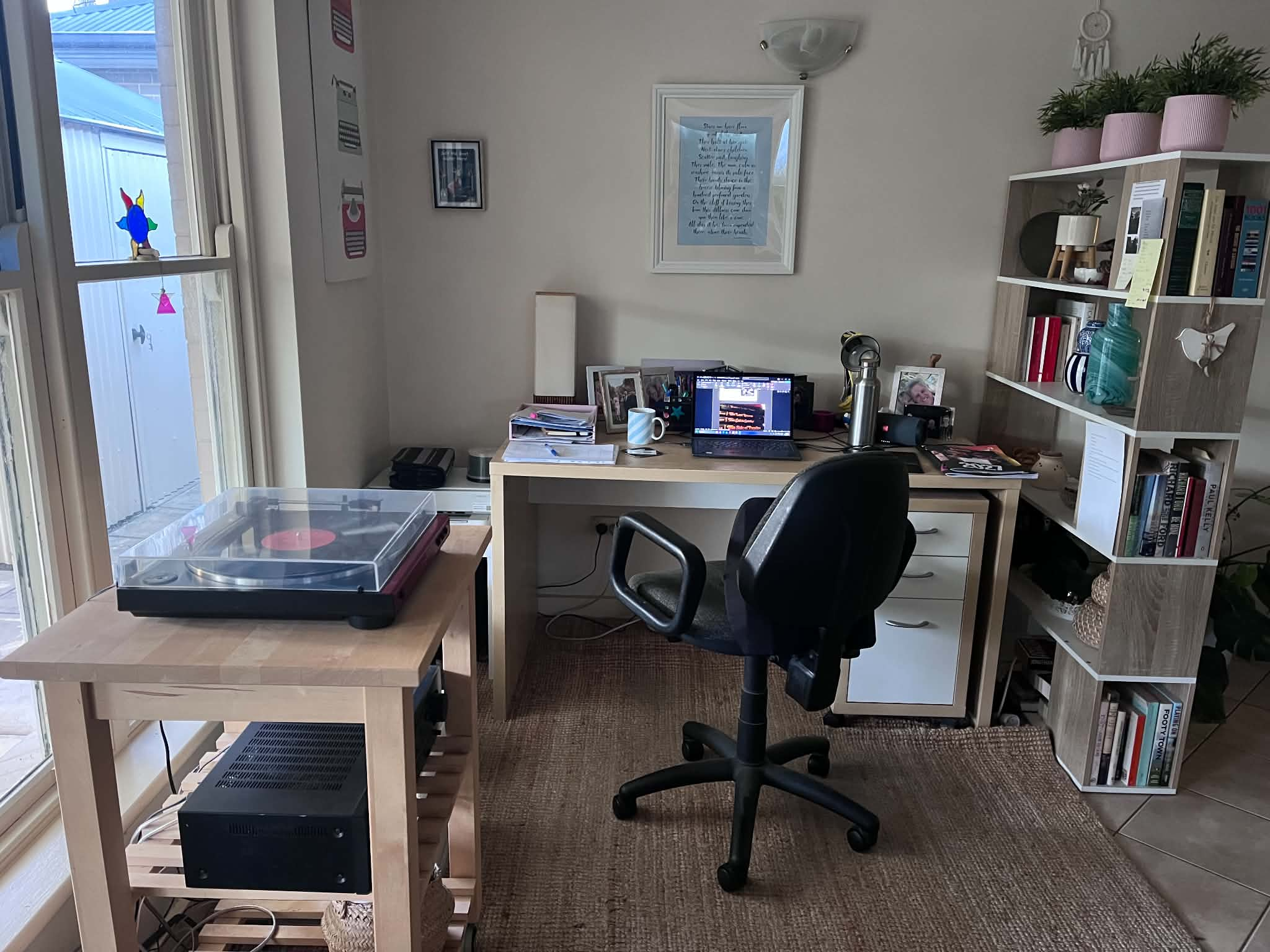
My writing nook sits by our back window. In the pre-dawn quiet, when the house is asleep, I can often be found there, thinking and composing. Sometimes a travellator of morning light glides in over the plants and the hessian rug and the old records.
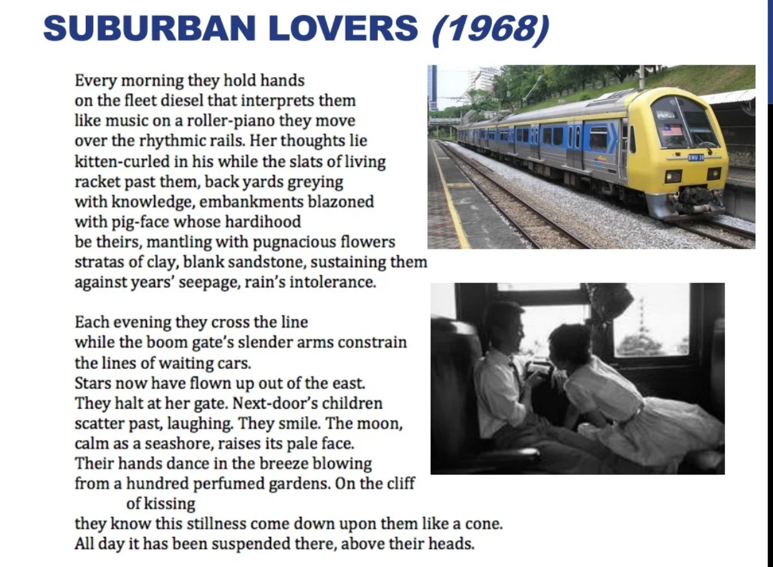
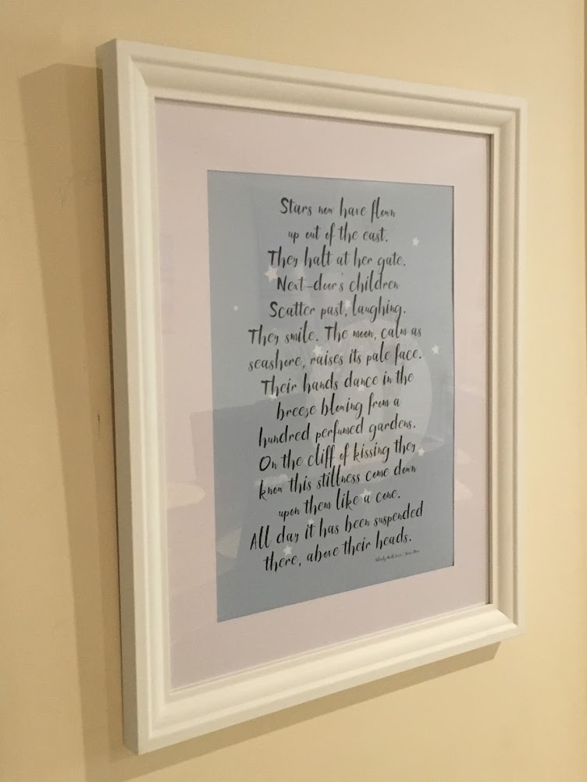
On the wall above the desk hangs a treasured birthday gift from Claire. It’s a large, framed print featuring part of Bruce Dawe’s 1968 poem, ‘Suburban Lovers.’
I love the line
Her thoughts lie kitten-curled in his
and, towards the conclusion,
On the cliff of kissing
But the first line on the artwork is my favourite part of the poem. Possibly my favourite line of any poem.
Stars now have flown up out of the east.
*
Over the millennia, how many have wondered at the night sky? Does anything on this good earth equal the beauty of nocturnal heavens? I suspect not.
From The Great Gatsby
He came out regarding the silver pepper of the stars. Something in his leisurely movements and the secure position of his feet upon the lawn suggested that it was Mr. Gatsby himself, come out to determine what share was his of our local heavens.
And this, Romeo’s uneasy thoughts, mere hours before he first meets Juliet, is among Shakespeare’s finest imagery
I fear, too early: for my mind misgives
Some consequence yet hanging in the stars
Shall bitterly begin his fearful date
Gatsby’s stars are silver pepper, personal possessions he surveys as part of his extravagant dream. Romeo’s stars suggest a bleak fate already in motion, but Dawe does something different. His stars have agency; they fly. And they transform his setting of suburban love.
*
Dawe’s line also serves to contextualise the lovers in a particular time and space, namely their residential street. It places them within the most dramatic theatre imaginable. What grander stage could there be than two lovers, rendered small beneath a gathering sky?
In ‘Stars now have flown up out of the east’ the seductive power lies with the verb. Here, flown is the engine of the idea and generates the narrative energy. It transforms the cosmic far beyond the static or the lamely fixed; the stars aren’t simply just there.
This kinetic thrust matches the vibrancy of new love, where the world is tumbling and kaleidoscopic. For lovers stars are not mere pinpricks in the inky sky; they conjure notions of fleeing joyfully from the world into themselves.
Bruce Dawe’s use of the temporal adverb now invests it with immediacy, placing us right there with the lovers. In my mind the line is cinematic. Now elevates it into a grand pronouncement and surely love is worthy of this artistic splendour.
Pushing back my chair, I look up again at the words on the wall. I feel grateful for the extraordinary gifts of poetry, and for Claire, who chose these for me.