0

What the Photo Knows

Whether it’s a repeated holiday, yearly lunch, or the lame recurring joke I inflict upon Claire, I reckon tradition offers psychological warmth. Do you have your own conventions that you repeat over and over again?

My rituals unfold like this: the deliberate or accidental start, the adhering — however long it endures — and the anticipation for next time, commencing immediately once the event’s done.

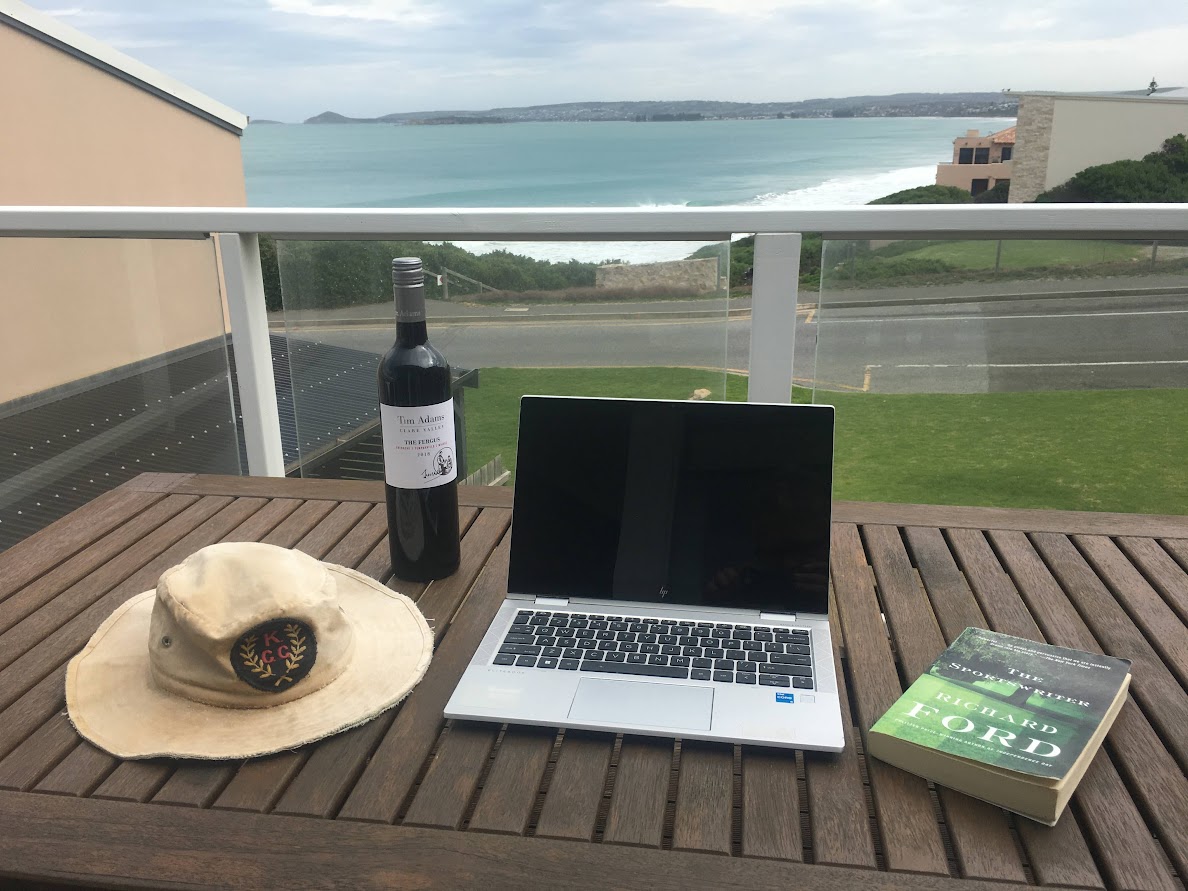
I’ve known Claire since we were thirteen so with much to consider and scribble, head to Port Elliot for a few days to immerse myself. At the beginning of my now biannual writing retreat, I conduct an opening ceremony. This is done by arranging a tableau of items on the townhouse deck’s wooden bench, overlooking Knights Beach. As is our modern way I then take and share a photo, mostly for self-amusement. Like the youngsters.

So, what’s in the photo?

I include my Kapunda Cricket Club hat; the Greg Chappell version (c.1982). It’s my oldest piece of apparel and a life-long companion. It represents youthful frivolity and fellowship. Having been on my head during many summers, I hope it inspires a sunny, grateful tone in my writing. Or at least not a golden duck.

It’s well-worn—perhaps even an heirloom. It’s certainly a talisman from another era—something with personal gravy gravity. Just this week, my eldest, Alex, wore my other beloved cricket cap (Kimba CC) while playing an old, broken-down PE teacher in his Year 12 drama performance. It was a star! Upstaged everyone. So maybe I can pass various cricket items down through the generations. Surely, there are more miserable inheritances. I reckon they’d prefer this to a house.

We can all learn lots from a hat.

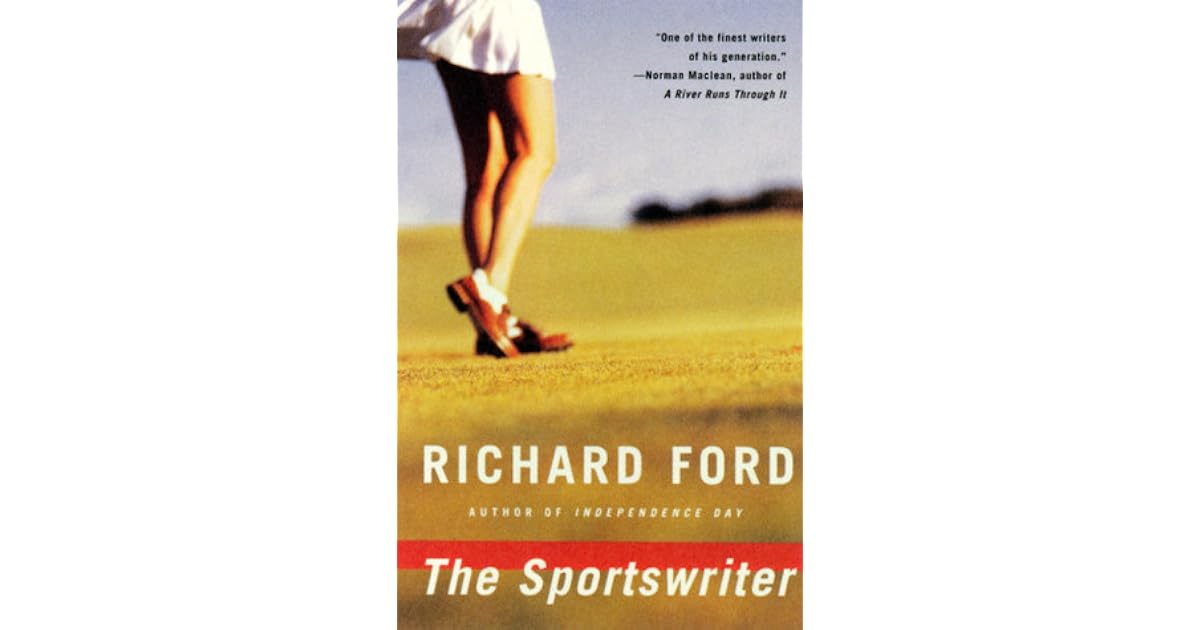
Also in the photo is Richard Ford’s The Sportswriter. Paired with the cricket memorabilia, it suggests a longing for past versions of masculinity—or the shifting seasons of life. The Sportswriter is the first in a series of five stories I’ve read three times across this past decade. It’s about loss, introspection and hope.

As I’m striving for enlightened forms of myself, I want both hat and novel, as personal texts, to be illuminating. To work like flares in the fog.

This writing retreat is for contemplative isolation —not loneliness. I generally seek no company — not even during my late-afternoon pub visits — but see the time as an opportunity to swim in words. Not drowning, waving. My sentences take shape from memory and its attendant considerations. Being beside the glittering, pounding Southern Ocean and adrift in language and reflection is spiritual.

The horizon line on the glass balustrade is enlightening. Did Frank Lloyd Wright once say this? Though it sits near the top third of the photo’s frame, it suggests both elevation and humility—the viewer just above the sea, but not grandly removed from it. I hope this projects gratitude for the occasion and the painterly environment, and encourages the idea that these are combining together, in serene concert.

This tableau proposes that through the laptop and novel, I’m straddling the border between writer and reader. Additionally, I’m fluctuating between labour and leisure and ultimately, thought and the expression of it. My retreat is simultaneously and indistinguishably all of these.

It’s my idea of fun.

Lastly, this is a portrait of myself in retreat— not from life, but toward something. Maybe a particular reckoning with age, or self, or meaning. The animating idea is that we harvest the past to better command our present.

0

Three imaginary beers with my favourite author, Richard Ford

The premise of Independence Day, Richard Ford’s Pulitzer Prize-winning novel, is simple. Frank Bascombe takes his sixteen-year-old son Paul on a road trip to the Baseball Hall of Fame in Cooperstown, New York, which ends badly. In Be Mine, the final instalment of the series, the narrator and his dying middle-aged son embark upon a last road trip, this time to Mt. Rushmore.

My son Alex and I are going on a short road trip to Moana, but our first stop is Writers’ Week as I want him to again witness the merits of a life with conversations and stories. He’s largely agreeable so with little persuasive effort, we’re here to listen to Richard Ford speak about his writing and probably, the characters of Frank and Paul.

While that’s fiction and our experiences are (aspirationally) real, the parallels seem both captivating and unsettling. The thought comes to me again: I’ve delayed a road trip with my sixteen-year-old son to hear a novelist enlarge upon a father and son on two heart-breaking road trips. I trust I’m not tempting any type of cosmic irony to drape its wicked self over this bonding weekend away.

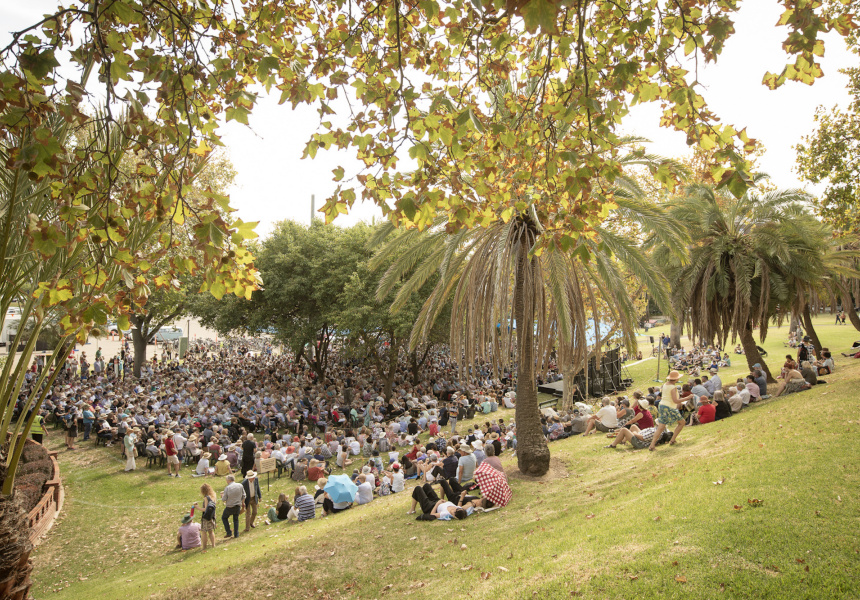
Lunchtime underneath the canopy in the Pioneer Women’s Memorial Garden. That Alex is here with an open mind and open heart, and willing to indulge his dad strikes me as a scarce act of teenaged generosity. I vow to afterwards buy him a coke for the drive. I spot the Footy Almanac’s editor-in-chief Harmsy and we’ve a quick chat.

Richard Ford is interviewed for about forty minutes, and it’s engrossing. Profoundly considered and droll and pleasingly, approaching stern when provoked, he makes references to Virginia Woolf (he’s a fan) and Samuel Beckett (he’s not a fan). I record the discussion on my phone, and Claire (elsewhere unavoidably) and I will listen to it one night soon over a Shiraz as if it’s an unedited podcast.

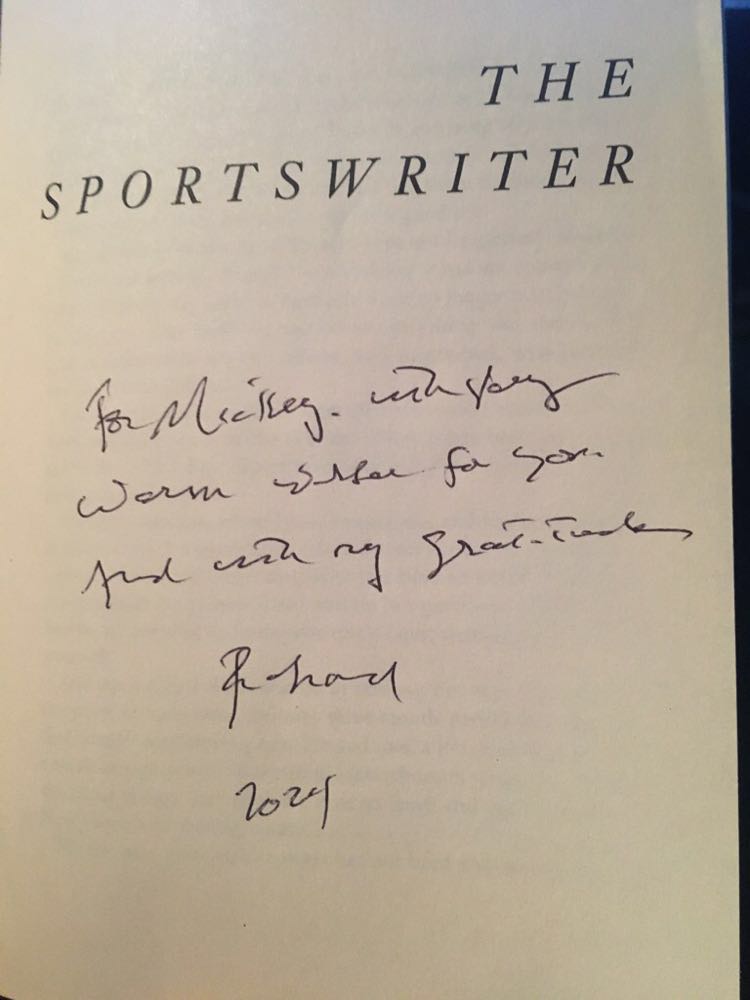
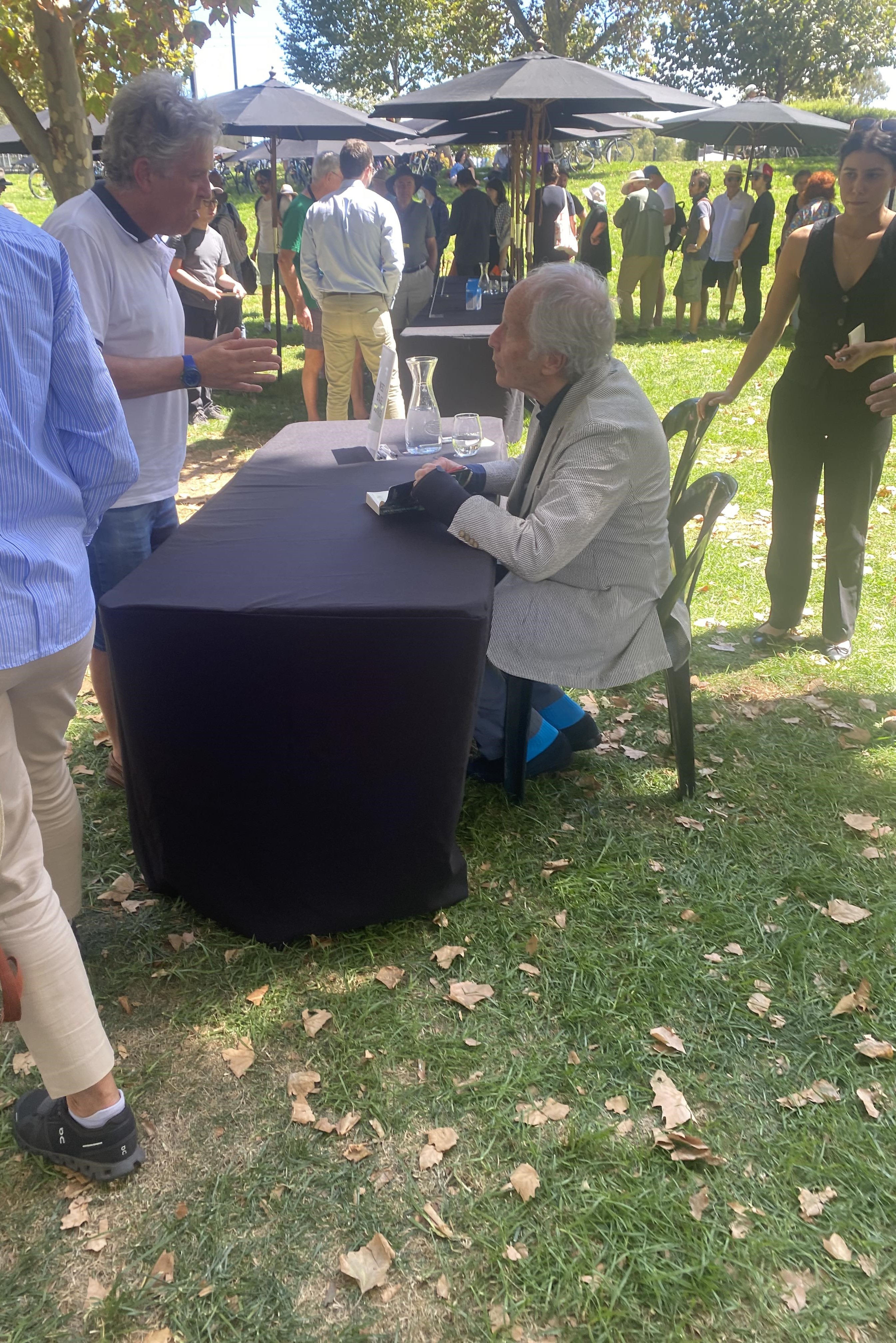
I rarely carry my backpack but do today just in case there’s a book signing and in it’s my beloved copy of The Sportswriter. I’ve not anticipated an autograph since Joel Garner at an Angaston Oval cricket clinic in 1975. He was the biggest human I (or likely the Barossa) had ever seen. Following our applause, the interviewer invites us to form a queue.

Rushing politely, I find myself about a dozen deep in the line. Alex stands with me. He’s a Beatles fan (for which I’m also thankful) and I say, ‘You know that chatting with this writer will be my meeting McCartney moment?’ He nods.

Introducing ourselves, we shake hands. He’s sitting at a table. Eighty-years-old and greyhound fit, Ford has hypnotically blue eyes (matching his socks) reminiscent of the late Bond but alive actor, Daniel Craig. I’ve hazily rehearsed what I say, and the opportunity doesn’t get to me as I imagined it might.   

I begin, ‘I’ve read all the Bascombe novels three times except for the last. But I will. They’ve made such a huge impact upon me, and I’ve happily accepted that I’ll pretty much re-read them constantly from here on in.’

Desperately gushing? Probably.

Richard (we’ve progressed to first names) replies with an affirming chortle, ‘Well, some books can hang around.’

I tell him the story of a Saturday night last autumn just prior to the publication of his final Bascombe novel. I explain, ‘I’d read a preview of the book and was telling my wife Claire about it over a Shiraz (now a theme, I know). And I mentioned the central tragedy of the father and son relationship and the son dying. I then realised that all this represented a loss for me too as a reader, so I shed a few tears.’

Richard continued peering at me fixedly with what I imagine’s a blend of deeply practised writerly attention and unshakeable southern manners. Acknowledging my revelations, he nods.

I’m now in full Sunday confessional mode, for I need this man to know how important his creations are to me. Perhaps I’m epiphanic, emblematically at large in New Jersey, like Frank Bascombe himself. ‘It’s the only time I’ve cried at a book before I’ve read it, such is the power of your storytelling, and the remarkable insights. Thank you for this.’

As he signs the title page, I feel a sense of gifted camaraderie. The waiting line is lengthy, and so I conclude, ‘I’m urging my wife to read your books when we retire. I talk about them so much.’

Richard laughs, ‘You’ll hand her a list!’

I also cackle, ‘I think so.’

He thanks me for coming and again we shake hands. The adage cautions against meeting your heroes but encountering this literary giant has been joyous. Alex and I stroll through the garden’s dappled light and up sundrenched King William Street.

2

Mystery and Murder in Moana

Hurtling past O’Halloran Hill on the Southern Expressway and Alex slides in a Steely Dan CD. Although he views this dad technology with bemusement, he’s also a devotee of nostalgia, and I’m thrilled he can meld irony and joy. Their jazzy and bewitching song, ‘Aja’ fills the cabin, and he mentions, ‘Manny’s dad loves this. He reckons it’s goated.’ I say, ‘It’s great. When I was at uni, I played the cassette in my old Holden going to and from Kapunda.’

Earlier at Writers’ Week we heard my favourite ever novelist, Richard Ford. Alex came to this excursion (I see no other teenagers in the garden) knowing it’s significant to me and this is heartening. Listening to the author of The Sportswriter he made connections to his Year 11 English course, and these were deliberated over the day. We returned to Ford’s point that characters are not people, but instruments of language and I’m convinced this insight puts Alex in front of his ATAR competition, should this still exist, and not a few literature teachers.

When Alex turned thirteen, we spent a night in Hahndorf and then last year on his equivalent birthday Max and I stayed in Aldinga. Claire suggested acknowledging these rites of passage and for this idea I’m most grateful. Each is an occasion to pause and talk and contribute to our future selves in novel surrounds.

Yielding again to my paternal voice I declare, ‘I think we should swim between the flags.’ Alex nods. Late afternoon at Moana beach, it’s chilly in the water but splashing about we promptly acclimatise. Irregular sets of waves march in from the icy Southern Ocean and some hoist themselves up as green walls, while others crumple sullenly about us, all slovenly foam and disagreeability. This burst of activity provides a relaxing physical context on which to hang this sparkling day. We catch a couple each and are rushed shoreward like straw.

For dinner it’s the esplanade’s Deep Blue Café. We’re sat by the windows and the sun slants in, all gilded and promising. It’s a cheerful, assured place with table service and over pepperoni pizza and a fat burger talk moves to Alex’s favourite Beatle, George Harrison. While I’m a McCartney man I see the appeal of the band’s youngest Liverpudlian with his quiet genius and affable ways. I say, ‘How amazing that he was only twenty-six when the Beatles finished.’ Musically, Alex’s unquenchable and sees no generation gaps as his preferences range from Kanye to Miles to 1970’s Japanese avant-garde. Hopefully, this cultural inquisitiveness is a predictor of a hearty, fulfilling life.

Back in our dune-side cabin we speak of the soundtrack for the film Alex’s making and how esteemed directors Wes Anderson and Quentin Tarantino use wistful music in their art. He plays ‘Miserlou’ by Dick Dale, made famous in the Pulp Fiction opening credits. Intrigued by Bob Dylan, he’s shortlisted several of his tunes for their project and asks, ‘Do you think Paul Kelly is the Australian Bob Dylan?’ It’s an essential, probing question.

We then turn on the tele. As he’s about forty years too young for Escape to the Country, I surrender the remote.A Bond film. Skyfall. During a break, I show Alex a clip from The Trip to Spain during which over an entree of scallops Coogan and Brydon battle with their respective Roger Moore impersonations. He laughs at, ‘Come, come, Mr. Bond’ and reckons the next movie introduces Jane Bond.

Before 007 defeats the cyberterrorist in Scotland we hit our cots. Today’s gone well and there’s been lovely moments and also, I hope, fruitful investment.