0

To Alex, as your final day at school looms

Dearest Alex

A summary of your recent achievements includes your continuing excellence in Drama and, just as impressively, in all of your Year 12 subjects; the inspiring trajectory and resilience you’ve shown in your work at Pasta A Go-Go; and the abundance of positive relationships you cultivate. All wonderful — and of these, I’m truly proud.
But what I want to talk about lies deeper than the visible architecture of these accomplishments. I want to get to the heart of things.

Although capable of admirable assertiveness — you can be feisty on occasion as I well know — there’s a gentleness in you that’s noble and principled. And this connects to kindness, which I believe is the most important quality a person can possess and practise. Here we think of The Dalai Lama, who as the head of Tibetan Buddhism, reminds us that, ‘kindness is my religion.’

The first time I became aware of your gift for kindness — and how others saw it — was in Singapore. Do you remember that boy in your class called Mitt? I don’t think he was enrolled for long but his Mum told me more than once how very compassionate you were to him. You’d included him, looked out for him, and made easier the passage of his young, challenging life. I don’t know how any of this came to be but it gladdened me that your role in this appeared to be voluntary and offered unconditionally. I was delighted, and moved, to be the Dad of someone kind. I still am. Wherever they are, I expect his family still remembers you warmly.
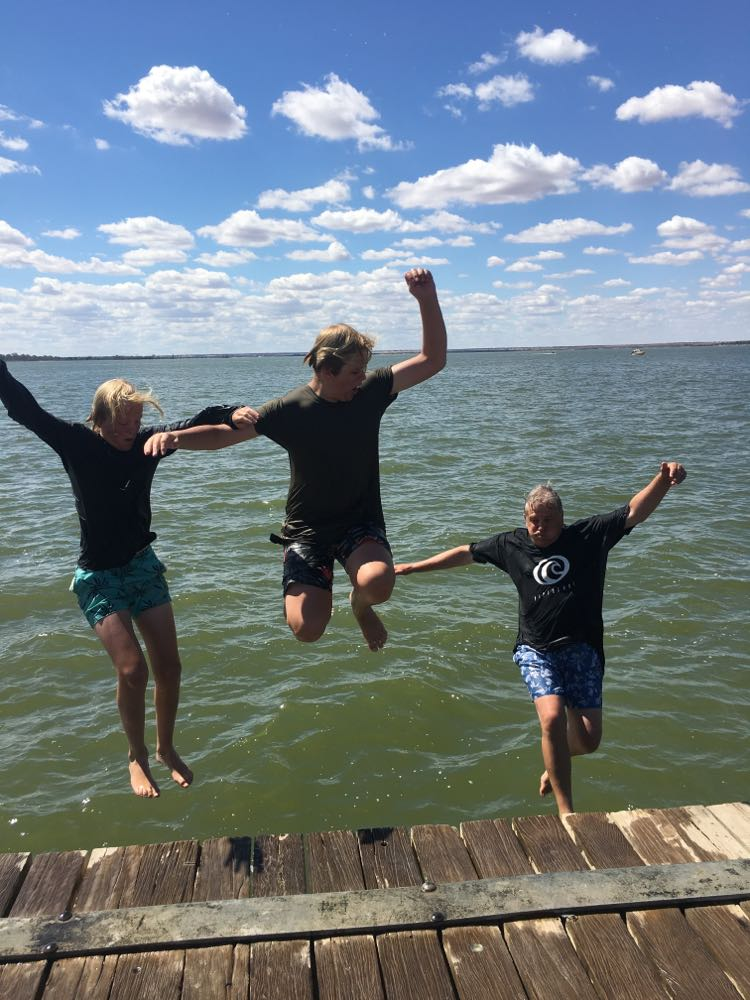
I also admire your appetite for experiences and your receptiveness towards possibility. For me, a chief joy in going somewhere with you and Max is in witnessing your engagement and the subsequent meaning you then collect from travelling. Agreeably curious, you’re inclined towards an open-hearted life.

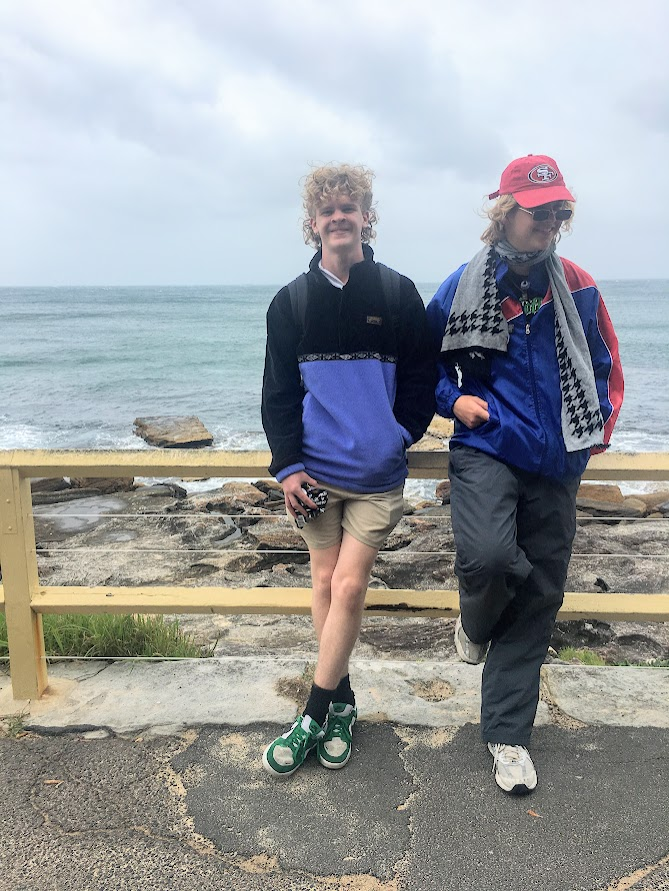
This was especially evident in Sydney on our coastal walk from Bondi to Coogee. Striding along, chatting with your brother, taking in that rugged sprawl of ocean and sky, clicking some photos — I loved being both a participant and witness to it. And how you do so in a good-natured way is, I hope, a predictor of a happy and fulfilling life.

Another favourite memory: the Lake Lap. I loved how quickly you turned our late afternoon drives around Lake Bonney into a ritual — and how you not only relished the anticipation and the loop itself, but also the talk that followed. You’ve always had the rare ability to find joy and connection in life’s simple rhythms.

Being a dad involves a lot of watching — scanning for all kinds of clues. Happily, in you, I’ve mostly seen encouraging ones.
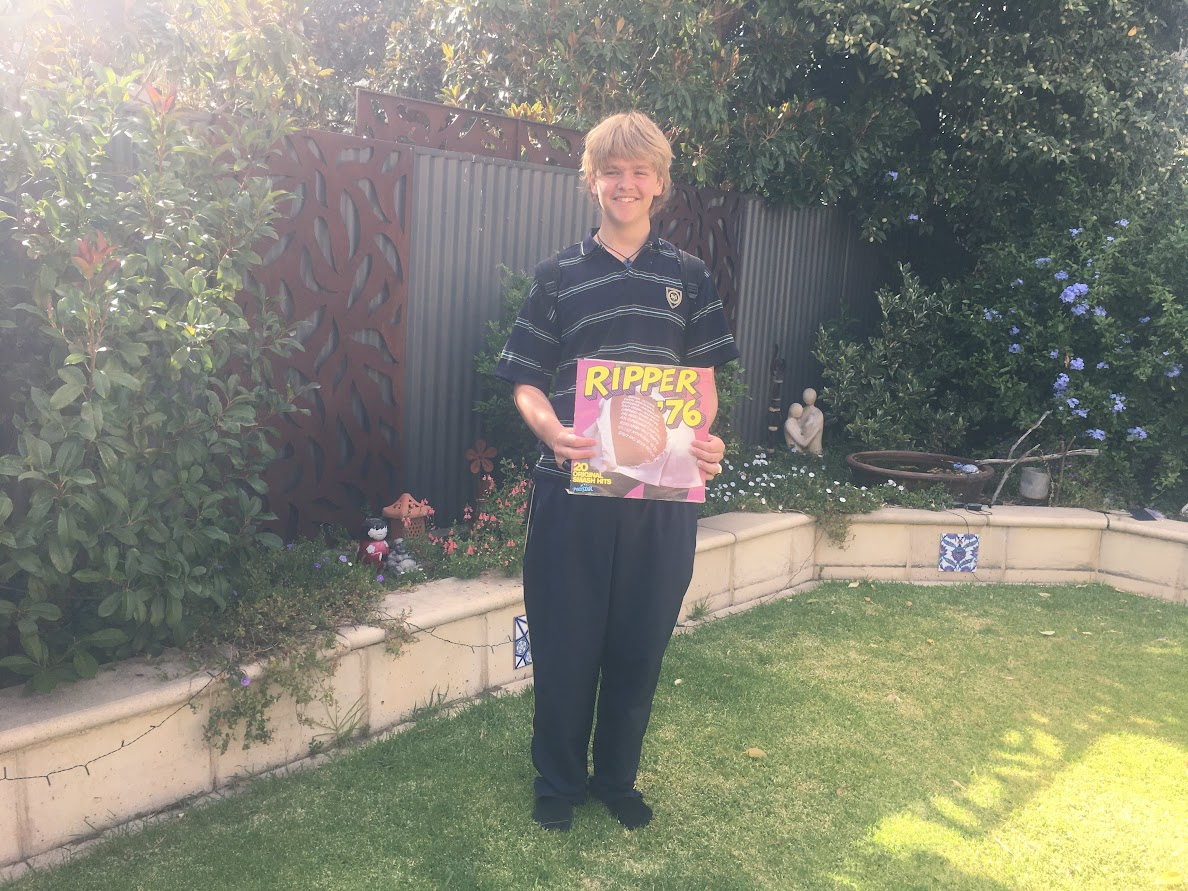
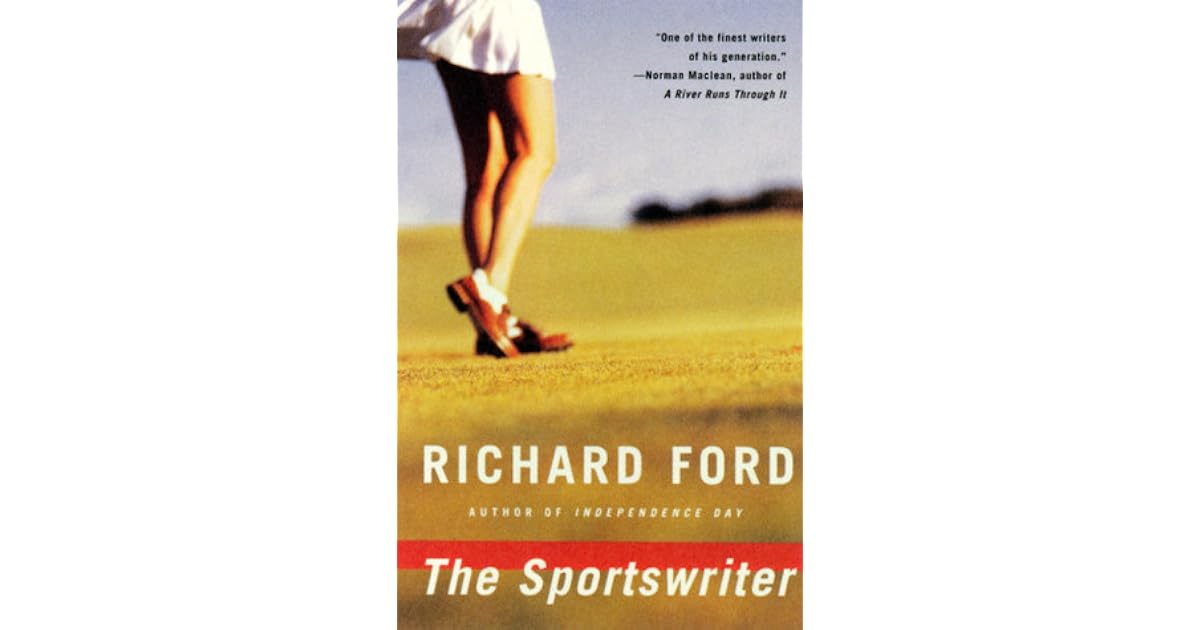
Last March, I made you a spontaneous offer: let’s go to Adelaide Writers’ Week to hear my favourite writer, Richard Ford, and then drive down to Moana — swim, eat at a café, and later, back in our cabin, watch a Bond film. Of course, you accepted with your usual, wholehearted enthusiasm. You bought into this with immediate unreservedness and listened to the literary discussion with patience and real interest. This passage from The Sportswriter — one of Ford’s best — speaks to perspective, hopefulness, and curiosity

I read somewhere it is psychologically beneficial to stand near things greater and more powerful than you yourself, so as to dwarf yourself (and your piddlyass bothers) by comparison. To do so, the writer said, released the spirit from its everyday moorings, and accounted for why Montanans and Sherpas, who live near daunting mountains, aren’t much at complaining or nettlesome introspection. He was writing about better “uses” to be made of skyscrapers, and if you ask me the guy was right on the money. All alone now beside the humming train cars, I actually do feel my moorings slacken, and I will say it again, perhaps for the last time: there is mystery everywhere, even in a vulgar, urine-scented, suburban depot such as this. You have only to let yourself in for it. You can never know what’s coming next. Always there is the chance it will be — miraculous to say — something you want.  

I was delighted — you’ve always been someone who brings me frequent delight — when unprovoked, you announced that you’d like to go to this year’s Adelaide Writers’ Week to hear one of our idols:  Shaun Micallef. I was impressed that you’d investigated the programme and this showed a healthy disposition towards a cultured life and learning. It also showed me that your curiosity now moves under its own steam.
For a number of seasons watching Mad As Hell on Wednesday nights was our ritual. I loved how ready you were to laugh at it and appreciate its absurd satire. It was tremendous fun and I was thrilled by your quick sense of humour — a necessity as well as a reliable forecaster of future success. We’d roar at Sir Bobo Gargle (release the Kraken!), gasp at Draymella Burt, and laugh at the cigar-chomping Darius Horsham who’d always finish with, ‘Don’t be an economic girly-man.’ There was a quiet magic and symmetry in us meeting and obtaining autographs from both Ford and Micallef. I hope you and I can continue to attend Adelaide Writers’ Week.

This letter is also meant to reflect on ambition and integrity — and I know you have an abundance of both. They’ll serve you well in this life which needs them. I remember your first day at school in Singapore — the morning heat rising, the skyscrapers shimmering — when you climbed aboard that little bus bound for Orchard Road and the great unknown. Your journey had begun.

These brief years have vanished, your final school day looms, and you’re about to go into the world. In my quiet moments, I used to wonder about the future and how you would look, sound, and be as an adult. Now, suddenly, that future is here. You stand at its edge — optimistic, imaginative, kind. I know you’ll be all types of magnificent.

Off you go.

Love always,

Dad

2

Three Moments of Beauty

Trundling along the murky esplanade, dawn was hiding behind the Adelaide Hills. To the west the ocean lay as if it too were asleep making me the sole speck of animated life. Some mornings are crisp and the world’s in sharp, razored focus. Today, the sky was fuddled and uncertain.

A distant, descending plane hung silently; its light frozen against the darkness like a lamp. Looming over the seascape, the burning, off-white moon threatened as if in an old horror film. The ghostly glow illuminated my plodding path and connected night and day.

Considering nature’s ravenous fire and the minuteness of human life, I kept running.

*

As is my happy habit I’m eternally re-reading The Sportswriter series and am on the final novel. The prose is often startling in its magnificence and makes me inwardly gasp. I forever find literary diamonds in these and Be Mine offers this scene at Mt. Rushmore:

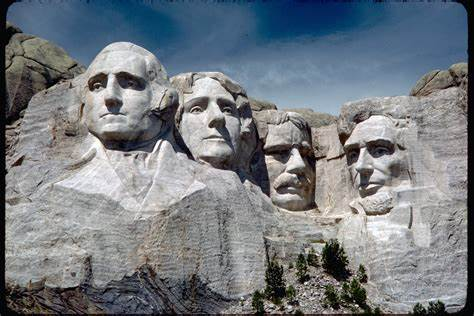
Just now, as if propelled from the mountain itself, a helicopter- tiny- materializes down out of the marbled heavens, high-tailed and insect-like, and for all of us along the viewing wall, soundless. It passes on string through the grainy air, tilts to starboard, seems for a moment to pause, then slides away, changes course and makes a dreamlike pass close to the presidential physiognomies, comes about again, tail swaying, makes a pass the other way, so that whoever’s inside get the fullest view up close.

The author, Richard Ford, has a rare sensitivity to the splendor and joy of words.

*

Originating in Athens, Georgia, REM was primarily a guitar band, and courtesy of singer Michael Stipe’s lyrics, they presented the world opaquely. Their jangling sounds were, for example, sometimes accompanied by a mandolin and sometimes by arena-sized grungy bombast, but REM’s most gorgeous track is one of which acclaimed keyboardists, Elton John and Ben Folds would be proud. ‘Nightswimming’ is a piano delight, penned and played by the band’s polymath bassist, Mike Mills. The circular motif is at once fragile but also driven, serenely.

It features on the album Automatic for the People, a meditative, melancholy record that gave opportune shape and meaning to my West Coast life when it was released three decades’ back. ‘Nightswimming’ is a prayer to nostalgia, friendship, and summer’s end. Spending time with the song this week, its embrace is that of a dear, old companion.

Nightswimming, remembering that night
September’s coming soon
I’m pining for the moon
And what if there were two
Side by side in orbit around the fairest sun?

0

Three imaginary beers with my favourite author, Richard Ford

The premise of Independence Day, Richard Ford’s Pulitzer Prize-winning novel, is simple. Frank Bascombe takes his sixteen-year-old son Paul on a road trip to the Baseball Hall of Fame in Cooperstown, New York, which ends badly. In Be Mine, the final instalment of the series, the narrator and his dying middle-aged son embark upon a last road trip, this time to Mt. Rushmore.

My son Alex and I are going on a short road trip to Moana, but our first stop is Writers’ Week as I want him to again witness the merits of a life with conversations and stories. He’s largely agreeable so with little persuasive effort, we’re here to listen to Richard Ford speak about his writing and probably, the characters of Frank and Paul.

While that’s fiction and our experiences are (aspirationally) real, the parallels seem both captivating and unsettling. The thought comes to me again: I’ve delayed a road trip with my sixteen-year-old son to hear a novelist enlarge upon a father and son on two heart-breaking road trips. I trust I’m not tempting any type of cosmic irony to drape its wicked self over this bonding weekend away.

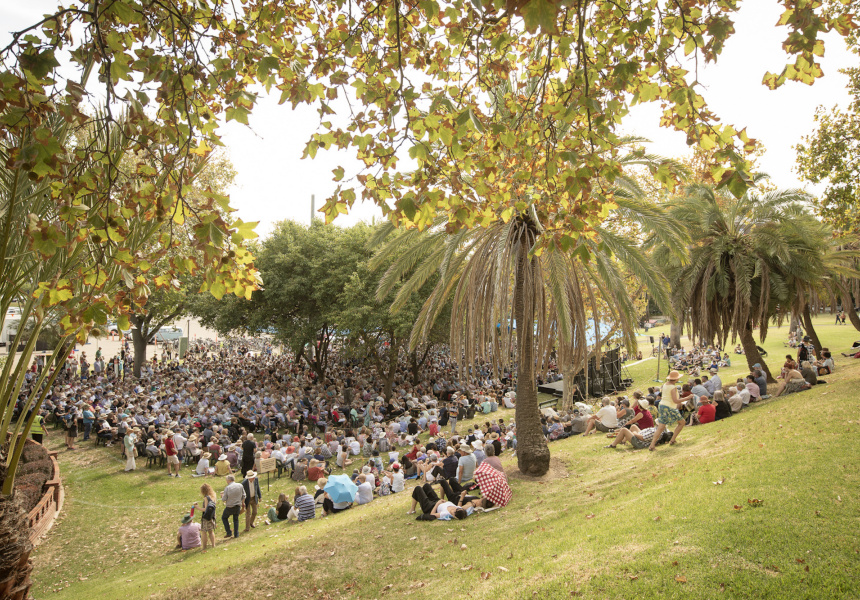
Lunchtime underneath the canopy in the Pioneer Women’s Memorial Garden. That Alex is here with an open mind and open heart, and willing to indulge his dad strikes me as a scarce act of teenaged generosity. I vow to afterwards buy him a coke for the drive. I spot the Footy Almanac’s editor-in-chief Harmsy and we’ve a quick chat.

Richard Ford is interviewed for about forty minutes, and it’s engrossing. Profoundly considered and droll and pleasingly, approaching stern when provoked, he makes references to Virginia Woolf (he’s a fan) and Samuel Beckett (he’s not a fan). I record the discussion on my phone, and Claire (elsewhere unavoidably) and I will listen to it one night soon over a Shiraz as if it’s an unedited podcast.

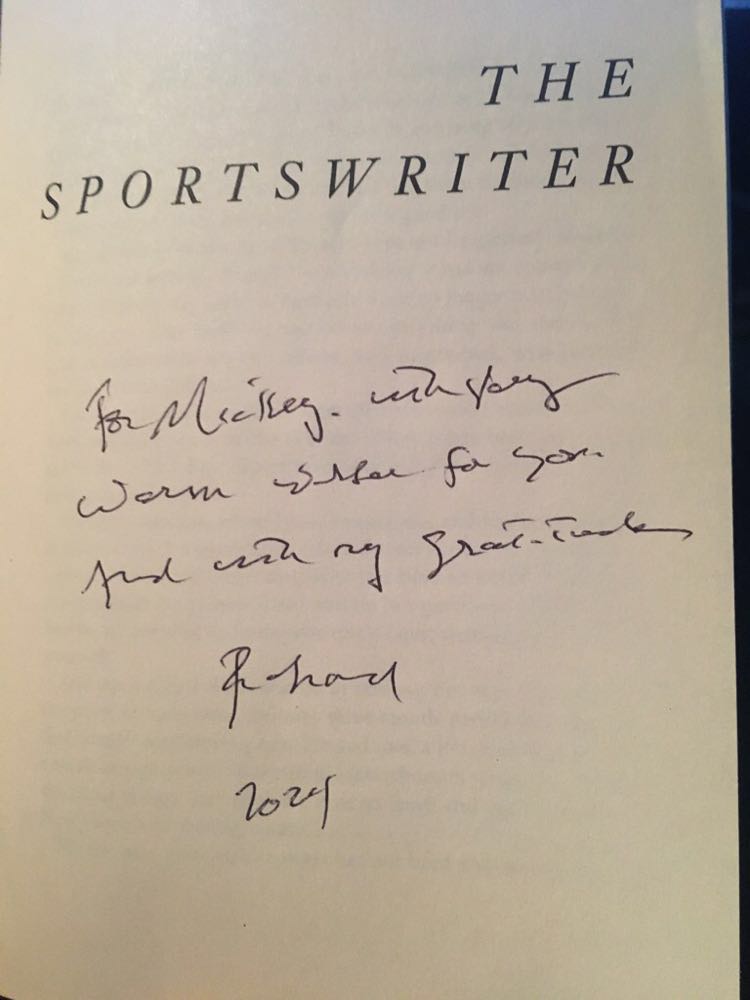
I rarely carry my backpack but do today just in case there’s a book signing and in it’s my beloved copy of The Sportswriter. I’ve not anticipated an autograph since Joel Garner at an Angaston Oval cricket clinic in 1975. He was the biggest human I (or likely the Barossa) had ever seen. Following our applause, the interviewer invites us to form a queue.

Rushing politely, I find myself about a dozen deep in the line. Alex stands with me. He’s a Beatles fan (for which I’m also thankful) and I say, ‘You know that chatting with this writer will be my meeting McCartney moment?’ He nods.

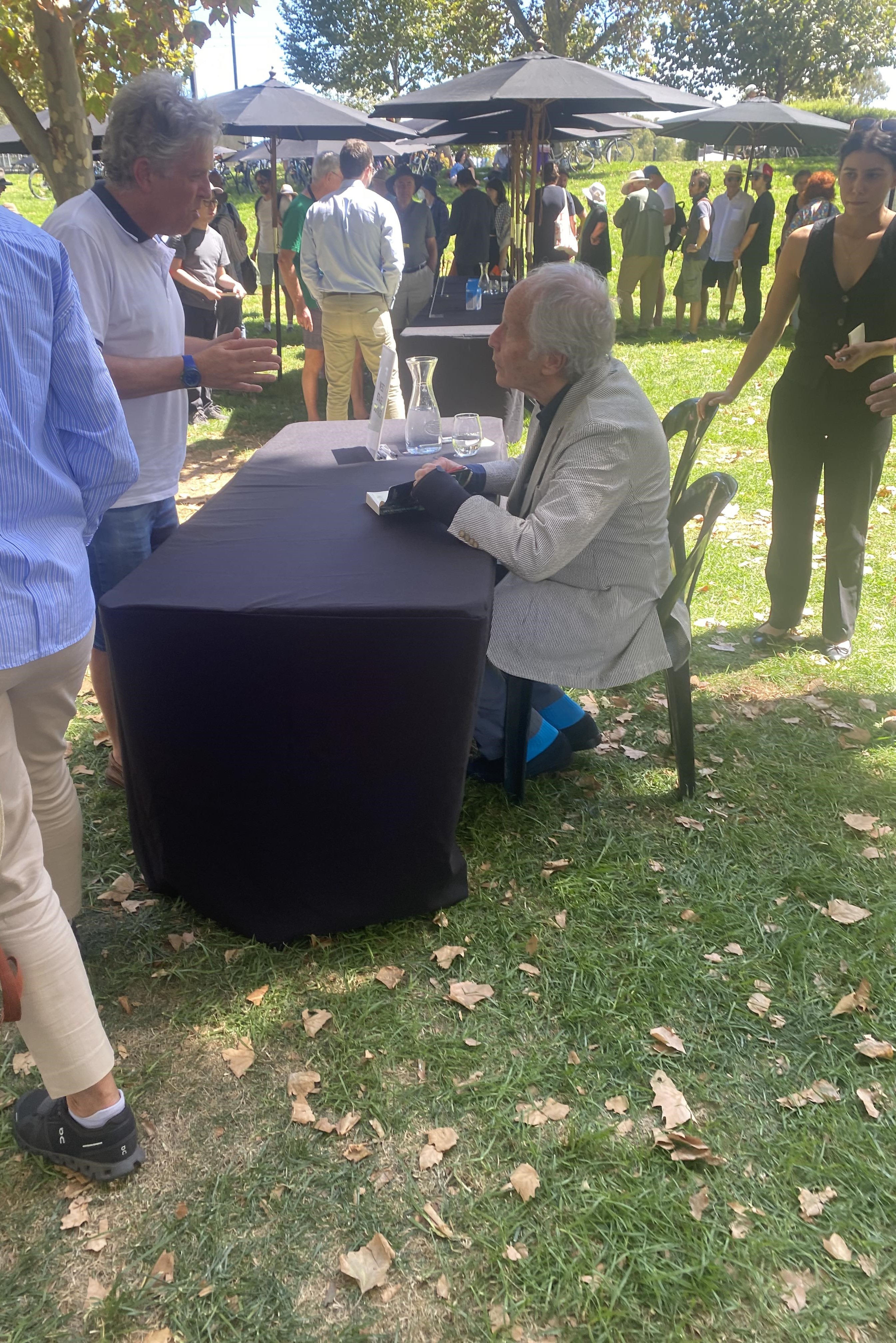
Introducing ourselves, we shake hands. He’s sitting at a table. Eighty-years-old and greyhound fit, Ford has hypnotically blue eyes (matching his socks) reminiscent of the late Bond but alive actor, Daniel Craig. I’ve hazily rehearsed what I say, and the opportunity doesn’t get to me as I imagined it might.   

I begin, ‘I’ve read all the Bascombe novels three times except for the last. But I will. They’ve made such a huge impact upon me, and I’ve happily accepted that I’ll pretty much re-read them constantly from here on in.’

Desperately gushing? Probably.

Richard (we’ve progressed to first names) replies with an affirming chortle, ‘Well, some books can hang around.’

I tell him the story of a Saturday night last autumn just prior to the publication of his final Bascombe novel. I explain, ‘I’d read a preview of the book and was telling my wife Claire about it over a Shiraz (now a theme, I know). And I mentioned the central tragedy of the father and son relationship and the son dying. I then realised that all this represented a loss for me too as a reader, so I shed a few tears.’

Richard continued peering at me fixedly with what I imagine’s a blend of deeply practised writerly attention and unshakeable southern manners. Acknowledging my revelations, he nods.

I’m now in full Sunday confessional mode, for I need this man to know how important his creations are to me. Perhaps I’m epiphanic, emblematically at large in New Jersey, like Frank Bascombe himself. ‘It’s the only time I’ve cried at a book before I’ve read it, such is the power of your storytelling, and the remarkable insights. Thank you for this.’

As he signs the title page, I feel a sense of gifted camaraderie. The waiting line is lengthy, and so I conclude, ‘I’m urging my wife to read your books when we retire. I talk about them so much.’

Richard laughs, ‘You’ll hand her a list!’

I also cackle, ‘I think so.’

He thanks me for coming and again we shake hands. The adage cautions against meeting your heroes but encountering this literary giant has been joyous. Alex and I stroll through the garden’s dappled light and up sundrenched King William Street.

2

Mystery and Murder in Moana

Hurtling past O’Halloran Hill on the Southern Expressway and Alex slides in a Steely Dan CD. Although he views this dad technology with bemusement, he’s also a devotee of nostalgia, and I’m thrilled he can meld irony and joy. Their jazzy and bewitching song, ‘Aja’ fills the cabin, and he mentions, ‘Manny’s dad loves this. He reckons it’s goated.’ I say, ‘It’s great. When I was at uni, I played the cassette in my old Holden going to and from Kapunda.’

Earlier at Writers’ Week we heard my favourite ever novelist, Richard Ford. Alex came to this excursion (I see no other teenagers in the garden) knowing it’s significant to me and this is heartening. Listening to the author of The Sportswriter he made connections to his Year 11 English course, and these were deliberated over the day. We returned to Ford’s point that characters are not people, but instruments of language and I’m convinced this insight puts Alex in front of his ATAR competition, should this still exist, and not a few literature teachers.

When Alex turned thirteen, we spent a night in Hahndorf and then last year on his equivalent birthday Max and I stayed in Aldinga. Claire suggested acknowledging these rites of passage and for this idea I’m most grateful. Each is an occasion to pause and talk and contribute to our future selves in novel surrounds.

Yielding again to my paternal voice I declare, ‘I think we should swim between the flags.’ Alex nods. Late afternoon at Moana beach, it’s chilly in the water but splashing about we promptly acclimatise. Irregular sets of waves march in from the icy Southern Ocean and some hoist themselves up as green walls, while others crumple sullenly about us, all slovenly foam and disagreeability. This burst of activity provides a relaxing physical context on which to hang this sparkling day. We catch a couple each and are rushed shoreward like straw.

For dinner it’s the esplanade’s Deep Blue Café. We’re sat by the windows and the sun slants in, all gilded and promising. It’s a cheerful, assured place with table service and over pepperoni pizza and a fat burger talk moves to Alex’s favourite Beatle, George Harrison. While I’m a McCartney man I see the appeal of the band’s youngest Liverpudlian with his quiet genius and affable ways. I say, ‘How amazing that he was only twenty-six when the Beatles finished.’ Musically, Alex’s unquenchable and sees no generation gaps as his preferences range from Kanye to Miles to 1970’s Japanese avant-garde. Hopefully, this cultural inquisitiveness is a predictor of a hearty, fulfilling life.

Back in our dune-side cabin we speak of the soundtrack for the film Alex’s making and how esteemed directors Wes Anderson and Quentin Tarantino use wistful music in their art. He plays ‘Miserlou’ by Dick Dale, made famous in the Pulp Fiction opening credits. Intrigued by Bob Dylan, he’s shortlisted several of his tunes for their project and asks, ‘Do you think Paul Kelly is the Australian Bob Dylan?’ It’s an essential, probing question.

We then turn on the tele. As he’s about forty years too young for Escape to the Country, I surrender the remote.A Bond film. Skyfall. During a break, I show Alex a clip from The Trip to Spain during which over an entree of scallops Coogan and Brydon battle with their respective Roger Moore impersonations. He laughs at, ‘Come, come, Mr. Bond’ and reckons the next movie introduces Jane Bond.

Before 007 defeats the cyberterrorist in Scotland we hit our cots. Today’s gone well and there’s been lovely moments and also, I hope, fruitful investment.

0

A Cheery Cemetery Story

In her eternally breezy way Claire says, ‘The cemetery’s such an interesting place to go.’

She doesn’t know what’s about to happen and I feel a pocket-sized spasm of panic.

I veer into the left lane so we can go to the first destination of our Mystery Day. Feeling happy with my insightful planning, I’m taking us to the West Terrace cemetery, and Mystery Day works best when there’s an intact sense of mystery, which of course, is now entirely vanished given my wife’s casual, prophetic remark about her continuing curiosity surrounding graveyards.

I’ve never been to this cemetery and knowing Claire’s interest in the stories of everyday people we select a self-guided walking tour that points us toward headstones offering tragic and triumphant narratives.

I open the website on my phone and off we stroll.

How many of us are at our very best on Saturdays, just before lunch? Our afternoon stretches out with the enthralling promise of carefree hours as we make our way through the city and punctuate the day with conversations that leap joyously between our past, present, and future.

The cemetery sprawls in every direction so it truly is a necropolis. Pleasingly, we’re alone. A bustling memorial park serves nobody well.

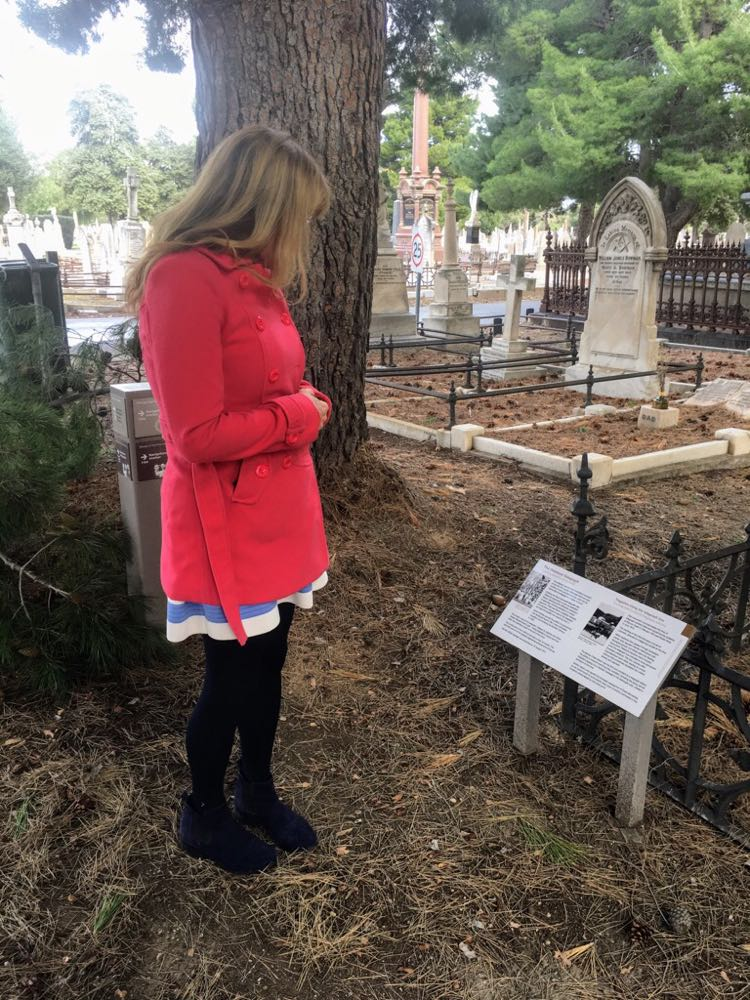
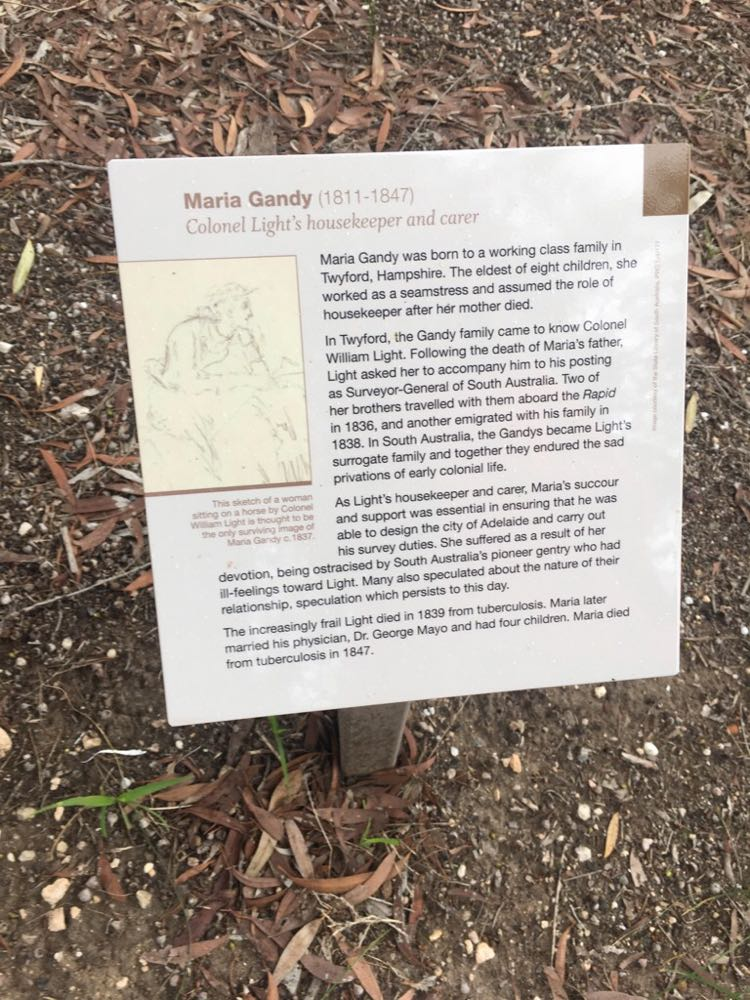
The digital map directs us to Road 2 Path 10 Site 26 West. It’s a modest grave for Maria Gandy. The plaque is informative. Born in Hampshire she became known to Colonel William Light. Claire and I then recall Year 12 Australian History at Kapunda High.

I’ve a vague notion. ‘Didn’t he spend time in prison? Remember Mr. Krips telling us about him?’

Claire nods as the rain begins. Has there ever been a film scene in a cemetery or a funeral and it doesn’t rain? ‘No, it wasn’t Colonel Light. It was someone else. Light surveyed the city. You’re thinking of the guy who had the idea for the colony of South Australia.’

This is why Claire achieved a perfect 100 in matric Australian History, and I didn’t.

I now have a belated flash. ‘That’s right. Wakefield. Edward Gibbon Wakefield.’

Maria Gandy accompanied Colonel Light to Adelaide, became his housekeeper and carer and, according to the day’s idle talk, much more than this. After Light’s death she married his physician George Mayo and had four children with him before tuberculosis claimed her. She was thirty-six.

There we were beneath the swirling July rain nattering about South Australia’s colonial past and our high school days right in the heart of our warm and incasing present. Cemeteries also quietly guide our gratitude and sharpen our sense of the fragile now. There were narratives all around, but mostly I thought of ours.

I’ve nearly finished reading Be Mine, the final release in my favourite series, the Frank Bascombe novels by Richard Ford. The storyteller takes his dying son on a sad, harrowing, and strangely humorous road trip to Mt. Rushmore and mindful of life’s delicacy, more than once mentions how, ‘there is no was, there is only is.’

*

Scurrying back through the drizzle to the car Claire suddenly announces, ‘Look.’ She then gives a happy sigh. We stop.

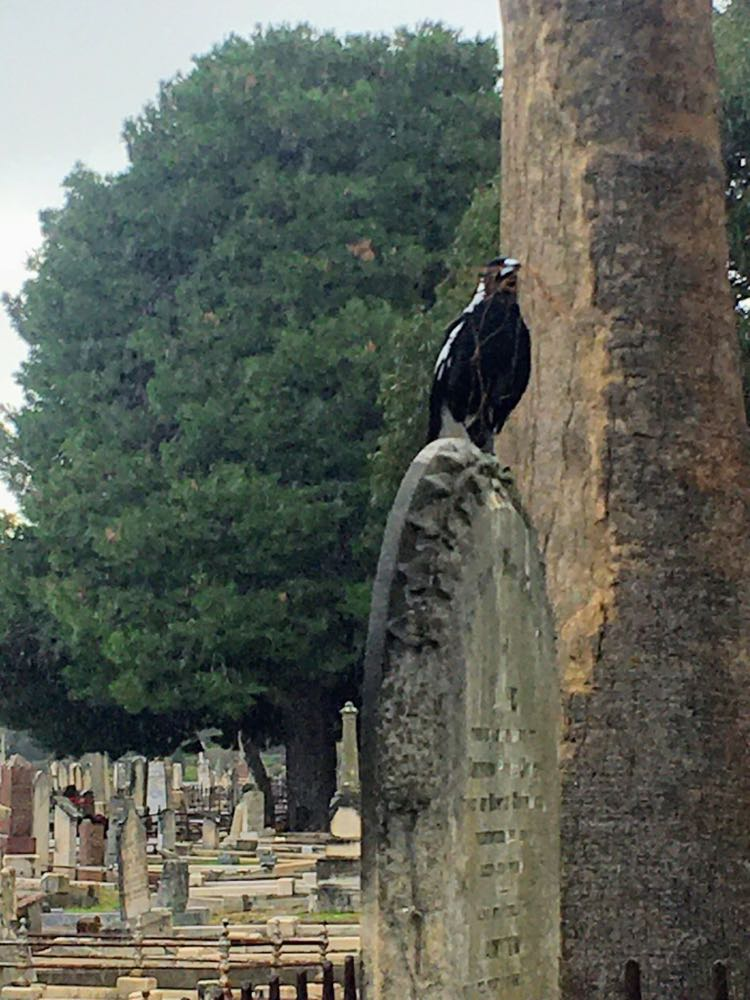
On top of a grey headstone is Claire’s favourite bird, a magpie. From its mouth hangs a clump of twiggy, leafy matter. He’s proud to show us his familial efforts. He’s building a nest.

And so, in this vast acreage dedicated to the city’s dead we see a sign of eager, irrepressible life and nature’s renewal. Holding hands, we walk on, and the rain slows.