3

Sydney, 1985: Catch the Bus to Bondi

Dramatis personae:

Chrisso- ridiculously smart, dry of wit
Woodsy- upbeat, an enthusiast
Trev- funny, beyond naughty
Swanny- convivial, night-owl
Paul- plain speaker, machine-gun laugh
Stephen- our host, gentle
Brendan- enigmatic, fatigued by the stupidity of others
Trish- quick to laugh, dramatic
Claire- cute but required explanations for most jokes
The Gem- Stephen’s bright green Holden Gemini
Your correspondent- always first asleep, silly.

*

The girl pointed at Chrisso but spoke to all four of us.

‘Are youse from England?’ We’d done a 900k day and here we were in West Wylong (pop – 2,500 odd) and some girls thought we were British. She was barefoot and continued. ‘Youse have got an accent.’ Someone, probably Trev said, ‘No, we’re from South Australia. Kapunda.’ He may have then added, ‘Where they have hot cars.’

We were a long way from home and here was an indicator of how wide the world was.

Idle chat with locals done, we decamped to our onsite caravan. I doubt there was a TV, radio, or home cinema. So, in that time-honoured way we inhaled pizza — likely ham and pineapple; mercifully eggplant hadn’t been invented — and the national beer which is now rarer than rocking-horse droppings; Foster’s Lager. I’m trusting it was from the Royal Hotel on Main Street (true; look it up).

We sat at the tiny table, and I’m quite sure, said things silly and then things sillier. This was best illustrated by Woodsy saying to me, ‘Your face is red,’ and catching his reflection in a mirror, then asking, ‘Aren’t I?’

Aside from the Foster’s Lager, on the trek to Sydney there was only one injury. As he slept in the back, Woodsy had a bad dream (doubtless being naked in a public place), threw out his leg, and cut his toe on the driver’s seat assembly. Ouch.

The next morning, we went through Bathurst, and all took turns driving the famous circuit. Speaking of hot cars from Kapunda, we were in Woodsy’s Datsun 180B. Bathurst was far steeper than imagined — TV tends to flatten these things — and as we whizzed along Conrod Straight at 140k, the little Japanese vehicle must’ve sounded like an oversized, determined mosquito.

*

The following tradition began, I think, in Katoomba.
We called into Macca’s, had lunch (two all-beef patties, special sauce, lettuce, cheese, pickles…), and leaping up from our red chairs, were keen to finish that final leg, and motor to Stephen’s. We were Sydney bound!

I pushed open the door when Trev announced suddenly, ‘I’ll just get a nut sundae.’ And so he did. We watched him eat it. Every deliberate mouthful. Some would say Trev ate it with a Zen approach. Some would say it was excruciating. It was a scene from a future Tarantino movie where characters chat in pop culture but strangely menacing ways before most are messily dispatched.

Regardless, once Trev eventually finished, the little plastic container could’ve been immediately and hygienically reused. Not a speck of sundae remained. Across the trip and indeed, the years, when we were halfway back to the car after a meal, we’d often hear Trev declare, ‘I’ll just get a nut sundae!’

Having passed the medical following his toe injury, Woodsy was ruled fit to drive. Back behind the wheel and with Sydney tantalisingly close, he chirped, ‘Let’s get there!’ and out into the honking traffic lurched the little Datsun. From the rear Chrisso murmured, in that distinctive Chrisso way, ‘Yeah, let’s get there.’

*

As a Kapunda kid, Bondi was among the most thrilling places I’d been.

The boisterous, teeming crowds on that striking, sandy crescent! With my saltwater swimming mostly restricted to gentle Glenelg and Horseshoe Bay, the Pacific was intimidating. The surf was enormous with towering waves rolling in and dumping us, metronomically. We bodysurfed and it was exhilarating but we were all dragged into a brutal rip.

Late afternoon with the marching breakers crashing on our heads, Trev and I tried to stand there and ignore the swell, mock-heroically. Amusing ourselves tremendously, we had the most mundane conversation as the azure walls collapsed onto us.

‘Yeah, I reckon Weetbix is the best breakfast cereal,’ I said, just as a massive wave nearly swept us off our feet.

‘Don’t forget CoCo Pops®,’ Trev added, as another tonne of blue-green water dumped onto us.

‘Cornflakes are overrated,’ I evaluated, fighting for balance.
*

It was also the summer of Midnight Oil.

They were everywhere and our unofficial soundtrack to Sydney. One of their early songs, ‘Section 5 (Bus to Bondi)’ became an anthem for us. In the carpark overlooking Bondi Beach we all heaved ourselves at Stephen’s silent, rolling car — known with great affection as the Gem; short for Gemini — in a theatrical, utterly unnecessary attempt to jump the engine into ‘life.’ Onlookers gawked as we performed our dramatic tribute, the song blasting from the open windows

Push start that car tomorrow
I’ll take it to the tip yard
We’ll leave it as a metal wreck
For cats to sleep
Then I’ll catch the bus to Bondi
Swim the beach and wonder
Who can wear the fashion when
The place is oh so hot

It felt like a scene from an arthouse film — but possibly not. Back then, we excelled at amusing ourselves.

*

Stephen lived in a high-rise apartment in the inner suburb of Drummoyne.

He’d been joined by our somewhat mysterious friend, Brendan, who’d abandoned his law degree and moved to the Harbour City. During our stay Brendan introduced us to British post-punk band, The The and such is this legacy that Swanny and I are seeing them later this month.
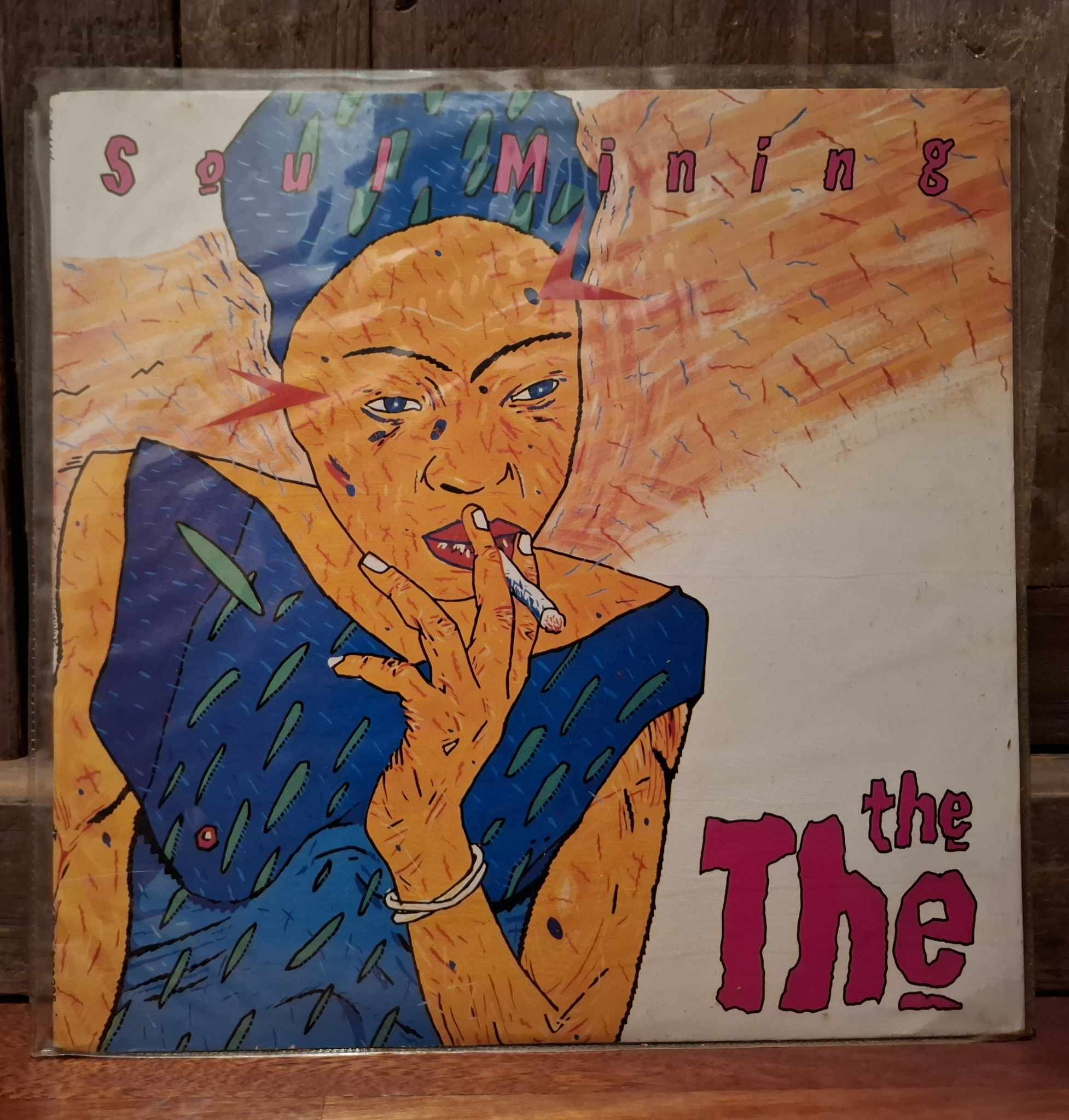
Like Hugh Hefner or The Dude, he seemed incessantly attired in his dressing gown, and with his nocturnal leanings, translucent face, and Morrissey-like melancholy, Brendan was more Manchester than Manly Beach. He was the most cynical person I’d met. He was already fatigued and world-weary. He was twenty.

Meanwhile, we grew a green mountain of empty beer cans in Stephen’s lounge room. It was an especially adolescent achievement, and the ring pulls from the cans were strung into lengthy chains and festooned about the flat like bogan Christmas tinsel. I guess they were. These were christened by Swanny, I think, as ‘Ring Mans.’

*

Sydney was an exciting but principally alien city. Unlike Adelaide, it was lush and brazen, seductive and dangerous. There was water everywhere. The Western Distributor — a bold, elevated boulevard — led us in and out of the city, curving dramatically above the buildings below.

On a sharp bend in Darling Harbour, a huge advertising billboard swam into cinematic view. And every time it demanded a theatrical response. It warned us with a menacing image straight from the film, Arachnophobia, of the threat we needed to take with extreme seriousness: Funnel web spiders! This was worrying. Home, we had friendly huntsmen. Our routine soon became that when the large, hairy arthropod came into startling sight — all beady, black eyes and dripping fangs — we’d shriek in chorus, led, of course, by Trev!

EEEEEEKKKKK! FUNNIES!
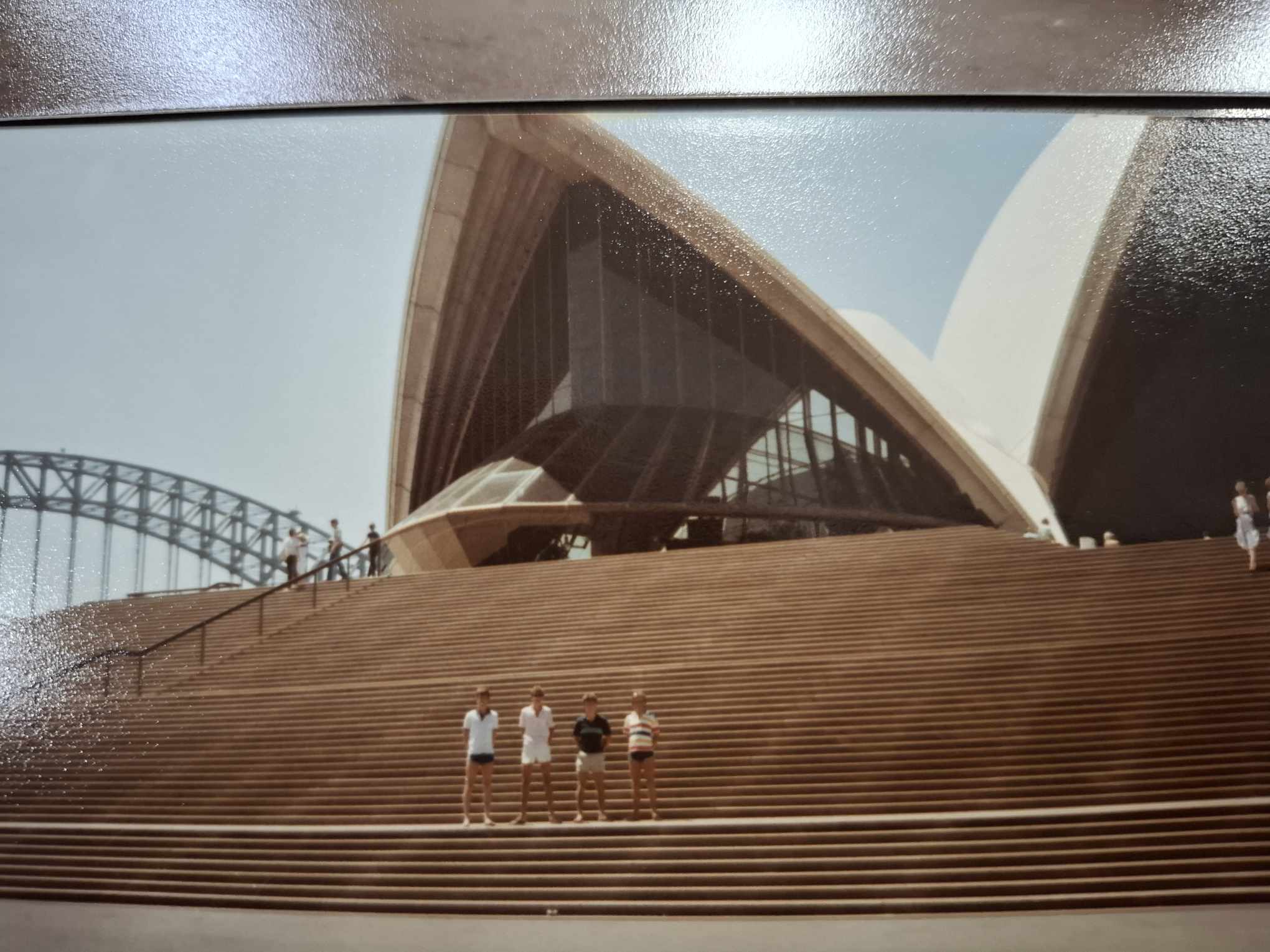
Paul and Swanny drove from Kapunda in Paul’s VK Brock Commodore. When they arrived, we were out, so with no mobile phones — those only existed on The Jetsons — they exercised their only option: wait in the grounds of the apartment block. With a slab of VB but no ice. They braved the beer. Back then simmering lager held no fears.

Now, there were six of us crammed into Stephen’s compact lounge room. We flopped about, foul boys in our now-illegal adidas shorts which revealed many things about us and none of them were healthy. The trapped odour must’ve been monstrous with lager, pizza, humidity, and ripe adolescence. Belated thanks, dear Stephen for your tolerance.

But, gee, it was fun.

Among the many delights was playing cricket in the hot and plush surrounds at Drummoyne Oval. Bare-footed and juggling beers, we batted and bowled and laughed, surrounded by all that sky and all that cobalt water. The details of the cricket don’t matter, but I recall the white picket fence, our lazy bliss, and VB in naval quantities.

It was another golden moment, and these stretched across that endless summer. 

Part 2 coming soon!

2

Novel Review: Lament (a Ned Kelly story)

When Muhammed Ali opened the 1996 Olympics in Atlanta a commentator remarked that the former boxer was, ‘the most famous man in the world’, and safely on my beanbag in front of the box I scoffed at the notion before later deciding it was likely true. His deeds, both noble and otherwise, continue to generate their own global momentum, and with a mythic, omnipresent station in Australian life Ned Kelly makes a similar, albeit local, impact.

While I’m not a Kelly obsessive some contextual experiences include Sidney Nolan’s Ned Kelly series which I first encountered at high school. These were intriguing and disturbing, and I knew there must be substantial reasons for the artist to complete 27 paintings on this subject although at seventeen I was naïve to their deeper reverberations. Around the turn of the millennium I read Peter Carey’s True History of the Kelly Gang and found it hypnotic, and I’m a huge admirer of Midnight Oil’s, ‘If Ned Kelly Was King’ (from their superb Place Without a Postcard) with its speculation on how our most iconic bushranger would handle modern multinationals.

With this literary and artistic baggage in hand I read Nicole Kelly’s Lament in this luxurious week between Christmas and New Year (this year’s ham intake has been down, oddly but healthily), and given the holiday freedom from tyrannical bosses that some of us are enjoying I’m sure Ned would’ve approved of my recreation. ‘Lament’ is a compelling text and the plot races along with the thrill and constant danger of an escaping bushranger’s stallion. The novel’s a balance of exterior action and, as a first person narrative, Ned’s acutely human interior. He’s also a charismatic leader of his gang

‘Pistols out, lads. Be ready for any bolters. We can’t have work out yet.’ I carry one in each hand. ‘We’re takin’ no prisoners. So give ‘em a warning and if there’s any movement, ye cut ‘em down, ye hear me?’ (Page 79)

The central purpose of ‘Lament’ is to wonder what might’ve happened if the Kelly Gang escaped Glenrowan, and this speculative fiction imagines how they hope to live once their bushranging days are done. So sympathetically, so abundantly does Nicole Kelly chaperone us into the private world of the central character that despite his inexcusable violence I found myself cheering for Ned, and his gang’s escape into happy, anonymous lives. As our narrator he observes carefully and with a native, attractive intellect

I warm to the two of them and it is her nickname, affectionately called, that confirms the great luck of my acquaintance with the couple. She’s another beautiful and formidable Kate within my life now. I think of my sister, who has always had my back. These people, so familiar and yet so strange, circling in my life. Surely, if I rely on a Kate, I am in good hands. (Page 146)

In this reimagining the character of Ettie gives symbolic and real agency to those frequently marginalised in this story of the marginalised. While it remains Ned’s version of events Ettie and other females like Anne Jones, the Glenrowan Inn proprietor, are given due prominence in this retelling and this is a strength of the writing.

Ned Kelly looms over our collective consciousness because, rightly or wrongly, he’s become the national embodiment of the themes of injustice and inevitable doom, but also love for family which have found forceful expression in this publication. With our sense of what it means to be Australian under heightened and probing scrutiny, this novel is most timely. I enjoyed my excursion into this historical domain of dark and light, and the chance to reflect upon a man who remains emblematic of much of our national identity.

Simultaneously of its time, but also distinctly modern in authorial attitude and style, Nicole Kelly has given us a new and welcome perspective on this infamous life.

Lament can be  purchased by contacting www.hawkeyebooks.com.au/lament/  or you can visit www.hawkeyebooks.com.au/nicole-kelly to contact her.

0

Jazz and me

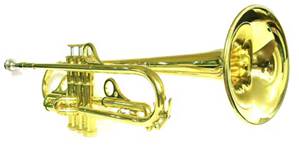
trumpet

My own musical career was fleeting. When I was eight I learnt guitar until the teacher moved, and Kapunda being a country town, that was it. I remember strumming in that measured, funereal way to “Banks of the Ohio” and being uneasy at having to sing

 I plunged a knife into her breast

 And told her she was going to rest

 She cried “Oh Willy, don’t murder me

 I’m not prepared for eternity.”

*

While at university I discovered Vince Jones, jazz vocalist and trumpeter and his album For All Colours. Its sophistication reminds me of Frank Sinatra, and “Straighten Up and Fly Right” stars a rowdy Wilbur Wilde sax solo. I then knew that the saxophone could be as cool as a guitar.

The first concert I attended was Midnight Oil at Memorial Drive (Julia) and Vince Jones at Le Rox in Light Square was the second. Standing with other students in the airless dark I note that Vince wears a suit and tie, and in contrast to Peter Garrett’s frenzied jumping the jazz ensemble appears uninterested.

But, I was in. Jones himself once said, “I want to be inside every atom of every note.” Over the next decade I saw him often, usually in the Piano Bar of the Festival Theatre. And then, I don’t know why, he stopped regularly touring Adelaide.

*

One wet Saturday in England I heard a BBC Radio 4 documentary on John Coltrane’s A Love Supreme, so immediately jogged up the high street to a HMV and bought it for ten quid. And as rain and sleet lashed our windows, its saxophonic hymn brightened the crushing winter sky.

The storms of Coltrane’s personal life thundered in counterpoint to the spiritual still of A Love Supreme, and within two years of its 1965 release he would be dead.

*

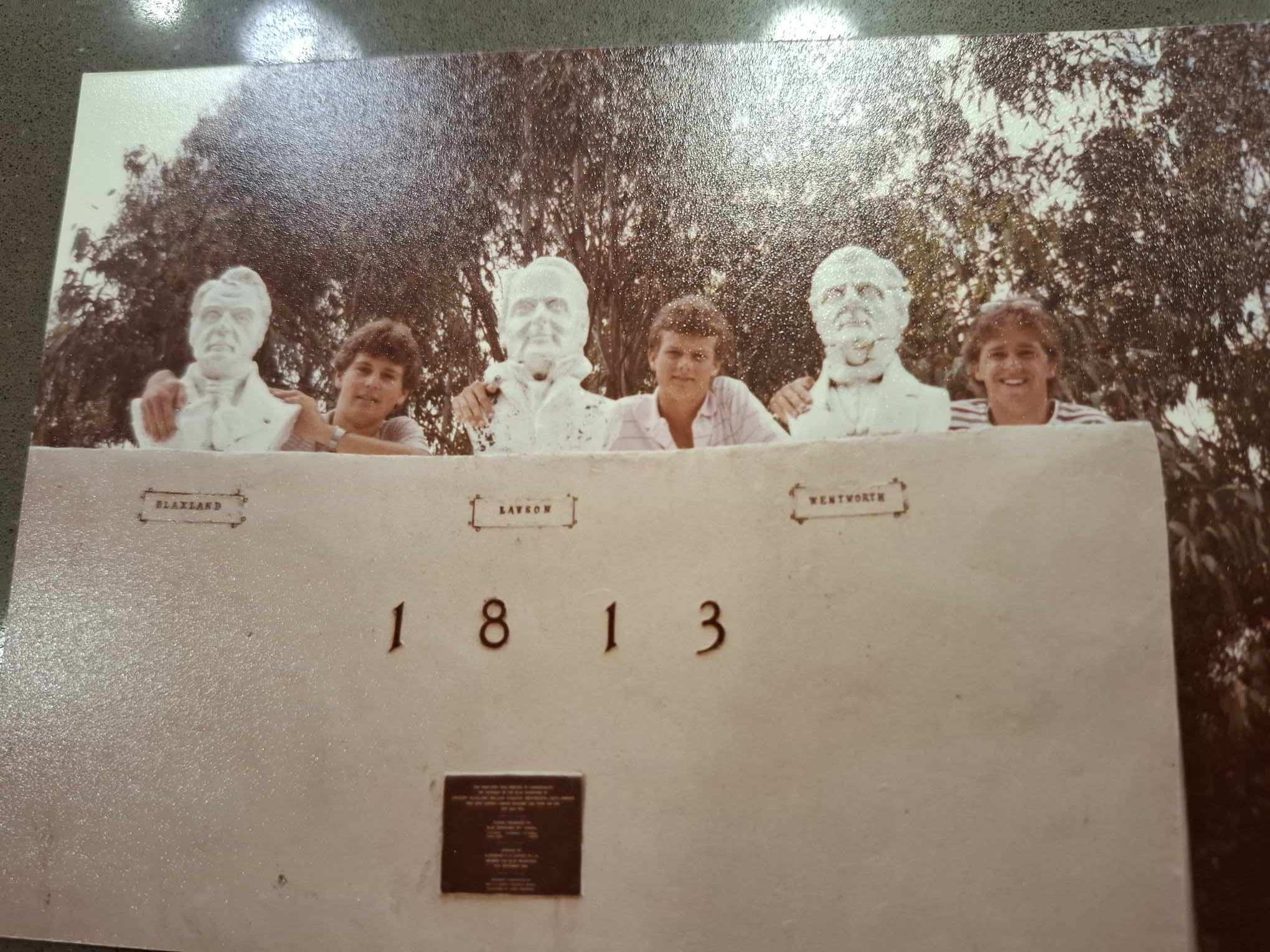
One distant summer some Kapunda boys and I drove across the Hay Plains to spend a fortnight in Sydney with an air-traffic controller mate. He was among rude privilege in a Drummoyne apartment. We parked Woodsy’s Datsun 180B on the street. As we’d daily exit the Western Distributor there was a looming billboard with a huge fanged spider warning us to watch out for funnel-webs. We did. I still do.

Besides playing cricket by the Parramatta River, and body-surfing at Bondi and Curl Curl I hauled everyone to The Basement in Circular Quay. I was a fan of Live at the Basement on ABC Saturday evenings, and Galapagos Duck was the house band, and Don Burrows and James Morrison were often guests. I can’t tell you who played that sultry evening, but I liked it. The wooden tables, the ambiance, the enveloping melodies.

*

Among the more brilliant things about living in England is chucking a sickie, and knicking off at dawn on a Friday to another country. Easyjet flew us from Luton to Cologne so we could explore their Christmas markets.

The city is largely unremarkable save for its compelling cathedral; the Dom. With twin spires ascending to 515 feet, it was the world’s tallest building until the Washington Monument. Similarly astonishing is that in 1162 Emperor Barbarossa secured for the Dom the authenticated remains of the Three Magi. We drifted about its vast interior and leaving, presented some Euros to a nodding priest.

Papa Joe’s En Streckstrump is Cologne’s premier jazz venue so we find our seats early for Sun Lane Ltd, an ensemble from nearby Aachen. Slender waitresses disperse wine and beer. We can scarcely see through the stinging blue smoke. The punters surge in. Bespectacled, ample musicians squash timorously onto the picnic-rug stage. The pianist looks like a sheet has been stretched about a lumpy, wobbling refrigerator.

Standing unnaturally close, an energetic type suddenly clambers up and straddles a nearby stair- and me, as if he and I are posing for a gay fire-fighters’ calendar. I am startled. Forgetting that Europeans are often bilingual I blurt, ‘What the fuck are you doing?’

As the gentleman dismounts the step, and my groin, I mutter, “Thank you.”

“You’re welcome!” my intimate twitters.

“Say what you really want!” adds his friend. We don’t see them again.

The traditional jazz is brisk and zestful, and spilling out onto the Rhine’s bank Nina’s “99 Red Balloons” bursts from a heaving club. Lingering at the chilly Alter Markt, the wife sips a concluding gluhwein; the spiced, red wine and we confirm that Cologne jazz goes pretty well.

*

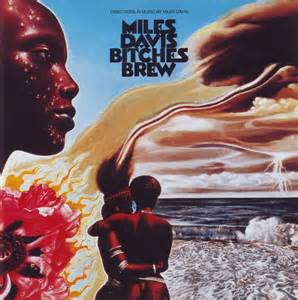
It was nearly an hour commute across Adelaide’s most miserable suburbs; Snowtown territory. After many months afternoon radio had become tiresome; especially when the old-age surrender of organising life around news bulletins, those ridiculous frissons began, so I fought this inevitability, by committing to Miles Davis. I submerged myself in Bitches Brew.

Menacing and swirling about you like a phantasm, the music is a sexual maelstrom, and its recording began within hours of Hendrix and his pyrotechnics at Woodstock. Was it jazz? Was it rock? Was it funk? I wasn’t sure, but I again knew that the trumpet could be as cool as a guitar.

Despite its ominous cadences and rhythms, I found it transportive and therapeutic as I’d make my way home to the beach. Bitches Brew is vital to jazz-fusion, and while the opening two tracks are rightly celebrated, “Miles Runs the Voodoo Down” on side four is the standout. I still love getting lost in this 94-minute ocean.

*

This story begins with Mum and Dad’s record collection. Don’t they all? In among the usual 1970’s fodder of Ripper ’76 and the Best of Abba there’s some curios, and in the not on 5AD or 5KA and certainly not on Countdown section are some jazz albums, one a Dixieland compilation. I don’t especially recall any of the tracks, but these made significant impacts upon my psychology and vocabulary.

The jazz evoked widescreen travel and the speaking of strange tongues and moving about in dazzling metropolises that one day I might be permitted to visit. It was New York and Chicago and New Orleans. It wasn’t that I was trapped in dusty little Kapunda, it was that a planet was out there, and Mum and Dad’s jazz records captured these teeming, thrilling possibilities.

They still do.

BB