0

Radiohead and me

headphones

I was a tourist, but also trying to be a detective. We ambled over the bridge and looked down at the Thames, making its quiet way towards London. Naught. In the town centre St Nicolas’ Church surrendered no clues, and I wondered what influence the former MG car plant had with its suggestions of status and privilege.

Abingdon is six miles from Oxford, and we were there visiting friends. It’s the birthplace of Radiohead. Following the requisite pub lunch, we took a stroll. While our hosts knew nothing of the town’s famous sons I attempted some connections. Any signs in the market square that could further decode “Karma Police?” Would Abingdon Gaol’s architecture enlighten my reading of “Pyramid Song?”

Of course, my thinking assumed that art is chiefly autobiographical. We often want it to be. But, was mine a ridiculous quest? Having worked for a decade near Kensington in Adelaide’s east, I’d not gained much geographical insight into Paul Kelly’s back catalogue.

However, it was also a sensible quest, for music is more meaningful if we can somehow make its birthplace enchanted. Landscapes might matter, even for Radiohead, whose existential songs are devoid of setting.

Driving home from Oxfordshire I acknowledge that from a wholly unremarkable village, a remarkable band emerged, as we’d hope.

*

Indeed, it was commuting up Kensington Road past Norwood into Paul Kelly territory (I taught two of his nieces) when on Triple J I first heard “Paranoid Android.” After, Mikey Robbins and The Sandman linked it to Hitchhiker’s Guide to the Galaxy, which I devoured as a teenager. References to Douglas Adams’ cult novel are infused across the record.

I was spellbound, apprehended by the song’s circuitous, multi-part structure that also announced Radiohead’s dominant theme: the horrors of modern life. They continue to explore this with gallows humour and compelling soundscapes. Perfect through headphones.

That afternoon I bought OK Computer.

*

Arriving in Singapore my wife and I bought smartphones, onto which I uploaded my CDs. I then rambled about that hot, teeming islet, accompanied by some beloved collections, which both isolated me and somehow welded me to those equatorial streets. Now, back in Australia when I put on Exile on Main St, Belle and Sebastian’s Tigermilk or Vampire Weekend’s Contra I’m walking through the thick heat at Robertson Quay.

Great albums present discovery and rediscovery as every track enjoys periods of personal high rotation in which it becomes the favourite. I like these evolutions in my explorations of an artist.

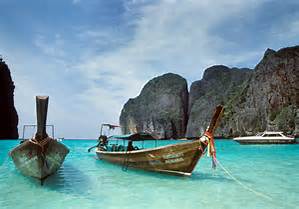
A few Octobers ago, around our Phuket pool, I played OK Computer. Horizontal on my sun lounge I became enamoured with the final song. The waltz-tempo and cathartic rhythm of “The Tourist” deliver a telling full stop to this record of splendor and portent. After a ferocious guitar solo, it closes with a single note struck on a triangle. Superb.

I also recall eating pizza by that pool when a neighbouring family leapt up and scattered. An emerald snake had appeared at their feet, and startled, it slipped hastily over the pavers and climbed a palm. We peered up at it, hanging green on a frond, fifteen feet up like reptilian tinsel. Could a frightened snake populate a Radiohead song? Feature as a symbol of contemporary alienation? Don’t be silly, I thought. Have another heat, the Chang’s getting to you.

*

In a distant Port Pirie winter, we lit a backyard fire and sat about it in black coats. The grey smoke phantomed around and through us while we drank shiraz and stories and music. It’s the year PJ Harvey released Stories from the City, Stories from the Sea, but what I remember from this evening is Radiohead’s second offering, The Bends.

I remember “Fake Plastic Trees” and aside from the consciously tautological title I love the soaring atmospherics of the guitars, although now Radiohead hasn’t been a guitar band for two decades. Throughout, Thom Yorke invests his vocals with vulnerability, and this matches the dread and defiance of the lyrics.

The next afternoon I bought The Bends.

*

1993 in a forgotten pub. “So, what do you think about that British band Radiohead? You know that song, “Creep?”

I replied. “Not much. Reckon they’re a one-hit wonder.”

Oops, but who can tell? Radiohead’s debut, Pablo Honey is a turgid mess, and proposes no capacity. However, about this time a blonde leg-spinner took 1/150 in his first Test…

*

I subscribe to Spotify because I love suddenly recollecting a song, and then hearing it within seconds. As a streaming service, it’s brilliant. Nevertheless, it worries me how the artists receive miniscule royalties, such that their yearly dividend may only allow a band to huddle naked around a can of flat Fanta.

I do prefer an artefact: vinyl, CD, even a cassette, but visiting the local K-Mart with three discs by the execrable Pink isn’t worth the free parking. I remind myself to buy a turntable, and return to that dear friend, the past.

A Moon Shaped Pool is the record Radiohead promised to make all millennium. When everyone’s asleep I sometimes listen to “The Numbers” through headphones. Concerning climate change, this track exquisitely combines fragile metaphor, guitar, and tinkling piano. I love a string section, and the urgent stabs accentuate the ominous themes.

Given their form I hope Radiohead continues. The menace of neo- conservativism and dire planetary health means there’s still much for them to ponder.

hitchhiker

0

Dylan Thomas and the mammalian protuberance

sixpence

Reaching the front of the Moon and Sixpence’s meals queue, the portly Welshman announced, ‘A chicken tikka and half ’n’ half.’

Half ’n’ half? I wondered. What could that mean? What could you have with Indian in half ‘n’ half portions? The blinking-eyed tavern employee also found his order baffling. ‘Sorry. Can you explain?’

And then the bloke did, encapsulating the essence of contemporary British dining, the way tradition is combined with the exotic. ‘Darling,’ he sighed, drained after a long day of golf and Abbot Ale, ‘half rice and half chips.’

Of course, I thought, just as they prefer it in downtown New Delhi. Chips. The UK runs on potato. Next time you’re in your local Tandoori Oven be sure, as a loyal member of the Commonwealth, to order a dish with half ‘n’ half. After all, surely there aren’t boorish people on this planet who subsist only on rice?

Besides combining the culinary, Wales offers much: bottle green mountains, picturesque villages and at least one castle per resident. Driving into Tintern late afternoon blonde sunlight blanketed the town, and through its narrow valley gushed the River Wye. Standing majestically is Tintern Abbey: arresting and vast, and it’s easy to see why William Wordsworth was inspired by this setting

Once again

Do I behold these steep and lofty cliffs,

That on a wild secluded scene impress

Thoughts of more deep seclusion; and connect

The landscape with the quiet of the sky

Dylan Thomas described Swansea as that ‘beautiful ugly place’ and we agree. Its eastern approaches are gruesomely industrial and smoke pumps into a dirty sky whilst rows of terrace houses cower and weep in the heavy shadows. Zooming through as smartly as our timid Renault allowed we emerged in the dishy village of Mumbles.

The name, a bastardisation of mammalian, is inspired by the twin headland landmarks which once reminded folks of breasts. After fifteen minutes of gazing and slack-jawed dribbling I couldn’t see them, and so Kerry and Roxy (by now barking in fluent Welsh) took me to nearby Oystermouth Castle, built in the twelfth century.

After, waiting on the misty Mumbles foreshore for the wife to return with lunch a dishevelled labourer wobbled out of his breakfast pub onto the esplanade and slurred the following at his phone

Mrs Smith? I won’t be able to tile your bathroom today. No, sorry. I’m stuck in traffic. I think there’s been an accident.

Hanging up on the trusting Mrs Smith he lurched back into the Fox and Hounds to his conspiratorial pint where I’m sure, to keep his conscience tidy, he spent the afternoon accidentally getting roaring.

It is spring, moonless night in the small town, starless and bible-black, the cobble streets silent and the hunched, courters’ and rabbits’ wood limping invisible down to the sloeblack, slow, black, crowblack, fishingboat-bobbing sea.

So starts my favourite play Under Milk Wood by Dylan Thomas, and the Carmarthenshire village of Laugharne presented a pilgrimage. The foreshore’s dominated by the obligatory castle, and an estuary laps tranquilly below the house (now a museum) of Thomas, his wife Caitlin and their children.

Up on the cliff rests an impressive boatshed, and it’s in here that Thomas wrote. Inside, a wooden table strewn with paper and brown ale bottles posed in a poignant tableau, and after several photos, we wandered through some picturesque lanes before discovering where the poet applied himself with tremendous verve: Brown’s Hotel.

The bar is hazy, musty and residence of sassy octogenarians. I ordered a pint and a bowl of water as two whiskery retirees enchantingly crooned, ‘How Much is that Doggie in the Window?’ for an entirely indifferent Roxy. We claimed the rickety table where Thomas invested countless singular hours.

The tobacco-stained walls are collaged with newspaper clippings and yellowed photos of their celebrated former patron, and I was smitten by an ancient advertisement for local ale whose slogan is Under Milk Wood’s opening: ‘to begin at the beginning.’ It’s marginally more elegant than, say, ‘Queenslanders don’t give a XXXX for anything else.’

Downing my Stella, Roxy and I abandoned the beery citizens to their throaty laughter and endless self-amusement. An intriguing footnote occurred shortly after our Welsh trip with the news that Neil Morrissey, of Men Behaving Badly and more impressively, Bob the Builder fame purchased Brown’s Hotel for a few pennies shy of 700,000 pounds.

*

Pembrokeshire’s Tenby is kaleidoscopically bright and explored perfectly on foot. The beaches are fabulously broad and white, the cobblestoned streets zigzag here and there, and a stonewall once protected the old town from invaders like, for example, the feckin’ English.

Appealing to all ages with bucks’ and hens’ nights and bowls tournaments dominating its social calendar, Tenby bursts with jovial pubs, cafes and restaurants. We ambled happily about and then dropped Roxy off in our room after she bravely endured her first elevator ride; mercifully not initialling one of the lift corners. Many hotels and pubs here are pet friendly, and this is something Australia could better embrace.

An unhurried drive through some showery, but charismatic countryside included a pause at Llandovery where we saw a silver sculpture of an esteemed elder that resembled Darth Vader, who may or may not have been born in Central Wales. It was raining when we arrived at Brecon Friday afternoon and still drizzly when we departed Saturday- not surprising given that seventy inches annually tumble down.

Following Indian snacks from a gleefully criminal take-away, we then investigated the town centre, boating canal and River Usk banks across from which we could spy some lush green and soggy sponge-like golf course fairways.

Back in Hertfordshire having concluded our holiday we ordered some chicken tikka and half ’n’ half from our local Indian restaurant up on Holywell Hill.

We’d assimilated.

bob


0

Sausage FM- less talk, more pork!

bsw

A month on and we’re still recovering from the rush. A gargantuan week as the UK whizzed along in a mad passionate whirl. Of course I refer to October 25 to 31 which, if you’ve forgotten, was British Sausage Week.

Up in the Peak District we bought and fried six sausages from Tideswell’s butcher, but these gastronomic impostors were devoid of texture, aroma and flavour. The week was saved only when we strayed past a York pub window and read its British Sausage Week (BSW) testimonials. Mr W of Leeds wrote, and I ask you to contemplate this during the festive period, ‘My wife still talks of the sausage the chef here gave her two years ago.’

Sitting hidden among undulating green hills is the village of Tideswell. Its market square is hugged by stone shops. Tindall’s is stuffed with exquisite home-cooked breads, cakes and pasties, and apron billowing, stood the matriarch, beaming behind her wooden counter. The glass cabinet parades black-pudding, scotch eggs and streaky bacon and in their store, eternally 1952, the doorbell chimes welcomingly and foodstuffs are dispatched in thick brown paper.

Also noteworthy is the chippy (chip shop) advertising not opening hours but frying times. Courtesy of the summer sun’s disappearance at only 11pm, the Tideswell Cricket Club competes in Wednesday evening fixtures. How fantastic’s that? Time was against us so we couldn’t visit the other delightful emporium, World of Icing, but hopefully, another day…

We love rambling with our dog Roxy about the countryside, and Derbyshire presented abundant opportunity. The hamlet of Litton sleeps in an autumnal hollow. It is hushed apart from a sporadic dog bark. Their branches blazing burgundy; trees watch its placid streets, leaves like a Hawaiian lava flow. We swim through the footpaths, our shoes drowning in swirling colour.

The village green is pocket-sized, and wooden stocks speak of an unruly past. A boisterous tractor roars past, and lurches to a halt. Bounding down from his cabin, a green-capped farmer nods at us, and ambles into his lunchtime pub.

Friday evening in Litton’s Red Lion is among the finest pub experience we’ve had in either hemisphere. Tilly the Airedale traversed the antique entrance, a jovial fire bellowed and homely chairs creaked with rustic tales and belly laughter. We’d been in the bedroom-sized bar but a minute when Harold pumped my paw, thrust a Black Sheep pint at me and told me a yarn about his 1992 Australian holiday; notably punctuated by wearing his pristine Crows tie during a roasting Christmas at Christies Beach.

The grimacing Terry doles out the falling-down water in this family-run pub whilst matriarch Joyce steers her kitchen, and insists on autographing her little home-made booklets of home-spun poetry. The titles are flawlessly kitsch: Re-Joyce, Jump for Joyce and the forthcoming Orange Joyce. We bought copies for Kerry’s grandma in Gympie.

Retreating bar-side after some tremendous lamb shanks I’m button-holed by Joyce’s husband, thirty years my senior but insisting, Yorkshire style, on calling me Sir. He asks of Adelaide and cricket and St Albans as if these are the most vital things in his world. Meanwhile Kerry chats with the rugby-loving couple from Portsmouth who is also commemorating their second anniversary. Afterwards we retreat to our cottage and its popping, cracking fire. Perfect.

*

York is staggeringly handsome and we liked spending our anniversary there ambling through its abbey, across the River Ouse (why it belongs to all of us!) and atop the Roman Wall, which smartly entraps the city. The Minster is a towering, honeyed church, and humbling to behold. However we didn’t venture in as the six pound fifty ‘compulsory donation’ appeared a little, well, un-Christian. Gladly, back at home St Albans Abbey demands no fixed fee but visitors may part with their pounds through a credit card machine, positioned conveniently in the bookstall at the cathedra’s entrance.

Steering our Fiat Punto at the appealingly tranquil Eyam proved fascinating for we learnt that in 1665 it lost much of its population. Shortly after unwrapping a package of cloth from London a local complained of feeling poorly. He was soon dead as the Plague again lowered its cold noose. Panicking, the minister urged his brethren to quarantine themselves in their houses, and only collect provisions from designated places, and mercifully this self-sacrifice partly confined the disease.

Strolling the 4WD-ed boulevards we read solemn plaques describing the demise of families of eight in as many days. Hundreds were claimed, but today it’s tricky to picture Eyam suffering any modern disaster beyond the Agricultural Society cancelling, due to heartless disinterest, the Strawberry and Fig Conserve Competition (Open Section).

*

2017 will be the twentieth year of British Sausage Week. Check the website for details, and remember to tune in to Sausage FM: less talk, more pork!

autumn


2

My best pubs


Love a list. Love a pub. Don’t you?

This week the Footy Almanac sought opinion on our favourite pubs. I instantly penned a digital love letter to some cracking watering holes. How could I refuse?

Ye Olde Fighting Cocks- St Albans, Hertfordshire

England’s oldest and most charismatic boozer. Ceiling so low it made me feel like a centre half-forward when I walked in, and most certainly as I left. We lived about a Par 4 away, and invested some time there on weekends. When we returned in 2014 it was the only pub in town we visited twice with Alex and Max.

cocks

The Magpie and Stump- Mintaro, Clare Valley

Gum trees and vineyards; idyllic beer garden. No aural pollution from within or without, just birdsong. Happily by its bar on a rainy Sunday morning before the SANFL grand final I first heard a publican say, “Another cup of tea, Vicar?” which amuses me more than it should.

Prince of Wales- Kapunda, South Australia

Hometown favourite. Colossal former mine host. When I lived five hours away in Kimba, and would visit, he’d greet me with, “Hello, West Coast smack-head.” I knew then that he missed me. Also home of spoofy.

The Kings Inn- Mousehole, Cornwall

Redolent of pirates and rum, romance and treasure. Of course, it’s pronounced Moz-all.

kings

The Exeter- Rundle Street, Adelaide

Eclectic perfection. Once, this happened: Dawn’s closer than dusk. Only Nick and I remain, our Doc Martins moored to the floorboards. He’s from a farm in Shea-Oak Log. We met in school. Years ago, we saw the Rolling Stones at Footy Park.

ex

*

Honourable mentions

The Goat- St Albans, Hertfordshire

The Taminga- Clare

All Nations- Richmond (frequently home to Mick Molloy and Bill Hunter, drinking in concert)

Greenock Tavern- Barossa Valley (mine host Norton, and then Mick)

Lemon Tree- Carlton (sadly now gone; snuck in there when in Melbourne during my mulleted 1980’s)

Seacliff Hotel- Adelaide

*

What’s your top battle-cruiser?

*

The original Footy Almanac post is worth a look and you can find it, and other great stuff here-

Best pubs of all time?


0

Tonight I’m gonna party like it’s 1993

wellington

Gee, I love the early nineties. Indeed, my wife has often remarked that I’m still living there. She may have a point. So, I’m listening to some old songs. Here’s two that reverberate.

Girlfriend- Matthew Sweet

I remember the first time I heard Triple J. I was driving around Adelaide on a Saturday during 1990 in my VK Commodore. Roy and HG and This Sporting Life was on, and Roy was telling of the occasion he was marlin fishing off Bermuda with It’s a Knockout host Billy J. Smith, Kylie Minogue and celebrated cricketer Steve Waugh. He narrated with such earnestness that like all good satire I believed him for a few minutes.

Back then Helen and Mikey did the breakfast shift on Triple J and it remains the most exciting, deranged radio I’ve heard. They regularly played Matthew Sweet’s “Girlfriend.” It’s power pop perfection with its exhilarating, urgent guitars and ambiguous lyrics. It still transports me back to 1992 when I and Greg Anderson both sported (unironic) mullets.

A few years later Mikey was still on breakfast, but with the Sandman, and this happened.

Sandman: I’ve often wondered what it’d be like to be a woman.

Mikey: Come here.

I’m not sure if Matthew Sweet is a one-hit wonder, but “Girlfriend” endures as a glowing artefact from a fun time.

Saints- The Breeders

Emerging as a Pixies side project for Kim Deal, their signature song is “Cannonball” from their album Last Splash. I bought this when I was down from Kimba, in Adelaide to undertake my first City to Bay fun run. My aim for the gently downhill twelve kilometres was modest. I wanted to break the hour mark.

The run was Sunday morning, the day after the 1993 preliminary final between the Adelaide Crows and Essendon Bombers. I watched it in Magill with a couple mates who were enjoying some footy beers. Adelaide was up by 42 points at half time. How exciting was this? We were going to our first grand final!

As things unravelled in the second half I was tempted to apply some medicinal lagers, but resisted as I’d been training for two months. Of course we lost and a week later Essendon claimed an unlikely premiership.

I completed the run in 58 minutes.

Last Splash is an eclectic listen comprising surf music, off-kilter ballads and infectious pop. “Saints” recounts a summery day at the fairground, but through an alternative prism. There’s disconnected imagery and a driving beat with Kelley Deal on a growling guitar. Invited by her sister Kim to join the band as a guitarist presented but one problem: Kelley did not know how to strum a chord. “Saints” shows she picked it up pretty well.

The following Christmas I was in Wellington, the capital of New Zealand, on a Contiki tour.  I learnt that the Breeders were playing a small venue around the corner from our digs. I didn’t go because I had to drink Steinlagers in a pub with other Australians and talk footy and cricket. As Australians do when overseas in beautiful places they might never again visit.

Ridiculous.

knockout

4

Voices

foghorn


I wrote this memoir about a decade ago. It won me a trip to Darwin for the national English teachers’ conference the highlight of which was sneaking off to Adelaide River and seeing the jumping crocodiles.

Of course.

*

Classrooms, for me, are largely about voices. These voices shout, whisper and demand. Guiding some to sing roughly in tune and gently handing a microphone to the shy student who just might sing like an angel are among our challenges. Now more than ever, it’s vital that students and teachers have voices that leap into laughter. As often as possible.

Many years ago, to conclude SAS English, pupils were invited to write a so-called ‘warm report’, summarising their successes. One student, for whom spelling was difficult, triumphantly declared to me that, ‘he had enjoyed improving his pubic speaking.’

Whilst in the UK a Year 10 class and I were crawling through an endless media unit from which the authorities had untimely ripped all the joy. One morning, instead of asking, ‘Sir, are we doing media today,’ one girl mistakenly said- without irony- ‘Sir, are we still doing mediocrity today?’ I could only reply, ‘Not just today, my little hombre, not just today.’

I’d just returned some coursework to- my fingers are trembling as I type this- a streamed, bottom-set Year 11 English class. One boy- I’ll call him Edward- began loudly announcing, somewhat curiously, that he’d gotten a G (Yes, it’s true, the UK system utilises the esteem-crushing F, G and U). His classmate Kyle started hollering, ‘A G! A G! Edward! What is wrong with you? You’re so thick.’ Kyle then glanced at his own work and with an utterly honest face, enquired, ‘Sir- is an F better than a G?’

Following their SATs, Year 9’s in England sometimes assemble a course work folder for internal moderation. On the accompanying coversheet, each writes a paragraph in which they reflect on their year’s achievements and a sweet, amenable girl concluded, ‘I have learnt not to use words that are unnecessary- and not needed.’

Recently, a boisterous lad was growing restless and distracted during his classmates’ oral presentations. I asked him, as you do, to concentrate and focus. Instead of replying that he’d promise to be more productive; he looked me in the eye, nodded and with total sincerity said that, in future, in class, he’d, ‘try to be more reproductive.’

At the school farm a healthy chicken became, unfortunately, a deceased chicken when a student unintentionally jumped on it. Days later, the boy lingered after English, glum-faced with notoriety and asked, ‘Did you hear about what I did the other day?’ Saying that I was sorry for his troubles, I added supportively, ‘So, how are you going?’ With a philosophical giggle, he said, ‘Well, much better than the chicken.’

Once I heard a Triple J announcer enthuse that educators, ‘create lives’ and I’ve tried to make this the chorus in my teaching. Spoken and written voices are the mesmerizing soundtrack of our schools and to create lives, our shared spaces must resonate with the music of golden laughter.

Thanks to Larry Sellers of The Big Lebowski for this (rather poor) homework.


larry


0

Belle and Sebastian: The State I’m In

B and S

The opening track on Belle and Sebastian’s debut album Tigermilk is “The State I’m In” and this vignette hosts some memorable characters. I first really listened to it on Karon Beach in Thailand, and often played it walking around Singapore beneath her towering skyscape. The jangling, Byrds-like guitar adds to its sunny glow.

The initial verse contains remarkable personal and family detail, and insight into our narrator’s psychological condition. “The State I’m In” utilises language in clever and complex ways to create vivid characters. The first line’s hyperbole offers humorous, arresting insight into our narrator.

I was surprised, I was happy for a day in 1975

I was puzzled by a dream, stayed with me all day in 1995

These simple, matter-of-fact, year-specific declarations engage the audience by provoking many questions, and the revelations continue through the following verse

I got married in a rush to save a kid from being deported

Now she’s in love

With this we learn that he’s compassionate, and even self-sacrificial, but then wonder who the girl’s now in love with: is it our narrator, or another? He then recounts another relationship in which he has been vulnerable: that with the priest whom takes his admissions, breaks confidentiality and the Seal of the Confessional, and turns these into art

He took all of my sins and he wrote a pocket novel called

“The State I Am In”

By the finish of the opening stanza’s confessional intimacy we’ve learnt of the family’s dynamics, challenges and history courtesy

He stood up with a sailor friend

Made it known upon my sister’s wedding day

We then hear the final affront where his highest authority hesitates before belatedly accepting our narrator; no wonder he’s in a despondent state

So I gave myself to God

There was a pregnant pause before he said ok

His self-loathing finds pathetic and final expression in the song’s last verse

            Now I’m feeling dangerous, riding on city buses for a hobby is sad

The language used in the lyrics is deceptively simplistic, but depicts vivid characters.

With this complex domestic context established our protagonist, or possibly antagonist, reveals in a striking act that shocks

I was so touched, I was moved to kick the crutches

From my crippled friend

Is this truth, or is it a comedic device; a strange metaphor? Certainly its oxymoronic nature invites deeper thought. Should we be horrified, amused, or both? Subsequently the narrator confesses this act of violence, and events take another unexpected turn with the priest acting immorally.

We find dark humour in the idea that a religious figure would steal a story and publicise it in a novel. Little wonder that our main character is disturbed! With this development the song title is invested with wicked irony that generates sympathy.

This powerful vignette catalogues key moments in the narrator’s life as he seeks purpose and meaning. The final image offers a positive picture of one, troubled as he is, wanting to do earthly good. There’s poignant use of circularity with the repetition of previous detail

Lead me to a living end

I promised that I’d entertain my crippled friend

My crippled friend

Expertly using first person perspective, the lyricist provides understated descriptions to provoke us, and our reactions encompass the witty, the sad, and the frightening. Belle and Sebastian have created some vivid characters, and this song invites deep contemplation.

karon

0

Jazz and me

trumpet

My own musical career was fleeting. When I was eight I learnt guitar until the teacher moved, and Kapunda being a country town, that was it. I remember strumming in that measured, funereal way to “Banks of the Ohio” and being uneasy at having to sing

 I plunged a knife into her breast

 And told her she was going to rest

 She cried “Oh Willy, don’t murder me

 I’m not prepared for eternity.”

*

While at university I discovered Vince Jones, jazz vocalist and trumpeter and his album For All Colours. Its sophistication reminds me of Frank Sinatra, and “Straighten Up and Fly Right” stars a rowdy Wilbur Wilde sax solo. I then knew that the saxophone could be as cool as a guitar.

The first concert I attended was Midnight Oil at Memorial Drive (Julia) and Vince Jones at Le Rox in Light Square was the second. Standing with other students in the airless dark I note that Vince wears a suit and tie, and in contrast to Peter Garrett’s frenzied jumping the jazz ensemble appears uninterested.

But, I was in. Jones himself once said, “I want to be inside every atom of every note.” Over the next decade I saw him often, usually in the Piano Bar of the Festival Theatre. And then, I don’t know why, he stopped regularly touring Adelaide.

*

One wet Saturday in England I heard a BBC Radio 4 documentary on John Coltrane’s A Love Supreme, so immediately jogged up the high street to a HMV and bought it for ten quid. And as rain and sleet lashed our windows, its saxophonic hymn brightened the crushing winter sky.

The storms of Coltrane’s personal life thundered in counterpoint to the spiritual still of A Love Supreme, and within two years of its 1965 release he would be dead.

*

One distant summer some Kapunda boys and I drove across the Hay Plains to spend a fortnight in Sydney with an air-traffic controller mate. He was among rude privilege in a Drummoyne apartment. We parked Woodsy’s Datsun 180B on the street. As we’d daily exit the Western Distributor there was a looming billboard with a huge fanged spider warning us to watch out for funnel-webs. We did. I still do.

Besides playing cricket by the Parramatta River, and body-surfing at Bondi and Curl Curl I hauled everyone to The Basement in Circular Quay. I was a fan of Live at the Basement on ABC Saturday evenings, and Galapagos Duck was the house band, and Don Burrows and James Morrison were often guests. I can’t tell you who played that sultry evening, but I liked it. The wooden tables, the ambiance, the enveloping melodies.

*

Among the more brilliant things about living in England is chucking a sickie, and knicking off at dawn on a Friday to another country. Easyjet flew us from Luton to Cologne so we could explore their Christmas markets.

The city is largely unremarkable save for its compelling cathedral; the Dom. With twin spires ascending to 515 feet, it was the world’s tallest building until the Washington Monument. Similarly astonishing is that in 1162 Emperor Barbarossa secured for the Dom the authenticated remains of the Three Magi. We drifted about its vast interior and leaving, presented some Euros to a nodding priest.

Papa Joe’s En Streckstrump is Cologne’s premier jazz venue so we find our seats early for Sun Lane Ltd, an ensemble from nearby Aachen. Slender waitresses disperse wine and beer. We can scarcely see through the stinging blue smoke. The punters surge in. Bespectacled, ample musicians squash timorously onto the picnic-rug stage. The pianist looks like a sheet has been stretched about a lumpy, wobbling refrigerator.

Standing unnaturally close, an energetic type suddenly clambers up and straddles a nearby stair- and me, as if he and I are posing for a gay fire-fighters’ calendar. I am startled. Forgetting that Europeans are often bilingual I blurt, ‘What the fuck are you doing?’

As the gentleman dismounts the step, and my groin, I mutter, “Thank you.”

“You’re welcome!” my intimate twitters.

“Say what you really want!” adds his friend. We don’t see them again.

The traditional jazz is brisk and zestful, and spilling out onto the Rhine’s bank Nina’s “99 Red Balloons” bursts from a heaving club. Lingering at the chilly Alter Markt, the wife sips a concluding gluhwein; the spiced, red wine and we confirm that Cologne jazz goes pretty well.

*

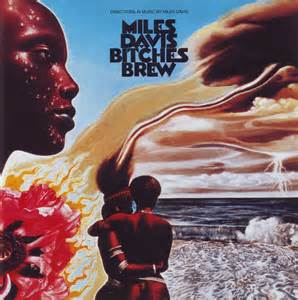
It was nearly an hour commute across Adelaide’s most miserable suburbs; Snowtown territory. After many months afternoon radio had become tiresome; especially when the old-age surrender of organising life around news bulletins, those ridiculous frissons began, so I fought this inevitability, by committing to Miles Davis. I submerged myself in Bitches Brew.

Menacing and swirling about you like a phantasm, the music is a sexual maelstrom, and its recording began within hours of Hendrix and his pyrotechnics at Woodstock. Was it jazz? Was it rock? Was it funk? I wasn’t sure, but I again knew that the trumpet could be as cool as a guitar.

Despite its ominous cadences and rhythms, I found it transportive and therapeutic as I’d make my way home to the beach. Bitches Brew is vital to jazz-fusion, and while the opening two tracks are rightly celebrated, “Miles Runs the Voodoo Down” on side four is the standout. I still love getting lost in this 94-minute ocean.

*

This story begins with Mum and Dad’s record collection. Don’t they all? In among the usual 1970’s fodder of Ripper ’76 and the Best of Abba there’s some curios, and in the not on 5AD or 5KA and certainly not on Countdown section are some jazz albums, one a Dixieland compilation. I don’t especially recall any of the tracks, but these made significant impacts upon my psychology and vocabulary.

The jazz evoked widescreen travel and the speaking of strange tongues and moving about in dazzling metropolises that one day I might be permitted to visit. It was New York and Chicago and New Orleans. It wasn’t that I was trapped in dusty little Kapunda, it was that a planet was out there, and Mum and Dad’s jazz records captured these teeming, thrilling possibilities.

They still do.

BB

0

global revolutions

globe


I love a globe. There’s simple joy in being hypnotised by the cascading sweep of the Americas, contemplating the distant familiarity of England, and contending with innumerable Stans where once was the muscular bulk of the USSR.

Ah, seduced by a sphere.

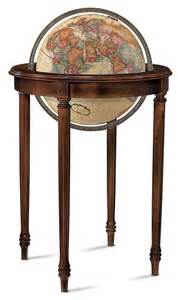
For my birthday Mum and Dad bought me a standing floor globe, and Sunday morning Max and I assembled its dark wooden frame before slotting in the tilted ball. Max gave it a spin.

Ocean. Land. Giddy revolutions. Ocean. Land.

Like the best gifts it’s made me reflect.

Alex and Max often chat about the wider world, and as they engage with the possibilities, their curiosity is comforting. Globes encourage this.

“Alex, how deep is the Marianas Trench?”

“Really deep. You couldn’t even touch the bottom.”

And last year, walking by the Singapore River-

“Max, when we’re older, like probably thirteen, Joseph and I are climbing Mt Everest. We won’t even need any oxygen tanks.”

“No oxygen tanks! Really?”

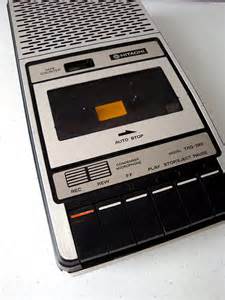
As a kid I had enchanted possessions. The tape recorder and accompanying best of Little River Band cassette I received one Christmas; my first cricket bat- Polyarmoured, and now resting in a cupboard at Mum and Dad’s, and a yellow, wooden skateboard. But, in our house in Kapunda the globe of my childhood held quiet and enduring power over me, like a mystic. Globes conjure memories, and are gateways into our future.

From his Nanna and Poppa Alex also got one for his eighth birthday. With eyes widening he ripped the wrapping paper from the box then hopped about the room with delight. His globe came with a touch-activated light, and when the boys are in bed, it cloaks their room with a snug glow. Living in a corner, it watches over them, a silent sentry as they sleep.

As an adult how did I survive so long without a globe? For too many years my homes were without one; emptier dwellings surely dulled by their absence, and now we’ve three, offering buzzing invitations to our planet’s mysteries and marvels, and voyages and stories. Our imaginative power is enhanced. They’re as essential as milk and I love turning them gently like a monk, fingers on the thermoplastic joy, meditating on unknown places, and the promise of drenching wonder.

Globes urge consideration of yourself, and the bustling world, waiting for you, just outside.

For our boys, I hope as much.

Thanks to Mum and Dad for their gifts of globes, over many decades.


tape recorder

0

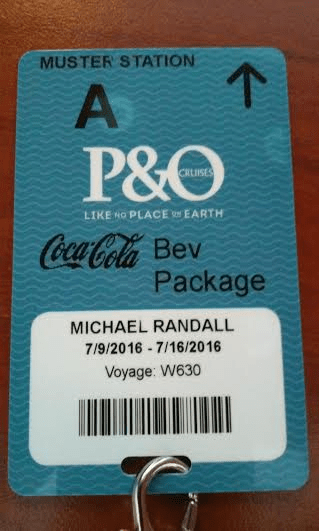
The Oceanic Adventures of Bev Package: Our Week on a Cruise Ship

bev


It’d be fifteen years since I last heard it. But it’s irresistible and in the cosy chairs of the Pacific Dawn’s Promenade Bar we all sang along

It’s nine o’clock on a Saturday

A regular crowd shuffles in

There’s an old man sitting next to me

Making love to his tonic and gin

Chugging across the Coral Sea during our week I heard Billy Joel’s “Piano Man” about a dozen times, and often twice an evening. Kieran, a Welsh fellow who looks a little like the comedian Jimeon was our favourite performer, did a grand version, and indeed, the first airing was, with planned theatricality, at precisely nine o’clock on the Saturday.

Earlier, we’d endured a curious, scatting, jazz interpretation, complete with messy harmonica, by a young pianist. We also heard it a couple times on the blustery pool deck.

Although it’s about broken dreams the song rollicks along in 3/4 waltz time and demands those with refreshments to raise and swing them about like pre-fight pirates. It’s an amazing narrative, dominated by the stirring affection with which the barroom tragics: John, Paul, Davy and co are described.

It was his first hit, and in its fifth decade, still works magnificently. Just as “Fairytale of New York” always takes me to Christmas in London, and with “LA Woman” I’m driving in Santa Monica, “Piano Man” will endlessly transport me to that rousing place on the Pacific Dawn.

*

We squeeze onto a water-taxi in Port Vila and transit across Vanuatu’s harbour. It’s an attractive winter’s morning and we’re buoyant with sea spray and the promise of exploration. Rounding Iririki Island, the coast is speckled with dozens of half-sunken yachts, ghostly victims of 2015’s Cyclone Pam. Seeing these dead craft reminds me that idyllic Pacific atolls frequently turn hellish, and that people are really, really small.

Zig-zagging along the main street it’s clear that our massive ship disgorging a couple thousand folks is an event. Some load-up at a duty-free shop and then I see it, that most ubiquitous of Australian chains: Billabong. It speaks of the worst colonial toxicity; a symbol of Australia’s reptilian hegemony and doomed local aspiration. I find it troubling to visit a country which is economically obliged to try to sell me surf wear.

*

I’m hoping that somebody can help me with this. Is it true that “Reminiscing” by LRB features on each of Cruise Ship Classics: Volumes 1 – 12?

Yeah, I thought so.

*

I love regressing to boyish wonder and again finding it awesome that a plane like an A-380 can fly. The Pacific Dawn, is also a leviathan which, if dropped onto Footy Park, would flatten both sets of goal posts. Of course if this were during a 2011 Power home game, it’d scare the be-jesus out of the scattered punters and Kochie while possibly also tearing the tarps.

That our ship glides seaward across a rippling bay can appear, from our vantage point, over one-hundred feet above the sea, as the muscular act of a magical god.

Aside from the Promenade Bar my favourite place within this hydropolis was on the pool deck, with my Jonathan Franzen novel, and a crisp Peroni courtesy of everyone’s bestie: Bev Package. How could I not love being drenched in languid holiday rhythms and their drifting afternoons? Up there, our petty urgencies evaporate into brief irrelevance.

*

Each morning over the PA and in his Genoan tones our captain addressed the ship: “So, we are travelling north-east through the Coral Sea at eighteen knots. Later today we’ll cross the Tropic of Capricorn and by afternoon the winds should abate. There’s currently around four to five metre swells, and we’ve activated our stabilisers to give you greater comfort. It’s nineteen degrees centigrade and should reach a top of twenty-three. Up next, a 1973 singalong classic by Billy Joel.”

*

Trudging up the tropical hill to Our Lady of Lourdes Chapel on the eastern coast of Lifou the terrain and vegetation remind me of Singapore’s Pulau Ubin, but without the aggressive monkeys. It’s an energetic stroll across this member of the Loyalty Islands and the view is fetching. Inspired by the beauty and proximate godliness, Bazz and I exchange observations:

“Look out there. See that yacht. That belongs to Richard Branson’s butcher.”

“Sure. Did you know that Sister Janet Mead isn’t buried beside this chapel?”

“Have I told you that Leo Sayer has never toured here?”

We then gathered on the beach, and some confronted the cruel, blue water. Alex and I clambered up to the village market to buy him a coconut. As we came back down the rocky track I see my wife, crying and saying something, but it’s lost in the wind. I think: someone’s been stung by a stingray, or worse, someone’s lost their phone, or even worse, Tex Walker’s done his knee (again).

Bursting onto the seashore, the cruislings are gathered about my brother-in-law Richard and his girlfriend Jasmine. They’ve just become engaged. Months prior to this voyage, he’d bought a ring to make this their moment. There’s tears and hugs and laughter. Families are meant to get bigger. Ours just did.

And with this Lifou is changed. For us, it was just an anonymous islet, a previously unencountered paradise, but now it’s invested, and forever enchanted. Isn’t this what people should do? With love, drape their stories upon an innocent geography, and transmogrify the terrain into something wonderful and harmless and humanly sweet?

*

Billy Joel hasn’t released a new song since 1993, and like many musicians he peaked early. But how fantastic that his biggest tune was born of grinding slog in an LA piano bar. That this song about crushed dreams would make his come rapidly and unthinkably true is a joyful irony.

For most of us, going on a cruise ship was new, and “Piano Man” an old friend, a smiling stowaway, waiting to surprise us. It was excellent to catch up over a beer or two, and like the best of songs it became a unifying motif for us, on our little holiday.

 Sing us a song you’re the piano man

Sing us a song tonight

Well we’re all in the mood for a melody

And you’ve got us feeling alright

BJ

4

Round 6- Adelaide v Fremantle: Sea Monkeys

sea monkeys

If talking about the weather is Britain’s obsession, then I’d argue that Australia’s national hobby is yabbying. A crustacean El Dorado, trifling physical labour, kids, and refreshments. Generally yielding inedible miscellany. I love it.

After five long years we’re back in Kimba, and Friday lunchtime the ute of my old mate Bazz clunks towards a dam on the Ballumbah Hill Road.

An exploratory net is thrown in, my boys leap about, and between sips of beer, Bazz and I slap at the late April flies. Out here flies never holiday, never bugger off up north for winter. I remember wearily waving them away at nearby Buckleboo during footy season as I rested in the forward pocket, while some spectators insulated themselves with stout.

Dragging the net onto the bank Alex and Max skip and shriek.

Bazz declares, “No yabbies, sorry boys.”

Pointing at the wriggling aquaculture Alex says, “Are these tadpoles?”

“Yep. Big ones. They’ll soon be frogs.”

Max asks, “What’s that funny one?”

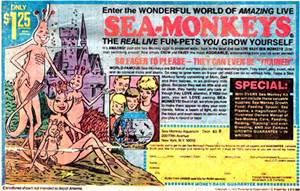
I instantly see my teenaged-self staring at whole-page advertisements within the horror comics I enjoyed briefly. I blurt, “Sea monkey. It looks like a sea monkey.” With exotic smiles and bewitching humanoid figures, sea monkeys belonged in Lost in Space, inspiring Dr Smith to more mission-threatening selfishness.

Sea monkeys taught me a lesson about the cruel gap between advertising promise, and consumer reality.

Thirty yabby-free minutes later, rattling to the Kimba Golf Club, the boys are singing the song they’re inventing, bemused by their own pulsing imaginations,

“Sea monkey, sea monkey, sea monkey….”

*

In opening the breezy afternoon Adelaide’s Tom Lynch forgets physics, which demands a drop punt, and instead sends a tragi-comedic dribbler across the face. It’s inexplicably ridiculous.

Fremantle commences its Behind-Fest as Mayne pushes it right. Then Mundy to the left. I’m sure Ross Lyon could watch a grim, sleet-soaked, third division Yorkshire derby that ended 0-0, and he’d say, “It were rubbish. Constant attack are useless. Too many goals.”

After nine and a half horrid minutes Jenkins gets Adelaide off the duck.

If we still had a VCR (Betamax) it would’ve been wasteful spending eight cents on electricity recording this quarter.

*

The tide’s turning at Coffin Bay. It’s just outside Port Lincoln, which produced Graham Johncock, Byron Pickett and brothers Peter and Shaun Burgoyne. All came from the Mallee Park Football Club.

We’re in the shallows of Long Beach. The boys, running and splashing, running and splashing. Their Mum then urges them to slow down, look and spot the details. Now they see them. Gazing down microscopically, their world inflates like a gaseous giant.

Sand crabs. Pale. Scuttling. Burrowing. Alex scoops some up. They escape, and tumble into the Southern Ocean. Like all younger brothers Max wants to follow, but is anxious as he’s not held a crab before. He jiggles and hesitates.

And then on his palm is a little crab. With curiosity and a pocketful of courage, a crustacean dances across his hand!

This is why we’ve driven seven hundred kilometres to a gentle, enlightening beach.

*

Second term opens with more of the same. To watch a match involving the Dockers is to observe two sloths; one willing and one captive, wrestling under a sodden army blanket.

Recent re-includee Cameron shows poise, and should still be at the club in a decade. Tom Lynch enjoys absolution by collecting plainly, pirouetting twice and snapping precisely. A Renoir in an abattoir.

Behind play Spurr flattens Betts and donates the Crows another. Meanwhile, The Dockers inch up to ten behinds.

Matthew Pavlich gets another minor score after the siren. He’s presented well today during a season in which many saw Pav not as Australia’s (New Zealand’s) favourite dessert, but month-old cheesecake.

*

So, our boys haven’t ever swung at a gold ball, but they’ve now driven a golf cart. Is this wrong? Ahead of tomorrow’s round Bazz wants a hit on Royal Kimba’s back nine.

I’m cart captain, but in turn and on my lap, Alex and Max steer and stomp the pedals. On the 12th Max accelerates up the fairway, but detours through a bush by the ladies’ tee. Crackling twigs and leaves shower us.

We’re only in Kimba three days, but the accomplishments accumulate like boy scout badges. They help in the garden, and Bazz takes them out on an electrical job, and a couple hours later they burst through the screen door. As apprentice sparkies, Alex has fifteen dollars, and Max juggles some toy trucks, bought with his earnings.

On the 16th Bazz pulls another drive left. “What’s going on?” I ask as the cart bounces along the rough. Not for the first time in the decades I’ve known him he self-analyses, “Bad golf made easy.”

We’re halfway across Australia, on a near-desert plateau, but this trip is a sea-change.

*

To commence the second half Betts is slung when not in possession, and then at the opposite end Ballantyne misses. His team-mates are secretly pleased.

Successively, Eddie provides a signature pocket-snap, and Brodie Smith delights with an equally emblematic missile from beyond fifty.

Halfway through the quarter Fremantle have kicked fourteen behinds, and only two majors. Goal scoring is as natural to the Dockers as it is to garfish (grilled).

Obviously using the Chicken Salt (yes, it’s now a proper noun) hoarding as a target, Tom Lynch guides through his second.

The Crows are in control. Rory Sloane continues to play footy the way Ringo drummed for The Beatles: possibly without constant finesse, but with a charismatic enthusiasm that kept things moving along.

In the final stanza the home side accelerates away early as if wishing to escape this dire opponent and direr affair. Adelaide produces some sunny moments, but it’s an oddly cheerless conclusion, and there’s a mechanical, Samuel Beckett-like inevitability. The last three goals go pointlessly to the Dockers, but few will mourn the passing of their season, and their turgid game plan.

I look forward to seeing the Crows and Dogs at the Docklands next week. Can you get Chicken Salt there?

*

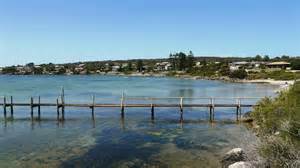
If you’re six you run from the holiday cottage to the Coffin Bay jetty in three languid seconds. Max does this each morning.

Late Anzac Day, we’re on the jetty. It attaches us to the glimmering water, welcoming contemplation and quiet gratitude.

Along the jetty there’s ladders, and Alex hovers above one. He wants to drive into the water. The deeper water. Most of his swimming has been in a Singaporean pool.

I can see the bottom, but it’s a scary step from the lower rung. A pause, then with a triumphant splash, he chests the water, dog-paddles about in innocent, furious circles, and scrambles up into the golden light.

At sunset of our final day on the West Coast I think of my old friend John Malone, and his poem, “Jetties” in which he notes that,


People lean

from jetties, dream from jetties

fishing for

tranquillity. They are

walkways into and out of

the mind. Umbilical

chords attaching us to the sea.

jetty

1

Welcome to Bundaberg


The following essay is a discussion of what makes Queensland a unique state, as observed by an outsider, and using a recent Bundy rum TV advertisement. Here’s a link to the clip-


I took a sip.

“He’s trying to kill me,” I thought (politely) to myself.

I took another sip.

“Yep, he is.”

Late Brisbane afternoon with my wife’s extended family. Uncle Fred had poured me a homebrew beer. “It works out at eighty cents a bottle.”

Fred’s a businessman, and his millinery company sells hats to southerners for the Melbourne Cup Carnival. He also travels overseas. He’s been around.

“New York. Shanghai. London,” he scoffed as I stared at my muddy glass.

“Between the Gold Coast and Rockhampton, the Queensland coast’s the best place in the world. Why would you wanna live anywhere else?”

Raising my beer I thought, this bloke’s serious. I stifled a laugh and looked at him.

For Uncle Fred, Queenslander, this is no joking matter.

*

In the colourful history of Australian booze marketing, the iconic VB campaign is king. It features a gallant orchestral score, and John Meillon’s distinctive voice:

You can get it liftin’

You can get it shiftin’

You can get it working a plough

You can get it any old how

Matter of fact, I got it now.

Nodding to Henry Lawson and Banjo Patterson, these poems continue to charm.

Meillon was vocally perfect. His recitations were not of the people, but to and for the people. Warm like a sunset and eager, he continued to promote the beer long after he’d downed his last lager; a ghostly advocate; the spirit of beer-drinking and of Australian life.

Yet VB ads often present a work ethic, the idea that clocking off after the day’s duties, a drink awaits: “For a hard-earned thirst, you need a big cold beer and the best cold beer is Vic.”

It’s what you deserve.

This contrasts with the Queensland dynamic. In this we’re often sold the notion that drudgery’s irrelevant. But, you’ve got to have the sense to live there.

Back when it called itself Castlemaine an advertisement in the “I can feel a XXXX comin’ on” series captured that thinking. Allan Border’s on a Great Keppell beach, and lying back in a deck chair, with a few tinnies while Jeff Thomson, Greg Ritchie and Ray Phillips are fishing. That work’s unwelcome in paradise comes through as James Blundell sings

I wish this lazy Sunday would never disappear

And I could hold back Monday for the rest of the year

As captain and saviour, AB’s exempt from dangling a line. Historically, it’s 1987 and he required all his energy to repeatedly resuscitate Australia’s miserable batting. It matters not that AB and Thommo are native Sydneysiders, Queensland is welcoming. Both had become as local as mangoes.

After a curious, homoerotic conga line across the sand, the batsman, bowler and wicketkeeper join the captain for a XXXX. Then like synchronised swimmers, the three fishing rods double over at once, dinner hooked. However, our sporting legends ignore them because, as we know, the beers won’t drink themselves.

The rest of Australia seemingly needs its collective thirst to be won, toil first, to legitimise the rEward of beer. But in Queensland relaxation is king. That’s the promise; life is better. You can forget work.

Things’ll take care of themselves.

*

What does the recent Bundy Rum campaign show us of the Sunshine State?

“Men Like Us Like Bundaberg Rum” delivers many ideas. It’s 2015, but we’re not talking to women.

The second concept is found in the title’s assertion, “Men Like Us.” Meaning, we the blokes from Up North. Not just geographically, but attitudinally. You’re either a Queenslander or should wish you were. The delicious dichotomy.

A beach. Some fellows (one wearing a fez) are cluelessly building a Viking boat. Its anchor’s blacksmithed from cheese graters and saucepans. Upon premature ejection it sinks; all head to the pub, and toast with swirling mugs of Bundy.

There’s rustic defiance in this. An outlook which (again) decries work. Over-achievement? Not us. Technology and modernity? How would these help up here in God’s own?

As a South Australian I envy the confidence, the sense of self-containment. The advertisement’s moderately mocking, but underpinned by a subtextual boast: This is Queensland, this is Queensland, this is Queensland.

Another link to the past is the ship’s Bundy Bear figurehead. Now pretty much absent (where has he gone?), the Bear was Bundy rum. He was everyone’s mate. He had a deep voice. He was the smartest bear (bloke?) in the room.

In one vignette Bundy Bear takes a pre-party bath, into which a housemate deviously drops a red sock. Modishly late, the now pink bear arrives at the gathering, and is ribbed by the boys.

A gorgeous girl admires that he’s, “brave enough to wear pink” and invites him over to meet her girlfriends. Bundy’s more attractive to women than his forlorn, human mates. He’s outplayed them; for he is Bundy, hear him roar!

*

The Bundy ad imagines us as sea explorers. Save for draft ineligibility, we’d surely have got up in a shoot-out with the Portuguese! But, here we are with only imported South Australian half-back flanker Dougie Mawson getting umpires’ votes. Rather than heroically sending boats out; we’re now infamous as a nation, for not letting boats in.

Borrowing from a pirate narrative tradition, we’re also invited us to see ourselves as buccaneers. Again, here’s a scorning of traditional work. Caribbean swashbucklers? No, less glamorously, we’re the world’s best video pirates.

*

My encounter with Bundy was brief. Advertiser drinks columnist Philip White once considered Nelson’s Blood, and I was idiotically inspired. It was first made with rum from the very barrel which stored Lord Nelson’s body following his death on the Victory, at the Battle of Trafalgar.

Modern interpretations of Nelson’s Blood exist, but White reckons the Adelaide variety’s a tankard of Coopers Best Extra Stout, drowned by an unholy baptism of Bundy. No, it doesn’t taste nearly as good as it sounds.

Like the witches around their bubbling cauldron in Macbeth, a friend and I made some at a party. He’s from Wales. The next morning he was driving six hundred kilometres, across the desert. It was truly, ferociously, colossally grog.

*

Itself a type of work song, the sea shanty’s used ironically, with geographical alertness rewarded by

We sail from here to Bogota.

It’s a fun line given the Columbian capital’s landlocked position up on an Andean plateau.

Having launched, the good ship Bundy sinks like a delightfully feeble entry in a 1970’s birdman rally.

Our sails are filled with wind and pride,

Explore the world – well at least we tried.

The pirates survive, and rush to the pub. Their shoddy shipbuilding reinforces the low status of work. Not landing in Bogota? The outside world’s cruel, and treacherous. Stay in Queensland, and get on the rum.

The shanty’s sustained last note reminds me of the opening page (I’ve got no further) of Finnegans Wake on which Joyce included a 101-letter word, evoking the fall of Adam and Eve

bababadalgharaghtakamminarronnkonnbronntonnerronntuonnthunntrovarrhounawnskawntoohoohoordenenthurnuk!

Our sailors are euphoric. But caution. A bar full of men full of hijinks full of Bundy? Fast forward a fierce hour. We’ve all seen how this film finishes. You’d usher gran out to the Cortina before she’d finished her shandy. Just relax. This is Queensland, nothing nasty’ll happen.

*

The slogan is Welcome to Bundaberg. So, it’s not only a city in regional Queensland, but an aspiration, a sultry nirvana, especially alluring to those of the cold wowserish south.

What can you expect upon arrival? A place in which you’d don a fez, and sink Viking ships. An idyll of cattle and cane, where the living is easy-going. A parish in which work is enthusiastically ignored.

The Lone Star and Sunshine states share much. Tellingly, for his 1940 recording, “Beautiful Queensland” country music pioneer Tex Morton adapted, “Beautiful Texas.” On airless Brisbane evenings Uncle Fred puts the needle on the vinyl, nods at the prudence of his life choices, and sings along

There are some folk who still like to travel

To see what they have over there

But when they go look, it’s not like the book

And they find there is none to compare

This may go some way to explaining the passion for Queensland in State of Origin football.

This essay was originally commissioned for  Long Bombs To Snake, the magazine of the Footy Almanac community. It is 68 pages of quality feature-length writing on numerous sports by twelve of the talented Footy Almanac contributors. My thanks to John Harms for the opportunity. Long Bombs To Snake is available for purchase here-

Almanac Shop


cricket


0

Skyhooks and me

ego

Urgency. I reckon this is the best word. For they were always urgent. Midnight Oil was aggressive, and Sherbet was summery. But even when they were brooding, Skyhooks was urgent.

Learning of their 1991 reunification tour, some mates and I instantly booked our tickets. However, on the day of their Adelaide concert I awoke 565 kilometres away on the West Coast as I had to pack up my Ucontitchie Road farmhouse for the move to Kimba.

With my earthly goods flung through the front door of my new house, we leapt into my mate’s SS Commodore, pointed the 4.9 litre beast eastward, and rumbled the five hours, through a January thunderstorm, to North Adelaide’s Old Lion Hotel. We arrived with moments to spare. The pub already stinging in its smoky, hot fug. There were but three beers on tap. Red Symons was at his belligerent Red Faces best. It was a night of huge fun.

I love crowd singing on a live album. It amplifies the sense of being there, when in all likelihood, you weren’t. Great examples include “Army” from Ben Folds Live and,” Don’t Look Back in Anger” by Oasis, but supreme for me is “All My Friends Are Getting Married” from Skyhooks’ Live in the Eighties. When Shirl invites the crowd to sing the chorus they do in such an adoring fashion. Back at the Old Lion this, too, was a highlight of that summer night.

*

Sophomore albums often rate highly. Think Nevermind, The Bends and Astral Weeks. Buoyed by the acclaim of their debut offering, there’s often a young band or artist, teamed up with a noted producer. Their confidence is unparalleled. An equivalent could be, again from 1991, when Mark Waugh made an elegant hundred on debut at Adelaide Oval. However, a friend observed, “It’s not such a surprise. After all, you only get picked for your country because you’re in fantastic form.”

Bearing this in mind, Ego Is Not a Dirty Word is their finest album. I know that Living in the Seventies is the much-loved debut, selling over 300,000 copies, and enjoying the infamy of six of its offerings being banned. But, on this second release, there’s an increased breadth in the songs, with “Love’s Not Good Enough” musing on suburban loneliness, “Smartarse Songwriters” featuring Greg Macainsh’s meta-cognitive explorations, and the title track, pushing the patience of many (I can’t imagine Sir Joh was a fan) with its brazen reference to the triumvirate of Richard Nixon, Leonard Cohen, and in an Australian music first, Jesus.

My favourite is side 2, track 2. I know it’s a hundred types of wrong, but I recently played it in the car for the boys. On the first note of “Mercedes Ladies” they both giggled at the larrikinism of bass line, the cheeky guitars and Freddie’s comical tom-tom drumming. It rollicks along with the musical highlight the double hi-hat chick at the end of each line. It’s a great way to spend three minutes, and encapsulates the band, their time, and their legacy. In this, as in much of their material, Skyhooks satirise the suburbs while also rejoicing in them.

Of course, we’re all apprehended by our creative context. Even here in smug 2016, history will eventually scold us. 1975 imprisoned many with multiple charges: sexism, homophobia, stereotyping. But despite this, Skyhooks also pioneered themes concerning the suburban and the local. It was music of the largely untold other; it was not of NYC or London.

Such is the significance of Skyhooks for me that the mention of Carlton evokes the song first, and the footy team second. The band’s collected lyrics still generate an imagined google map of Melbourne, and a reference to Toorak or Balwyn returns me to my original conceptions of the city by the Yarra. If the Beatles are Liverpool, and the Rolling Stones are London, then Skyhooks is Melbourne. Their music has always presented the geography of a highly human environment, as there’s colourful pictures of grimy pubs, menacing streetscapes, and widescreen vistas too.

Open photo

It was in my school mate Lumpy Nixon’s lounge room (I’m sure there were ceramic ducks flying up the wall) that I first saw, and heard Straight in a Gay, Gay World. I was mesmerised by the guitars on the title track, and the sonic trickery of a swarm of insects hovering overhead on the outro, moving from the left speaker to the right. I was fourteen and this was beyond cool.

The album’s artwork gripped me equally with its triptych of a solitary black sheep, butcher shop and lamb dinner. It was the first humorous cover I’d seen. The art often functioned as a portal to an album’s narrative. I was especially intrigued by Pink Floyd’s Wish You Were Here and tried to decipher the cover photo of the two businessmen, one calmly ablaze, shaking hands on a Californian backlot. However, I couldn’t unlock its mystical meanings. In our age of Spotify and digital downloads, these happy distractions have largely disappeared. But vinyl’s fighting back.

*

And finally, to Shirl. He’d a remarkably complex voice, blending a tradie’s building site swagger with the footballer’s front-bar cockiness. It was effortlessly confident, and also reassuring, saying, “Why would you live anywhere else?” as it slapped your back and shouted, “Forget about it, I’ll buy you a beer!” He sung to, and for, us. But his vowels were knowingly crisp and aware of the telling subtext. He delivered his stories with affection, while also investing the songs, as appropriate, with a sneer. “Million Dollar Riff” could be his best performance. Shirl was the perfect front man.

I love that I can go years without listening to a band, and then one afternoon find myself dragging out a dusty CD, and with the opening chords, being teleported to a distant, thrilling place. With Skyhooks that place is in the dimming distance and unreconstructed, but from time to time, I really enjoy going back there.

hooks

2

Now You Are Eight

Koh lanta

Suddenly and incredibly, you are eight! Alex, how our world changed when you were born on that bright Saturday afternoon, eight years ago.

Among my favourite things is spying on you. Isn’t this funny? You and Max love spy games, but Dad loves spying on you. What do I see when you’re not looking, but I am?

I see so much that makes me, and Mum proud. You’re funny and alert. Like a puppy, you play with creative energy. You love your friends, and they love you too. You like sharing stories, but listen when people tell you stuff too. For you, games and fun must be fair. You don’t like it if others are unkind to you, or those you care about. Because it’s important, you take a stand. This makes you a leader, and we love this about you.

I’ve so many memories.

We’re on Koh Lanta. It’s a fresh, clean morning and the sky’s holiday blue. I’m on a sun lounge out the front of the resort, looking across the sparkling sea towards the Strait of Malacca. You and Max are on the flawless, golden sand. Buckets, spades, toys. Boys and brothers. Do you remember this? I watched you; long-limbed like a giraffe, and miraculous, as if born of the tropical sun itself.

And later, on the same trip- our last while living in Singapore, we do a boat tour to five islands! In the marine warmth, snorkelling above the coral, Mum and Max are bobbing about on the azure ocean, while off on our own, and peering down through our masks, we see it. Silently, and like a whip cracking in slow-motion, is a sea-snake! It’s there for mere seconds, and only we saw it, together, in our private universe. Instantly we sit up, beaming

Did you see it Dad?

Sure did. What’d you think?

So cool.

A momentary sight, but for us, stronger than two electrons in perpetual orbit. For someone as curious about nature and dangerous creatures as you, it’s a thrilling highlight of our three years in Asia.

Last Friday, in the afternoon sunshine, you’re in your blue Strikers shirt and cricket cap. We’re at Glenelg Oval, and there’s plastic yellow stumps and kids, learning and playing, learning and playing. You’re batting. I’m on a bench by the boundary, spying on you. Again!

The bowler pitches it on a good length, but outside the wicket. In a fluid, looping motion, you step into it, and swing the bat. It’s an on-drive, and possibly having seen an Australian cricketer like David Warner do this, you go down onto one knee. It’s cute, but also shows me how carefully you take in the details of your world, how keen you are to do your best and display some robust mastery. You stay low and hold your position, watching until, just in front of me, the ball jumps the rope. Your first boundary! Certainly a treasured event in many years of loving cricket.

Now finally, back we travel, to 2008 when you’re only three months old. It’s May, Mothers’ Day; fetching and warm like a hug. We’re at Wattle Reserve, by the beach, with a picnic of olives, breads and dips, dolmades; unhurried food for a late autumn lunch. You’re there on the rug, in the breezy, timelessness. Smiling, blue eyes alert, enchanted. It’s a movie, a love song, our lifetime distilled. It’s a dreamlike afternoon.

So, as you begin your ninth year, I wanted to find a few moments among the guitars and the bikes, the barbeques and the blur of the cruelly rushing weeks to reminisce on how astonishing our world became on that bright Saturday. The day you arrived; the gorgeous, clever, amazing gift of you, arrived.

glenelg oval

3

The Beatles and me

radiogram

Sunday at the Adelaide Grand Prix. Former Speaker of the House Arthur Whyte and his wife Mary were on pit straight. Respected folk from Kimba, local royalty. Every lunchtime Arthur went to the Kimba pub. Blistering heat or punishing cold, he’d have a stout. Just one. Mostly. Arthur lived to ninety-three.

Being outgoing and with a healthy curiosity in people Mary exchanged pleasantries with the man in the neighbouring seat. He was gentle, possibly even a little shy. Sounded English. He made gracious inquiries, asked about life in Australia, in Kimba, on farms. Nigel Mansell seemed to be leading the race, and with the octane thunder booming about them Mary reciprocated.

“So, what do you do?” Gosh, what was his name again?

“I’m a musician.”

“That’s nice. So which instrument do you play?”

The cars were making astonishing noise. It was hard to hear.

“I play guitar.”

“That’s lovely. Do you play on your own? Or with others?”

Mary took a sip of her tea. He was an agreeable chap.

“I just play by myself now.”

“That’s probably easier. So you were in a group?”

“I was.”

“Oh, yes. What was the name of the group? I probably won’t know them, but you never know.”

“They were called the Beatles.”

*

Mum and Dad had a radiogram. Wooden, heavy, solemn in appearance. The turntable sunken into its teak depths. I remember Creedence Clearwater Revival and Anne Murray and The Carpenters.

But what I recollect most vividly is a 45. In the digital age when artefacts like vinyl are discretionary, these seem primeval, unnecessarily real. It was “Love Me Do” with the B-side “PS I Love You.” Both songs crackled constantly when you dropped the needle, but were exhilarating. John Lennon’s harmonica was rowdy while Ringo’s drumming crashed out of that old radiogram.

I was only five, but I was in.

*

The first cassette I owned was It’s a Long Way There by the Little River Band. I’m pretty sure my first record was Ripper ’77; on which the highlights are, “This Is Tomorrow” by Bryan Ferry and, “A Mean Pair Of Jeans” by Marty Rhone. As catchy as it was my cousins Boogly and Froggy and I thought “Blue Jeans” by David Dundas the superior denim-themed pop confection. We’re still right.

Fresh from uni and working on the West Coast I bought my first CD player, second-hand from old school mate Fats with whom I shared a passion for Bush Biscuits, tepid Southwark, and Mondo Rock. Acutely aware of my personal responsibility I went into Allans music along Rundle Mall- just up from the Malls Balls. I bought two CDs- Sgt. Pepper’s Lonely Hearts Club Band and The White Album.

Living by myself in a big farmhouse I blasted these out into the dusty summer dark; brutally cold July mornings; before cricket; after school. These provided a soundtrack to my early twenties after I’d left home, and was making my way.

*

Having spent a week in Penang my girlfriend (now wife) and I then flew to London. It remains the world’s best theme park. Is there a better way to spend a day than walking the ancient streets before flopping exhausted, in a Soho boozer?

In exquisite St Johns Wood, Abbey Road’s frontage appears modest, giving no indication to the history, and the thrilling, unparalleled creativity that’s occurred within. But the fence across the front is remarkable for it’s a giant thank you card to the Beatles, electric with graffiti and black-texta tributes. It’s re-painted every week or so.

“Strawberry Fields Forever” unfailingly takes me back to this time and place.  I especially love George Martin’s cello arrangement; it’s blue skies in Hyde Park, a string of Routemaster double-deckers along Oxford Street, and planter boxes bursting with late spring colour on the façade of a Themes pub.

*

What are the most exciting moments in music? Guns ‘N Roses’ “Paradise City” and Axel Rose’s whistle urging his band into the song like a mad football umpire? The Who and Roger Daltery’s apocalyptic scream in “Won’t Get Fooled Again”?

No, it’s George Harrison’s Rickenbacker guitar opening to “A Hard Day’s Night.” The chord’s undeniable, an invitation, a golden promise. Fifty years on, it’s still rock music’s most iconic grab.

*

My favourite Beatles’ album has changed as I have. Curiously, I’ve moved retrospectively through their discography. Starting at the ambitiously expansive church of The White Album, I moved to Sgt. Pepper’s Lonely Hearts Club Band, and was then besotted with Revolver, and especially George’s spectacular guitar work on “And Your Bird Can Sing.” Is there a sunnier riff in rock?

Where am I now? Rubber Soul.

The record’s a confident transition by a band sensing that the boundaries might be further than even they’d imagined. It’s a languid listen, but there’s telling experimentation- most notably with Harrison’s use of sitar on “Norwegian Wood.”

But it’s “You Won’t See Me” which is the album’s standout.  At 3.22 it was the longest song the band had recorded. It’s perfectly placed, appearing at track three.

It connects to Scott Fitzgerald’s The Great Gatsby. In it the author explores some dark themes that are critical of much in America- the greed, the selfishness, the appalling lack of responsibility, but he delivers these bleak ideas beautifully, in achingly gorgeous prose, and I’m always struck by the poignant contrast between method and message. It stays with me, haunts me. I like art which displays a thoughtful divide.

For me it’s the driving jauntiness of Paul’s piano, Ringo’s tambourine and inventive drumming, and the uplifting harmonies of Lennon and McCartney. “You Won’t See Me” has up tempo hooks in counterpoint to the gloomier nature of Paul’s seemingly autobiographical lyrics, documenting his challenges with then girlfriend Jane Asher, who might still be the most famous former girlfriend in rock music. This song marks a maturation for the Liverpudlians. It’s colossal fun.

In time I’m sure I’ll bow before other Beatles’ albums, other Beatles’ songs. Just like I always have. The labyrinthine beauty of their palace ensures this.

But tonight, as my family sleeps, I slide on my headphones and press play. Again.
Beatles