2

Kapunda, Monday: A Drive Through the Quiet

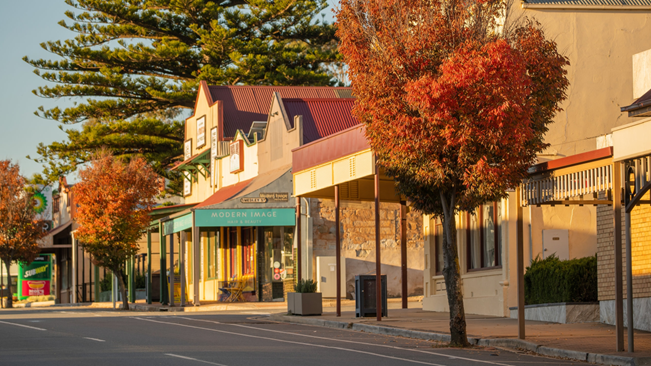
From the top of Gundry’s Hill, Kapunda lies soundlessly below — half-hidden in its jumbled valley.

The topography gifts this view — and encourages a certain kind of reflection. I consider how some of the nearby towns such as Freeling, Nuriootpa, and Tanunda are largely flat — perhaps a little reserved in their landscape. Our steeper hills allowed for a testing upbringing of bike and billycart riding.

Once, the surrounds of Gundry’s Hill were simply paddocks — rolling and empty. Now, a housing estate sprouts, improbably dense. There’s about twenty homes hounded in together — you’d struggle to swing a nine iron between them. However, unlike other locations further north, the population’s climbing.

Driving about I’m gladdened by the early-week industry. People on foot and in vehicles are moving about collecting and depositing stuff, accomplishing transactions, making things happen.

A blue sky presses down on Kapunda, dragged by an icy wind slashing at the trees and roofs. I remember days like these from my childhood. A friend once called it a lazy wind — ‘It doesn’t go around you, just straight through your torso.’ She was right.

I’m curious — profoundly invested — in the high school’s rebuild after the 2022 fire. Eringa now looks familiar and is regaining much of its grandfatherly glory. It’s reclaiming its place as the town’s reassuring heart. The croquet lawn lies beneath a compact row of building site offices and the apron sloping from the grand front steps is crowded with what I hope are temporary structures. The old palm tree stands noble by the basketball court.  

*

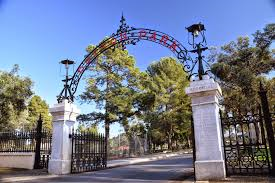
Idling through the Dutton Park gates I take a slow lap around the sporting precinct, passing the clubrooms where Claire and I had our wedding reception. I then see the sleek bowls club, tennis and netball courts, and sadly becalmed trotting track — remembering long, dust-kicked laps in the heat of footy’s pre-season. The encircling gum trees bend in the crisp June gusts.

I veer past the old Railway Hotel. Most of it’s intact behind some hopeful orange bunting. I wonder for a moment at what it could become. A motel? Café? Restaurant?  I then shake my head. It’s been decades since the pub fire and nothing’s happened.

Across the road is the Railway Station. It’s now luxury accommodation but I remember Mum taking my sister Jill and I to collect our monthly parcel of State Library books and cassettes. There was always excitement in pulling open the brown paper wrapping to see what’d made the train trip up from North Terrace.

I note mechanics garages all around town. A number have sprung up to service patiently waiting trucks and utes. Diesel motors have feelings, too. A boxing club’s in a shed across from Bald Hill.

The North Kapunda pub is shut although the forlorn loss is yet to drape itself glumly over the veranda and windows. I hope it reopens but Kapunda has probably always been overserviced by pubs. Smiling at the thought of Saturdays in there during the 1980’s — the rowdy white smear of a couple dozen cricketers and I hear, ‘Where are you goin’? You owe me a beer for the Schooner School!’   

In contrast, Puffa’s drive-through has been trading steadily since dawn and just over on Clare Road’s a flashing sign urging punters to drop by for morning coffee and afternoon delights. I love pushing through the front door into its cosy bar but before noon on a Monday’s not really the time. One day soon.

Turning onto Hill Street I spy the sporting mural about which I’ve heard much. I’m carried back to the past and beam at Rocket Ellis, Paul O’Reilly, Davo, and other portraits. Macca — iconic teacher and sportsman — is also there and he once told me, ‘You’ve got it arse about. You hit a cricket ball in the air and a golf ball along the ground!’

I smile at the adjacent mural more broadly acknowledging Kapunda’s story. Much-loved deli owners and revered citizens Eli, Brian, and Reg Rawady are at the rightful centre. I can still hear their distinctive voices, especially Reg’s bellowing baritone. A town that appropriately praises its people and history is surely a healthy place.

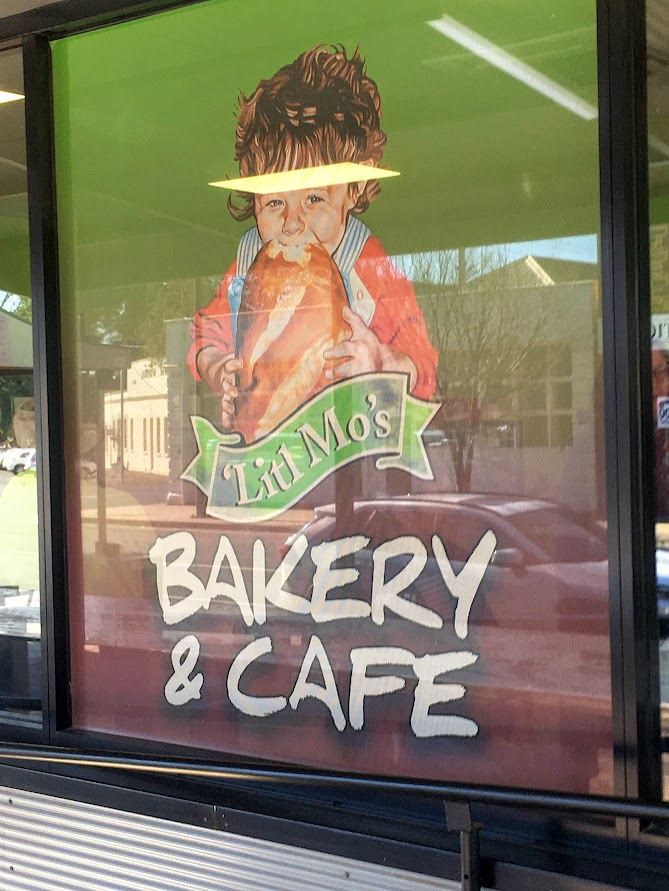
At Litl Mo’s bakery, I park outside the former Eudunda Farmers store. Inside’s noisy with older folks concluding their morning tea. As I’m ordering most amble towards the door — leaving behind their coffee cups, chatter, and crumbs. A murmuring din bounces around. ‘See you next week, Bill. Enjoy your golf on Thursday!’ It’s an encouraging hub for the town and a bustling café.
Deciding to eat on the balcony, I spot the dental clinic across the Main Street. It’s new although Dad later tells me it’s been open a while. After too many of Mo’s chocolate donuts, stride across the road to get your teeth fixed.

My sausage roll is excellent. Scrutinising it after a bite or two, I’m thrilled to spot that neglected ingredient: carrot! The taste is delicate and flavoursome. It’s not massive — no need to compensate for tastelessness or oily pastry. It’s a treat.

*

Monday mornings teach you things in a country town. I’ve taken a tranquil drive through memory but have also glimpsed something of Kapunda’s boisterous and bright future. There’s movement beneath the quiet.

2

Kapunda, 1983: Dutton Park to the Duck Pond

Let’s imagine a drone hovering over Kapunda.

Gundry’s Hill is the natural place for it to commence with its views across our undulating town. There’s St Roses’ spire, a patchwork of roofs, and the silos standing quietly down near the road to Freeling. The vista is smeared green from the trees lining Clare Road, Mildred Street, and Hill Street which is home to the ancient playground and its old black steam train.

We’re now above Dutton Park and its fetching oval protected by those silent eucalypts. If we listen carefully, we can hear the Mickans chuckling and telling stories. It’s a short flight then to the Duck Pond and if it’s a weekend evening there might be half a dozen cars parked haphazardly on the southern bank, near Dermody Petroleum. There are teenagers draped all across the lawns. My friends. From the tape deck of a car, possibly a Gemini or a Kingswood, you hear this soulful song

Karma, karma, karma, karma, karma chameleon
You come and go
You come and go
Loving would be easy if your colours were like my dreams
Red, gold, and green

We then zip over to the swimming pool. On this hot afternoon we see dotted on the grass untidy groups of kids. Zoom in and they’re munching on Bush Biscuits or a Zooper Dooper before running to the diving board. From this they leap off aiming desperately and adolescently at the canteen, run long-sufferingly by Mrs. Chappell. They try to splash her by doing a storkie, arsey or a coffin. They’re tiresome but determined. The supervisor—an elderly Englishman—yells to the skinny boys, ‘Pack it in!’ They ignore him but he yells again. ‘Pack it in or you’ll have a rest for five minutes!’

A short journey and we pause over the Pizza Bar on the Main Street. Johnny Guzzo is the boss. Again, inside there’s some of the town’s youth and they’re huddled about the Formica tables. Some spill onto the footpath, weighted by black duffle coats and ripple boots. With P plates blutacked to their windows, assorted cars lined up outside. There’s a knot of motorbikes too.

Inside by the windows and next to the pinball machines, a mate’s trying for his best ever score on Frogger. He’s trying to cross the river on logs and—be careful—skip over on the backs of hopefully drowsy crocodiles. But he gets munched and the game’s over. He thumps the glass top of the arcade machine. Johnny’s throwing pizza dough up into ever widening circles and hears the racket. ‘Hey! Do that again and I kicka you out!’

It’s 1983 and for one group of kids, they’re in year 12. Seventeen is an age when much happens but you’re no longer a child and not yet an adult. It’s a fraught, fantastic time. Let’s zoom in and see who they are.

*

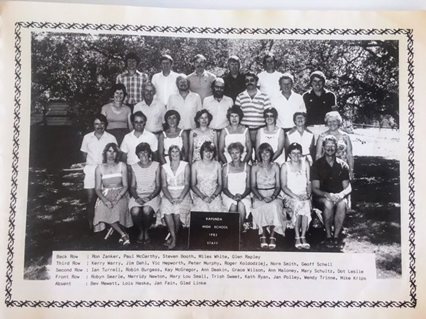
Here’s Kapunda High’s class of 1983. There’s only thirteen of us although this was boosted by the subsequent return of one Paul Masters, and arrival of Eriko, our Japanese exchange student. Then, of course, most of the fifty-odd who began with us in year 8 had left school for a job. Year 12 was matriculation which meant qualifying for university. It an innocent and wonderous time.

This photo was taken on the croquet lawn at the front of the school. I never saw any croquet but sitting on its grass under the autumn sun was calming and peaceable. And it’s such a picturesque setting that a few short decades later it was where the girl fourth from the left and I would be married. No other location presented itself.

There were only fifteen of us, but I thought us an unruly collective. All day long we laughed and yelled and interrupted each other. Thirty years on, talking in the footy club with Macca—our beloved History teacher Paul McCarthy—he told me we were, ‘bright and well-behaved. A really great group.’ In 1983 I sat in a corner next to Chrisso and Davo and we did much together.

Claire and Trish and I had long enjoyed our triangular friendship, and this continued. There were a couple of classmates with whom I barely exchanged words. I didn’t dislike them; we just had little in common and I hope they’re happy and well.

*

Our matric centre was at the front of the school just near the croquet lawn. It was down the cement steps and in Kidman’s bequeathed mansion, Eringa, it had been a servant’s bedroom. A tiny room, it could only fit ten or a dozen of us around the little student tables.

A blackboard hung to the side and an old gas heater sat above the mantle and we’d use it to toast sandwiches until we weren’t permitted. A corridor ran around two of the walls and our individual carrells were lined up there. How lucky that we had our own private desks? Much of our year was spent at these.

In that little classroom we’d conversations which influenced us. Mrs. Schultz, our gentle and wise English teacher, chaperoned us through The Grapes of Wrath with the Joads as they made their emblematic and weighty way from Oklahoma to California through the Mojave Desert.

I recall my terror as she and Trish talked at length about the novel’s symbolism, focusing upon the turtle crossing a highway and how it represented struggle, determination, and hope. Committed to making my own life difficult, I read many Steinbeck novels over the summer and loved them. But, of course, I didn’t finish the compulsory Grapes of Wrath, and generally only saw the turtle as a turtle.

Our Australian History teacher, Mr. Krips, escorted us through a study of our national identity and the apotheosis of the nomad tribe. I’d not encountered the word apotheosis before. It wasn’t used on the cricket, even by Richie Benaud or by Graham Kennedy on Blankety Blanks. It impressed me and I vowed to keep it in my vocabulary as I thought it could have future value. I swiftly forgot it.

Of equal value was the extra-curricular stuff we learnt from our teachers. The girl fourth from the left and Trish always had enthusiasm for curating our experiences and so set up communal diaries in big scrap books. Quickly becoming known as the Crap Books, these enjoyed daily entries, with some contributing more than others. Occasionally Kripsy did too. How great was he? Early in the year he noted the discovery of a musical gem.

Last night I saw Marvin Gaye on TV singing, ‘Sexual Healing’ which was terrific. What a voice! What a performance!

It is a great tune and now when I hear it I instantly think of Kripsy and that tiny, windowless classroom. I hear it with fondness for my classmates and teachers and that fleeting, singular time and place.

Get up, get up, get up, get up
Wake up, wake up, wake up, wake up

Oh, baby now let’s get down tonight!

*

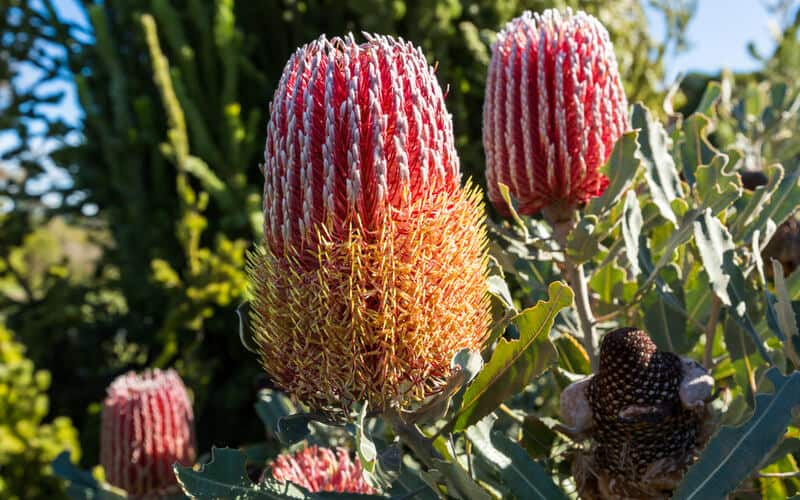
The Coorong is a distance from Kapunda, south of the mouth of the Murray. Until our matric year, school camps had been breezy and amusing affairs. More like holidays than educational experiences. As we had to study both a science and a humanities subject, I found myself in Biology and had to undertake a special personal project. For reasons which over time have only become more bleakly absurd, I was about to immerse myself in the heady, sparkling world of Banksias.

Yes, my teenaged fantasies were all becoming real. I would undertake a vegetation transect. It’s not, however, as glamorous as it sounds.

We stayed in rustic accommodation with Mr. Zanker and Miss Searle. Curiously, I would work with Mr. Zanker decades later at Marryatville High where I taught his daughter in year 12. In 1983, there were about eight of us in Biology and we drove down on Sunday. I recollect none of the journey.

It was cold and grey but one night by a shared metal sink I had a novel experience. One of my classmates, the girl fourth from the left, leant towards me, giggling, and announced, ‘Hey you. Listen to this!’ A brief subterranean rumble followed. We both collapsed into laughter. It was the first time I’d heard a girl fart.

This remains the clear highlight of that camp.

Monday morning was grim and wretched, and it began to rain. I was utterly alone in the middle of a forest of banksias. My task was to measure all sorts of variables like tree height, number of banksia flowers, distance between trees, and other things too hideously dull to itemise for you now.

Until then I think I was a kid who just got on with stuff. But this was new for it was an obligation in which I had zero interest. It was a necessity and there was no escape. I sat on the wet ground and my bum became damp. Three more days of this! I reckon it was the first time in my life I was truly bored. Even now I twitch if I see a Banksia. They’re for life, not just the Coorong.

It gave me a glimpse into the dark world of adulthood responsibility. I didn’t like it.

*

The second and final part is coming soon!

0

Dear Dad, on your 80th birthday

Dear Dad

Remember the backyard at Stirling Street and that gnarly old lemon tree? Near the swing with the triangular frame? Every now and then you’d pluck one off a branch, halve it, take a bite and urge Jill and I to do the same. I’d screw up my face at a single drop, but you and Jill seemed to enjoy the taste and so keeping a safe distance, and united in our horror, Mum and I could only look on as you’d both munch a lemon like it was a lolly.

Running down the middle of the yard were parallel garden beds. They bisected the lawn and after tea with your quiet patience you’d help me with the hose and teach me to water the vegetables, saying calm, encouraging things like, ‘Make sure you give them a good drink. On a hot day would you only want half a glass of water? Well, it’s the same with the cucumbers and the tomatoes.’ And even now when watering our plants, I contemplate Dad’s wisdom, trusting I’m giving them a decent sip.

Then, there’s the image of you on your hands and knees, methodically making your way around the lawn perimeter as you edged the buffalo with those big, steel clippers. Of course, while you snipped away at the grass, Jill and I jumped on your back as if you were our very own horse. This was true multitasking, and from you I inherited my love of a manicured lawn. Out the back one-day Max gazed at me and said, ‘Dad, do you think of this lawn as your third son?’

After Kapunda Junior Colts footy games, I’d await your assessment of my performance. There was praise when I played well which was very, very often (Ed– we’re looking into this) but if needed you were direct too. One Friday night I went to a friend’s to watch a film on Betamax, possibly American Werewolf in London and the next day had a terrible game. In the changerooms your advice was clear, ‘You looked tired out there. I reckon from now on stay at home on Friday nights.’ So, I did.

Claire, you’ll be happy to know that morning before this game I called into Peter Moyle’s fruit ‘n’ veg shop and bought an apple and an orange which I ate walking along Hill Street and then winding my way down Baker Street. They didn’t help me at all. Obviously, fruit and football don’t mix.

John Schluter was my Year 6 teacher and Dad and I agree, a very smooth footballer. One spring morning JS and I had a chat at school that went like this-

JS: What do you think about your dad making a comeback to tennis?

Me: Yes, I heard. (You’re about 33 then) You don’t think he’s too old?

JS then helped me realise that how you see your parents is sometimes different to everybody else. He said, ‘Your Dad’s capable of very many things. You should remember that.’ I nodded.

You once and only once played in an oldies footy match at Dutton Park. Now, I was too young to have any real images of your playing days but was thrilled that afternoon as you kicked a bag of impressive goals. It was a clinic. Well, at least until half-time when you were injured, and for the following week hobbled around like you’d been kneecapped by the mafia. Or Mum. But I’m glad I witnessed it.

What about that summer holiday to the Berri Caravan Park? If I’m right, we came home early because it didn’t go so well. Now, I know that to this very day Jill’s sorry she caused all those fights with me. Since then, she’s grown up so much. See boys, it’s about learning.

We’ve a Barmera tradition in which every afternoon at 5pm we do a lap of Lake Bonney with a can of lemonade for the boys and for me a massively deserved Coopers Sparkling Ale. Setting off, each guesses the total number of cars we’ll pass on the Lake Lap. For example, Max might say 7, Alex, 5, Claire 3 and me, 9. Closest wins. Such excitement! And people say I don’t show the boys a good time. Thanks Mum and Dad for those Riverland trips as these gave me deep affection for the place and hopefully, I’ve passed this on.

In August, at the Tanunda Club, on the eve of the ’73 grand final reunion, Phil Jarman declared to Chris Hayward and me that for his height, Bob Randall is the best mark he’s ever seen. I was delighted to hear this yet again and Chris and I were so inspired we each had another six beers.

But among my cherished memories of you is another at Dutton Park. However, this occasion was not for footy or cricket, but the day Claire and I were married. Your speech was elegant and heartfelt and affecting. It told our story well and was about devotion and joy and family. Thank you so much for that.

Tonight’s also an occasion of devotion and joy and family so on his eightieth birthday let’s make a toast to Bob, Poppa, Dad. We love you. To lemons, lawns and love!

0

Kapunda perspectives: Gundry’s Hill, the Duck Pond, and Dutton Park

We’re doing a lap of Kapunda because it’s probably illegal to come home and not.

So, Lukey and I drive up to Gundry’s Hill. We’ll then swing by the Prince of Wales for a brisk beer before heading to the footy.

We hop out and wander around the grassy knoll. The sky is cloudless, and the rolling hills and crops are a reassuring green.

Glancing about I wonder does everywhere look better from a bird’s eye? Does it always provide a heavenly view? Ascending, do our earthly imperfections vanish?

What happened as we grew up in our town, nestled in that mundane, enchanted valley? Everything and nothing. It was hot and dusty, and cold and muddy. Can you be atop even the smallest hill and not become philosophical? Is private awe guaranteed?

Seeing the whole helps me remember the grainy episodes and to time-travel. I locate the spire of St Roses Catholic Church and it’s midnight mass and I’m an altar boy with lads who, for Father Moore, didn’t always behave like altar boys.

My eye finds the tiny primary school oval. I remember lunchtimes and my classmate Grant Dodman kicking what eleven-year-old me regarded as impossibly prodigious torpedo punts.

What do those from flat towns like Freeling do? How do they access a dreamy perspective?

With this elevated silence on Gundry’s Hill comes warming gratitude. I again gaze out across this modest, little town.

It becomes gentler and postcard-pretty.

*

Between the four pubs of the main street and the oval sits the Duck Pond. Although we knew the family well, nobody I know uses the official name, Davidson Reserve.

This ornamental lake was witness to youthful distraction. As with any locality on a map the geographical value is in the personal narratives.

Undertaking our compulsory tour of our hometown’s landmarks, Lukey and I pause and ponder by the water.

It’s suddenly our teenaged 1980’s.

I remember the cars we owned and can see them clustered conspiratorially by the Duck Pond. There’s Trisha’s Hillman Imp, all English and apologetic. Woodsy’s 180B in which one summer we did two ridiculous laps of Bathurst. My wife Claire’s (sadly our nuptials were a way off) little red and white mini, like an extra from Carnaby Street, London. There’s Lukey’s Alfa Romeo which aside from the then new Chinese restaurant in Nuriootpa, was the most exotic thing I knew.

The Saturday night vista is completed by a crowded used car lot of white HQ Holdens.

If I shut my eyes Stephen Trotta’s green Gemini has all the windows down and the Pioneer stereo volume up. A TDK C-90 cassette is playing. ‘US Forces’ by Midnight Oil blasts across the dark water and then we hear Mondo Rock’s moodily suggestive, ‘Come Said the Boy.’

As Dickens wrote, it was the best of times.

*

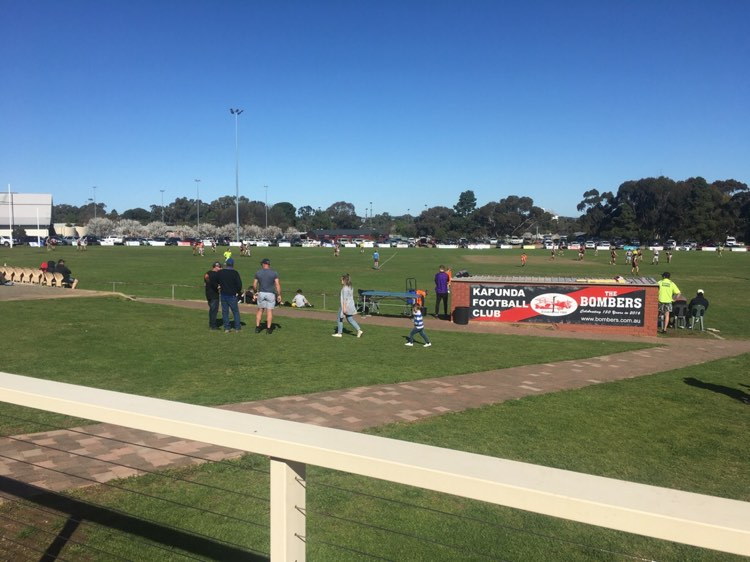
It’s a glorious late-winter’s day beneath the eucalypts at Dutton Park as the B grade footy concludes.

We’re here to see old friends and recount some well-worn tales. Woodsy, Keggy, Hollis, O’s. Fats and Chipper had called into Puffa’s. Whitey’s elsewhere.

Knots of timeworn faces huddle in front of the changerooms on the new wooden deck. Orange bunting separates us from the reunions of the 1973 B grade (Dad’s a member but can’t be here today) and Senior Colts premiers.

There’s something poetic about the equine term ‘colts’ for footy teams that’s much better than the numerical Under 17’s or Under 14’s. Looking over at the often less than sprightly reunionists someone says, ‘That’ll be us soon boys.’

There are folks I’ve not seen for decades like Kelpie Jarman and Peter Masters but the years melt away because we all lived in the same town.

I see three of the Mickan brothers in Goose, Drew, and Richie and have a quick chat with Macca. There’s much handshaking. By the canteen I bump into Fergy. In the morning he’s again off to Arkaroola and we share our experiences. Claire and I went there and to Hawker and Rawnsley Park on our honeymoon.

Early in the A grade Kapunda leads with three goals to two but then by quarter time it’s 13 majors to Angaston and not nearly enough for the Bombers. Nobody seems to mind for the air’s awash with nostalgia.

The first job, as always, when we congregate, is to organise the next event, so arrangements are made to visit Christmas Higgins’ brewery in Greenock. Before Christmas, of course.

I later learn that Morphettville race 9 is won by number 4. A seven-year-old bay gelding, its name is Angaston. And their team salutes too. By 25 goals.

But on the footy club deck it’s all chortles and familiar stories. Homecomings aren’t universally adored so I’m lucky to love these moments.

After the siren I drive south from this modest, little town.

4

Five Scenes from Our Wedding

The weather presented us a story that will, doubtless, enjoy regular airings over the decades. Standing alone on the croquet lawn as yet another squally shower progressed from mist to rain, I wrestled with what to do: brave it or ring the Kapunda boys to put up some marquees? Shelter might be functional, but it’d ruin the aesthetic and checking the BOM radar for the dozenth time that hour I could see more dark clouds racing our way.

Yet again I changed my mind. As family arrived a hundred chairs were dried off and with the last row done the rain slashed across the school again. Crippled by indecision I reluctantly rang you, interrupting your preparations and feminine fun. But your voice was calming in its reassurance.

Mere minutes before our ceremony the clouds fled and while it was gusty and bracing the April sun shone upon us and that lavish lawn as if it had sisu, the Finnish concept of resilience and determination.

*

After hours, months, years of anticipation an occasion can suddenly rush upon you and despite all the expectation and longing it shocks with its realness now that you’re finally living it and are right in the magical moment. I was initially a little anxious when I saw the first guests’ cars pull up outside Kapunda High on dusty West Terrace and felt blissfully powerless as our time finally arrived.

Then Lisa Mitchell’s “Providence” soared across the afternoon and launched our narrative, while you made your graceful way, and I decided to wait and not strain or move onto tippy-toes. Our guests stood and some lurched into the grassy aisle. Camera, heads, hair. I could not see you. I remained on our rug between the plinths.

Then you emerge as if in a cascading, serene dream. Smiling, singular, focussed. Hair tousled and tumbling, cheekbones perfectly formed, eyes flashing.

Your dress is shimmering, shapely and a vision of painterly elegance. I surrender to this, and to you.

*

It was as if the town and each citizen we encountered had been bewitched and a golden hour descended, just for us. There could have been a clandestine operation and Kapunda was now our private movie set. As the photographers captured us in our intermingling blue attire we moved about from Dutton Park where we danced by the iron gates to the Main Street murals to the mine chimney and above us and about us the late afternoon light was enchanted and invested with unhurried kindness.

*

Hand-in-hand and entering through the Dutton Park doors was a triumph. You imagined it flawlessly and then realised it with cinematic style. The candles, the balloons, the rustic beauty. Our friends and family were assembled for the evening in an event that was firstly about us but also allowed for old connections to be remade and renewed. The sound was raw and welcoming, a rush of affirmation and liquid joy. It was a twilight sea of warmth.

*

And finally in the midnight stillness, we walked back to our accommodation at the School of Mines through Dutton Park’s lingering jubilance, under the gates, past the dark homes, over the disused railway line near the Duck Pond, across from the playground and swimming pool, next to the Institute and museum, around the quiet library corner, under the Rawady’s veranda and to our front door.

The geography and place are so unremarkable, and so familiar but now re-contextualise as a private paradise, and as we stroll and reflect upon our perfect day, these bear hushed witness to our love.  

2

The Kapunda Cricket Club: Long Necks in Brown Paper Bags and the Patron Saint of Spoofy

kcc-derro-and-spoofy

In 1880 the Australian Test side played a match in Kapunda against a local team. The shops shut at noon and thousands gathered. The national captain, Billy Murdoch, congratulated the club on the Dutton Park pitch. It was coconut matting.

The national side made 401 with opening bat AC Bannerman registering a century. The local side accumulated eighty, despite there being a batting line-up of twenty-two chaps. Only one fellow, TR Bright, got to double-figures with twenty-seven. Ten made ducks. Can you imagine a Wade/ Maxwell conversation happening back then?

“Hey Skip, got a minute?”

“Sure. What’s the problem?”

“I see you’ve got Bennett coming in at eighteen. And I’m batting at nineteen.”

“That’s right. He’s actually made a run this year.”

*

Saturday night saw the celebration of Kapunda Cricket Club’s sesquicentenary, and it was held at Dutton Park. Arriving late afternoon Woodsy, Bobby Bowden and I wandered down to catch the closing stages of the A grade fixture against Freeling. On the grass and under the shade we had a yarn with Tolly, Bart, Whitey, Goose and Rexy who were taking refreshment as preparation for the evening. Kapunda took four wickets to secure second place.

*

Away games still mean meeting at Rawady’s deli in the Main Street, just next door to the Sir John Franklin hotel. Thirty years ago, we’d head off to Eudunda or Angaston or Truro in a car with no air-conditioning. FM radio barely existed. Bench seats like those in HQ Holdens allowed six so only two cars might be needed. Toranas and 180Bs were rightly seen as selfish.

You’d be squeezed in and somewhere like Riverton was only about twenty minutes away, but with cramping calves and eyes stinging with the smoke of a dozen Winny Reds you’d slide from the seat with a soaking back like you were being born.

This is the Kapunda Cricket Club.

*

In a change room at Dutton Park some memorabilia is on display. I wander through. Old bats- GN Scoops and Fielkes, and boxes- such as the one made famous by Froggy are there, as are old score books. One from 1987 is on a bench and Bobby Bowden finds the match against Greenock, the one cruelly documenting his eighteen ball over. I’d forgotten that he and I opened the batting, but then when this happened, why would we?

Sudden by international standards, the demise of England’s G Swann was glacial compared to Bobby’s. At the start of his final ever over for the Kapunda Cricket Club he was a reliable medium pacer. Eleven agonising minutes later his bowling career was dead.

It began with a couple of wides, progressed to a malignant lack of confidence and culminated with Bob, broken, walking to the wicket like it was the gallows, and trying to complete a legitimate delivery. It often ended up at slip, or skidding forlornly, ashamedly, down to fine leg. His mental self-disintegration was total.

Subsequent pub analysis confirms that Bob’s eighteen-ball over only contained seven legal deliveries, and therefore nearly thirty years on, remains incomplete. I was at mid-off, and lobbed the ball to him, fifteen times. I felt increasingly like I was throwing him a box jellyfish. Or a can of XXXX.

This is the Kapunda Cricket Club.

*

Cricket clubs provide much. Social instruction. Gentle exercise. Weekend structure. But mostly they generate memories. Eagle Rock with whites around ankles, slopping up beer and Bundy in a Tarlee disco. Tony Clarke spinning the black vinyl of “Walk Like An Egyptian.” A fella like Flab who, in astonishing dedication, wore his cricket whites until Tuesday. Yeah, Tuesday. Twice. Did these have to be burnt? If we had a nuclear waste storage facility (no doubt on the site of the former Railway Hotel) they probably should have gone in there.

I think of Spoofy. I think of the front bar in Puffa’s late on summer afternoons. Boys drinking West End from handles. No TAB or big screens. No pumping music. Just three coins, clasped behind the back. Not trying to win, but trying not to lose. Goose Mickan. Someone chirping, “Good call.”

The final moment and someone- hopefully not yourself, trudging off to buy for everyone like GS Chappell after his fifth consecutive duck. This, of course, all belongs spiritually to Whitey, the patron saint of Spoofy, or as he now calls it, “The Free Beer Game.”

This is the Kapunda Cricket Club.

*

And then, late afternoon somehow squeezing back into the HQ Holden as Chris Hayward once said, “Like ten pounds of spuds in a five-pound bag” we’d drive through the dusty warmth back home. This often included calling through a pub like the Greenock Tavern to get a long neck in a brown paper bag. One each for the journey.

Just as the drive to cricket could seem eternally long, as a seventeen-year-old the trip back home with a derro could be horribly brief as now within Kapunda’s town-limits you tried to gulp down the last of the beer. The HQ would swing into a park outside the Clare Castle Hotel, and you’d stare down the neck of the bottle, looking for the fish bones you’re sure are swimming about in there, wondering how the older blokes actually drank the stuff. Safely inside, after three schooners of Nugget’s finest, you’d recovered and all was fine. You were set.

This is the Kapunda Cricket Club.

*

It was a great night. There were stories from JL Mosey and Sarge Johnston and laughs and life memberships. Wayne Phillips made a funny speech in which he referenced Fatcat and IVA Richards and the beginning of his relationship with his wife which, in part, began atop Gundry’s Hill overlooking Kapunda.

After midnight, everyone drifts outside to the veranda. It seems like it’s only nine o’clock. There’s a looming full moon and the skittish clouds race across the velvet. After a blistering week, the cool change is arriving.

I call back into the club next morning on my way home and ask what time the celebration wound up. Matt says, “I left at ten to four and there were still about sixty here.” Impressive.

Some nights the stories just won’t let you go to bed. There’s too much to say, too many hands to shake.

And, this is the Kapunda Cricket Club.

dp


KCC Rawadys Deli squashed into Holdens Jock McGregor six Craig Hutton hat trick Rocket Tanunda Light Pass tie Leo Carter trained at KHS Fergie and Phil Bob and Christmas Greg Chappell hat Greenock dozen runs Interest in Caulfield Cup Spoofy Long neck Old score books Flab in whites until Tuesday 298 Dean Waugh Flipper coach ASADA 29 NSW Fatcat can’t guarantee that After midnight migrate outside, looming moon and skittish clouds 4am sixty folk, stories stretch onKCC Rawadys Deli squashed into Holdens Jock McGregor six Craig Hutton hat trick Rocket Tanunda Light Pass tie Leo Carter trained at KHS Fergie and Phil Bob and Christmas Greg Chappell hat Greenock dozen runs Interest in Caulfield Cup Spoofy Long neck Old score books Flab in whites until Tuesday 298 Dean Waugh Flipper coach ASADA 29 NSW Fatcat can’t guarantee that After midnight migrate outside, looming moon and skittish clouds 4am sixty folk, stories stretch onKCC Rawadys Deli squashed into Holdens Jock McGregor six Craig Hutton hat trick Rocket Tanunda Light Pass tie Leo Carter trained at KHS Fergie and Phil Bob and Christmas Greg Chappell hat Greenock dozen runs Interest in Caulfield Cup Spoofy Long neck Old score books Flab in whites until Tuesday 298 Dean Waugh Flipper coach ASADA 29 NSW Fatcat can’t guarantee that After midnight migrate outside, looming moon and skittish clouds 4am sixty folk, stories stretch on

0

Growing Up In A Footy Club

KFC


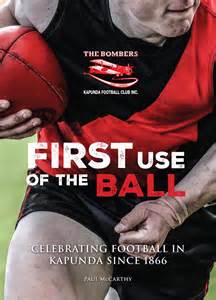
The following memoir features in First Use Of The Ball- Celebrating Football In Kapunda Since 1866. I’m most grateful to sporting legend, local historian and my former teacher Paul McCarthy for the chance to contribute to this special publication.

If you love footy and stories of colour and passion I’m proud to say the book’s available at the Kapunda Football Club, and certainly not the Essendon Football Club website at-

http://www.bombers.com.au

*

Growing up in the Kapunda Football Club was fun. It does take a village to raise a child, and in part many of us were guided through to adulthood by the Bombers. Sometimes in affirming, character-building ways, and sometimes by one of the Mickan brothers.

*

Eudunda. Heading across the hills before descending into the town, a bluish plain swims into view. This flat scrubbiness seems, on certain days, as a becalmed, wintry ocean. As a kid I used to think, instead of this saltbush and mallee, it’d be fantastic if it was the sea. As it was, eons ago. Even before the Robertstown junior colts all wore mutton-chops on their colossal faces which sat atop of their colossal frames.

To the north, and by Burra Creek, is the locality of World’s End. Snaking nearby we find Goyder’s Line, which shows where rain and soil might allow crops to be grown confidently. Goyder is still right.

Sitting in Mum and Dad’s car by the Eudunda oval, Starland Vocal Band’s “Afternoon Delight” plays on 5KA, in grim competition with the hail hammering on the roof.  It turns to a sleety, possibly snowy gale. It’s diabolical, even for Eudunda, and forces the footballers to scurry over the fence, and huddle between the Kingswoods and Chargers. There’s no afternoon delight for them. I’d never seen such an apocalyptic storm, and know it’s serious when I see Boo Menzel leap the hoardings and hide by a souped-up Torana.

Although I was only ten World’s End seemed even closer.

*

My old mate Trevor Lucas took what many reckon is the best mark ever taken by a Kapunda Bomber. 1985, Angaston oval, U17’s Grand Final against Riverton/Saddleworth. Still lanky even today, Trev ambled out from full-forward like a slow-motion deer, rose impossibly to the crest of the pack, and grabbed it. The footy stuck! It’s a mighty moment.

When the video was shown at their recent reunion this got the loudest roar. Like all treasured yarns it gets better over time, and Trev’s grab is now becoming stratospheric. By 2030 his mark will surely defy physics.

I spent most of that season in the Bombers’ B grade. We barely won a game. In the forlorn huddle at three-quarter time of the final match we were down by truckloads. Our coach’s address- he may have been a Mickan- was less Barack Obama than drunken barracker. “Well boys we’re in trouble. Again. And we’re out of excuses. The season’s done. I don’t know what to say. Just go and run a lap. Or something.”

*

Now demolished, Kapunda’s Railway Hotel hosted a fleeting infamy, among the ridiculous, by opening at 8am on Sundays, when because breakfast was apparently too early for beer, we’d get raspberry cordial splashed in our West End Draught butchers. Once we were chaperoned down there in the cool morning air by none other than Mick Dermody.

Years before this the publicans’ son, Mick, went briefly to Kapunda High.  In the hotel ballroom he inflicted upon me Rick Wakeman’s Journey to the Centre of the Earth. Once. I recovered. I tell you, everything about the Railway Hotel was ridiculous.

But Mick could play footy. He was a thumping kick, and when he connected, he sometimes achieved the mythological quality known in country sport as, “good purchase.”

In the Junior Colts one Saturday at Dutton Park our ruckman got the tap from the centre bounce. Mick seized the footy in that clean, untouchable way he had. Suddenly frozen as if in a sci-fi telemovie, the Tanunda boys were incapable of tackling. They simply stared, wide-mouthed and slack-jawed.

Mick surged towards the half forward line. Fifty-metre arcs were yet to be discovered, and he was outside that when he bombed it, a monstrous dob. Perhaps prog-rock had already pinched his conceptual clarity. It was a behind. To the Tanunda Magpies.

He’d kicked it the wrong way.

But, gee, it was impressive. I’ve never seen a better point.

*

Meet me down by the jetty landing

Where the pontoons bump and sway

I see the others reading, standing

As the Manly Ferry cuts its way to Circular Quay

“Reckless” by Australian Crawl takes me back. With a funereal bass line, and a snare drum like gunshot, it’s prominent in the soundtrack to my final year at school, 1983. At the Kapunda Swimming Pool it got a workout, in between us sneakily bombing the canteen, and poor Mrs Chappell. This was also the year I fractured my arm playing senior colts. June and my season, wrecked.

As the locum had not aligned it a fortnight later my arm was to be re-broken. Six more weeks in a cast. Look! There I am on a hospital bed as the doctor looms and mumbles.

“Ouch! It’s hurting!” I sense the subterranean crunching. Doc is an absorbed professional, and continues his medical manipulation of me. “Be quiet please!” I am in distress. “No, it’s really hurting!” Not just Masters bakery is out of sausage rolls distress. Or even Skyhooks have split distress. It is monolithic pain.

Minutes later the doctor squints at the drip. He realises. His tone transforms. “Oh! I’m so sorry. I’m very sorry!” There he was, fracturing my arm with feverish enthusiasm, but somehow, he forgot to turn on the anaesthetic.

After, the local veterinarian gave me artificial insemination gloves to slide over my cast when showering. Happily, for the district’s young and old bulls and me, these were not pre-loved.

*

Mini-League training was Wednesdays at Dutton Park. Former stationmaster and beloved club servant Bruce Dermody was our coach. He was patient and grandfatherly. At least twice a week Bruce would holler, “Hold that ball straight lad when you kick!”

With goalposts across the ground we’d have scratch matches down the trotting track end. It was the best fun of the week. It was our innocent island. It was our world. Only stopping because of the gathering gloom, we’d then cycle home to chops and three veg (mashed spud, carrots and peas), Dukes of Hazzard and bed. Even now when I dob the Sherrin with my boys I can still hear Bruce’s urgings, “Hold that ball straight, lad!”

Bruce met his wife Melva at Bowmans, a railway siding between Balaklava and Port Wakefield. It’s long gone. They lived for the club, and it was their family. We remember them well.

*

When I was at Kapunda High Former Port Magpie Rod Burton became senior coach of the Bombers. He was menacing. He had mad eyes. He could seem unhinged. Even for a Port player.

As a boy listening to one of his particularly ferocious pre-match speeches in Angaston’s claustrophobic change rooms I came within a wobbly gasp of wetting myself. I’m reminded of him whenever I watch Jaws and Quint, the great shark-hunter and his Indianapolis speech

Sometimes that shark, he looks right into you. Right into your eyes. You know the thing about a shark, he’s got… lifeless eyes, black eyes, like a doll’s eye. When he comes at ya, doesn’t seem to be livin’

Paul “Crackshot” Masters, Rod “Rocket” Ellis and I sitting on the western wing by Dutton Park’s timekeepers’ box when Burton had a boundary kick in. The box also housed the public address system, and across the day Bruce Dermody made regular catering announcements. These are as burned into my memory as Father Moore’s lilting sermons from St Rose’s pulpit

Ladies and gentleman, the canteen is selling pies, pasties and sausage rolls. There’s lollies for the kids. And the liquor bar will open at 2.30 for all your refreshment needs.

We were behind Burton. Deliberately, he pushed off the fence, and launched a colossal screw punt. Spiralling instantly above the gum trees, the Ross Faulkner footy bisected the posts, and below the mound, way down near the trotting track, on the service road, it landed like a depth-charge in a submarine movie.

Blighty’s after the siren goal for North Melbourne was but a stab pass.

As the Holden Commodores honked in praise, and duffel-coated kids including us shrieked, Burton smiled.

Just briefly.

KFC2